
Zero Threshold: What It Means for Crypto Access and Why It Matters
When we talk about zero threshold, a system where anyone can participate without identity checks, minimum deposits, or approval. Also known as no barriers to entry, it’s the backbone of true decentralization—where you don’t need a bank account, government ID, or approval to join. This isn’t just a technical feature. It’s a philosophy. And it’s under fire.
Look at the posts below. You’ll see how no-KYC crypto exchange, platforms that let you trade without verifying your identity. Also known as anonymous exchanges, it [Continue with natural text that connects to your post collection.] got shut down globally because regulators called them dangerous. But here’s the catch: the same people who banned them still use P2P trades, private wallets, and DeFi protocols that operate with zero threshold every day. The hypocrisy is real. And the truth? Zero threshold isn’t going away—it’s just moving underground.
Flash loans, for example, run on zero threshold. You can borrow millions in crypto without collateral—if you repay it in one transaction. No bank, no form, no waiting. That’s the power. But it’s also why hackers drain $1.7 billion a year. The same freedom that lets a teenager in Cambodia trade Bitcoin through a mobile app also lets state-backed groups launder stolen crypto. It’s not good or bad. It’s just how the system works when you remove the gatekeepers.
And then there’s the airdrops. You’ll find posts about fake ones—like ART Campaign or WKIM Mjolnir—that promise free tokens but steal your crypto. Why? Because zero threshold means anyone can create a token, launch a campaign, and vanish. Legit projects like Convergence Finance or TopGoal use it too, but they’re the exception. The rule? If it sounds too easy, it’s probably a trap.
Zero threshold doesn’t mean no rules. It means the rules are written in code, not in courtrooms. It means your wallet is your ID. Your transaction history is your credit score. And if you don’t understand that, you’re not ready for crypto. The posts below show you exactly where this plays out: in Cambodia’s banking bans, in Thailand’s $2.1 million licensing fees, in Indonesia’s shift from commodities to financial assets. They’re all reactions to the same thing: people refusing to play by the old rules.
What you’ll find here isn’t theory. It’s real-world fallout. From dead meme coins like GDOGE and JF to legit tools like SoSoValue and WAGMI, every post shows what happens when access is free but responsibility isn’t. Some platforms survive. Most don’t. The ones that do? They don’t need your ID. They just need you to be careful.
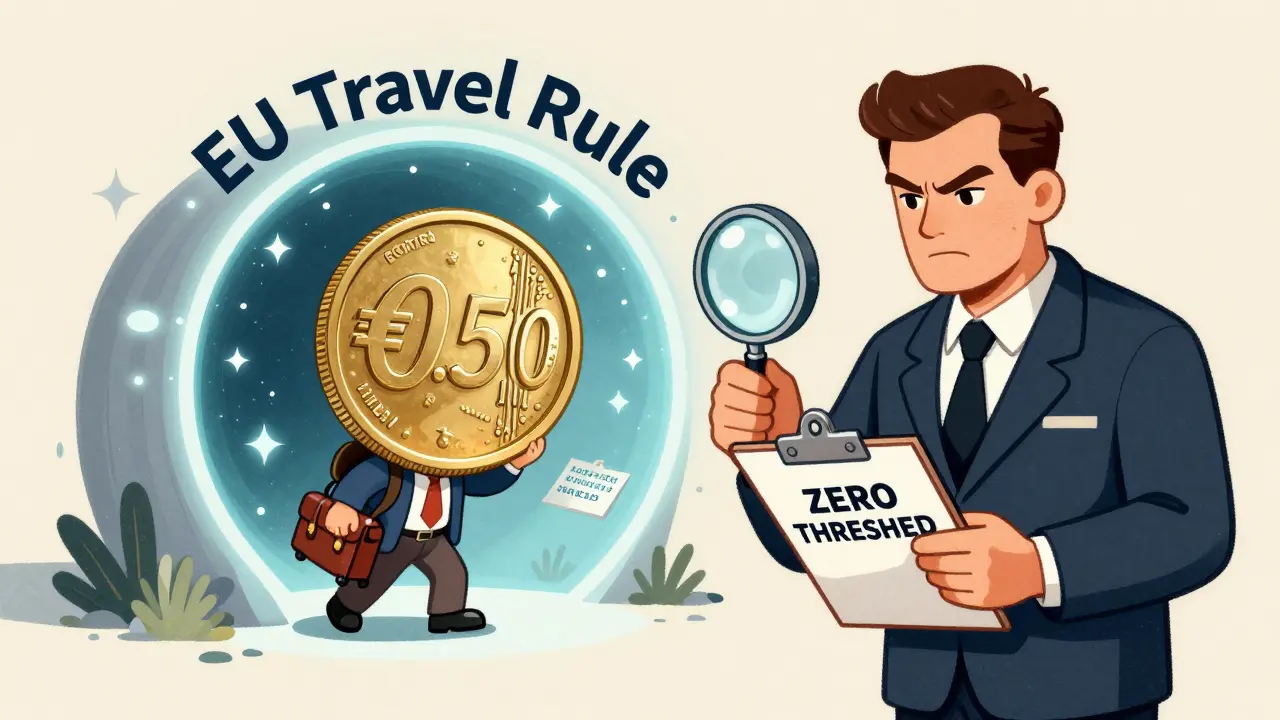
EU Crypto Travel Rule Compliance: What Zero Threshold Means for Your Transactions
by Johnathan DeCovic Dec 4 2025 23 CryptocurrencyThe EU's zero-threshold Travel Rule now requires full identity data for every crypto transaction, no matter how small. Here's how it works, who it affects, and what you need to know as a user or business.
READ MORE