
EU Travel Rule: What It Means for Crypto Users and Exchanges
When you send crypto across borders in the EU, the EU Travel Rule, a regulatory requirement under MiCA that forces crypto service providers to share sender and receiver info on transfers over €1,000. Also known as VASP Travel Rule, it’s not a suggestion—it’s a legal obligation that reshapes how exchanges, wallets, and users handle transactions. This rule isn’t about spying on people. It’s about stopping criminals from moving money anonymously through crypto. If you’re using a licensed exchange in Germany, France, or Spain, you’ve already seen it: they ask for more details before you send ETH or USDT abroad. That’s the Travel Rule in action.
The MiCA, the EU’s comprehensive crypto regulation framework that standardizes rules across all member states. Also known as Markets in Crypto-Assets Regulation, it makes the Travel Rule mandatory for every Crypto Asset Service Provider, any company offering crypto trading, custody, or transfer services in the EU. Also known as CASP, it must collect and share names, account numbers, and addresses for transfers over €1,000. This isn’t just for big exchanges like Binance or Kraken. Even small DeFi platforms that operate in the EU must comply—or face fines, shutdowns, or being blocked from the market. You can’t bypass it with privacy coins or P2P tricks. The rule applies to the service provider, not the user. So if your wallet provider is EU-based, they’re required to report. If you’re using a non-EU exchange, they might still block your EU transactions to avoid legal risk.
This rule ties directly into AML compliance, the global standard for preventing money laundering through financial systems. Also known as anti-money laundering, it and the broader push for crypto transparency. It’s why exchanges like KuCoin had to shut down EU access before adding KYC, why new platforms need €1 million in capital just to apply for a license, and why fake exchanges like Unielon or Spin never made it past the first warning. The EU isn’t trying to kill crypto. It’s trying to clean it up. And if you’re sending crypto to someone in another EU country, you’re now part of that system. Below, you’ll find real cases of exchanges caught off guard, how users got locked out of their funds, and what steps you can take to stay compliant without getting tangled in red tape.
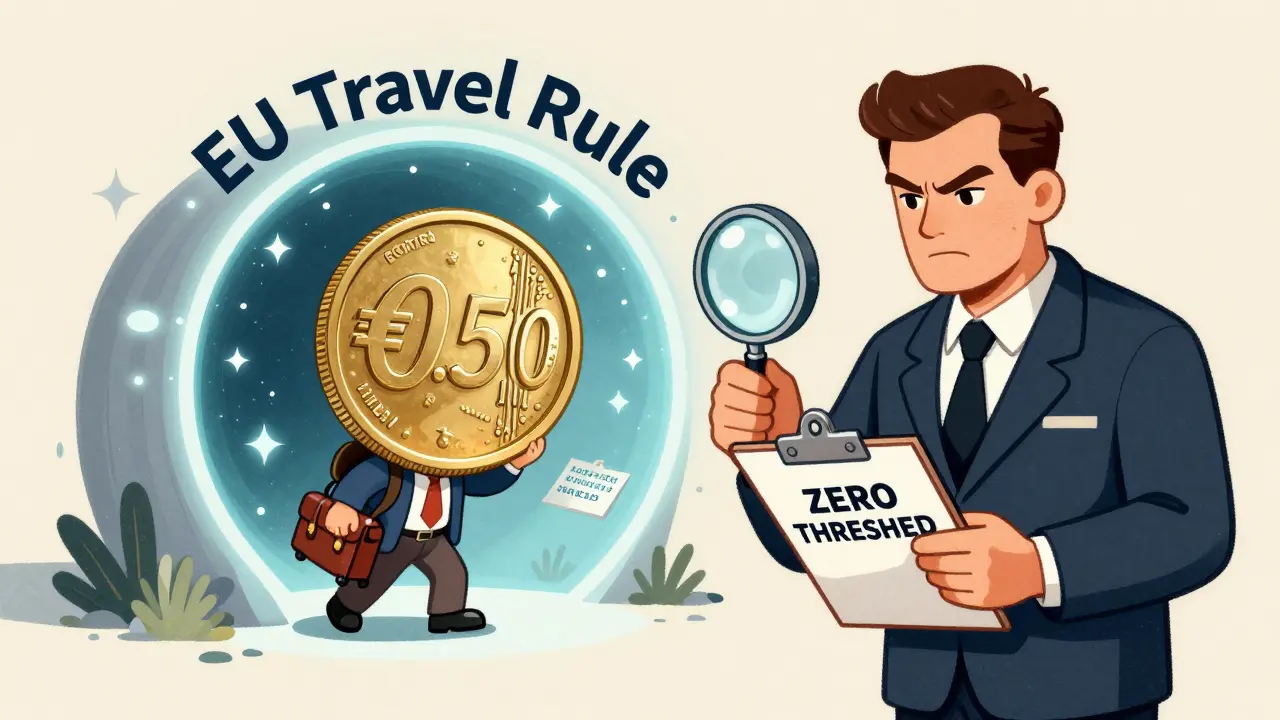
EU Crypto Travel Rule Compliance: What Zero Threshold Means for Your Transactions
by Johnathan DeCovic Dec 4 2025 23 CryptocurrencyThe EU's zero-threshold Travel Rule now requires full identity data for every crypto transaction, no matter how small. Here's how it works, who it affects, and what you need to know as a user or business.
READ MORE