
Livecoin has been around since 2013 - longer than most crypto exchanges that came and went during the 2018 crash or the 2022 bear market. If you’re looking for a platform that supports obscure altcoins and lets you trade directly with USD, EUR, or even Russian Rubles, Livecoin might seem like a hidden gem. But here’s the thing: Livecoin isn’t what it used to be. While it once earned praise for stability and niche trading pairs, recent user feedback paints a very different picture. This isn’t a hype piece. It’s a real look at what Livecoin offers today - and whether it’s still worth your time.
What Livecoin Actually Offers
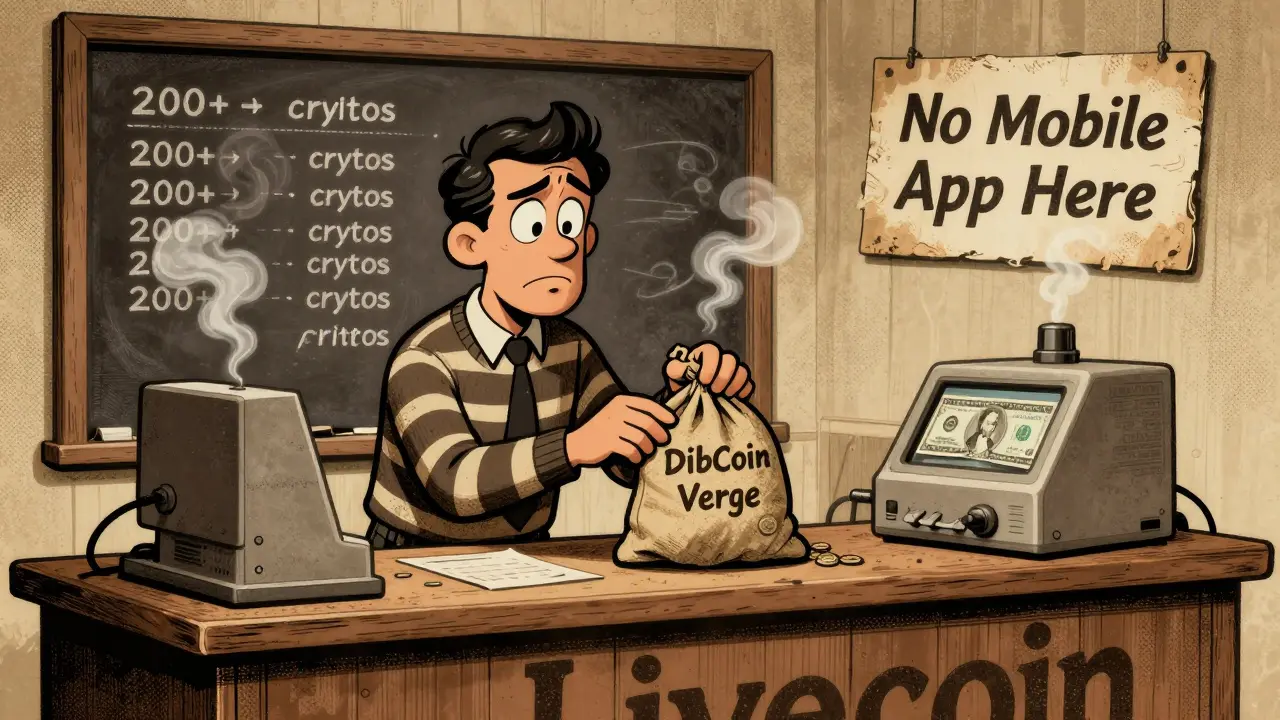
Livecoin isn’t trying to be Binance or Coinbase. It doesn’t have hundreds of thousands of daily users or a slick mobile app. Instead, it fills a gap: altcoins you can’t find anywhere else. If you’re trading something like DibCoin, Verge, or a dozen other obscure tokens, Livecoin might be one of the few places you can buy them with real money - not just Bitcoin or Ethereum.
It supports over 100 cryptocurrency-to-fiat pairs. That’s way more than Coinbase, which only lets you buy four cryptos directly with USD. Livecoin lets you deposit euros, dollars, or rubles and instantly trade them for over 200 different cryptocurrencies. That’s its main selling point. For traders in Europe or Russia, this is a big deal. You don’t need to first buy Bitcoin on another exchange and then move it over. You can go straight from bank transfer to Dogecoin or Monero.
Trading Fees: Lower Than You’d Expect
Most exchanges charge different fees for makers (people who add liquidity) and takers (people who remove it). Livecoin doesn’t. It uses a flat fee: 0.18% per trade. That’s slightly below the industry average of 0.25%. If you trade often, the fee drops. High-volume traders can get down to 0.02%. That’s competitive, even against bigger platforms.
Withdrawal fees are also reasonable. For Bitcoin, you pay 0.0005 BTC - about $30 at current prices. That’s lower than what Kraken or Binance charges. For Ethereum, it’s 0.005 ETH. These fees are transparent and consistent. No surprise charges. No hidden costs. That’s rare.
The Big Problem: Low Liquidity
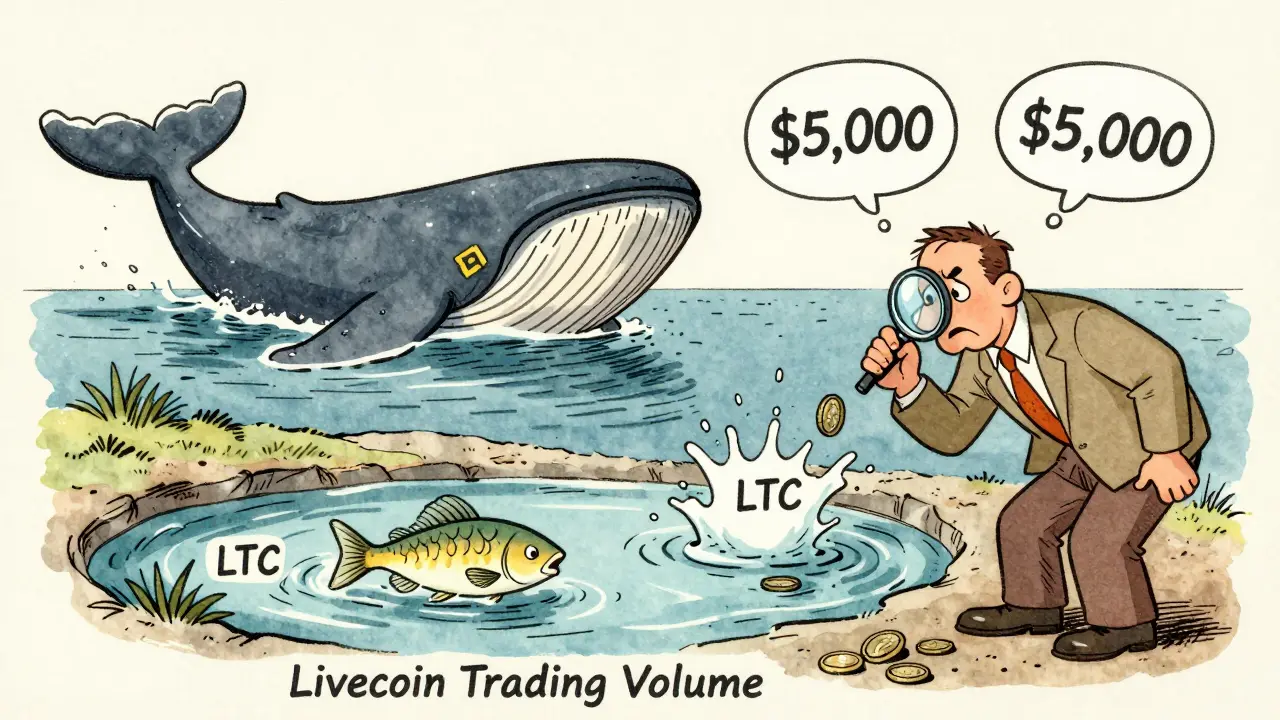
Here’s where Livecoin starts to fall apart. Even for popular coins like Litecoin or Ripple, trading volume is thin. Users on G2 and Trustpilot repeatedly mention this: "The not so nice thing about Livecoin is the volume of trading. It is often quite low, even for more popular currencies."
What does that mean for you? If you want to buy $5,000 worth of Ethereum, you might not find enough sellers. Your order could push the price up by 5% or more before it fills. Same if you try to sell. You’ll get a worse price than expected. This isn’t a minor inconvenience - it’s a dealbreaker for anyone trading more than a few hundred dollars at a time.
Compare that to Binance or Kraken, where you can move $100,000 without moving the market. Livecoin doesn’t have that depth. It’s a small pond. And in crypto, liquidity is everything.
Security: No Major Hacks - But That’s Not Enough
Livecoin hasn’t been hacked since 2013. That’s impressive. Most exchanges that lasted that long got breached. Even Coincheck, one of Japan’s biggest, lost $530 million in 2018. So Livecoin’s track record here is solid.
But security isn’t just about hacking. It’s about how you handle user funds. There’s no public proof of reserves. No regular audits. No cold storage transparency. You’re trusting them to keep your money safe - without any third-party verification. That’s risky. If they disappear tomorrow, you have no recourse.
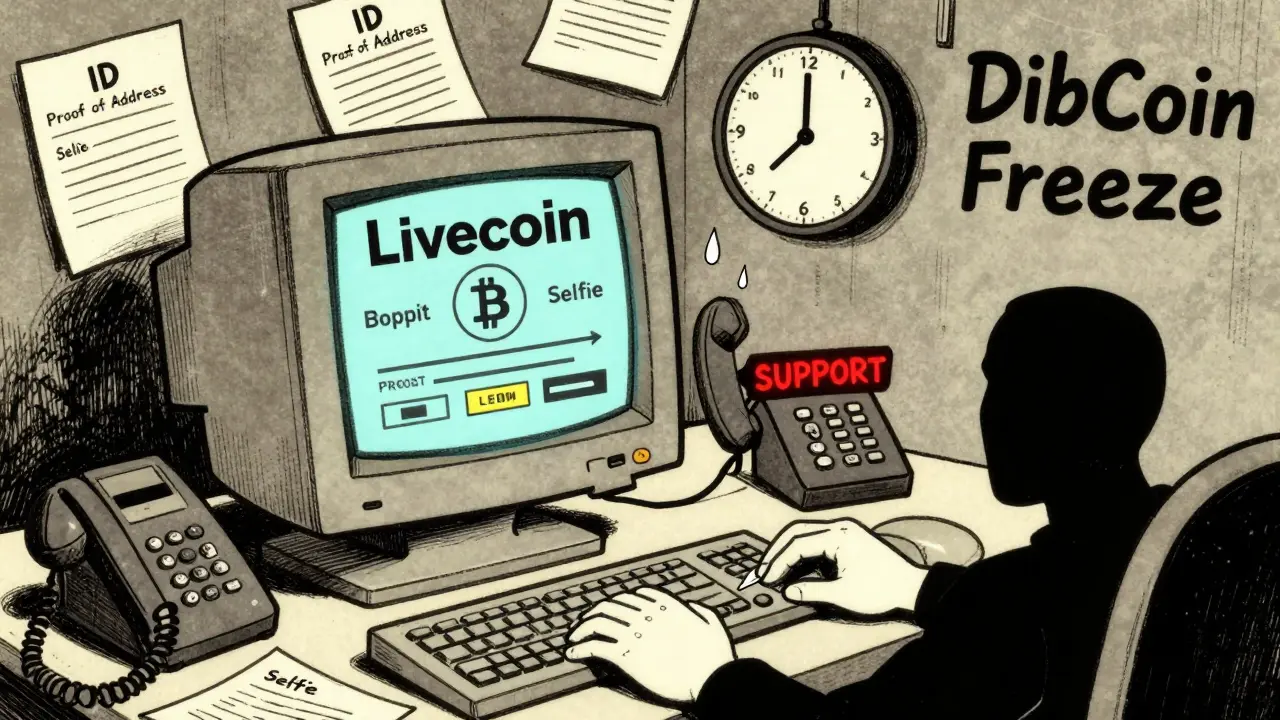
And then there’s the DibCoin incident. A user reported over $200 in DIBC tokens frozen for two weeks. No explanation. No timeline. Just silence. That’s not a technical glitch - that’s poor communication. And it’s not an isolated case. Other users have had similar issues with lesser-known tokens.
User Experience: Confusing for Beginners
Livecoin claims to have a "very simple interface." That’s misleading. The layout is cluttered. Menus are buried. The verification process for higher withdrawal limits isn’t clearly explained. You’ll need to submit ID, proof of address, and sometimes even a selfie holding your ID. But there’s no checklist. No progress bar. You just wait.
Deposits can take up to an hour to show up - even for Bitcoin. That’s slow. Most exchanges confirm BTC deposits in under 15 minutes. Withdrawals are faster, but the platform doesn’t always notify you when they’re processed. You have to check manually.
And the mobile experience? There isn’t one. No official app. You’re stuck with the website. On a phone, it’s clunky. You’ll need to zoom in, scroll sideways, and tap blindly. If you’re used to Binance’s app, this will feel like using a 2010-era browser.
Customer Support: Mixed Results
Livecoin offers 24/7 support in English, Russian, and Chinese. That’s a plus if you’re not a native English speaker. But response times vary wildly. Basic questions - like "How do I deposit?" - get answered within hours. Complex issues? You might wait days.
One user on Reviews.io said they couldn’t reactivate their old account for weeks. When they finally got through, they got their money back - but only after a long, stressful process. Another user on Trustpilot wrote: "I asked about my withdrawal three times. They said it was processed. It wasn’t. I had to call them twice."
And here’s the worst part: Trustpilot’s rating dropped to 2.2/5 in January 2026, based on 56 reviews. That’s not a fluke. That’s a pattern. People are leaving. And they’re not happy.
Who Should Use Livecoin?
Livecoin isn’t for everyone. It’s not for beginners. It’s not for big traders. It’s not for people who want fast deposits or a clean app.
It’s for one type of user: someone who needs to trade obscure altcoins with fiat and doesn’t mind the hassle. If you’re holding 10 different tokens that aren’t on Coinbase, Kraken, or Binance - and you want to cash out without converting to Bitcoin first - then Livecoin might still be your only option.
But if you’re looking for reliability, speed, or safety - walk away. There are better exchanges. Even if they don’t support your obscure coin today, they might add it tomorrow. Livecoin won’t change. It’s stuck in 2015.
Final Verdict
Livecoin is a relic with a few useful features. Its fee structure is fair. Its altcoin selection is unmatched. Its lack of hacks is impressive.
But its low liquidity, confusing interface, poor communication, and falling user ratings make it a risky choice in 2026. If you’re already using it, be careful. Don’t keep large balances. Withdraw regularly. And don’t expect quick help if something goes wrong.
If you’re new to crypto - or even if you’ve been trading for a while - there are safer, faster, and more reliable exchanges out there. Livecoin isn’t dead. But it’s not thriving either. It’s barely hanging on.
Is Livecoin safe to use in 2026?
Livecoin hasn’t been hacked since 2013, which is rare. But safety isn’t just about hacks. There’s no public audit, no proof of reserves, and no regulatory oversight. If the exchange disappears, you have no legal recourse. Recent Trustpilot ratings (2.2/5) suggest growing user distrust. Use only small amounts you can afford to lose.
Can I trade USD or EUR directly on Livecoin?
Yes. Livecoin supports over 100 cryptocurrency-to-fiat pairs, including USD, EUR, and Russian Rubles. This is one of its biggest advantages over exchanges like Coinbase, which only offer direct fiat trading for four coins. You can deposit via bank transfer or card and instantly trade for altcoins without first buying Bitcoin.
Why is Livecoin’s trading volume so low?
Livecoin serves a niche market focused on obscure altcoins. Most users are small traders who buy and sell infrequently. Unlike Binance or Kraken, it doesn’t attract institutional buyers or high-frequency traders. Low volume means price slippage - your buy/sell orders may not fill at the price you expect, especially for larger amounts.
Does Livecoin have a mobile app?
No. Livecoin has no official mobile application. You must use the website on your phone or tablet. The interface isn’t optimized for touch, making trading slow and frustrating. This puts it far behind competitors like Binance, Coinbase, and Kraken, which all offer polished, reliable apps.
Are U.S. users allowed on Livecoin?
No. Livecoin explicitly blocks users from the United States. This is likely due to regulatory pressure. If you’re in the U.S., you’ll need to use exchanges like Kraken, Coinbase, or Binance.US, which operate under U.S. financial laws. Attempting to bypass this with a VPN violates their terms and risks account suspension.
How long do deposits take on Livecoin?
Deposits vary by cryptocurrency. Bitcoin deposits can take up to an hour to reflect in your account - slower than most exchanges. Altcoin deposits may take longer, especially if the network is congested. Fiat deposits via bank transfer can take 1-5 business days, depending on your country. Livecoin doesn’t offer instant deposits like some competitors.
What are Livecoin’s trading fees?
Livecoin charges a flat 0.18% fee per trade for both makers and takers. This drops with volume - high traders can pay as low as 0.02%. Withdrawal fees are transparent: 0.0005 BTC for Bitcoin, 0.005 ETH for Ethereum, and similar rates for other coins. These are below the industry average of 0.25%, making Livecoin cost-effective for active traders.
Why did Livecoin’s Trustpilot rating drop?
The Trustpilot rating fell to 2.2/5 in January 2026 after 56 reviews. Users cite slow support, frozen assets (like DibCoin), poor communication, and confusing account procedures. While earlier reviews praised its altcoin selection and low fees, recent feedback shows declining customer service and transparency. This suggests operational issues are worsening.

Katie Haywood
February 8, 2026 AT 07:13Sharon Lois
February 8, 2026 AT 07:53Mrs. Miller
February 8, 2026 AT 08:41mahikshith reddy
February 9, 2026 AT 02:48Brendan Conway
February 10, 2026 AT 00:46Josh Flohre
February 10, 2026 AT 13:36Joshua Herder
February 11, 2026 AT 06:41David Bain
February 12, 2026 AT 00:19Brittany Coleman
February 12, 2026 AT 15:23Jim Laurie
February 13, 2026 AT 14:19Reda Adaou
February 14, 2026 AT 16:34Freddie Palmer
February 15, 2026 AT 19:15Alisha Arora
February 16, 2026 AT 12:00Matt Smith
February 18, 2026 AT 03:13Taybah Jacobs
February 19, 2026 AT 13:28Udit Pandey
February 19, 2026 AT 18:06Jesse Pasichnyk
February 21, 2026 AT 02:59Deeksha Sharma
February 21, 2026 AT 17:55Brittany Novak
February 22, 2026 AT 19:24