
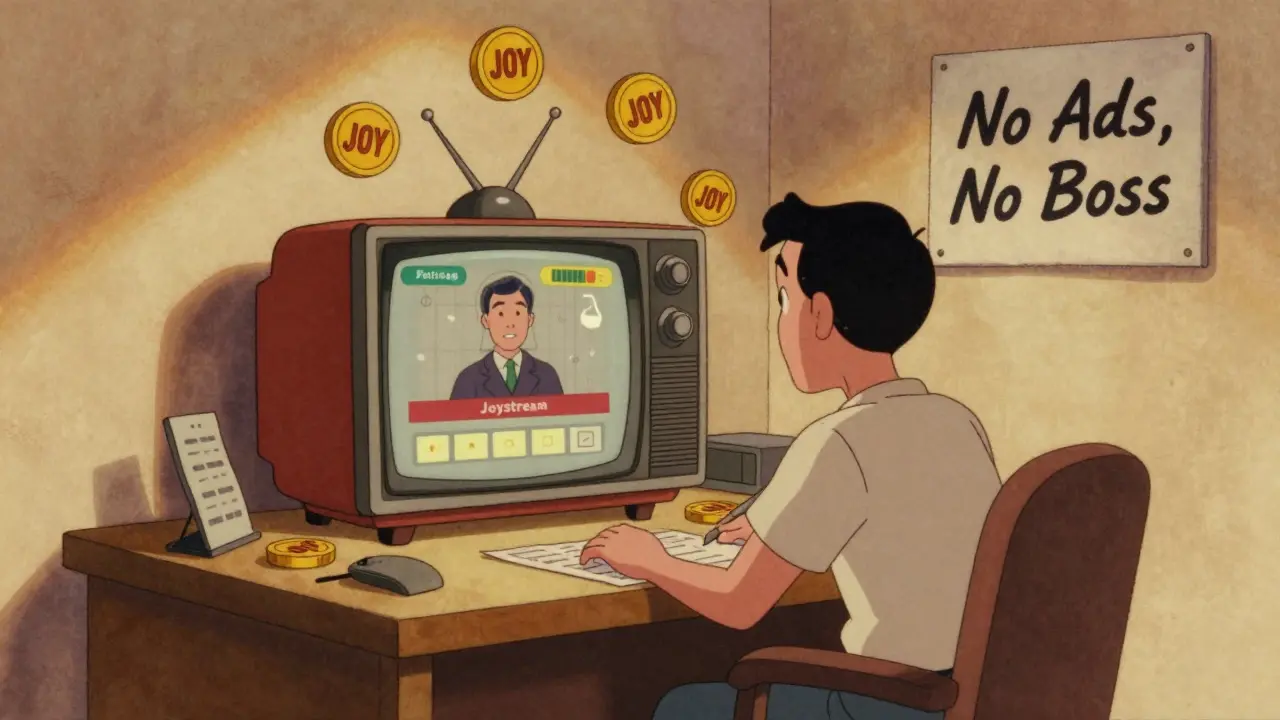
Joystream (JOY) isn’t just another cryptocurrency. It’s a bet on a future where video creators aren’t locked into YouTube’s rules, YouTube’s ads, or YouTube’s payouts. At its core, Joystream is a blockchain built to let people upload, share, and earn from videos without needing permission from a Silicon Valley corporation. The JOY token is the fuel that makes it all work - paying creators, rewarding contributors, and letting users vote on how the platform evolves.
How Joystream works (no tech jargon)
Imagine a YouTube where no one owns the platform. No ads served by Google. No demonetization. No algorithm hiding your videos. That’s the idea behind Joystream. Instead of a company controlling everything, it’s run by its users through a DAO - a Decentralized Autonomous Organization. If you hold JOY tokens, you can propose changes, vote on updates, or even get paid to help build the platform.
Creators set up channels on Joystream, just like on other platforms. But here’s the twist: viewers can buy channel tokens tied to their favorite creators. These aren’t JOY coins - they’re custom tokens created by the creator themselves. When someone buys your channel token, they’re not just subscribing. They’re becoming a small stakeholder in your channel’s success. If your content grows, so does the value of that token. And you, as the creator, get a cut every time it’s traded.
Joystream also has a system called Patronage. Think of it like Patreon built into the blockchain. Subscribers can send you JOY tokens every month, automatically. No middlemen. No fees. No surprise policy changes. You get paid in crypto, and you keep 100% of it.
What makes JOY different from other crypto coins?
Most crypto coins are either money (like Bitcoin), investment bets (like Solana), or utility tokens for apps (like Chainlink). JOY is different because it’s tied directly to real-world activity: video creation and viewing. You don’t just hold JOY hoping it goes up in price. You use it to pay for services, earn rewards, or influence decisions.
Joystream’s blockchain was built from the ground up for video. That means it’s optimized for storing metadata - titles, descriptions, thumbnails, comments - without clogging up the network. It doesn’t store the actual video files (that’s too expensive), but it keeps everything else permanent and uncensorable.
Other platforms like Odysee or DTube also try to do this. But Joystream’s unique edge is its channel token system and its Pioneer program. Pioneer lets anyone apply for paid roles - like moderator, developer, or translator - and get paid in JOY for doing real work. It’s not a bounty system. It’s a job board built into the protocol.
Token supply and current market status (as of early 2026)
There are 1.11 billion JOY coins total. About 1.09 billion are already in circulation. That’s a lot - but the price tells a different story. As of early 2026, JOY trades around $0.00045. That’s down over 99% from its all-time high of $0.06033 in late 2023.
Why such a crash? Because the platform hasn’t scaled. Despite being around since 2018, Joystream has only about 1,240 active creators and under 50,000 monthly users. Compare that to YouTube’s 2.5 billion users. Joystream’s market cap is around $500,000. Most major crypto projects have market caps in the billions.
Most JOY trades on three exchanges: MEXC, Gate.io, and CoinEx. The trading volume is tiny - less than $120,000 a day. That’s less than 0.01% of what YouTube makes in ad revenue daily. For most people, it’s not worth the hassle.
Who’s using Joystream - and why?
Some creators are finding value. One YouTuber switched to Joystream after getting demonetized. In his first month, he earned 1,245 JOY ($0.56 at today’s rate) from patronage. On YouTube, he made $0.47. So technically, he made more - but only because his JOY tokens were worth more back then. Today, that same 1,245 JOY is worth less than 56 cents.
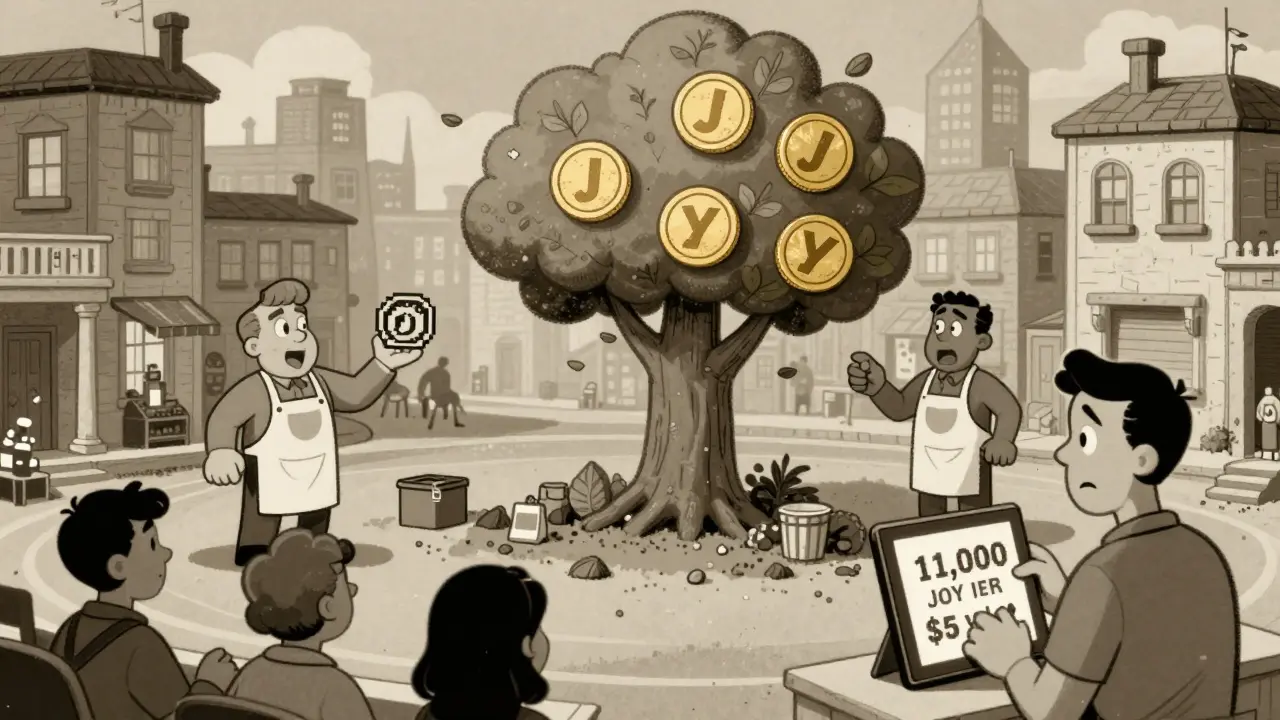
That’s the problem. The token is too cheap to be practical. If you want to buy a $5 video download, you need to send over 11,000 JOY. That’s not user-friendly. Most people don’t want to count zeros like that. One creator on Twitter put it bluntly: “I need 687 JOY to buy $1 worth of services. It’s like trying to pay for coffee with pennies.”
On the flip side, some users love the governance side. One person submitted three proposals to improve the platform and earned 250 JOY in rewards over six months. That’s about $0.11 - not life-changing, but it shows the system works. People are trying to make it better, even if the money isn’t there yet.
The big hurdles: adoption and usability
Joystream’s biggest enemy isn’t competition. It’s complexity. Setting up a channel takes the average new user over 8 hours. That’s longer than most people spend learning how to use Instagram. The documentation is patchy. The interface isn’t intuitive. And if you run into a problem, support takes two days to respond - and only fixes 43% of token-related issues.
Even the community is small. There are 2,347 people in the official Discord server, but only 18% are active. Most are developers or early adopters. There are almost no regular viewers. Without viewers, creators can’t earn. Without creators, viewers have nothing to watch. It’s a chicken-and-egg problem.
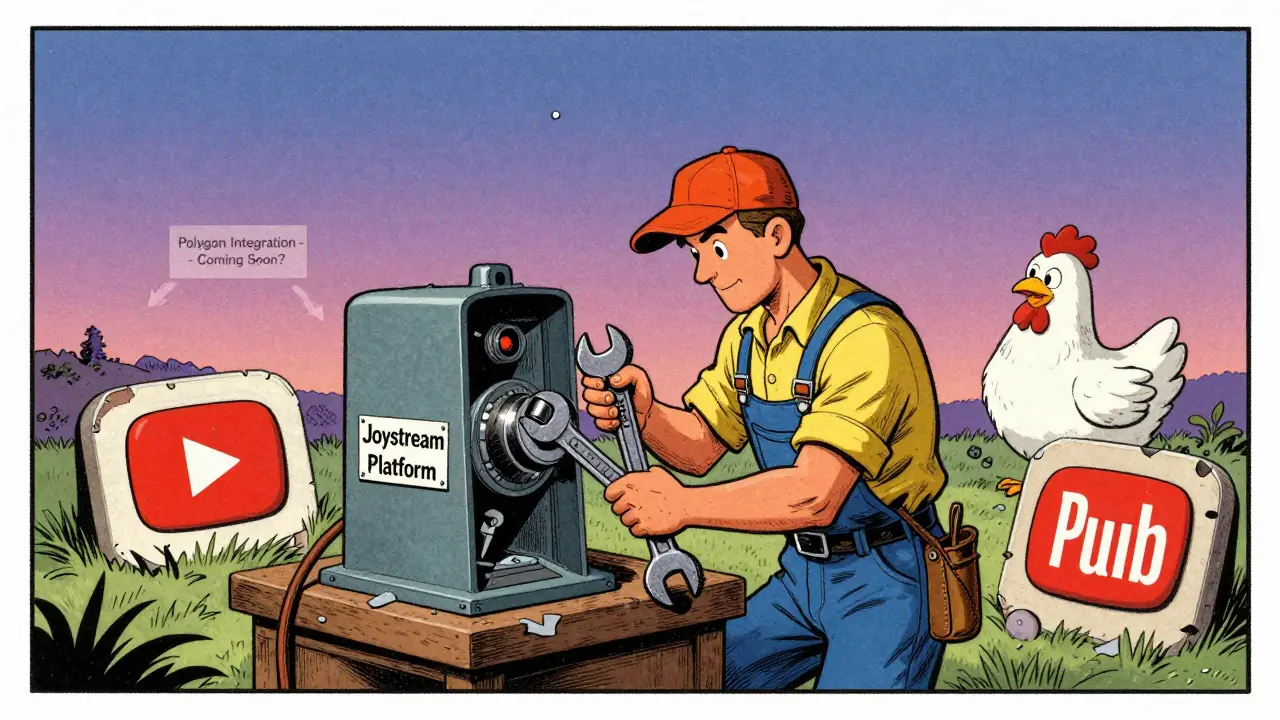
Joystream’s roadmap includes a mobile app and integration with Polygon (a faster, cheaper blockchain). That could help. But those features were promised for late 2023. As of early 2026, the mobile app is still in beta. The Polygon integration? Barely functional.
Is Joystream worth it?
If you’re a crypto speculator? Probably not. JOY has lost 99% of its value. It’s not going to make you rich. The market is too small. The trading volume is too low. The risk is too high.
If you’re a creator tired of being censored or underpaid? Maybe. Joystream gives you full control. No one can delete your channel. No one can change the rules overnight. You own your audience. You own your earnings. But you also own the struggle - the lack of viewers, the confusing tech, the tiny payouts.
If you believe in decentralized media? Then Joystream is one of the few real experiments left. It’s not perfect. It’s not popular. But it’s trying. And sometimes, that’s enough to keep going.
What’s next for Joystream?
Analysts are split. Delphi Digital says JOY needs a 15x price increase just to be usable. Messari thinks it could hit $5 million in market cap if it finds a niche. Neither is optimistic about mass adoption anytime soon.
The truth? Joystream is a proof of concept. It proves you can build a video platform without a CEO. It proves creators can earn without ads. It proves users can vote on rules. But it hasn’t proven that enough people care to make it sustainable.
For now, Joystream survives on passion, not profit. And that’s a fragile foundation.
What is the JOY token used for?
The JOY token is the native currency of the Joystream platform. It’s used to pay creators through Patronage, reward contributors in the Pioneer program, vote in governance proposals, and purchase channel tokens created by individual creators. It’s not meant to be a speculative asset - it’s meant to power real activity on the platform.
Can I make money with Joystream?
Yes, but not easily. Creators can earn JOY through Patronage (monthly subscriptions), channel token sales, and governance rewards. However, because JOY’s price is extremely low, earnings are minimal - often less than $1 per month. You’re more likely to earn recognition or freedom than income.
How is Joystream different from YouTube?
YouTube is owned by Google, runs ads, and controls what content survives. Joystream has no owners. No ads. No censorship. Creators keep 100% of earnings, set their own rules, and can’t be banned by a corporate policy. But Joystream has almost no audience compared to YouTube’s billions.
Where can I buy JOY tokens?
JOY is traded primarily on MEXC, Gate.io, and CoinEx. The most common trading pair is JOY/USD. Because the token is low-value and low-volume, you’ll need to use a crypto exchange that supports small-cap coins. Don’t expect liquidity or fast trades.
Is Joystream safe to use?
The blockchain itself is secure - it’s built on proven crypto tech. But the platform is still experimental. The interface is confusing, support is slow, and many features are incomplete. You can lose money if you mismanage your tokens or send them to the wrong address. Treat it like a beta test, not a bank.
Why hasn’t Joystream taken off yet?
Because it’s too hard to use, too slow to grow, and the token’s value is too low to be practical. Most people won’t bother learning blockchain just to upload videos. And without viewers, creators won’t stick around. The ecosystem needs a critical mass of users - and it’s still far from getting it.

christal Rodriguez
February 1, 2026 AT 13:30Steven Dilla
February 1, 2026 AT 21:01Brianne Hurley
February 3, 2026 AT 03:42Kevin Thomas
February 5, 2026 AT 03:22Tom Sheppard
February 6, 2026 AT 10:30Sunil Srivastva
February 7, 2026 AT 08:05Pamela Mainama
February 8, 2026 AT 15:15Rachel Stone
February 9, 2026 AT 03:40Mark Ganim
February 9, 2026 AT 23:17Elizabeth Jones
February 9, 2026 AT 23:29Nickole Fennell
February 11, 2026 AT 16:15laurence watson
February 13, 2026 AT 13:12Gustavo Gonzalez
February 14, 2026 AT 12:42Robert Mills
February 15, 2026 AT 22:52Raju Bhagat
February 17, 2026 AT 22:33Tom Sheppard
February 19, 2026 AT 21:03Calvin Tucker
February 21, 2026 AT 09:25Edward Drawde
February 22, 2026 AT 00:01Richard Kemp
February 23, 2026 AT 03:27Christopher Michael
February 24, 2026 AT 08:52Freddy Wiryadi
February 24, 2026 AT 10:06mary irons
February 25, 2026 AT 16:02