
DeFi DEX: What It Is and Why It Matters
When working with DeFi DEX, a decentralized exchange that lets users trade crypto directly from their wallets without a central intermediary. Also known as Decentralized Exchange, it empowers peer‑to‑peer swaps, reduces custody risk, and opens finance to anyone online. In simple terms, a DeFi DEX enables token swapping without an order book, so you keep full control of your funds.
Core components that make a DEX work
A key building block is Liquidity Pools, bundles of tokens that provide the depth needed for instant trades. Liquidity pools reduce price impact and allow users to earn fees. To reach assets on other blockchains, a DEX Cross‑Chain Bridges, trustless protocols that lock assets on one chain and mint equivalents on another, extend trading options beyond a single network. Finally, Stablecoins, cryptocurrencies pegged to stable assets like the US dollar, provide a low‑volatility medium for swapping, protecting traders from sudden price swings. Together, these elements create a seamless, permissionless trading experience.
Below you’ll find practical guides covering stablecoins, cross‑chain bridges, liquidity‑pool ratios, and other hot topics that help you navigate the DeFi DEX landscape with confidence.

Curve (Optimism) Crypto Exchange Review: Low Fees, High Stability, But Not for Beginners
by Johnathan DeCovic Feb 20 2026 14 CryptocurrencyCurve (Optimism) is the fastest, cheapest way to swap stablecoins in DeFi. With 0.04% slippage and $0.0004 gas fees, it dominates stablecoin trading-but it's not for beginners. Learn how it works, who it's for, and why it's the #1 DEX for USDC, DAI, and USDT.
READ MORE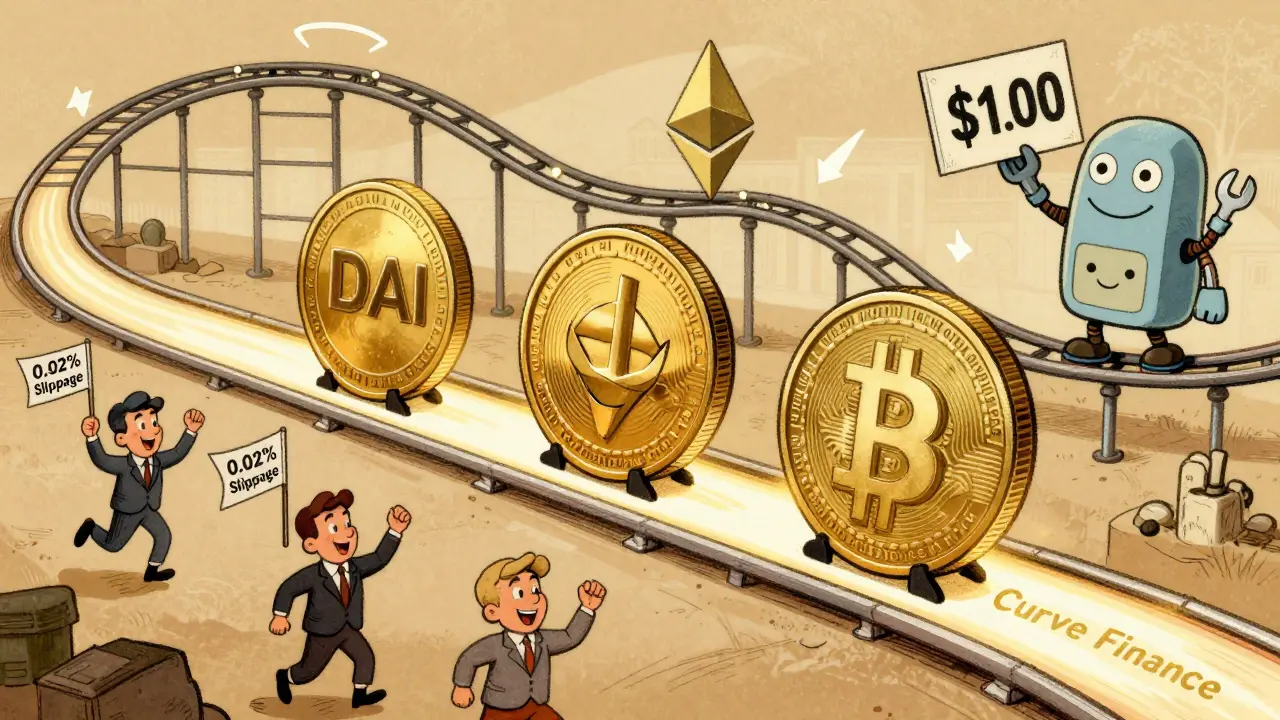
Curve Finance Ethereum Crypto Exchange Review: Best for Stablecoin Trading in 2026
by Johnathan DeCovic Jan 27 2026 19 CryptocurrencyCurve Finance is the most efficient decentralized exchange for stablecoin trading on Ethereum, offering low slippage, minimal fees, and deep liquidity. With $35B in Q1 2025 volume and crvUSD integration, it's the go-to for traders and institutions.
READ MORE
Uniswap V3 (Blast) Review: Features, Fees, and Yield Potential
by Johnathan DeCovic Apr 18 2025 24 CryptocurrencyA detailed review of Uniswap V3 (Blast) covering its L2 advantages, fees, yield hooks, user experience, and how it compares to other DEXs in 2025.
READ MORE