
Crypto AML: How Anti-Money Laundering Rules Are Changing Crypto
When you hear crypto AML, anti-money laundering rules applied to digital assets to stop criminal use of blockchain networks. Also known as cryptocurrency compliance, it's no longer a back-office concern—it's the line between staying open and getting shut down by regulators. In 2025, every crypto business, big or small, has to follow global AML standards. If you’re running a wallet, exchange, or even a DeFi protocol, you’re legally a VASP, Virtual Asset Service Provider—a term that includes any entity that moves, trades, or holds crypto for others. And if you don’t verify users, monitor transactions, or report suspicious activity, you’re not just taking a risk—you’re breaking the law.
It’s not just about KYC forms. AML compliance, a set of legal requirements forcing crypto businesses to detect, report, and prevent financial crime using blockchain data. means real-time monitoring, transaction tracing, and working with authorities. Look at what happened to KuCoin and BitMex: they weren’t shut down because they were bad companies—they were targeted because they ignored AML rules for years. The same goes for platforms in Thailand, Indonesia, and the EU. The MiCA, the European Union’s comprehensive crypto regulation that enforces AML, licensing, and transparency for all crypto service providers. isn’t optional. It’s the new baseline. Even decentralized platforms aren’t safe. Flash loan exploits? They’re not just technical bugs—they’re now flagged as potential money laundering patterns. The OFAC sanctions, U.S. government blacklists that block crypto transactions to sanctioned countries like Iran and North Korea. are enforced by blockchain analytics firms tracking every move. If your exchange doesn’t screen wallets, you’re liable.
And it’s not just exchanges. Airdrops, cross-chain bridges, and meme coins all fall under this umbrella. Projects like GDOGE and JF airdrops didn’t just fail—they were abandoned because they never built compliance into their model. Meanwhile, legitimate platforms like Orion Protocol and Elk Finance survive because they know the rules. You can’t ignore AML anymore. It’s not about trust—it’s about survival. Below, you’ll find real cases of what happens when crypto businesses ignore these rules, how regulators are catching violators, and what you need to do to stay legal—even if you’re just trading on the side.
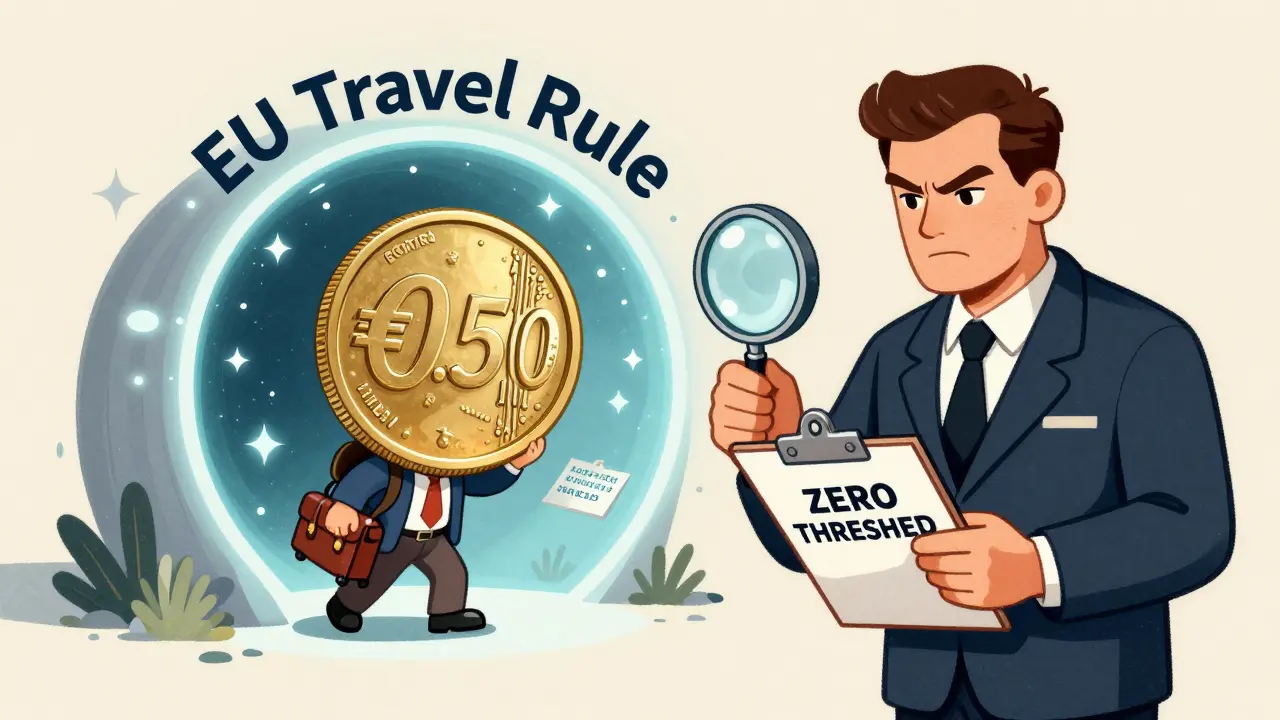
EU Crypto Travel Rule Compliance: What Zero Threshold Means for Your Transactions
by Johnathan DeCovic Dec 4 2025 23 CryptocurrencyThe EU's zero-threshold Travel Rule now requires full identity data for every crypto transaction, no matter how small. Here's how it works, who it affects, and what you need to know as a user or business.
READ MORE