
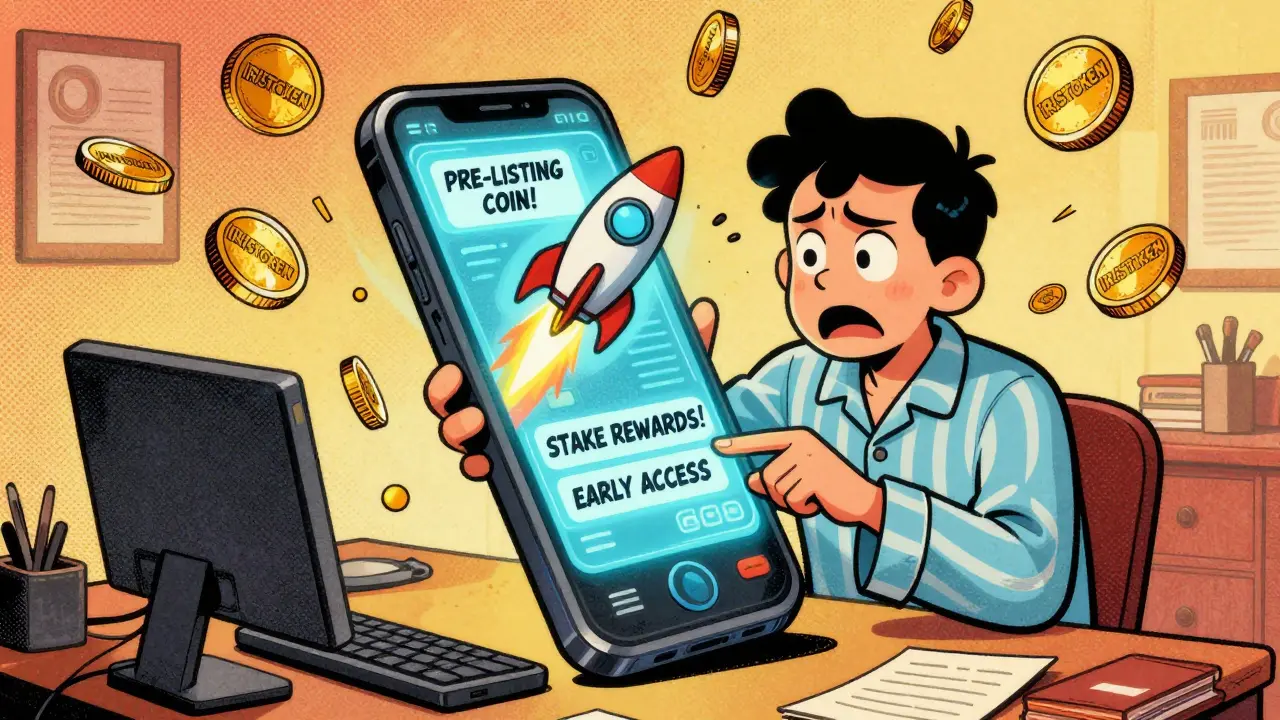
IRISTOKEN isn't just another cryptocurrency. It’s a utility token built around a full ecosystem designed to help crypto investors find high-potential projects before they blow up. Think of it less like Bitcoin and more like a premium subscription service - but instead of streaming movies, it gives you access to AI-driven alerts, staking rewards, and early access to new blockchain projects. If you’ve ever missed a coin that went 10x because you didn’t hear about it until it was already on CoinMarketCap, Iris Ecosystem tries to solve that exact problem.
How Iris Ecosystem Works
The core of Iris Ecosystem is its mobile app, called the Iris App. This isn’t a price tracker like CoinGecko. Instead, it uses a mix of artificial intelligence and human analysts to scan hundreds of new crypto projects every day. It looks for things most platforms ignore: low-market-cap tokens, unusual trading volume spikes, or team activity on GitHub that suggests real development. When it spots something promising, it sends an alert - often hours before the coin gets listed on major exchanges.
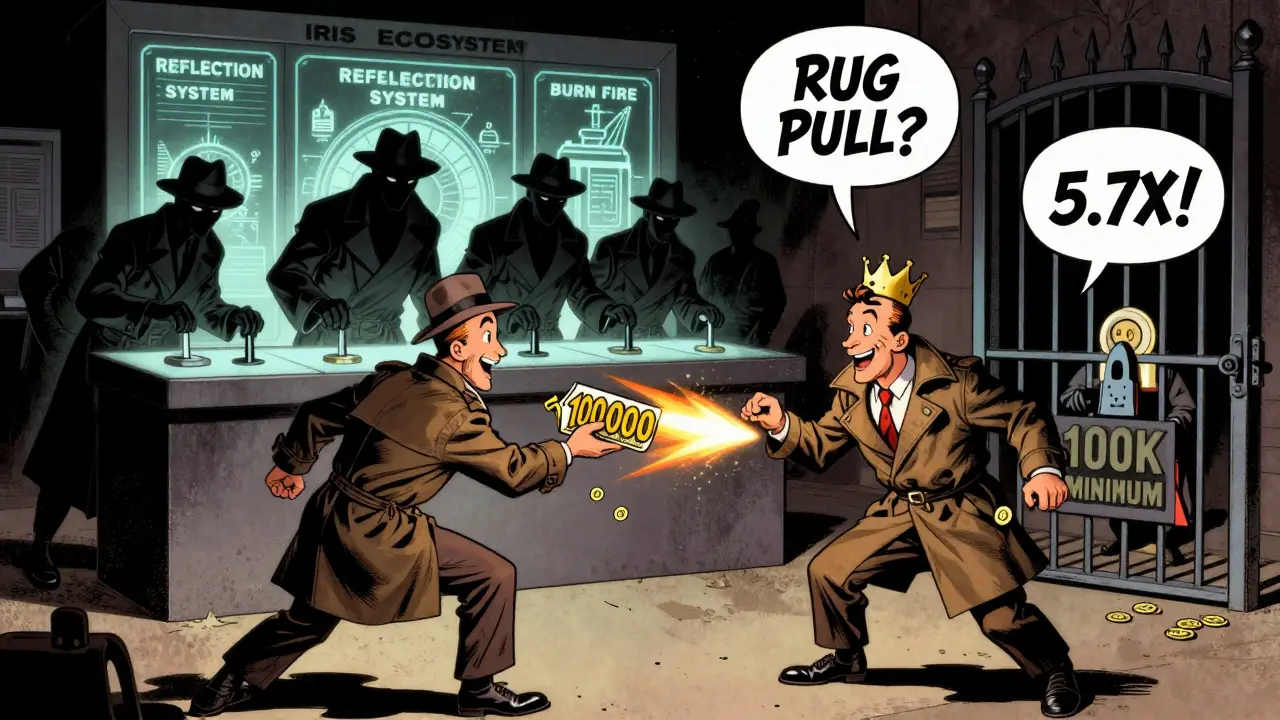
But you don’t get those alerts just by owning a few tokens. To unlock premium features like real-time alerts, exclusive project reviews, and early access to new launches, you need to hold at least 100,000 IRISTOKEN in your wallet and stake them. That’s about $300 at current prices. It’s a high barrier, but the idea is simple: if you’re serious about finding the next big coin, you’re expected to put skin in the game.
The Four Pillars of the Ecosystem
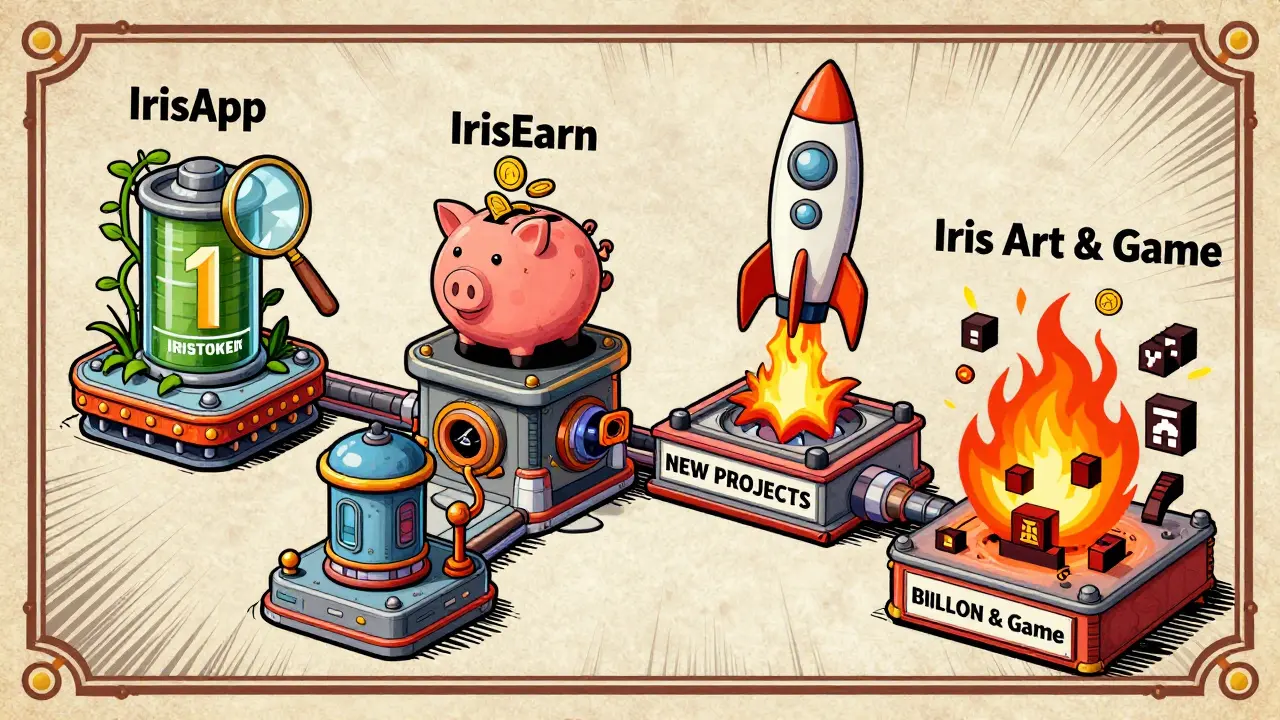
The Iris Ecosystem isn’t just one tool - it’s four interconnected platforms:
- IrisToken (IRISTOKEN): The main utility token that powers everything. It’s built on Binance Smart Chain (BSC), with plans to expand to Ethereum, Solana, and Avalanche.
- IrisEarn: A staking platform where you lock up your IRISTOKEN and earn passive rewards. Unlike typical staking, these rewards come from ecosystem revenue - not inflation.
- Iris App: The AI-powered research tool that sends alerts about pre-listing opportunities and high-yield staking projects.
- IrisPad: A launchpad for new blockchain projects. Projects that get approved here get exposure to the entire Iris user base.
There’s also Iris Art & Game, a side project for NFTs, where 40% of sales go toward buying back and burning IRISTOKEN - reducing the total supply over time.
Tokenomics: How IRISTOKEN Moves Money
IRISTOKEN has a fixed supply of 1 billion tokens. No more, no less. That’s different from many crypto projects that keep printing new coins. Here’s how the money flows:
- 50% to marketing: Funds ads, community growth, and app development.
- 25% to special holders: Anyone staking 100,000+ tokens gets a share of this. It’s called a reflection system - every time someone buys or sells IRISTOKEN, a small percentage gets redistributed to holders.
- 25% to burn and buyback: A portion of revenue is used to buy tokens off the market and destroy them. Less supply = potential price pressure upward.
There’s also a hidden layer: IRIS ARMY. This is a group of 50 active community members who get 1% of all ecosystem revenue every two weeks. If you’re not active in the Telegram group or don’t contribute to discussions, you get replaced. It’s like a loyalty program with teeth.
Why It’s Different - And Why It’s Risky
Most crypto research tools just show you data. Iris tries to tell you what it means. That’s powerful. For example, one user on Reddit reported making 3x on a project because the app flagged it 12 hours before it hit CoinMarketCap. Another user, however, said the alerts were often late - sometimes hours after the coin was already listed.
The biggest criticism? The 100,000-token requirement. It’s not just a gate - it’s a wall. If you don’t have $300 to spare, you’re locked out of the best features. That’s great for big holders, but it leaves out most new investors.
And then there’s the team. Nobody knows who built it. No LinkedIn profiles. No public names. Just a vague mention of “a team of experts.” That’s a red flag for some. Add to that the fact that no major audit firm like CertiK or PeckShield has reviewed the smart contract - and you’ve got a project that’s flying under the radar.
Real User Experiences
People either love it or hate it.
One user, @DeFiDiva on Twitter, shared how she made a 5.7x return in 72 hours after following an Iris App alert. That’s the dream.
But another user, @NewbieCrypto, lost $1,840 after following a recommendation that turned out to be a rug pull. The app claimed the project was “rigorously audited,” but clearly, that didn’t mean much.
Trustpilot gives it a 3.2/5 rating. 58% of users like the interface. 63% say the token requirement is too high. And on Telegram, over 40% of messages are about liquidity concerns - meaning people are worried they can’t sell if they need to.
Market Position and Future Plans
IRISTOKEN isn’t competing with Bitcoin. It’s competing with Messari, Nansen, and TokenTerminal - companies that charge thousands for institutional crypto research. Iris is trying to bring that same level of insight to retail investors.
As of early 2026, it holds about 2.3% of the crypto research tools market. Not huge - but growing. The team claims to have 45,000 active users.
The roadmap for 2026 includes:
- Expanding to Ethereum by Q2 2026 (delayed from 2022)
- Integrating with major decentralized exchanges by Q3
- Launching a Web3 social trading platform by Q4
But here’s the catch: if the AI alerts stop being accurate, or if the team disappears, the whole system collapses. There’s no backup plan. No big company behind it. Just code, tokens, and a community.
Who Is This For?
IRISTOKEN is not for beginners. If you’ve never used a wallet or don’t know what staking means, this will overwhelm you. It’s also not for people who want quick flips. The ecosystem rewards patience, research, and long-term holding.
It’s best for intermediate crypto users - people with 1-3 years of experience who are tired of guessing which new coin to buy. If you’re the type who spends hours reading Twitter threads and Discord chats looking for the next gem, this could save you time.
But if you’re risk-averse, or if you need transparency - team names, audits, clear roadmaps - you might want to look elsewhere.

Freddie Palmer
February 3, 2026 AT 09:14Taybah Jacobs
February 4, 2026 AT 18:55Udit Pandey
February 5, 2026 AT 04:01mahikshith reddy
February 7, 2026 AT 03:08Brendan Conway
February 8, 2026 AT 14:28Matt Smith
February 9, 2026 AT 16:40Alex Garnett
February 10, 2026 AT 07:24Ryan Chandler
February 12, 2026 AT 04:28Ajay Singh
February 12, 2026 AT 05:07Nathaniel Okubule
February 12, 2026 AT 14:17Joshua Herder
February 13, 2026 AT 18:32Brittany Coleman
February 15, 2026 AT 02:02laura mundy
February 16, 2026 AT 13:33Mendy H
February 17, 2026 AT 17:09sabeer ibrahim
February 18, 2026 AT 08:50David Bain
February 19, 2026 AT 08:11Deeksha Sharma
February 19, 2026 AT 15:43Katie Haywood
February 19, 2026 AT 17:10