
US Sanctions Syria: How Crypto Regulations Are Affected by Global Geopolitics
When the US sanctions Syria, a targeted financial blockade imposed by the US government to restrict economic activity with a regime accused of human rights violations and weapons development. Also known as Syrian sanctions, it’s not just about blocking bank transfers—it’s about cutting off every possible financial escape route, including cryptocurrency. This isn’t theoretical. It’s happening right now, and crypto exchanges, wallets, and even DeFi protocols are caught in the crosshairs.
These sanctions aren’t isolated. They’re part of a broader pattern tied to OFAC compliance, the legal framework enforced by the US Treasury’s Office of Foreign Assets Control that requires financial institutions to screen transactions and freeze assets tied to sanctioned entities. Also known as US financial sanctions, it’s the reason exchanges like KuCoin and BitMex had to shut down services for users in Iran, North Korea, and now Syria. If you’re running a crypto platform and you ignore OFAC rules, you don’t just lose customers—you risk criminal charges, multi-million dollar fines, or a complete shutdown. That’s why no legitimate exchange lets you send crypto to a Syrian wallet address. Even decentralized platforms can’t fully escape this. If a DeFi protocol’s smart contract interacts with a blacklisted wallet, it becomes a legal liability overnight.
The ripple effect goes beyond borders. Countries like Indonesia and Thailand are tightening their own crypto rules because they’re under pressure from the US and EU to align with global sanctions. When crypto sanctions, the use of blockchain technology to enforce financial restrictions on individuals, organizations, or entire nations. Also known as blockchain sanctions, it’s not just about freezing wallets—it’s about tracing every transaction through on-chain analytics, AI-driven monitoring, and real-time flagging systems become standard, even small P2P trades can get flagged. That’s why platforms like Jswap and Unielon disappeared—they were used as backdoors for sanctioned activity. And now, regulators are watching harder than ever.
You’ll find posts here that show exactly how this plays out: how exchanges get shut down for ignoring sanctions, how Iranian users are forced into risky P2P networks, and why memecoins with no utility—like CCDOG or DOGE—are sometimes used as cover for laundering. These aren’t random stories. They’re connected. Every no-KYC exchange shutdown, every frozen wallet, every airdrop scam that targets users in restricted regions—it all ties back to the same root: US sanctions Syria and the global enforcement machine it triggered. What follows is a collection of real cases, breakdowns, and warnings from the front lines of crypto compliance. You won’t find fluff. Just facts about who’s being blocked, why, and how to stay clear of the same fate.
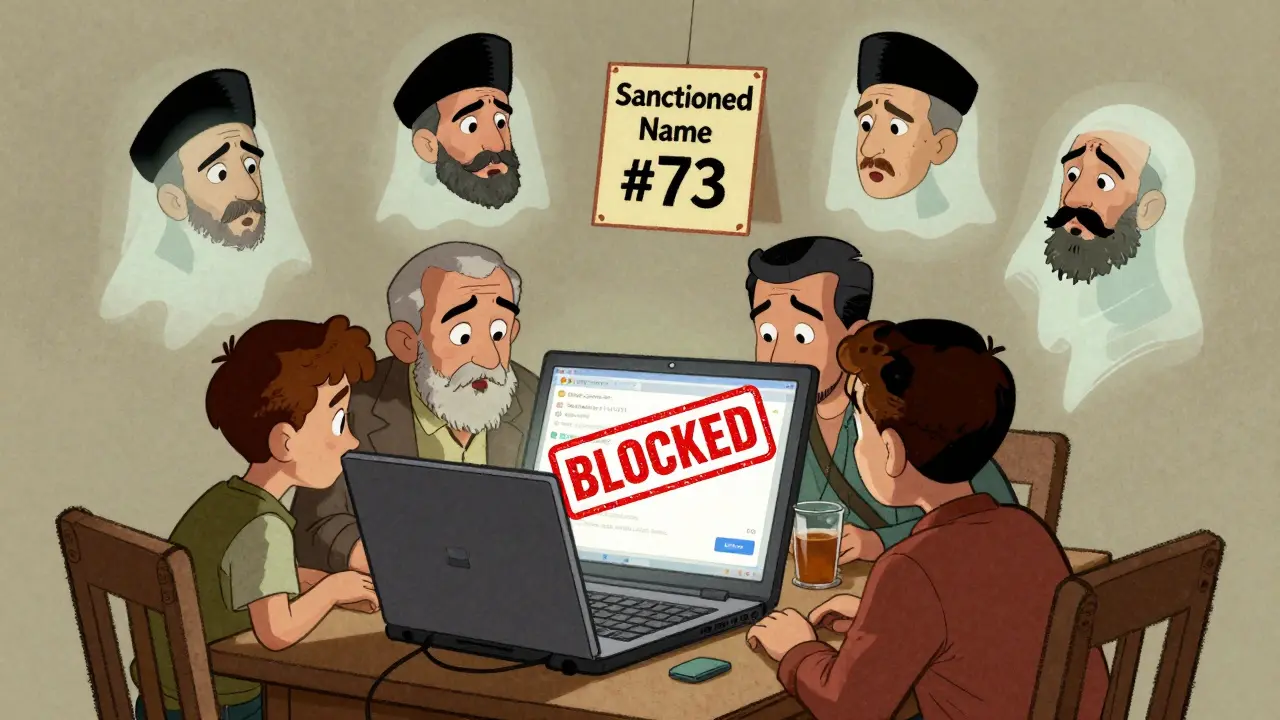
Syria Crypto Ban Complications from US Sanctions in 2025
by Johnathan DeCovic Dec 8 2025 21 CryptocurrencyDespite U.S. sanctions relief in 2025, Syria's crypto scene remains locked down by residual designations, banking restrictions, and zero local regulations. Users face frozen accounts, $500 limits, and risky workarounds.
READ MORE