
Crypto Scams 2025: How New Tricks Are Stealing Crypto and How to Avoid Them
When you hear crypto scams 2025, modern fraud schemes targeting cryptocurrency users through fake platforms, manipulated airdrops, and deceptive DeFi protocols. Also known as crypto fraud, these scams have evolved from simple phishing emails to AI-driven impersonations that look like real projects. In 2025, scammers aren’t just guessing your password—they’re using your social media posts to build trust, cloning legitimate websites down to the favicon, and even creating fake customer support teams that answer in real time.
One of the biggest threats is the fake airdrop, a lure promising free tokens from well-known platforms like CoinMarketCap or Binance, but designed to steal wallet keys. Also known as crypto airdrop scams, they often appear as pop-ups, Discord DMs, or fake Twitter threads with verified-looking blue checks. Projects like ART Campaign airdrop, a non-existent reward from Around Network, and WKIM Mjolnir airdrop, a fake KingMoney token offer have already trapped users into signing malicious approvals that drain wallets. These aren’t just scams—they’re engineered to exploit trust in brands you already use.
Then there’s the rise of DeFi scams, fraudulent protocols disguised as decentralized exchanges or yield farms that vanish after collecting funds. Also known as rug pulls, these often target users looking for quick returns. Projects like JF airdrop, a token that dropped to $0 after a short hype and GDOGE, a meme coin with fake BNB rewards show how even projects with real-looking websites can be dead on arrival. These scams rely on FOMO and the illusion of legitimacy—no team, no audit, no roadmap, just a slick landing page and a Twitter bot army.
And don’t forget the crypto exchange scams, fake platforms like Unielon that don’t exist but collect deposits before disappearing. Also known as fake crypto platforms, they mimic real exchanges with similar names, fake reviews, and even customer service chatbots. In 2025, these scams are often promoted through YouTube ads and TikTok influencers who don’t disclose they’re paid. The result? People send their ETH, BTC, or SOL to wallets controlled by criminals—and there’s no customer support to call.
The common thread? All these scams exploit one thing: your trust. Whether it’s the name of a big brand, the promise of free money, or the fear of missing out, scammers are counting on you to act before you think. The good news? You don’t need to be a tech expert to avoid them. Check for official links. Never connect your wallet to a site you found in a DM. If it sounds too good to be true—like a $500 airdrop from a project with zero social presence—it is. And if a platform doesn’t have a public team, a live audit, or a clear purpose, walk away.
Below, you’ll find real case studies of scams that happened in 2024 and 2025—how they worked, who got burned, and exactly what to look for before you click, connect, or send anything. This isn’t theory. These are the exact traps people are falling into right now. Learn from them before it’s your turn.
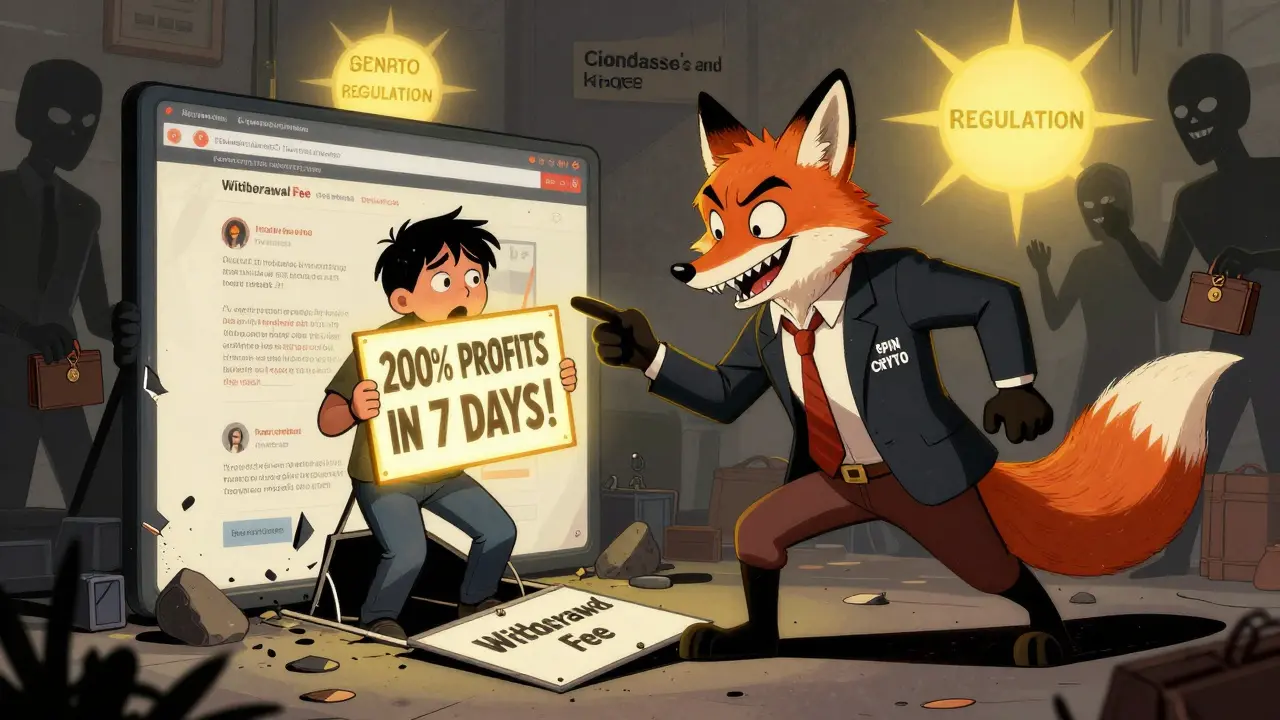
Spin Crypto Exchange Review: Is It Legit or a Scam?
by Johnathan DeCovic Dec 4 2025 25 CryptocurrencySpin Crypto Exchange is not a legitimate platform-it's a scam. No reputable source lists it, and all signs point to fraud. Learn how these scams work and how to protect your crypto.
READ MORE