
OFAC Syria: How Sanctions Block Crypto Access and What It Means for Users
When you hear OFAC Syria, the U.S. Office of Foreign Assets Control’s restrictions on financial activity tied to Syria. Also known as Syrian financial sanctions, it’s not just about politics—it’s about frozen wallets, blocked transactions, and exchanges shutting down access to entire regions. These aren’t vague warnings. OFAC publishes real lists of wallet addresses, exchange IPs, and even names of individuals tied to Syria. If your crypto moves through one of those addresses, your transaction gets rejected. No appeal. No second chance.
Major exchanges like Binance, Coinbase, and Kraken don’t ignore this. They’re fined millions if they let a single dollar from a sanctioned region slip through. So they don’t take chances. If you’re in Syria—or even if your wallet once interacted with a Syrian address—you’re locked out. That’s why users turn to P2P platforms, decentralized exchanges, or crypto mixers. But those come with their own risks: scams, stolen funds, and no recourse if something goes wrong. The same rules that stop money laundering also stop ordinary people from buying food, paying for internet, or sending remittances to family. It’s not just about criminals—it’s about collateral damage.
OFAC sanctions, a U.S. government tool to enforce economic restrictions. Also known as financial embargoes, they’re not limited to Syria. You’ll see the same pattern with Iran, North Korea, and Crimea. The system is global. Exchanges use blockchain forensics tools like Chainalysis and Elliptic to scan every transaction in real time. If a wallet has ever touched a sanctioned address—even years ago—it gets flagged. There’s no gray area. And when an exchange gets caught, they don’t just pay a fine. They lose licenses, face criminal charges, or shut down entirely. That’s why platforms like KuCoin and BitMex moved their operations overseas. Compliance isn’t optional—it’s survival. For users, this means the crypto world is split: those who can access regulated platforms, and those who can’t. There’s no middle ground.
blockchain enforcement, the use of on-chain data to track and freeze illicit activity. Also known as crypto compliance monitoring, it’s the engine behind OFAC’s reach. Every transaction leaves a public trail. Even if you use a privacy tool, your past activity might still tie you to a sanctioned entity. And once you’re on the list, you’re on it forever unless you prove you’re clean—a process that rarely exists for regular users. This isn’t science fiction. In 2024, over $300 million in crypto was frozen under OFAC orders. Most of it wasn’t from terror groups. It was from ordinary people who just used a wallet that once received a transaction from a Syrian address.
What you’ll find below isn’t theory. It’s real cases: exchanges shut down for touching Syria, wallets frozen without warning, and users left with no way to recover their funds. You’ll see how the same rules that target Syria also trap Iranian users, how crypto exchanges react under pressure, and why even a single wrong transaction can ruin your access to the entire ecosystem. This isn’t about choosing sides. It’s about understanding how the system actually works—and what it means for you if you’re on the wrong side of the line.
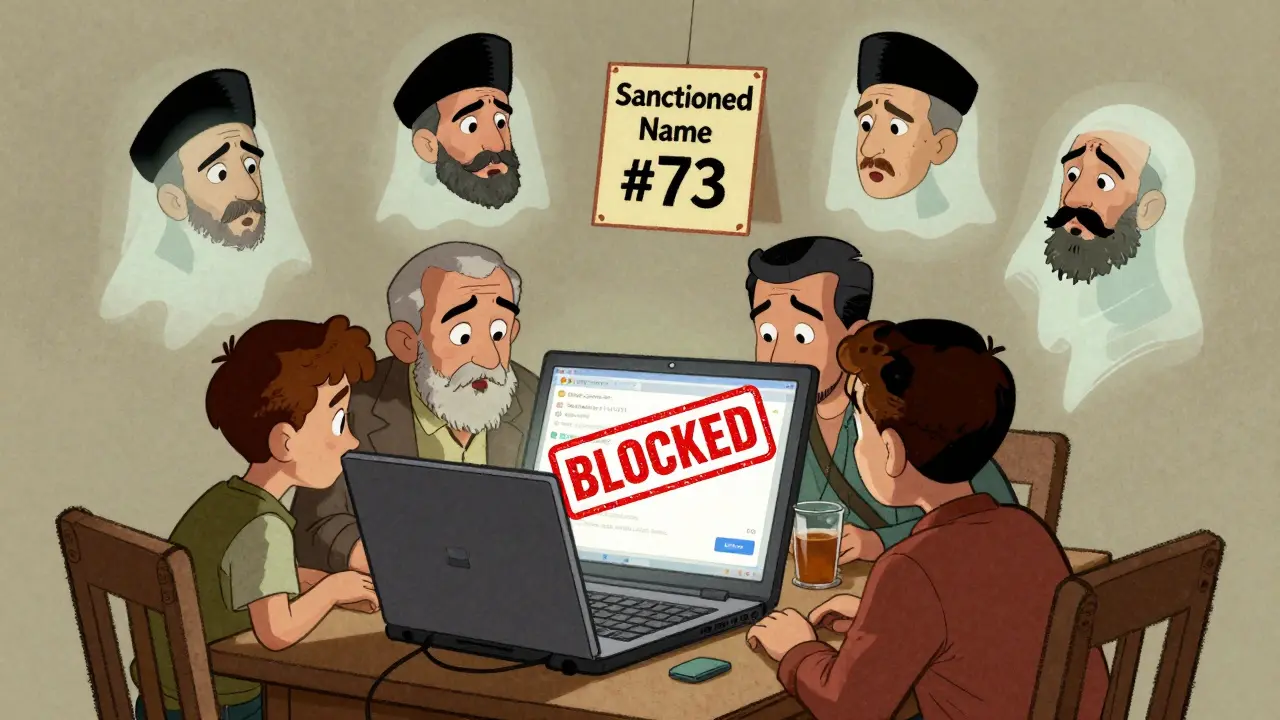
Syria Crypto Ban Complications from US Sanctions in 2025
by Johnathan DeCovic Dec 8 2025 21 CryptocurrencyDespite U.S. sanctions relief in 2025, Syria's crypto scene remains locked down by residual designations, banking restrictions, and zero local regulations. Users face frozen accounts, $500 limits, and risky workarounds.
READ MORE