

Can you legally hold cryptocurrency in Saudi Arabia? The answer isn’t simple. There’s no outright ban, but there’s also no official approval. It’s a gray zone - and that’s exactly why so many Saudis are still buying, selling, and holding crypto.
It’s Not Illegal, But It’s Not Legal Either
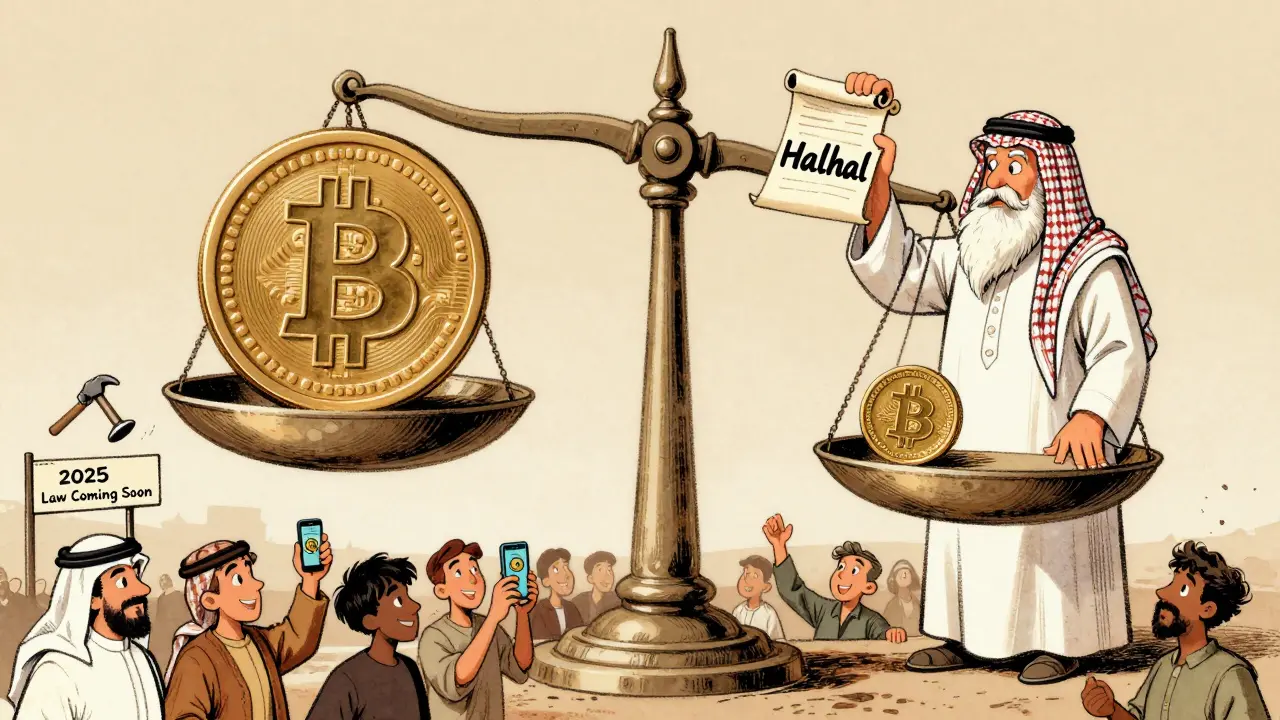
Saudi Arabia doesn’t have a law that says, "You can’t own Bitcoin." But it also doesn’t have a law that says, "You can." That’s the reality. The Saudi Central Bank (SAMA) and the Capital Market Authority (CMA) have never licensed crypto exchanges or recognized digital assets as legal tender. In 2018, a government committee called virtual currencies "illegal and unlicensed." In 2019, the Ministry of Finance warned citizens not to invest in them, saying they’re "not regulated by any official entity." But here’s the twist: in 2023, a top religious authority issued a fatwa - a formal Islamic legal opinion - stating that using Bitcoin and other cryptocurrencies doesn’t violate Sharia law. That shifted the conversation. For many Saudis, this wasn’t just a religious green light; it was a signal that the government might be reconsidering its stance.
People Are Still Buying Crypto - Millions of Them
Despite the lack of clear rules, crypto adoption is booming. Around 4 million Saudis - about 11.4% of the population - own some form of digital asset. That’s more than double the global average. Transaction volumes jumped 153% between July 2023 and June 2024, hitting over $31 billion. By 2025, the market is expected to generate nearly $500 million in revenue.
Why? Because Saudi Arabia has one of the youngest populations in the world. Over 63% of people are under 30. They’re tech-savvy, curious, and unafraid to explore new financial tools. Many use peer-to-peer platforms like Paxful or LocalBitcoins to buy Bitcoin with cash or bank transfers. Others use international exchanges like Binance or Kraken, accessing them through VPNs since local banks are blocked from supporting crypto.
Banks Are Blocked. Institutions Are Not.
Here’s where it gets interesting. Regular people can’t use Saudi banks to buy crypto. SAMA has banned financial institutions from handling digital assets unless they get special permission - and no one has gotten it yet. Credit cards, bank transfers, and ATM withdrawals tied to crypto purchases are all blocked.
But at the institutional level? The story is completely different. The Saudi government is actively building blockchain infrastructure. SAMA is working with the UAE, China, Thailand, and Hong Kong on the mBridge is a multi-central bank digital currency (CBDC) project designed for cross-border payments. This isn’t about Bitcoin. It’s about digitizing bonds, trade finance, and government assets using blockchain technology.
Global giants like Goldman Sachs and Rothschild are setting up tokenization platforms in Saudi Arabia. They’re not trading Ethereum. They’re turning real estate, oil contracts, and sovereign debt into digital tokens on private blockchains. This isn’t speculation - it’s institutional finance, and it’s being encouraged by the state.

Taxes? No Capital Gains - But Watch Out
If you make money holding crypto, you don’t pay capital gains tax in Saudi Arabia. That’s right - no tax on profits from Bitcoin, Ethereum, or Solana. The government treats crypto as an asset, not currency, and doesn’t tax personal holdings.
But if you run a business that accepts crypto, things change. Your company pays 20% corporate income tax. Add 2.5% zakat (Islamic charitable tax), and you’re looking at 22.5% total. That’s not a crypto-specific rate - it’s just how businesses are taxed in the Kingdom.
And while there’s no official AML/KYC system for crypto, the Anti-Money Laundering Law of 2017 still applies. It defines "funds" broadly - including "any economic resource of value, whether tangible or intangible." That means if you’re moving large amounts of crypto and the authorities notice, you could still be investigated under existing financial crime laws.
What’s Coming in 2025? A New Law
Everyone expects a major regulatory shift by mid-2025. The government is drafting legislation that will finally define how crypto works in Saudi Arabia. The goal? To protect investors without killing innovation.
Experts believe the new law will likely:
- License local crypto exchanges under SAMA supervision
- Require KYC for all users
- Allow institutional trading with strict reporting
- Keep retail trading open but monitored
- Formally recognize crypto as a financial asset, not currency
This isn’t about banning crypto. It’s about bringing it into the light. Saudi Arabia wants to be a leader in digital finance - not just a place where people trade in secret.
What Should You Do Right Now?
If you’re holding crypto in Saudi Arabia, here’s what you need to know:
- You won’t get arrested for owning Bitcoin.
- You won’t pay tax on gains - unless you’re a business.
- Don’t use local banks to buy or sell crypto. Use peer-to-peer or international platforms.
- Keep records of your transactions. If regulations change, you’ll need proof.
- Don’t advertise crypto services using Saudi government branding - you’ll get fined.
And if you’re thinking of starting a crypto business? Wait for the 2025 law. Jumping in now means operating in a legal vacuum. You could be shut down tomorrow - or become the first licensed exchange next year.
Why This Matters Beyond Saudi Arabia
Saudi Arabia isn’t just a market. It’s a test case. It’s showing how a conservative, religious state can quietly embrace blockchain without fully endorsing crypto. The mBridge project proves they trust the technology - just not the wild west of retail trading.
Their approach? Allow innovation at the top (banks, governments, corporations), while keeping the bottom (individuals) in a gray zone. That’s not chaos - it’s control. And it might be the model other countries follow.
For now, crypto in Saudi Arabia is like driving without speed limits - no one’s pulling you over, but the cops are watching. And soon, they’ll put up signs.
Is it legal to hold Bitcoin in Saudi Arabia?
Yes, you can legally hold Bitcoin and other cryptocurrencies in Saudi Arabia. There is no law that bans personal ownership. However, crypto is not recognized as legal tender, and there is no formal regulatory framework for individual traders. This creates a legal gray area where ownership is tolerated but not officially protected.
Can I use my Saudi bank account to buy crypto?
No. Saudi banks are prohibited by the Saudi Central Bank (SAMA) from handling cryptocurrency transactions. Any attempt to link your bank account to a crypto exchange will likely be blocked. Most users bypass this by using peer-to-peer platforms or international exchanges with non-bank payment methods like cash deposits or crypto ATMs.
Do I have to pay tax on crypto profits in Saudi Arabia?
No, individuals do not pay capital gains tax on crypto profits. The government treats crypto as an asset, not income, so personal gains are not taxed. However, businesses that trade or accept crypto must pay 20% corporate income tax plus 2.5% zakat. This distinction is important - personal holding is tax-free; business activity is not.
Why are institutions allowed to use blockchain if crypto is restricted?
Saudi Arabia separates blockchain technology from retail cryptocurrency. The government supports blockchain for institutional use - like tokenizing bonds, trade finance, and government assets - because it improves transparency and efficiency. But it fears unregulated retail trading. So while Goldman Sachs can launch a tokenized bond platform, you can’t open a crypto brokerage in Riyadh without waiting for the 2025 law.
Is there a risk of being investigated for holding crypto?
Yes, if your activity looks suspicious. While owning crypto isn’t illegal, Saudi Arabia’s Anti-Money Laundering Law treats digital assets as "intangible economic resources." Large, unexplained transfers or frequent trading could trigger investigation under existing financial crime laws. Keep records of your transactions, avoid cash-based P2P deals with unknown parties, and don’t use Saudi government branding to promote crypto services.
Will Saudi Arabia ban crypto in the future?
No, a full ban is unlikely. The government is actively developing its own digital currency (CBDC) and partnering with global financial institutions on blockchain projects. The 2025 legislation is expected to bring crypto under regulated supervision - not eliminate it. The goal is to control and benefit from digital assets, not reject them.
Can I trade altcoins like Solana or Cardano in Saudi Arabia?
Yes. There is no law that singles out specific cryptocurrencies. Whether you hold Bitcoin, Ethereum, Solana, or Dogecoin, the legal status is the same: not illegal, not regulated. However, altcoins are more popular in Saudi Arabia than in most countries, with youth-driven demand exceeding global averages. This reflects higher risk tolerance and a strong interest in decentralized finance (DeFi) platforms.
What happens if I start a crypto business in Saudi Arabia now?
You’re operating without a license, which is risky. The Ministry of Finance has warned that using Saudi national symbols to promote crypto services can lead to legal action. There are no established compliance procedures (KYC/AML) because crypto isn’t recognized. If the 2025 law passes, you may be forced to shut down or restructure. Waiting for regulation is the safer path.
Is the Saudi CBDC the same as Bitcoin?
No. The Saudi CBDC is a central bank digital currency - a digital version of the riyal, controlled entirely by the government. Bitcoin is decentralized, not issued by any authority. The CBDC is designed for banking and government use; Bitcoin is for peer-to-peer trading. The government supports the CBDC and opposes unregulated crypto like Bitcoin - but both use blockchain technology.
How does the 2025 law affect everyday crypto users?
It will likely make things safer. You’ll be able to use licensed local exchanges instead of risky offshore platforms. KYC checks will be required, protecting you from scams. You’ll have clearer rules on reporting and taxation. The law won’t stop you from holding crypto - it will give you a legal way to trade it, with more protection and fewer risks.
For now, crypto in Saudi Arabia is a quiet revolution. No headlines. No parades. Just millions of young people buying Bitcoin on their phones, while the government builds the future behind closed doors.

Will Lum
February 11, 2026 AT 04:21Sanchita Nahar
February 12, 2026 AT 07:09Ben Pintilie
February 13, 2026 AT 01:23Sakshi Arora
February 14, 2026 AT 22:16bala murali
February 16, 2026 AT 21:12Ekaterina Sergeevna
February 17, 2026 AT 05:52Desiree Foo
February 18, 2026 AT 18:00Kaz Selbie
February 20, 2026 AT 12:42Donna Patters
February 21, 2026 AT 15:10Peggi shabaaz
February 22, 2026 AT 16:58Holly Perkins
February 23, 2026 AT 15:42Robbi Hess
February 23, 2026 AT 17:54Keturah Hudson
February 24, 2026 AT 20:24Ace Crystal
February 25, 2026 AT 08:12Brittany Meadows
February 25, 2026 AT 16:28