

When you trade Bitcoin, mine Ethereum, or swap tokens on a decentralized exchange, you’re not just participating in a new kind of money-you’re creating a paper trail the IRS is actively watching. Since 2014, the IRS has treated cryptocurrency as property, not currency. That means every trade, every sale, every airdrop, and even every gift could trigger a taxable event. And since 2020, the IRS has forced every taxpayer to answer a simple but dangerous question on Form 1040: "At any time during [the taxable year], did you receive, sell, send, exchange or otherwise acquire any financial interest in any virtual currency?" Answer "no" when you should’ve said "yes," and you’re playing with fire.
Don’t Wait for the Audit Letter
Many people think they can handle crypto taxes on their own. They use CoinTracker or Koinly, file their returns, and assume they’re fine. But here’s the truth: crypto tax compliance isn’t just about numbers. It’s about legal exposure. If you’ve been trading since 2017, you likely have dozens of transactions. Did you track the fair market value of each Bitcoin you bought in 2018? Did you record the exact time and price of every ETH-to-SOL swap? Most people didn’t. And the IRS doesn’t care if you "forgot." If you’ve ever failed to report crypto gains, you’re already at risk. The IRS now has data-sharing agreements with major exchanges like Coinbase, Kraken, and Binance US. They know who traded, how much, and when. If your return doesn’t match their records, you’ll get a notice. And once that happens, it’s too late to just "fix it" with an amended return. That’s when you need a lawyer-before the notice arrives.These 5 Scenarios Require Legal Help Immediately
- You received cryptocurrency from an Initial Coin Offering (ICO) and never reported it.
- You mined crypto and didn’t report the income at fair market value on the day you received it.
- You used crypto to buy a house, car, or other asset and didn’t calculate the capital gain.
- You transferred crypto between wallets you own and didn’t track cost basis across platforms.
- You’re being contacted by the IRS or received a CP2000 notice about unreported crypto income.
What Makes a Good Crypto Tax Lawyer?
Not every tax attorney knows crypto. And most CPAs don’t understand blockchain law. The best legal help comes from someone who’s both a licensed attorney and a certified public accountant (CPA). These dual-qualified professionals can reconstruct your transaction history, calculate gains and losses accurately, and communicate with the IRS using language they understand. Look for someone with 15+ years in tax law. Why? Because crypto regulations aren’t written in stone-they’re interpreted through existing laws. The IRS uses the same statutes from the 1980s to tax crypto as they do for stocks and real estate. A good lawyer doesn’t need to be a blockchain expert. They need to know how to apply old rules to new tech. Ask them: "How would you handle a situation where I received 10 ETH in 2021 as payment for freelance work, then sold it in 2023 for a $15,000 profit?" If they hesitate or give a vague answer, move on. Also, ask what software they use. Do they rely on Koinly, TokenTax, or CoinTracker? Or do they have their own system for tracking cost basis across multiple wallets and chains? The right lawyer will ask for your transaction history, not just your tax return.
Red Flags to Avoid
Beware of lawyers who promise you’ll "never pay taxes" on crypto. That’s fraud. Also avoid anyone who says they’re "the only expert in crypto tax law." There’s no such thing. The rules are still evolving. The best lawyers admit uncertainty. They say: "Here’s what the IRS currently says. Here’s how courts have ruled. Here’s where the risk lies. Let’s get you compliant." Another red flag: lawyers who charge flat fees for "crypto tax audits." Crypto compliance isn’t a one-size-fits-all service. If you’ve done 500 trades over 5 years, your case is different from someone who bought $5,000 of Bitcoin and held it. Hourly rates or project-based fees are normal. Expect $250-$500/hour. It’s expensive-but cheaper than an IRS criminal investigation.What You Need to Bring to Your First Meeting
Don’t go in blind. Gather:- All wallet addresses you’ve ever used (including cold wallets)
- Exchange account statements from Coinbase, Kraken, Binance, etc.
- Records of crypto-to-fiat trades (even if you used a peer-to-peer app)
- Proof of purchases (receipts, bank transfers, screenshots)
- Any IRS notices or letters you’ve received
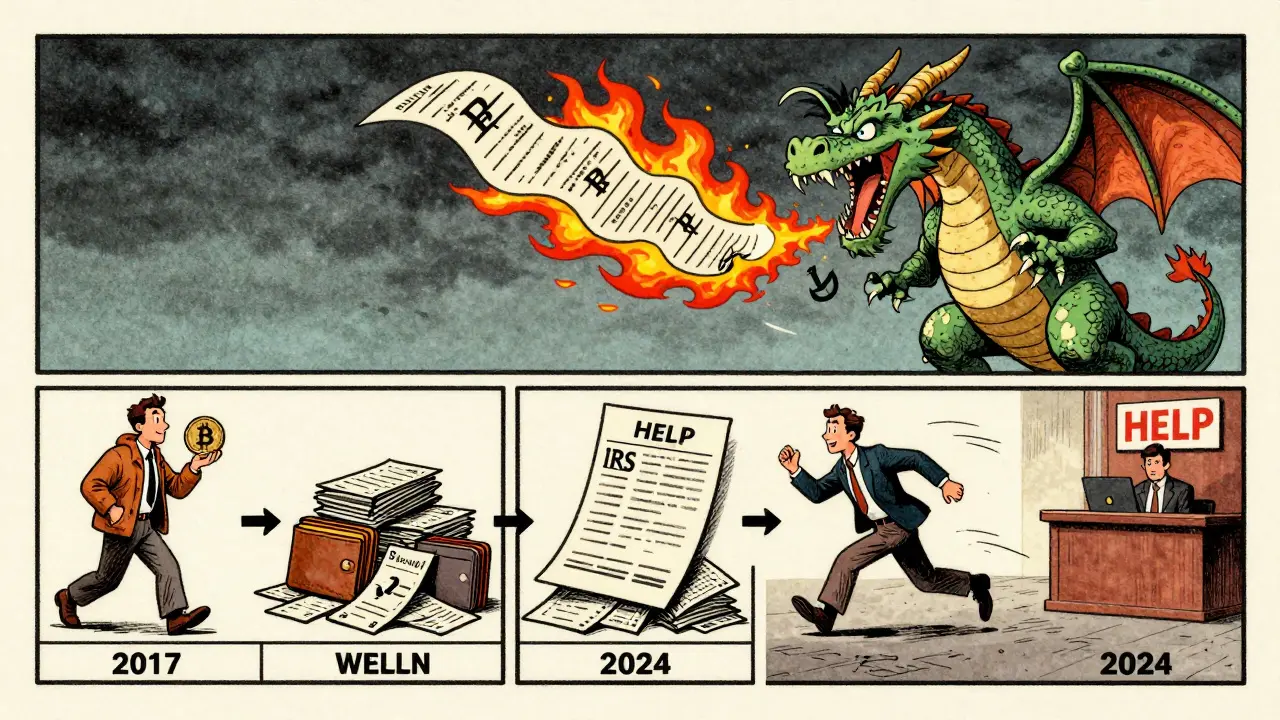
It’s Not Just About Taxes
Crypto compliance isn’t just about avoiding penalties. It’s about protecting your future. If you’re a business owner who accepted crypto as payment, you might be liable for payroll taxes, sales tax, or even securities violations if you issued tokens. A lawyer can help you structure your operations so you don’t accidentally violate SEC rules. They can also help you set up internal record-keeping systems so next year’s tax season doesn’t become a nightmare. And if you’re planning to move crypto to a trust, gift it to family, or use it in an estate plan? That’s estate law. That’s a whole other layer of complexity. A crypto-savvy lawyer can help you avoid unintended tax consequences that could cost your heirs tens of thousands.Bottom Line: Don’t Guess. Act.
The window for easy compliance is closing. The IRS is ramping up enforcement. They’ve hired blockchain analysts. They’re using AI to match wallet addresses to tax returns. You can’t outsmart them. But you can out-prepare them. If you’ve ever traded crypto and didn’t keep perfect records, you’re already behind. The best time to hire a crypto tax lawyer was yesterday. The second-best time is today. Don’t wait for a letter. Don’t hope it’ll go away. Don’t rely on software alone. Get legal help before the audit starts. You’ll pay less. You’ll sleep better. And you’ll avoid a lifetime of legal headaches.Do I need a lawyer if I only bought Bitcoin once and never sold it?
No, you don’t need a lawyer in this case. If you bought Bitcoin and held it without selling, trading, or using it to pay for goods, you have no taxable event. The IRS only cares about sales, exchanges, or spending crypto. But if you ever plan to sell-even years from now-start tracking your purchase date and cost basis. That’s your defense later.
Can my CPA handle my crypto tax issues, or do I need a lawyer?
A CPA can prepare your return, but they can’t represent you in an IRS audit if there’s suspicion of fraud or willful noncompliance. Only a licensed attorney can give you legal advice, negotiate with the IRS on your behalf, and invoke attorney-client privilege. If you’ve underreported crypto income, a CPA can help you file an amended return-but if the IRS is already investigating, you need a lawyer to protect your rights.
What happens if I didn’t report crypto gains from 2019 to 2023?
The IRS can audit you for up to six years if they suspect substantial underreporting (over 25% of income). If you didn’t report crypto gains from 2019-2023, you’re at risk. But if you proactively contact a crypto tax lawyer and enter the IRS Voluntary Disclosure Program, you can pay back taxes, interest, and a reduced penalty-often just 15-25% of the tax due-instead of 75% or criminal charges. The key is acting before the IRS contacts you.
Is crypto staking taxable? Do I need a lawyer for that?
Yes, staking rewards are taxable as ordinary income on the day you receive them. If you’ve been staking for years and never reported it, you’re at risk. A lawyer can help you calculate the fair market value of each reward, determine if any were from unregistered securities, and help you file amended returns. If you’re a large-scale staker, you may also need advice on whether your activity qualifies as a business-this affects deductions and self-employment taxes.
Can I be audited even if I didn’t make a profit on crypto?
Absolutely. The IRS doesn’t care if you lost money. They care if you reported the transaction. If you traded ETH for SOL and didn’t report it, you’re still violating the law-even if the value went down. The IRS sees every transaction. If they see unreported activity, they’ll audit you to find out why. A lawyer can help you explain the transactions, prove you didn’t intend to hide them, and avoid penalties.

prasanna tripathy
March 4, 2026 AT 05:32Man, I just realized I forgot about my 2020 ETH-to-DAI swap. I used CoinTracker but never double-checked the FMV on that one day in August. Guess I’m one of those people the post warned about.
Went back and dug up my old MetaMask logs. Took me 3 hours. Now I’m just praying the IRS doesn’t flag me. Thanks for the wake-up call, OP.
James Burke
March 4, 2026 AT 18:06Yeah, I used to think crypto taxes were just ‘track your buys and sells’ - until I got a CP2000 last year. Turns out, my 12 DEX trades weren’t even in Koinly. The IRS had them all from Kraken.
Hired a crypto tax lawyer after that. Paid $3k. Saved me from a 75% penalty. Worth every penny. Don’t wait.
Jonathan Chretien
March 6, 2026 AT 01:44Wow. The IRS is basically the NSA with a tax form. 🤡
They’re not after money - they’re after *control*. Every transaction, every wallet, every timestamp… they’re building a blockchain surveillance state. And we’re handing them the keys.
It’s not tax evasion. It’s digital sovereignty. 🕵️♂️
Bill Pommier
March 8, 2026 AT 00:08It is a fundamental failure of personal responsibility to assume that software will do your tax compliance for you. The IRS does not operate on goodwill. It operates on precedent, statute, and audit trails. You are not entitled to ignorance. You are not entitled to convenience. You are not entitled to forgetfulness.
There is no such thing as "I didn't know." There is only "I chose not to know." And that is legally indefensible.
Olivia Parsons
March 8, 2026 AT 23:18I’m a CPA, and I see this all the time. People think if they don’t make a profit, it doesn’t count. But the IRS doesn’t care about profit - they care about *transactions*. Even a $50 swap counts.
And yes, staking rewards? Taxable on receipt. Even if you didn’t sell. Even if you reinvested. Even if you lost it later. It’s income. Period.
Nick Greening
March 10, 2026 AT 17:41Wait, so if I bought BTC in 2017 and held it, and never sold - I’m fine? But if I used it to buy a pizza in 2021? I owe taxes?
So the government is taxing me for spending my own money? That’s not taxation. That’s theft. And now I’m supposed to hire a $500/hour lawyer to explain why I ate pizza? This is insane.
Issack Vaid
March 11, 2026 AT 01:43Let’s be real - this isn’t about tax compliance. It’s about the IRS finally catching up to a decentralized system they can’t control. They’re terrified of crypto because it undermines their monopoly on money.
So they weaponize tax law. They scare people into compliance. And they make lawyers rich in the process.
Meanwhile, the average person just wants to trade tokens without becoming a forensic accountant.
Shawn Warren
March 11, 2026 AT 06:50You think this is bad wait till they start taxing NFTs as capital assets on a blockchain that doesn’t even have timestamps
And don’t even get me started on DeFi yield farming you think you’re making 20% APY but the IRS sees 17 taxable events a week
It’s not a tax problem it’s a systemic collapse waiting to happen
Jackson Dambz
March 11, 2026 AT 21:39I read this whole thing and just sighed. Why do people think the IRS cares about their crypto? They’re overwhelmed with W-2s and 1099s. They don’t have time for your 500 DEX trades.
And if they do? You’ll get a notice. You’ll amend. You’ll pay. You’ll move on.
This post is fearmongering dressed up as advice.
Megan Lutz
March 12, 2026 AT 05:03Legal counsel isn’t about avoiding taxes - it’s about avoiding criminal liability. There’s a difference between underreporting and willful evasion. One is a mistake. The other is intent.
And intent? That’s what turns a $10k penalty into a federal case.
My cousin got audited for unreported crypto in 2022. He thought he was "just holding." Turns out, he’d traded 87 times. The IRS said he was trying to hide it. He had to pay $80k - and spent 18 months in legal limbo.
Don’t wait for a letter. Don’t hope it goes away. Document. Disclose. Protect yourself.
Jesse VanDerPol
March 12, 2026 AT 14:26My brother got a CP2000 last year. He didn’t report 3 ETH he got from airdrops in 2020. He thought they were spam.
Turns out, they were from a defunct project that later became a real token. The IRS valued them at $12k. He owed $3k in taxes. Plus penalties.
He didn’t know. But ignorance doesn’t help. He had to hire a lawyer. Cost him $4k.
Now he tracks every single transaction. Even the tiny ones.
jonathan swift
March 12, 2026 AT 18:39THE IRS IS USING AI TO TRACK YOUR WALLET ADDRESSES 🤖
They’re linking your Coinbase account to your social security number. They’re scraping blockchain data with machine learning. They’re building a database of every crypto transaction you’ve ever made.
And they’re not stopping there.
Next year? They’ll tax your wallet-to-wallet transfers. Even if you own both wallets.
THIS IS THE BEGINNING OF A DIGITAL FINANCIAL DICTATORSHIP. 🚨
Datta Yadav
March 13, 2026 AT 03:55You say "don’t wait for the audit letter" but you’re ignoring the real issue - the IRS doesn’t even have the capacity to audit 1% of crypto users. They’re bluffing. They’re throwing scare tactics at people who don’t understand tax law because they know most won’t fight back.
I’ve analyzed 300+ crypto tax filings. The IRS sends out 50,000 notices a year. But they only pursue 1,200 for criminal charges. That’s 2.4%.
Most people who get notices just amend their returns and pay. No lawyer needed. No panic. Just paperwork.
Stop letting fear drive your financial decisions. The system is broken, but it’s not a guillotine.
Lydia Meier
March 14, 2026 AT 11:46Why are people so eager to hire a $500/hour lawyer for something that should be handled with a spreadsheet? This is not rocket science. You track buys, you track sells, you calculate gains. Use CoinTracker. File Form 8949. Done.
Unless you’re trying to hide something, you don’t need a lawyer. You need a calculator.
Leah Dallaire
March 15, 2026 AT 03:10They’re using blockchain analytics to trace wallet clusters. If you ever sent ETH from Coinbase to MetaMask to Uniswap, they can reconstruct your entire history. Even if you deleted your exchange statements.
They don’t need you to admit anything. They have the data.
And if you’re married? They’ll audit your spouse’s wallet too - because they assume you share assets.
There’s no privacy left. No anonymity. Just compliance or consequences.