
Imagine getting paid every time you listen to music, browse the web, or interact with an app. It sounds like a dream scenario in the digital age, where your attention and personal information are usually harvested for free by tech giants. Itheum is a blockchain-powered data marketplace designed to let individuals own, tokenize, and sell their data assets to artificial intelligence developers. Instead of big corporations mining your habits without permission, Itheum aims to put that power back in your hands through its native token, ITHEUM.
But how does it actually work? Is it just another crypto hype, or is there real utility behind the promise of an 'AI Data Workforce'? Let’s break down what Itheum is, how you can use it, and whether it’s worth your attention in 2026.
The Core Idea: Your Data, Your Asset
At its heart, Itheum solves a specific problem in the world of artificial intelligence. AI models need massive amounts of high-quality, human-generated data to learn and improve. Currently, companies scrape this data from the internet, often violating privacy norms and offering no compensation to the people who generate it.
Itheum flips this model. It creates a decentralized infrastructure where users become part of an AI Data Workforce. You contribute data-like listening history, fitness metrics, or browsing patterns-and in return, you receive rewards in cryptocurrency. The platform uses the Solana blockchain, which is known for high-speed transactions and extremely low fees. This choice is critical. If every small data interaction cost dollars in gas fees (like on older Ethereum networks), the system wouldn’t work. Solana allows microtransactions that make earning fractions of a cent per action economically viable.
How Itheum Works: Data NFTs and Liveliness
You might be wondering, "How do I prove I provided good data?" This is where Itheum’s technical architecture gets interesting. The platform doesn't just take raw files; it tokenizes them.
- Data NFTs: When you share data, it is packaged into a Non-Fungible Token (NFT). This isn't a picture of a monkey; it's a smart contract that proves ownership and sets usage rights. You decide who can access your data and for how long.
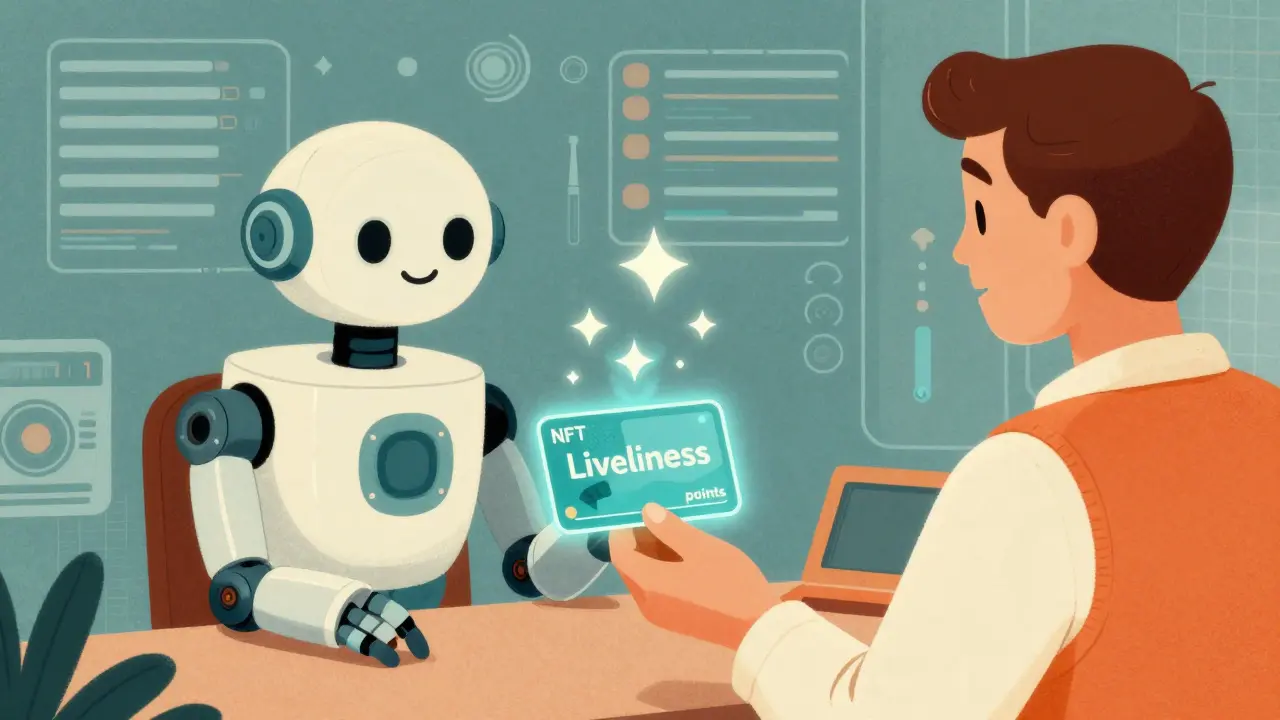
- Liveliness Metric: Every user has an on-chain reputation score called 'Liveliness.' This metric tracks the quality and consistency of your engagement. Higher Liveliness means better rewards because AI agents prefer reliable, high-quality data sources over spammy or inactive ones.
- Sigma Music: This is the flagship application of the Itheum ecosystem. Sigma Music allows users to earn tokens by listening to music. The platform curates content based on user preferences, creating valuable datasets for artists and labels who want to understand audience behavior without invasive tracking.
Tokenomics: What You Need to Know About ITHEUM
The ITHEUM token serves as the utility currency within the Itheum ecosystem, used for rewarding users and paying for data services. Understanding its supply and distribution helps you gauge the project's potential inflation and value stability.
| Category | Allocation Percentage | Amount (Tokens) |
|---|---|---|
| Private/Pre-Sale | 20.00% | 200,000,000 |
| Public Sale (IDO) | 5.00% | 50,000,000 |
| Total Supply | 100% | 1,000,000,000 |
The Initial DEX Offering (IDO) launched on March 28, 2022, raising $2 million at a price of $0.04 per token. Since then, like many altcoins in the volatile crypto market, the price has experienced significant fluctuations. As of recent reports, the trading volume has been relatively low compared to major competitors, which is a key factor to watch if you're considering investing.
Itheum vs. Competitors: Where Does It Fit?
You aren't alone in trying to monetize data. Several projects aim to solve similar problems. Here is how Itheum stacks up against established players like Ocean Protocol and Filecoin.
| Feature | Itheum (ITHEUM) | Ocean Protocol (OCEAN) | Filecoin (FIL) |
|---|---|---|---|
| Primary Focus | AI Training Data & User Rewards | General Data Exchange | Decentralized Storage |
| Blockchain | Solana | Ethereum / Polkadot | Filecoin Network |
| Key Mechanism | Data NFTs & Liveliness Score | Data Tokens & Compute Markets | Storage Deals & Proofs |
| User Incentive | Direct Crypto Rewards for Activity | Selling Access to Datasets | Paying for/Storing Files |
Itheum distinguishes itself by focusing specifically on the AI era. While Ocean Protocol is great for complex enterprise data exchanges, Itheum is built for individual consumers who want easy, passive income from daily activities. However, Itheum faces challenges in liquidity and adoption. Its market cap is significantly smaller than Ocean Protocol’s, meaning fewer buyers and sellers in the short term.
Is Itheum Safe and Legitimate?
Legitimacy in crypto isn't just about having a working product; it's about transparency, backing, and community trust. Itheum has secured funding from notable venture firms such as Mechanism Capital, Ascensive Assets, and Morningstar Ventures. These investors typically conduct rigorous due diligence before putting money into a project.
However, user feedback is mixed. Some users report successfully earning small weekly amounts through apps like Sigma Music, while others complain about the steep learning curve and slow payout rates. For example, one user noted it took three weeks of consistent activity to earn tokens worth less than $0.10. This highlights a crucial point: Itheum is not a 'get rich quick' scheme. It’s a long-term play on data ownership.
Security-wise, operating on Solana provides robust protection against common hacks seen on other chains. Additionally, Itheum complies with data privacy regulations like GDPR and CCPA by using on-chain permissioning systems. You always retain control over who accesses your data, and you can revoke permissions at any time.
How to Get Started with Itheum
If you’re curious about joining the AI Data Workforce, here is a practical step-by-step guide to get you moving.
- Set Up a Solana Wallet: You’ll need a compatible wallet like Phantom or Solflare. Download the extension or mobile app and securely store your seed phrase offline.
- Fund Your Wallet: Buy some SOL (Solana’s native token) from an exchange like Coinbase or Binance to cover transaction fees. You don’t need much, but you need enough for gas.
- Visit the Itheum Platform: Go to the official website and connect your wallet. Look for the 'Sigma Music' app or other active data-sharing modules.
- Complete Identity Verification: To prevent botting and ensure fair reward distribution, Itheum requires identity verification for payouts. This process is straightforward but necessary.
- Start Sharing Data: Engage with the apps. Listen to music, provide feedback, or participate in surveys. Watch your 'Liveliness' score grow.
- Claim Rewards: Once you accumulate enough ITHEUM tokens, you can swap them for SOL or transfer them to an exchange to sell for fiat currency.
Expect a learning curve. If you’re new to crypto, spend time reading the documentation or joining the Discord community, which has over 15,000 members. Support response times can average 48-72 hours, so patience is key.
The Future of Itheum in 2026 and Beyond
The Web3 data infrastructure sector is booming. Estimates suggest the market will grow from $1.2 billion in 2022 to nearly $9 billion by 2027. Itheum is positioning itself to capture a slice of this pie by expanding beyond music. Recent developments include partnerships with major streaming services and the planned launch of 'Data Farming 2.0,' which introduces dynamic pricing for data based on real-time AI demand.
However, risks remain. The token’s price has declined significantly from its all-time high, reflecting broader market skepticism toward low-volume altcoins. Success depends on achieving network effects-getting enough users and AI buyers on board to create a liquid, thriving marketplace. If Itheum can solve the liquidity challenge and expand its app ecosystem, it could become a standard tool for ethical AI training. If not, it may remain a niche experiment.
What is the current price of ITHEUM?
The price of ITHEUM fluctuates daily based on market conditions. As of recent data, it has traded at fractions of a cent (e.g., around $0.0007), representing a significant drop from its initial IDO price of $0.04. Always check live charts on CoinMarketCap or CoinGecko for the most accurate, real-time pricing.
Can I earn money passively with Itheum?
Yes, but 'passive' doesn't mean 'effortless.' Apps like Sigma Music allow you to earn while listening to music, which is a normal daily activity. However, the earnings are currently small, often amounting to a few dollars a week depending on your engagement level and the value of your data.
Is Itheum safe to use?
Itheum operates on the secure Solana blockchain and employs strict data privacy measures, including user-controlled permissions and compliance with GDPR. However, as with any crypto platform, you should never share your private keys and should be cautious about the personal data you choose to tokenize.
What is the 'Liveliness' metric?
Liveliness is an on-chain reputation score that tracks the quality and consistency of your data contributions. A higher Liveliness score indicates that you are a reliable source of high-value data, which can lead to increased rewards from AI agents seeking premium datasets.
How does Itheum differ from Ocean Protocol?
While both platforms deal with data markets, Itheum focuses specifically on consumer-generated data for AI training using the fast, low-cost Solana blockchain. Ocean Protocol operates more broadly on Ethereum and Polkadot, catering to enterprise-level data exchanges with higher transaction costs and complexity.
