

Imagine if you could take a piece of a savings account from one bank, snap it onto a loan from another, and attach a high-yield investment from a third bank-all without asking for permission, filling out a single form, or waiting for a manager's approval. In the traditional world, that sounds like a fantasy. In the world of DeFi protocol composability is the ability of different decentralized finance applications to interact and build upon one another like modular building blocks , it's just a Tuesday. This "Money Legos" approach is what separates the blockchain revolution from the old-school financial system, turning a collection of isolated apps into a massive, interconnected financial engine.
The Secret Sauce: How Composable DeFi Actually Works
At its core, composability isn't magic; it's the result of a specific technical design. The engine driving this is the Smart Contract, which is a self-executing agreement with the terms written directly into the code. Because these contracts live on a public blockchain, they are open for anyone to interact with. If a developer writes a contract that allows for lending, another developer can write a contract that automatically moves those lent assets into a different pool to earn more interest.
To make this work without constant errors, the industry relies on Token Standards. For instance, ERC-20 is the gold standard for fungible tokens on Ethereum. Because almost every project uses this same set of rules, a token from a niche project can be recognized and traded by a giant Decentralized Exchange (DEX) without the DEX needing to write custom code for every single new coin. This uniformity creates a seamless plug-and-play environment where APIs and SDKs allow different software systems to talk to each other instantly.
Why This is a Game-Changer for Your Money
The most immediate benefit for the average user is the death of the "financial silo." In the old system, your money is trapped in whatever product you chose. In a composable ecosystem, you can maximize your capital efficiency. Have you heard of yield farming? This is a prime example of composability. A user might deposit assets into a lending protocol to get a receipt token, then take that receipt token and stake it in another protocol to earn a second layer of rewards. You're essentially stacking profits across multiple platforms in one go.
This flexibility allows you to build a custom financial strategy. Instead of picking a "Moderate Risk" portfolio from a bank's dropdown menu, you can manually combine a stablecoin vault, a liquidity pool, and a decentralized insurance policy to create a risk profile that fits your exact needs. Plus, since many of these interactions can happen in a single transaction, you save a significant amount of time and gas fees compared to moving funds manually between disconnected apps.
| Feature | Traditional Finance (TradFi) | Composable DeFi |
|---|---|---|
| Integration | Permissioned, slow, bureaucratic | Permissionless, instant, open-source |
| Customization | Pre-set product bundles | Modular "Lego-like" construction |
| Transparency | Closed books, private audits | Publicly auditable smart contracts |
| Barriers to Entry | High (KYC, credit checks, minimums) | Low (Wallet and internet connection) |
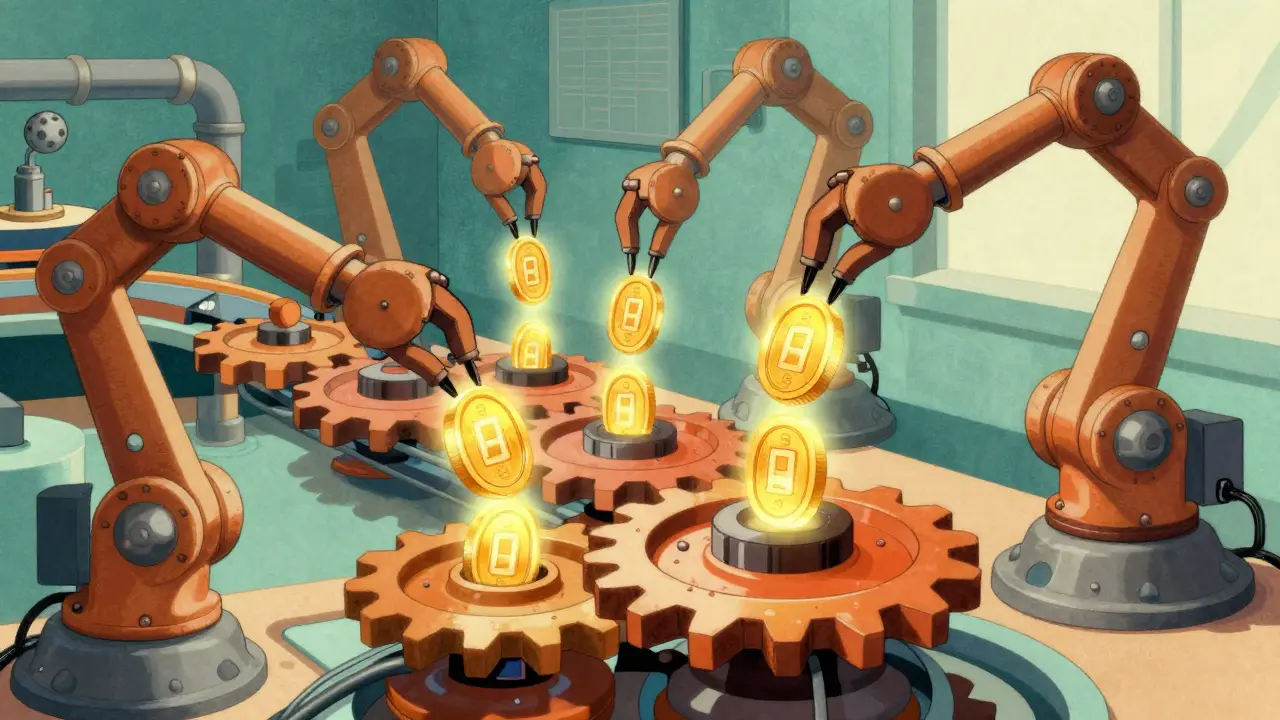
Innovation at Warp Speed
For developers, composability is like starting a race halfway through. They don't have to build a wallet, a payment gateway, or an identity system from scratch. They can simply "import" those functions from existing, battle-tested protocols. This drastically shortens the innovation cycle. A developer can focus entirely on a new piece of business logic-like a new way to calculate interest-and plug it into the existing infrastructure of a Lending Protocol like Aave or Compound.
This collaborative environment has birthed complex tools that were previously impossible. Take Flash Loans, for example. These allow a user to borrow millions of dollars with zero collateral, provided the money is paid back within the exact same blockchain block. This is only possible because the loan, the trade, and the repayment happen through a series of composable smart contract calls in one atomic operation. If any part of the chain fails, the whole thing reverts, meaning the lender never loses their money.

The Dark Side: Cascading Risks and Systemic Fragility
It's not all sunshine and high yields, though. The biggest weakness of a Lego tower is that if you pull out a brick at the bottom, the whole thing can crash. This is known as systemic risk. Because protocols are so tightly interwoven, a bug in one small, obscure contract can trigger a domino effect. If a widely used price oracle fails, it doesn't just affect one app; it can lead to mass liquidations across every lending platform that relies on that oracle.
This "contagion" is a real danger. When you use a composable strategy, you aren't just trusting the final app you interact with; you're trusting every single protocol in the chain. If you have your assets in a vault that is deposited into a lending pool, which is then used as collateral for a synthetic asset, you have three potential points of failure. This is why rigorous auditing and due diligence are non-negotiable. You can't just look at the top-layer UI; you have to understand the dependencies underneath.
Navigating the Composable Landscape
If you're looking to get started, the key is to start simple. Don't jump into a five-layer yield strategy on day one. Use a reputable wallet and explore a single protocol first to understand how it handles your assets. Once you're comfortable, look for "aggregators"-these are apps designed specifically to simplify composability by scanning multiple protocols to find you the best rates automatically.
For those with a technical bent, mastering the interaction between different standards is the goal. Learning how an ERC-721 (NFT) can be used as collateral in a DeFi loan is a great way to see where the market is heading. The future of finance isn't a single "Super App" that does everything, but a web of specialized protocols that talk to each other perfectly.
Is composability a risk to my funds?
Yes, it introduces "interconnected risk." If a protocol you are using relies on another protocol that gets hacked or fails, your funds could be affected even if the primary app you used is secure. This is why diversifying across different ecosystems and checking audit reports is crucial.
How is this different from traditional APIs?
Traditional APIs are usually permissioned-you need an API key and approval from the company. DeFi composability is permissionless. Anyone can interact with a public smart contract without asking for a key, making the integration instant and uncensorable.
What are "Money Legos"?
"Money Legos" is a metaphor for DeFi composability. Just as Legos allow you to build complex structures by snapping simple blocks together, DeFi allows developers to build complex financial products by connecting simple, open-source protocols.
Does composability increase gas fees?
It can. Complex transactions that touch multiple smart contracts require more computational power from the network, which usually costs more in gas. However, it's often cheaper than doing five separate transactions manually.
Can I use composability for NFTs?
Absolutely. Through standards like ERC-721, NFTs are being integrated into DeFi. You can now find protocols that allow you to lock up an NFT as collateral to borrow stablecoins, blending the world of digital art with decentralized finance.

Eric Raines
April 23, 2026 AT 13:28Everyone's talking about the upside but most people don't even get how the underlying EVM handles these calls. It's not just "snapping Legos" together; it's a precarious dance of gas limits and state changes that can go sideways in a heartbeat if the logic isn't airtight.
Mike Krasner
April 24, 2026 AT 15:42money legos is just a fancy term for a giant house of cards waiting to fall lol
Mary Tawfall
April 25, 2026 AT 23:55It's really exciting to see how this empowers the individual to manage their own wealth without a middleman slowing things down!
Yvette P
April 27, 2026 AT 17:52Oh sure, just "start simple" while you're navigating a landscape of rug-pulls and flash-loan attacks that could wipe out your liquidity in a single block. I'm sure the average user loves the idea of auditing raw Solidity code just to make sure their "safe" vault isn't actually a nested dependency nightmare where one flawed oracle update sends the whole systemic architecture into a death spiral of cascading liquidations. It's just so wonderful how we've traded the slow bureaucracy of a bank for the lightning-fast efficiency of losing everything because a developer forgot a reentrancy guard in a contract three layers deep. Truly the pinnacle of financial evolution, isn't it?
Candace Sherrard
April 28, 2026 AT 14:50There is something deeply philosophical about the shift from centralized trust to algorithmic transparency, where the relationship between different financial tools is defined by open code rather than private contracts. This modularity doesn't just change how we earn interest, but it fundamentally alters the concept of ownership by allowing assets to remain productive even while they serve as collateral in another system, creating a fluid state of value that feels more like a living organism than a static ledger.
Jagdish Sutar
April 28, 2026 AT 16:55This is a great explanation for those of us coming from different financial backgrounds to understand the potential of decentralized systems.
Kyle Bush
April 29, 2026 AT 00:56USA should be leading this tech and crushing the competition! 🇺🇸🚀 Let's get those yields stacking! 💸💰
Alex Hunter
April 30, 2026 AT 05:25I've found that using aggregators is the best way for beginners to dip their toes in without getting overwhelmed by the technical side.
Ellie Drews
May 1, 2026 AT 04:31It's a bit scary but the freedom is worth it if you're careful.
Liz Ariza
May 2, 2026 AT 21:51The flexibility here is just wild! 🌈✨ It's like a digital playground for your portfolio where you can actually be creative with your gains! 💎
Matthew Morse
May 3, 2026 AT 15:08too much jargon not enough real world use cases for normal people
Hannah Rubia
May 4, 2026 AT 18:27It is imperative to note that while composability enhances capital efficiency, the systemic risk mentioned is significantly exacerbated by the lack of a centralized lender of last resort.
Tara Aman
May 6, 2026 AT 16:12I totally agree that the innovation speed is the best part of this whole setup!
Miranda Jamieson
May 7, 2026 AT 14:45Only a complete amateur would ignore the catastrophic risks of oracle failure in a composable stack. If you don't understand the dependency tree, you're just gambling with your money and calling it "investing." Get a grip on the fundamentals before you touch a liquidity pool.
Jennifer L
May 8, 2026 AT 08:54I am truly shaken by the idea of a single bug causing a domino effect... the fragility of it all is just heartbraking for a newcomer!
Charlie Queen
May 10, 2026 AT 03:10Love seeing how different cultures are adopting this! It's making finance inclusive for everyone everywhere! 🌍🤝
debashish sahu
May 12, 2026 AT 01:44The permissionless nature is the most significant part of this transition.