
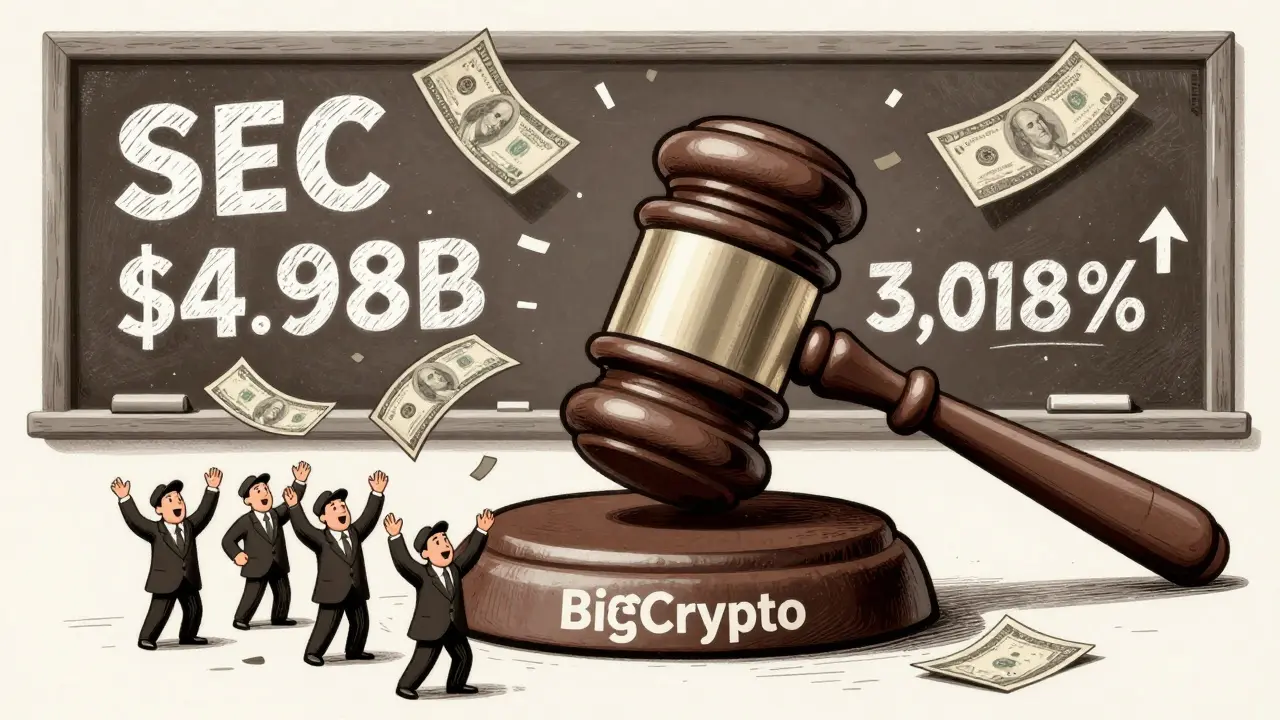
The SEC didn’t just ramp up its crypto crackdown in 2024 - it went all in. Crypto enforcement fines jumped by 3,018% compared to the previous year, hitting a record $4.98 billion in penalties and disgorgements. That’s not a typo. One single case accounted for nearly $4.5 billion of that total. This wasn’t a random spike. It was a calculated, final push by the SEC under Chair Gary Gensler before he stepped down. And it changed everything about how crypto companies think about compliance.
Why the Numbers Look So Wild
At first glance, the 3,018% increase sounds impossible. How could penalties go up that fast? The answer isn’t that more companies got fined. It’s that one company got hit harder than any in history. The SEC won a landmark trial against a major crypto platform accused of selling unregistered securities. The court ordered $4.5 billion in disgorgement, interest, and civil penalties - all from one judgment. That one number alone pushed the total crypto enforcement haul for the year past $4.98 billion. Without it, the total would’ve been closer to $500 million. So yes, the percentage looks insane. But it’s not because of dozens of small fines. It’s because of one massive, precedent-setting penalty.More Money, Fewer Cases
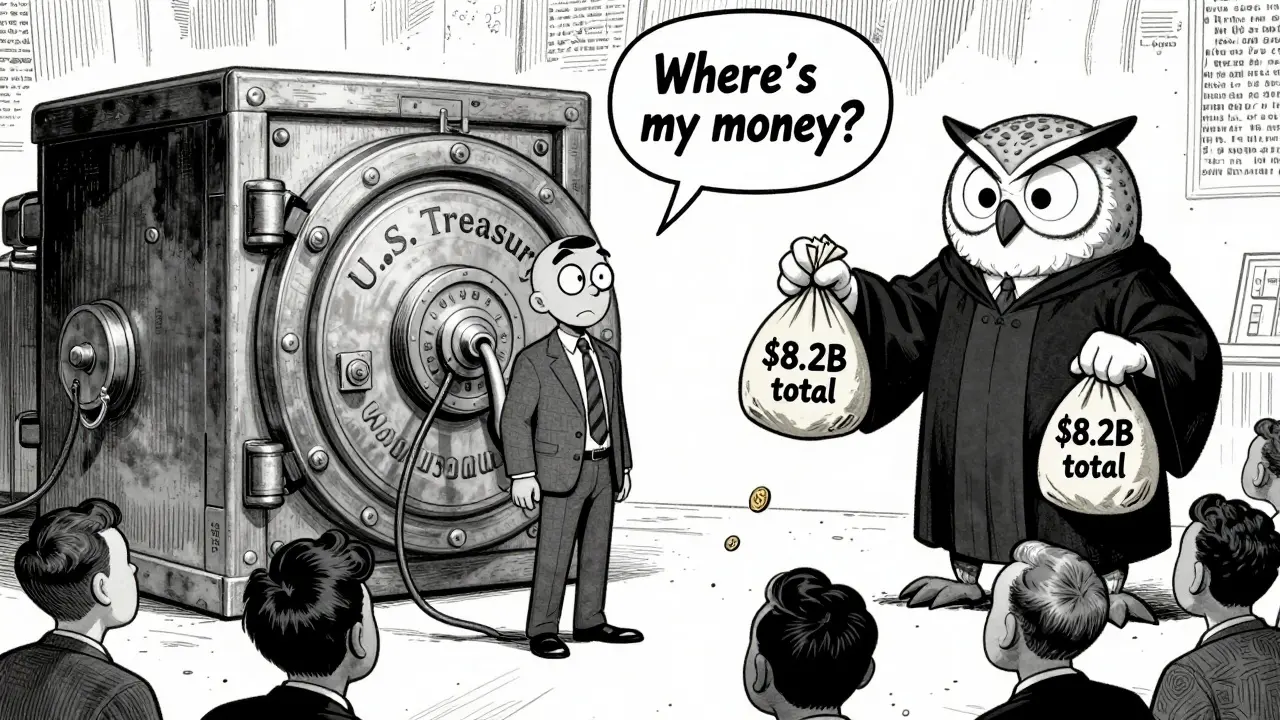
Here’s the twist: the SEC actually brought fewer crypto enforcement actions in 2024 than in 2023. Some reports say 33 cases, others say 49. Either way, it was either flat or down. That’s the opposite of what you’d expect if the agency was just chasing more targets. Instead, they shifted strategy. They stopped going after dozens of small players. They went after the big ones - the ones with real revenue, real users, and real influence. The SEC filed 583 total enforcement actions in 2024, down 26% from 2023. But the money recovered? Up to $8.2 billion across all sectors. That’s the highest ever. Crypto made up nearly half of that. This wasn’t about volume. It was about impact. One case could now pay for 10 smaller ones. And it sent a message: if you’re a major player, don’t assume you’re too big to fail.What the SEC Was Really Targeting
The SEC didn’t go after every crypto project. They went after specific patterns. Over 60% of the cases involved unregistered securities offerings - basically, selling tokens like stocks without registering them with the SEC. That’s the core of their legal argument: if a token acts like an investment contract, it’s a security. That’s the Howey test in action. They also went after:- Platforms that let users trade crypto like stocks without being registered as exchanges
- DeFi lending apps that didn’t register as broker-dealers
- Companies that used misleading marketing to lure retail investors
How the SEC Got So Powerful
The SEC didn’t just wake up one day and decide to fine people billions. They spent years building up. In 2024, their Crypto Assets and Cyber Unit grew by 20%. They hired forensic accountants, blockchain analysts, and former crypto executives. They got smarter. They started using data from exchanges, wallet addresses, and even social media to track suspicious activity. They also got help. The whistleblower program received over 180 tips in 2024 - up 25% from the year before. That’s not random. It’s because people inside crypto companies started talking. Why? Because the rewards for reporting fraud went up. And the risk of getting caught went way higher.Settlements Over Trials
You’d think the SEC would want to win every case in court. But they didn’t. About 44% of crypto enforcement actions in 2024 ended in settlements. Companies agreed to pay fines, shut down illegal activities, and accept court orders - all without admitting guilt. Why? Because trials are expensive and unpredictable. Settlements give the SEC guaranteed money, public precedent, and control over the outcome. The SEC also got creative. In January 2025, they had asset freezes or injunctions in 31 crypto cases. That means they didn’t just fine companies - they stopped them from moving money, shutting down operations before investors lost everything.
What Happened to the Money?
The SEC collected $8.2 billion in total penalties in 2024. But only $345 million went back to harmed investors. That’s down from $930 million in 2023. Why? Because most of the money went to the U.S. Treasury, not directly to victims. The SEC says it’s because many victims can’t be identified. Others say it’s because the agency prioritizes punishment over restitution. This is a major point of criticism. Investors lost billions in crypto collapses. But very few got their money back. The SEC’s focus on record-breaking penalties doesn’t always mean better protection for everyday users.What Comes Next?
Gensler’s term ended in early 2025. The new leadership under the Trump administration hasn’t reversed course - yet. But they’re watching. The SEC created a crypto task force in early 2025 to review enforcement priorities. Some experts think the next chair will ease up on the aggressive tactics. Others say the legal groundwork laid in 2024 is too strong to undo. One thing’s certain: crypto companies can’t assume enforcement will slow down. The SEC’s message in 2024 was clear: register, disclose, or pay. The fines are no longer just a cost of doing business. They’re a warning shot.What This Means for You
If you’re running a crypto project, token sale, or exchange - even a small one - you’re not safe. The SEC isn’t just going after Coinbase or Binance. They’re going after anyone who sells tokens as investments without registering. That includes DeFi protocols, NFT projects, and even DAOs that raise money through token sales. Here’s what you need to do:- Ask: Is my token a security? If it’s sold with promises of profit based on others’ efforts, the answer is likely yes.
- Register with the SEC or find a valid exemption - don’t guess.
- Don’t market your token like an investment. Use language like "utility" or "access," not "ROI" or "growth potential."
- Keep detailed records of how you raise funds and what you promise users.
- Get legal advice from someone who understands SEC crypto rules - not just general crypto lawyers.
Why did SEC crypto fines jump 3,018% in 2024?
The jump came mostly from one case - a court ordered $4.5 billion in penalties against a major crypto platform for selling unregistered securities. That single penalty pushed the total crypto enforcement fines to $4.98 billion. Without it, the increase would’ve been much smaller. The SEC targeted big players, not small ones, to set legal precedents.
Did the SEC bring more crypto cases in 2024?
No. The number of crypto enforcement actions actually decreased. Some sources report 33 cases, others 49 - both below 2023 levels. The SEC shifted from chasing many small cases to focusing on fewer, high-value ones. This made their penalties go up even as their case count went down.
What’s the Howey test and why does it matter?
The Howey test is a legal standard from a 1946 Supreme Court case. It says a transaction is a security if someone invests money in a common enterprise with the expectation of profit from others’ efforts. The SEC uses this to argue that most crypto tokens are securities. If your project promises returns based on the team’s work - not just access to a service - it likely fails this test.
Did the SEC return money to investors in 2024?
Yes, but only $345 million went back to harmed investors - down from $930 million in 2023. Most of the $8.2 billion collected went to the U.S. Treasury. The SEC says many victims can’t be identified. Critics argue this shows enforcement is more about punishment than restitution.
Will crypto enforcement continue in 2025?
Yes. Even after Chair Gensler left, the SEC kept its enforcement team intact and created a crypto task force to review priorities. The legal groundwork from 2024 - including court rulings and settlement terms - is still binding. Companies can’t assume enforcement will slow down. The rules are now clearer, and the penalties are steeper.

Konakuze Christopher
March 19, 2026 AT 06:36Zachary N
March 21, 2026 AT 01:43Ernestine La Baronne Orange
March 21, 2026 AT 16:05Steph Andrews
March 22, 2026 AT 02:52john peter
March 22, 2026 AT 21:54Manali Sovani
March 24, 2026 AT 03:38Derek Lynch
March 25, 2026 AT 02:52shreya gupta
March 26, 2026 AT 23:22Christopher Hoar
March 28, 2026 AT 20:50Jesse Pals
March 30, 2026 AT 00:39Prakash Patel
March 31, 2026 AT 10:22Shreya Baid
March 31, 2026 AT 13:26Elizabeth Kurtz
April 1, 2026 AT 18:55Robert Kunze
April 2, 2026 AT 08:53iam jacob
April 3, 2026 AT 05:51Diane Overwise
April 4, 2026 AT 04:35Marc Morgan
April 5, 2026 AT 01:20Henrique Lyma
April 5, 2026 AT 06:43