
When you think about blockchain security, you probably picture unbreakable cryptography or massive server farms. But the real weak spot isn’t the math-it’s the connection between nodes. Peer-to-Peer (P2P) networks form the backbone of every major blockchain, allowing computers to talk directly without a central boss. This design is brilliant for decentralization, but it opens the door to some nasty attacks that can isolate users, delay transactions, and even manipulate what they see as the 'truth' on the ledger.
In 2023, Chainalysis reported that over 12% of cryptocurrency thefts started at the P2P layer. That’s not a rounding error; it’s a systemic risk. Whether you’re running a full node, building a wallet, or just holding coins, understanding how these networks can be compromised is no longer optional-it’s essential for staying safe in the digital economy.
The Anatomy of a Blockchain P2P Network
To understand the vulnerabilities, we first need to look at how these networks actually work. In a traditional client-server model, your computer talks to one big central server. In a Blockchain P2P Network, your node connects to other nodes directly. Bitcoin uses port 8333, while Ethereum uses port 30303. These connections are usually built on TCP/IP protocols.
There are two main ways these networks organize themselves:
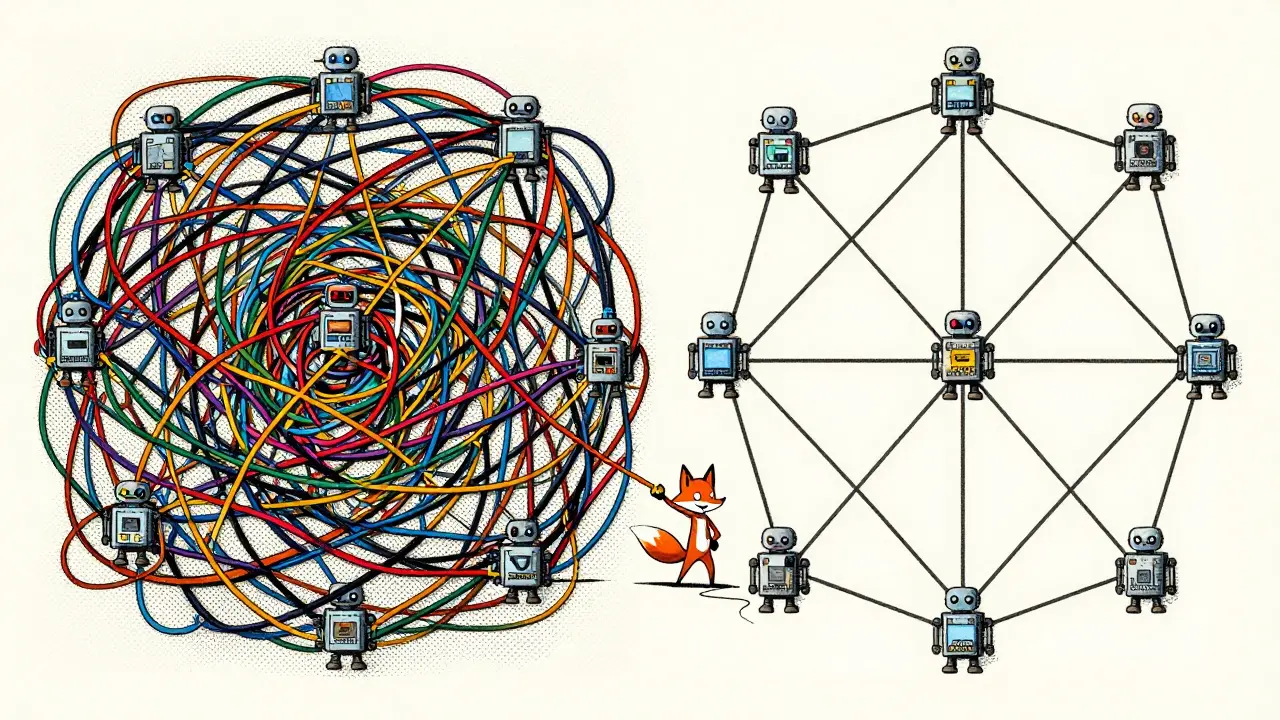
- Unstructured Topologies: Bitcoin uses a random graph approach. Nodes connect to whoever they find first. It’s simple and resilient against targeted data manipulation, but it makes it easier for attackers to flood a specific node with fake connections.
- Structured Topologies: Ethereum uses a system called Kademlia Distributed Hash Table (DHT). This is more organized, helping nodes find specific data faster. However, this structure creates new attack vectors where malicious actors can manipulate routing tables to hide or alter information.
The core trade-off here is clear: structured networks are faster but harder to secure against sophisticated isolation attacks, while unstructured networks are slower but slightly more resistant to targeted data corruption. Both, however, share a critical flaw-they rely on trustless discovery mechanisms that bad actors can exploit.
Eclipse Attacks: The Silent Killer
If there’s one vulnerability you need to know about, it’s the Eclipse Attack. First described by researchers Heilman et al. at USENIX Security in 2015, this attack doesn’t break encryption. Instead, it breaks your connection to the rest of the world.
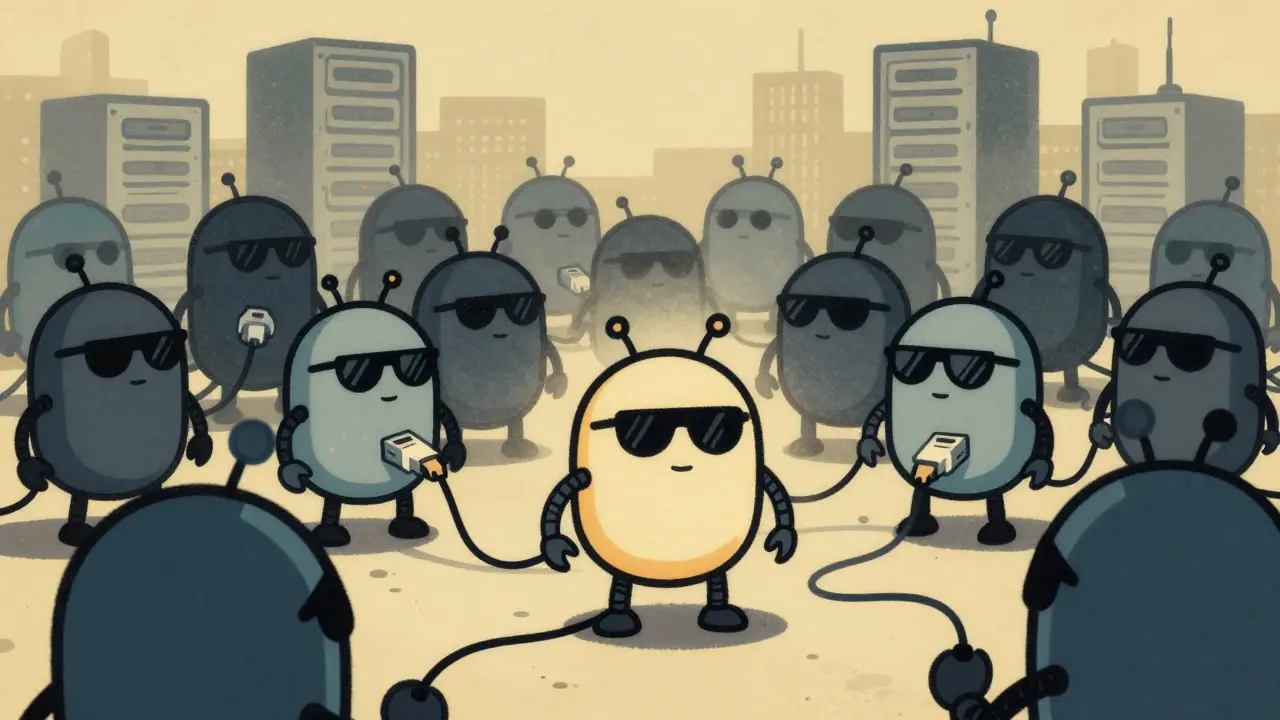
Here’s how it works: An attacker monitors your IP address when you’re offline. When you come back online, they rush to connect to you using dozens of their own controlled nodes before any legitimate peers can reach you. Because most blockchain clients have a limit on how many connections they accept (Bitcoin Core historically limited this to 8-12 slots), your node gets completely surrounded by fake friends.
You’re now 'eclipsed.' You only hear from the attacker. They can feed you false transaction histories, delay your payments indefinitely, or trick you into spending coins twice. In January 2019, Monero suffered a documented eclipse attack involving roughly 130 IP addresses. Users saw their transactions stuck for 8 to 12 minutes because their wallets were isolated from the honest network.
More recently, the NDSS 2023 paper introduced the 'Gethlighting Attack,' showing that attackers didn’t even need to fully eclipse an Ethereum node to cause damage. By disrupting just 1.5% of the network bandwidth, they could force nodes into unstable states, causing transaction failures and delays. This proved that large-scale resources aren’t necessary for effective P2P disruption-a scary realization for individual users.
| Network Type | Primary Topology | Key Vulnerability | Mitigation Difficulty |
|---|---|---|---|
| Bitcoin | Random Graph | Connection Starvation / Eclipse | High |
| Ethereum | Kademlia DHT | Routing Manipulation / Gethlighting | Very High |
| Monero | Unstructured | IP-Based Targeting | Medium |
Why Decentralization Creates Attack Surfaces
It seems counterintuitive, but the very thing that makes blockchain strong-decentralization-makes its P2P layer vulnerable. Dr. Emin Gün Sirer, Professor of Computer Science at Cornell University, noted in his 2024 IEEE Security & Privacy keynote that 78% of consensus failures originate from network layer issues, not cryptographic flaws.
The problem lies in resource constraints. A typical Bitcoin node requires minimum 2GB RAM and 500GB storage, plus constant internet connectivity. More importantly, it has a limited number of connection slots. If you only have room for 8 friends, and an attacker sends 100 fake requests, your node might accidentally pick the fakes if they arrive first.
This is known as connection starvation. It’s exacerbated by the fact that many public nodes run on default configurations. Qualysec’s 2023 blockchain pentesting report found that 68% of public nodes had incorrectly implemented firewall rules, and only 63% properly used certificate pinning for node authentication. These small oversights add up to a massive collective weakness.
Real-World Impact on Users and Businesses
P2P vulnerabilities aren’t just theoretical exercises for computer scientists. They hit regular people hard. During the Monero eclipse attack in 2019, exchanges like Binance reported thousands of delayed deposits. One transparency report showed 2,341 affected transactions across nearly 2,000 user accounts.
On Reddit, users complained about swaps failing despite normal gas prices during Ethereum’s Gethlighting incident. One user wrote, "My swap transactions failed for 47 minutes..." This isn’t just an inconvenience; it’s financial loss. In DeFi, where timing is everything, being isolated from the network for even a few minutes can mean missing out on arbitrage opportunities or suffering slippage losses.
For businesses, the stakes are higher. The EU’s MiCA framework, effective December 2024, now requires 'robust network layer security assessments' for blockchain service providers. If your platform relies on a P2P network that can be easily partitioned or eclipsed, you’re not just risking technical downtime-you’re risking regulatory compliance and customer trust.
How to Protect Your Node and Wallet
So, what can you do? If you’re running a node or using a self-custody wallet, you need to take active steps to harden your P2P connections. Here are practical measures recommended by experts and protocol developers:
- Diversify Your Peers: Don’t rely on a single DNS seed node. Use multiple sources to discover peers. This makes it harder for an attacker to predict which nodes you’ll connect to.
- Implement Rate Limiting: Restrict how many new connections your node accepts per minute. This slows down attackers trying to flood your connection slots.
- Use Tor or I2P: Hiding your IP address behind anonymity networks like Tor makes it much harder for attackers to monitor your online status and target you specifically.
- Enable TLS Encryption: Ensure your node communicates over TLS 1.3+. While this doesn’t prevent eclipse attacks directly, it prevents man-in-the-middle interception of your traffic.
- Monitor Connection Diversity: Check if all your connected peers are coming from the same IP range or ASN (Autonomous System Number). If they are, you might already be under attack.
Protocol-level fixes are also arriving. Ethereum’s EIP-7002, released in September 2024, mandates peer scoring for all Geth nodes. This means nodes will automatically penalize and disconnect from peers that behave suspiciously. Similarly, Bitcoin Core merged PR #27891 in July 2024, introducing connection diversity requirements to prevent IP-based targeting.
The Future of P2P Security
The battle for P2P security is ongoing. The global blockchain security market is projected to grow from $3.84 billion in 2023 to $12.71 billion by 2028, driven largely by demand for better network-layer protection. We’re seeing a shift toward hybrid architectures that try to balance decentralization with security.
Ethereum plans a 'DevP2P 2.0' upgrade scheduled for Q2 2026, aiming to reduce the P2P attack surface by 70%. Projects like Polkadot are experimenting with parachain architectures that isolate certain communication paths. However, long-term threats loom. Dr. Ari Juels warned at Black Hat 2025 that quantum networking advancements could undermine current P2P security models within 5-7 years, requiring complete architectural redesigns.
Until then, vigilance is key. The fundamental trade-off remains: total security often requires some centralization, while total decentralization invites complexity and vulnerability. Understanding this tension helps us build better systems and make smarter choices about how we interact with them.
What is a P2P network vulnerability in blockchain?
A P2P network vulnerability refers to weaknesses in the communication layer between blockchain nodes. Unlike cryptographic flaws, these issues arise from how nodes discover, connect, and exchange data. Common vulnerabilities include eclipse attacks, where a node is isolated by fake peers, and network partitioning, where the network splits into conflicting groups due to manipulated routing.
Can an eclipse attack steal my crypto?
Not directly. An eclipse attack isolates your node from the honest network, allowing attackers to feed you false information. They can delay your transactions or trick you into double-spending. However, they cannot access your private keys or sign transactions on your behalf unless you also fall victim to malware or phishing. The primary risk is financial loss through delayed trades or accepted fraudulent blocks.
How do I know if my node is under attack?
Signs include sudden transaction delays, inability to broadcast transactions, or seeing a different block height than major explorers. Technically, check your peer list. If all connected peers share the same IP range, ASN, or geographic location, you may be eclipsed. Tools like `bitcoin-cli getpeerinfo` can help you analyze connection diversity.
Is Ethereum more vulnerable than Bitcoin?
They face different risks. Bitcoin’s unstructured topology is susceptible to connection starvation and classic eclipse attacks. Ethereum’s Kademlia DHT offers faster data retrieval but introduces complex routing anomalies and vulnerabilities like the Gethlighting attack. Neither is inherently 'safer'; they require different mitigation strategies tailored to their specific architecture.
What is the Gethlighting attack?
The Gethlighting attack, detailed in an NDSS 2023 paper, demonstrated that attackers could disrupt Ethereum nodes without fully eclipsing them. By consuming just 1.5% of network bandwidth, attackers could force nodes into unstable states, causing transaction failures and delays. This showed that low-resource attacks could have significant impacts, challenging previous assumptions about the cost of P2P disruption.
