
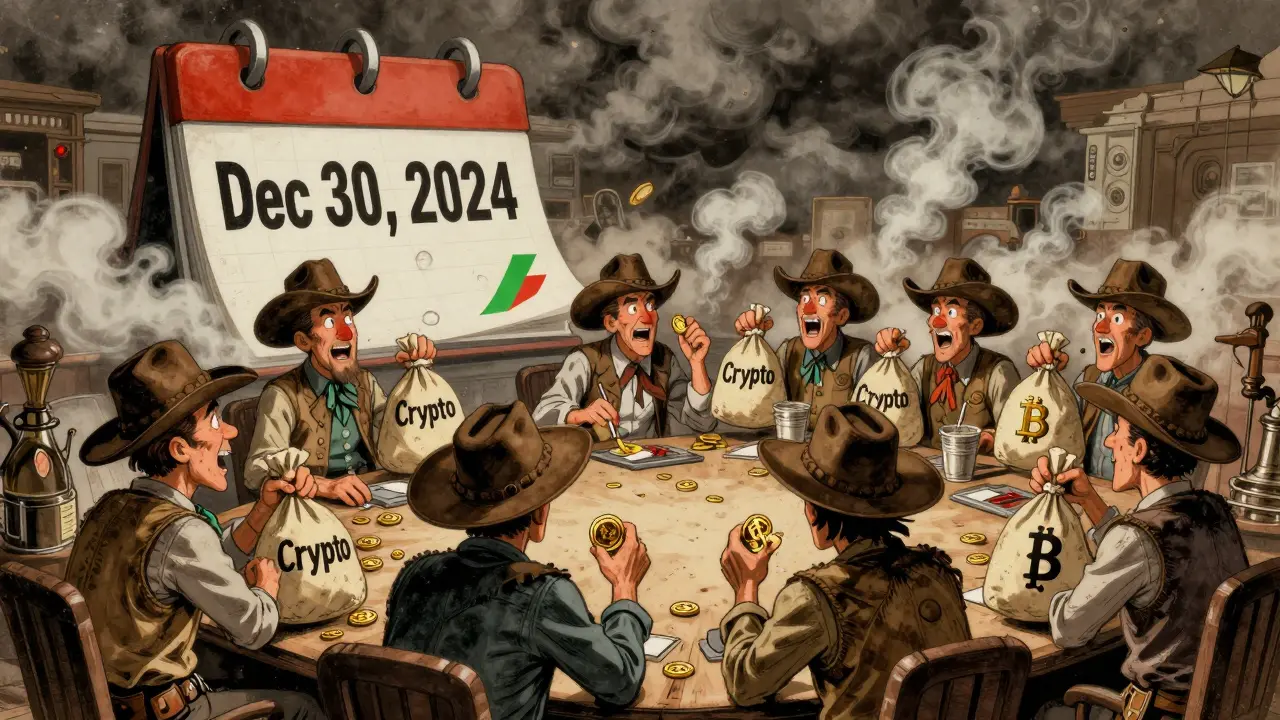
It is now mid-2026. If you are holding cryptocurrency in Europe, you have likely noticed that things feel different than they did a few years ago. The days of wild west trading are officially over. The big shift happened on December 30, 2024, when the final phase of the European Union’s Markets in Crypto-Assets (MiCA) regulation came into full force. This wasn't just another bureaucratic date; it was the moment the EU cemented itself as the first major global economy to fully regulate digital assets.
For many users, this meant their favorite exchanges suddenly required more ID verification. For others, certain stablecoins disappeared from their portfolios overnight. By June 2026, the dust has settled enough to see exactly how this framework reshaped the market. Let’s break down what actually changed, why some tokens were banned, and how your rights as an investor evolved.
The Two-Step Rollout: Why June and December 2024 Matter
MiCA didn’t drop all at once. The European Commission designed a phased approach to prevent market shock. Understanding this timeline helps explain why some changes hit earlier than others.
The first major wave hit on June 30, 2024. On this date, strict rules for Asset-Referenced Tokens (ARTs) and E-Money Tokens (EMTs) became enforceable. In plain English, these are stablecoins. ARTs peg to a basket of currencies or commodities, while EMTs peg to a single fiat currency like the Euro or US Dollar. From this day forward, issuers had to prove they held 1:1 liquid reserves, publish regular transparency reports, and undergo rigorous audits.
Then came the deadline everyone watched: December 30, 2024. This date activated the rest of MiCA, specifically targeting Crypto Asset Service Providers (CASPs). These are the companies you interact with-exchanges, wallet providers, and custodians. Suddenly, operating in any of the 27 EU member states required a single, unified license. No more patchwork rules where one country allowed something another banned. This created the "passporting" system, allowing authorized firms to operate across the entire bloc seamlessly.
What Changed for Your Wallet?
If you are a retail investor, the most visible impact was on stability and access. Before MiCA, you could buy almost any token on any platform. Now, every service provider must adhere to strict consumer protection standards.
- Enhanced Disclosure: Issuers of non-stablecoin crypto assets (like Bitcoin or Ethereum projects) must now provide whitepapers approved by national regulators. These documents clearly outline risks, technology details, and environmental impacts. You know exactly what you are buying.
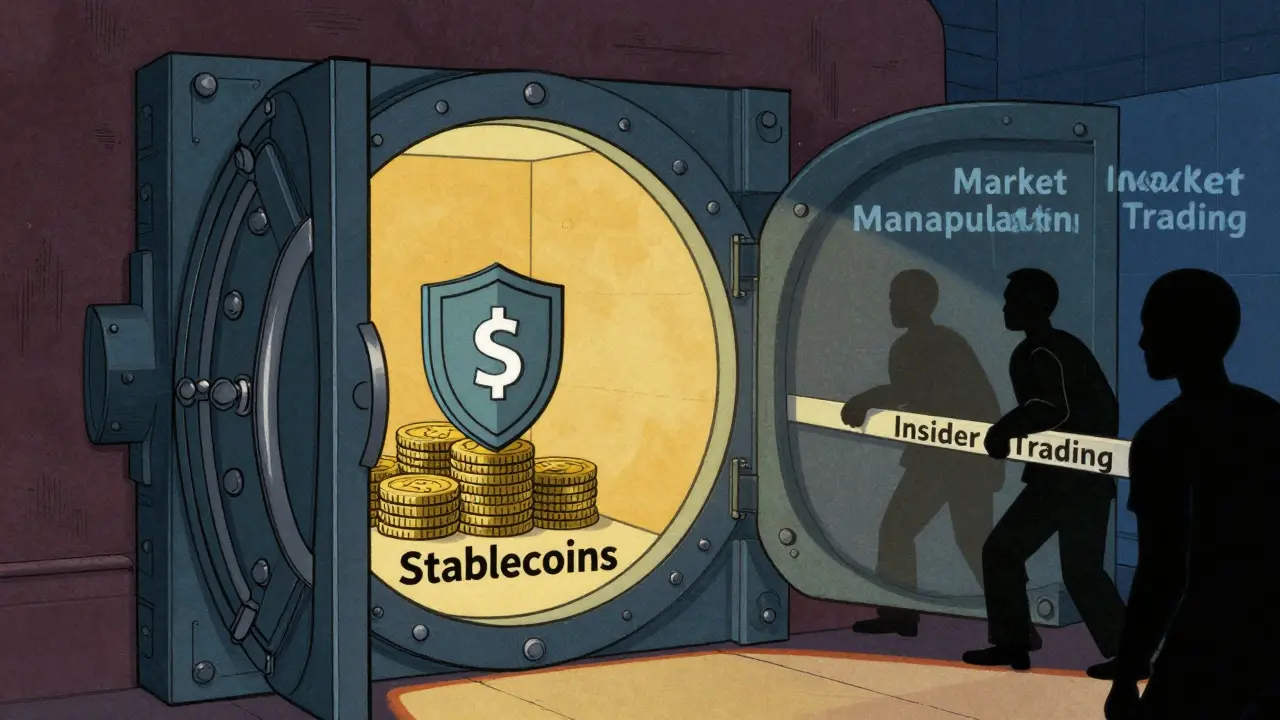
- Market Abuse Prevention: Practices like insider trading and market manipulation are now explicitly illegal under MiCA. While enforcement takes time, the legal framework exists to penalize bad actors who distort prices.
- Custody Requirements: Exchanges must keep client funds separate from their own operational capital. If an exchange goes bankrupt, your crypto should theoretically remain safe and accessible, unlike previous high-profile collapses.
However, there was a trade-off. Compliance costs money. Many smaller, niche platforms chose to exit the EU market rather than pay for expensive licensing. This reduced choice but increased safety for the remaining players.
The Stablecoin Crackdown: Delistings and Restrictions
The most dramatic effect of MiCA was felt in the stablecoin sector. The European Securities and Markets Authority (ESMA) moved quickly after the December 2024 deadline. In January 2025, ESMA issued a clear directive: CASPs must restrict or delist non-compliant stablecoins by March 31, 2025.
This wasn't a suggestion. Popular stablecoins that failed to meet MiCA’s reserve backing requirements or lacked authorization from a National Competent Authority (NCA) were removed from trading pairs. Users faced a tight window to sell or convert these assets. Between January and March 2025, many exchanges operated on a "sell-only" basis for these tokens, meaning you couldn't buy them, only liquidate your position.
Why such harsh measures? The collapse of TerraUSD (UST) in 2022 showed the systemic risk of unbacked stablecoins. MiCA ensures that if you hold a stablecoin in Europe, it is backed by safe, liquid assets like cash or government bonds, not risky commercial paper or other volatile crypto.
| Feature | Pre-MiCA (Before Dec 2024) | Post-MiCA (2025-2026) |
|---|---|---|
| Licensing | Fragmented national rules | Unified EU-wide passport |
| Stablecoins | Mostly unregulated | Strict reserve & audit requirements |
| Consumer Protection | Minimal disclosure | Mandatory approved whitepapers |
| Market Manipulation | Hard to prosecute | Explicitly prohibited & enforced |

Transition Periods and Member State Variations
Not everything changed instantly on December 30, 2024. The EU allowed member states to apply transitional measures for up to 18 months for existing entities. This meant some older firms could continue operating under legacy rules while they prepared for full MiCA compliance.
However, this created a confusing landscape. Firms using these transition periods did not get full MiCA status. They couldn't use the intra-EU passport to expand freely. Legal experts from firms like Norton Rose Fulbright warned that this was not a loophole but a bridge. Companies had to rush to obtain proper authorization before their transition windows closed, or face immediate shutdown.
By 2026, most of these transition periods have expired. The market is now fully normalized. Any CASP operating legally in Germany can also serve customers in France or Italy without additional licenses, provided they follow the home state's supervision.
Global Ripple Effects
MiCA didn't just change Europe; it influenced the world. Because the EU is such a massive market, global giants like Coinbase, Binance, and Kraken adjusted their worldwide operations to meet MiCA standards. Why? It is easier to run one compliant global system than two separate ones.
This effectively exported EU regulations to other regions. Users outside the EU often experienced stricter KYC (Know Your Customer) checks and fewer obscure tokens available for trade, simply because their global provider aligned with MiCA rules. The European Banking Authority (EBA) also published detailed technical standards on capital adequacy and stress testing, setting a benchmark for financial resilience that other jurisdictions are now studying.
Challenges and Criticisms
While MiCA brought clarity, it wasn't without pain. Smaller startups struggled with the cost of compliance. The requirement for sophisticated risk modeling and regular audits forced many small players out of business. Critics argue this stifles innovation, creating a barrier to entry that favors well-funded incumbents.
Additionally, the initial delisting of non-compliant stablecoins caused temporary liquidity crunches. Traders had to migrate assets quickly, leading to slippage and frustration. However, proponents argue that short-term pain prevented long-term disaster. By ensuring only robust, transparent stablecoins survive, the EU protected millions of investors from potential rug pulls.
Looking Ahead: What Comes Next?
As we move through 2026, MiCA is no longer new news. It is the baseline. Regulators are now focusing on enforcement and refining technical standards. We expect tighter scrutiny on decentralized finance (DeFi) protocols that attempt to bypass CASP rules. The line between centralized and decentralized services will be tested further.
For users, the key takeaway is simple: due diligence is still required, but the playing field is safer. Always check if your exchange holds a MiCA license. Verify that your stablecoins are MiCA-compliant. The era of anonymity and unchecked risk is behind us, replaced by a structured, regulated market that prioritizes security over speculation.
Did MiCA ban Bitcoin or Ethereum?
No, MiCA did not ban Bitcoin or Ethereum. These assets fall under the general crypto asset category. However, the exchanges and wallets you use to buy, sell, or store them must be licensed under MiCA. The regulation targets the service providers, not the underlying assets themselves.
Why were some stablecoins delisted in early 2025?
Stablecoins that did not comply with MiCA's strict reserve backing and transparency rules were ordered to be restricted by ESMA. By March 31, 2025, exchanges had to delist non-compliant stablecoins to avoid penalties. This ensured that only stablecoins with verified 1:1 fiat backing remained available to EU investors.
What is a CASP license?
A CASP (Crypto Asset Service Provider) license is the mandatory authorization required for any company offering crypto services in the EU, such as exchanges, custody wallets, or trading platforms. Obtained from a National Competent Authority, this license allows the firm to operate across all 27 EU countries via the passporting system.
Is my crypto safe if my exchange goes bankrupt?
Under MiCA, exchanges are required to segregate client assets from their own corporate funds. This means your crypto should not be used to cover the exchange's debts. While no system is 100% foolproof, this rule significantly reduces the risk of losing your funds during an exchange insolvency compared to pre-MiCA practices.
Does MiCA apply to DeFi protocols?
Currently, MiCA primarily targets centralized service providers (CASPs). Purely decentralized protocols without a central operator exist in a gray area. However, regulators are closely watching interfaces and front-ends that facilitate access to DeFi, potentially bringing them under future scrutiny or requiring them to register as CASPs if they exert control over user funds.

Ryan Peters
June 27, 2026 AT 05:02Another day, another EU nanny state decree strangling innovation with red tape. 🙄 They call it 'safety' but we all know it's just a barrier to entry for the little guy while Coinbase and Binance laugh all the way to the bank. The 'passporting' system is just corporate welfare for the big players who can afford the compliance army.
Rob Morton
June 28, 2026 AT 16:25It is interesting to consider whether regulation inherently stifles freedom or if it merely redefines the boundaries of acceptable risk in a financial ecosystem. One might argue that the chaos of the early crypto years was less about liberty and more about a lack of structural integrity, much like building a house without a foundation. Perhaps the true philosophical question here is not whether MiCA is good or bad, but whether a market can truly mature without some form of agreed-upon social contract regarding trust and verification. The shift from wild west to regulated environment feels inevitable, even if the process is painful for those accustomed to anonymity.
ross harris
June 29, 2026 AT 05:15The digital leviathan has finally swallowed its tail, leaving only the shiny, sanitized carcass of what used to be revolutionary technology. We are witnessing the death of the cypherpunk dream, replaced by the beige boredom of institutional compliance. It is a tragicomic spectacle where the rebels put on ties and start filling out KYC forms, believing they have won something other than their own irrelevance. The soul of crypto has been excised, leaving behind a hollow shell that looks suspiciously like traditional finance with extra steps and worse UX.
Daniel J. Cox
June 30, 2026 AT 23:08I actually think this is pretty cool! 😊 As someone who travels between Europe and Asia, having a unified standard makes things so much easier. No more worrying if my exchange is legit in France vs Germany. It’s like when air travel got standardized-scary at first, but now you just get on the plane and trust it’ll land safely. Plus, knowing my stablecoins are backed by real assets gives me peace of mind. ✈️💶
Emma Rémond
July 1, 2026 AT 13:46Oh, please. Do not conflate basic regulatory hygiene with 'corporate welfare.' The delisting of non-compliant stablecoins was a necessary surgical removal of toxic assets from the portfolio. If one cannot navigate the complexities of reserve backing requirements and NCA authorizations, perhaps one should reconsider their participation in sophisticated financial instruments. The pretense that this 'stifles innovation' is the whining of unprepared amateurs who failed to adapt to the new paradigm of institutional-grade security.
ELNORA JEFFERSON
July 2, 2026 AT 08:27Boring. I just want to buy shitcoins and make money. Why do I need a whitepaper approved by a regulator? This is why I moved everything to offshore exchanges. Who cares if they shut down? At least I had fun while it lasted.
Carol @minaszilda
July 3, 2026 AT 07:27It is important to remember that safety often comes with a cost. While the loss of niche platforms is unfortunate, the protection of retail investors from rug pulls is paramount. Let us focus on the positive aspects of transparency and how we can educate ourselves to use these new tools effectively. Every step forward requires adaptation, and we can grow together through this transition.
Carl Belgrave
July 4, 2026 AT 10:29Listen up, folks. This is exactly what happens when you let bureaucrats pick winners and losers. They ban the risky stuff because they are too stupid to understand it, then they blame the survivors for being 'too expensive.' It is a classic power grab. The EU is trying to control the narrative and the flow of capital. Don't let them tell you this is 'for your own good.' It is for their control. Stand firm against this overreach.
Carl Hanzel
July 4, 2026 AT 20:21You are all missing the point entirely. This isn't about safety; it is about surveillance. By forcing every transaction through licensed CASPs, they create a perfect ledger of your financial behavior. The 'protection' is just the bait to get you into the cage. Once they have your data, your 'rights as an investor' mean absolutely nothing. Wake up before the door locks.
John Curry
July 5, 2026 AT 00:07The dramatic irony of it all is palpable. Here we stand, watching the wild frontier become a gated community, complete with HOA rules and mandatory inspections. It is a tragedy of sorts, the end of an era where code was law, replaced by a world where lawyers write the code. Yet, there is a strange comfort in the order, a quiet resignation that perhaps chaos was never sustainable. We mourn the lost potential while sipping our compliant digital wine.
Trent Erman1
July 6, 2026 AT 08:57Hey everyone! 👋 Just wanted to add that while the regulations are strict, they also bring clarity. For example, the segregation of client funds is a huge win for security. If you are still using unlicensed platforms, you are risking everything. Let's embrace the change and build a more secure future for crypto! 💪🚀
Fiona Ellis
July 6, 2026 AT 22:59I must say, the emphasis on consumer protection is quite refreshing. 🌟 It is rather naive to believe that markets can self-regulate effectively without oversight. The requirement for approved whitepapers ensures that users are fully informed, which is a fundamental right in any financial transaction. One should appreciate the rigor involved in achieving such standards.
Nicole Woessner
July 8, 2026 AT 02:44it really shows how globalized the market is now. even if you are outside the eu you feel the effects because the big exchanges just adopt the strictest rules everywhere. it simplifies things for them but it means less choice for us. i guess thats the price of playing in the big leagues though
Routh Middaugh
July 8, 2026 AT 09:18Well... I suppose... there are pros and cons. On one hand... yes... safety is good. But on the other hand... oh dear... the bureaucracy! It is quite a lot to take in. I wonder if the smaller exchanges will ever recover? It seems... rather harsh... to force them out completely. Perhaps there could be a middle ground? A lighter touch for smaller entities? It is a complex issue... indeed.
Jon Milton
July 9, 2026 AT 12:47Look, I get the frustration with the red tape, but let's not kid ourselves-the alternative was FTX-level collapses happening weekly. The EU took a hard line, sure, but it created a baseline of trust that actually allows mainstream adoption to happen. Yes, the small guys got crushed, but the survivors are now viable long-term businesses. It is aggressive, yes, but it is also effective. We need to stop romanticizing the 'wild west' days; they were mostly just scams waiting to happen. This is the maturation of the asset class, painful as it may be.