
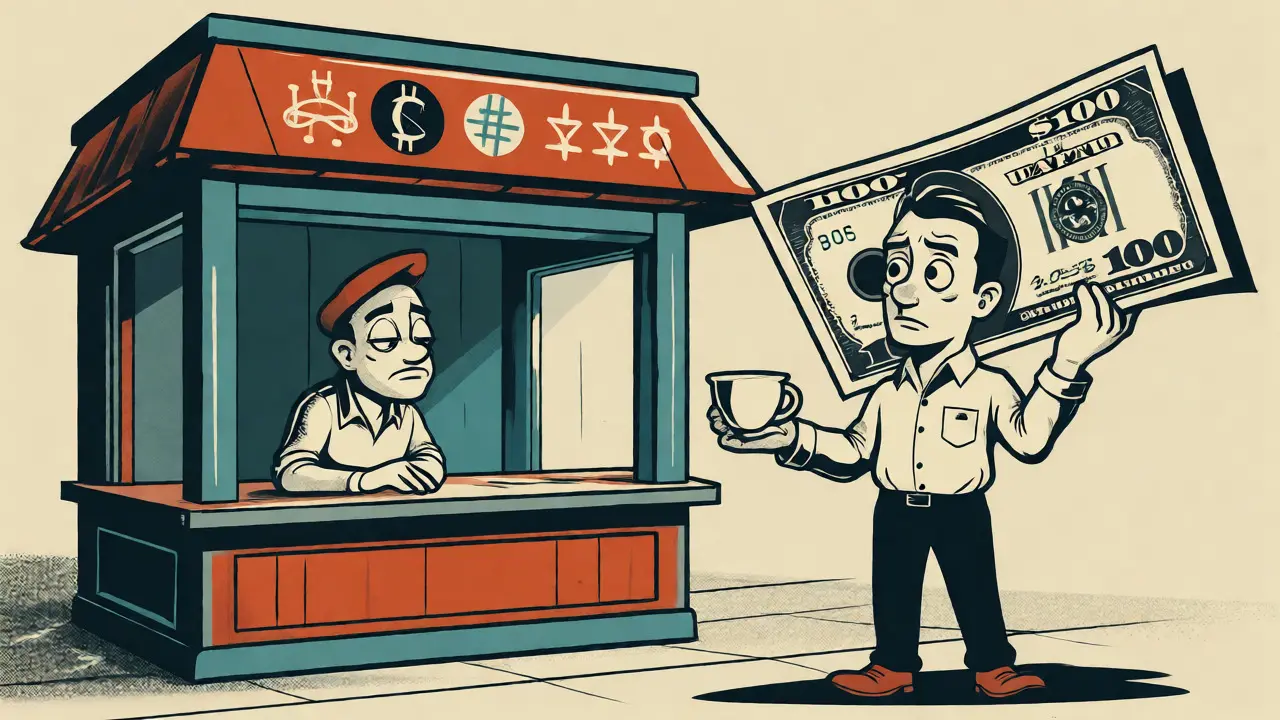
Imagine trying to buy a cup of coffee with a $100 bill in a shop that only has five customers a day. That’s roughly what trading on Kava Swap feels like for most people outside the Kava ecosystem. It is a decentralized exchange (DEX) built directly into the Kava blockchain, designed to let you trade assets without handing your coins over to a middleman. But before you connect your wallet, you need to know if this platform can actually handle your trades or if it will leave you stuck with high slippage and failed transactions.
As of late 2023 and into 2024, Kava Swap operates in a very specific niche. It isn’t competing head-to-head with giants like Uniswap or PancakeSwap for volume; instead, it serves as the liquidity hub for the Kava network itself. If you are already deep into the Cosmos ecosystem or holding KAVA tokens, this might be your go-to spot. For everyone else? You might find the experience frustratingly thin. Let’s break down exactly how it works, where it shines, and why its low trading volume is both its biggest weakness and its defining characteristic.
What Exactly Is Kava Swap?
Kava Swap is an automated market maker (AMM) that launched in 2019 as part of the broader Kava Network. Unlike centralized exchanges where you trust a company to hold your funds, Kava Swap uses smart contracts to facilitate trades between users. You keep control of your private keys at all times. The platform runs on the Kava blockchain, which is unique because it combines the Ethereum Virtual Machine (EVM) with the Cosmos SDK. This dual architecture allows developers to use familiar Ethereum tools while leveraging Cosmos’ fast inter-blockchain communication (IBC).
The core mechanism here is simple: you swap one asset for another by interacting with liquidity pools. These pools contain pairs of tokens, such as KAVA and USDX. When you trade, you pay a small fee that goes to the people providing the liquidity (the folks who put their tokens in the pool). Because it’s non-custodial, there is no KYC (Know Your Customer) process. You don’t need to upload your passport or wait for approval. You just connect a compatible wallet, and you’re ready to trade.
Liquidity and Trading Volume: The Elephant in the Room
Here is the hard truth: Kava Swap has extremely low liquidity compared to major DEXs. According to data from CoinGecko and DeFi Llama, the daily trading volume often hovers around $15,000 to $20,000. To put that in perspective, Uniswap processes billions in daily volume. Kava Swap represents a tiny fraction of the global DEX market.
Why does this matter? Low liquidity means high slippage. Slippage is the difference between the price you see when you start a trade and the price you actually get. On a liquid exchange, this might be 0.1%. On Kava Swap, if you try to swap more than $100-$200, you might see slippage jump to 3%, 5%, or even higher. One user reported a 7.3% slippage on a $500 trade, which essentially wipes out any potential profit unless you are making a massive directional bet.
| Feature | Kava Swap | Uniswap V3 | PancakeSwap |
|---|---|---|---|
| Daily Volume (Approx.) | $15k - $20k | $1B+ | $800M+ |
| Asset Selection | ~9 Assets | 1,200+ Assets | 1,000+ Assets |
| Average Slippage ($100 Trade) | Low (<0.5%) | Negligible | Negligible |
| Average Slippage ($500 Trade) | High (3-7%) | Negligible | Low |
| Cross-Chain Support | Native IBC (Cosmos) | Via Bridges | Via Bridges |
This table highlights the trade-off. Kava Swap is fine for small, frequent swaps within the Kava ecosystem. It fails miserably for large trades or diverse altcoin exposure. If you are looking to trade obscure altcoins, Kava Swap likely doesn’t list them. It primarily supports KAVA, USDX, BTC.b (a wrapped Bitcoin version), and a handful of other Cosmos-native assets.
How It Works: Speed and Fees
One area where Kava Swap genuinely impresses is speed. Because it runs on the Kava blockchain, which uses a Proof-of-Stake consensus model, transaction confirmation times are incredibly fast-often settling in under 5 seconds. Compare this to Ethereum mainnet, where confirmations can take minutes during congestion, or even some Layer 2 solutions that still have latency issues.
Fees are another bright spot. While Kava Swap charges a standard AMM fee (typically 0.3% paid to liquidity providers), the gas fees (network costs) are near zero. You won’t be paying $50 in ETH gas fees to make a $100 trade. This makes it attractive for micro-transactions or testing strategies. However, remember that the "fee" you pay includes slippage. So, while the explicit fee is low, the implicit cost due to poor liquidity can be high.
User Experience and Interface
The interface is straightforward, almost to a fault. There are no advanced order types like limit orders, stop-losses, or margin trading. It is purely a spot swap interface. You select the token you want to send, the token you want to receive, and click swap. That’s it.
Connecting your wallet is easy if you use MetaMask or the native Kava Wallet. For MetaMask, you’ll need to add the Kava EVM network manually (Chain ID: 2222). Once connected, the dashboard shows your balances and available pools. Users generally rate the usability as "easy," with a learning curve of about 15-20 minutes. However, the lack of features can feel limiting for experienced traders used to Binance or Kraken interfaces.
Community feedback paints a mixed picture. On Trustpilot, reviews average around 3.2/5 stars. Positive reviews praise the speed and simplicity. Negative reviews consistently cite failed transactions and low liquidity. A common complaint involves transactions failing during periods of moderate network activity, forcing users to retry multiple times or increase their slippage tolerance settings manually.
Security and Audits
Security is critical in DeFi. Kava Swap’s smart contracts were audited by CertiK in late 2022. The audit identified three medium-severity vulnerabilities related to price oracle manipulation, which were subsequently resolved. While this provides a baseline of confidence, it’s worth noting that audits are snapshots in time. They don’t guarantee future security, especially in rapidly evolving DeFi protocols.
Because Kava Swap is integrated deeply with the Kava blockchain’s native stablecoin, USDX, any instability in USDX could theoretically impact the swap pools. USDX is over-collateralized, meaning it’s backed by more crypto value than the dollars it represents, but it’s not immune to depeg risks during extreme market volatility.

Who Should Use Kava Swap?
You should consider using Kava Swap if:
- You are already invested in the KAVA token or the Kava ecosystem.
- You want to convert between KAVA, USDX, and BTC.b quickly and cheaply.
- You prefer non-custodial trading and want to avoid KYC procedures.
- You are making small trades (under $100) where slippage is minimal.
- You are exploring the Cosmos IBC ecosystem and want to trade assets natively without bridges.
You should probably look elsewhere if:
- You plan to trade large amounts (over $200-$500).
- You need access to hundreds of different altcoins.
- You require advanced trading tools like limit orders or margin.
- You are new to crypto and expect a robust support system (support response times can be slow, averaging 38 hours via email).
The Future of Kava Swap
Looking ahead, Kava Labs’ roadmap focuses less on improving Kava Swap as a standalone product and more on enhancing the underlying Kava blockchain infrastructure. Recent upgrades have improved performance, but they haven’t significantly boosted the swap’s volume. Industry analysts suggest that Kava Swap will remain a utility tool for existing Kava users rather than becoming a major player in the global DEX market.
The long-term viability of Kava Swap is tied directly to the adoption of the Kava blockchain. If Kava attracts more institutional DeFi projects and increases its Total Value Locked (TVL), liquidity in the swap pools may improve. Until then, it remains a niche solution for a specific community.
Is Kava Swap safe to use?
Yes, Kava Swap is generally considered safe. Its smart contracts have been audited by CertiK, and it operates on the established Kava blockchain. However, as with all DeFi platforms, you interact with smart contracts, so there is always a technical risk. Always verify the official URL to avoid phishing sites.
Why do my trades fail on Kava Swap?
Trades often fail due to insufficient liquidity in the pool or setting a slippage tolerance that is too low. If the price moves slightly between your quote and execution, the trade reverts. Try increasing your slippage tolerance to 1-3% or reducing the size of your trade.
Does Kava Swap require KYC?
No, Kava Swap is a decentralized exchange (DEX). You do not need to provide personal identification documents or undergo Know Your Customer (KYC) checks. You simply connect a Web3 wallet like MetaMask or Kava Wallet.
What tokens can I trade on Kava Swap?
The selection is limited compared to major exchanges. You can primarily trade KAVA (the native token), USDX (the stablecoin), BTC.b (wrapped Bitcoin), and a few other assets native to the Kava or Cosmos ecosystems. It is not suitable for trading popular altcoins like SOL, ADA, or DOGE unless they are bridged specifically to Kava.
Are there trading fees on Kava Swap?
There are two types of costs. First, there is a network gas fee, which is negligible (near zero) on the Kava blockchain. Second, there is a swap fee (typically 0.3%) that goes to liquidity providers. Additionally, you may experience "slippage," which is an effective cost caused by low liquidity.
