

Imagine walking into a crowded casino. You hand over a stack of crisp, marked bills to the cashier. They break them down, mix them with thousands of other chips from hundreds of gamblers, and eventually, you cash out for a fresh stack of unmarked currency. No one can trace which specific bill ended up in your final payout. This is exactly how Cryptocurrency mixing services, often called tumblers or mixers, work. But instead of gambling chips, we are talking about millions of dollars in digital assets, and the stakes are no longer just about privacy-they are about global security.
In recent years, intelligence agencies have pointed a finger at a surprising source of illicit crypto flows: North Korea. Despite being one of the most isolated nations on Earth, Pyongyang has become a sophisticated player in the cybercrime economy. A significant portion of its revenue comes from hacking exchanges, stealing stablecoins, and selling weapons. To keep this money flowing without triggering international sanctions, they rely heavily on obscuring the trail. Understanding how these mixing services facilitate money laundering for state-sponsored actors is crucial for anyone navigating the crypto landscape today.
The Mechanics of Obscuring Digital Footprints
Blockchain technology was designed to be transparent. Every transaction on networks like Bitcoin or Ethereum is recorded publicly. If you send coins from Wallet A to Wallet B, anyone can see that connection. For legitimate users, this is a feature. For criminals, it is a fatal flaw. That is where mixing services step in.
When funds enter a mixer, they are pooled together with coins from dozens, sometimes hundreds, of other users. The service then shuffles these funds through a complex series of transactions before sending the equivalent amount to new, unrelated addresses. By the time the money exits the system, the link between the original sender and the final recipient is broken. It’s not magic; it’s statistical noise.
There are two main types of mixers, each with different implications for law enforcement:
- Centralized Mixers: These operate like traditional businesses. You send your crypto to their wallet, they hold it, shuffle it, and send it back. Examples include services like Blender.io or Sinbad.io (which faced US Department of Justice indictations). The risk here is custody. If the operator is hacked, goes rogue, or is forced by authorities to hand over logs, your privacy evaporates. However, these are often easier for non-technical users to access.
- Decentralized Mixers: These use smart contracts and cryptographic protocols like CoinJoin. No single entity holds your funds. Instead, multiple users coordinate to create a single transaction with multiple inputs and outputs. This removes the "trusted third party" risk but requires more technical knowledge to use correctly.
For a state actor like North Korea, the choice of mixer depends on the scale of the operation and the need for speed versus anonymity. Centralized mixers offer convenience for large batches, while decentralized protocols provide a layer of resilience against shutdowns.
North Korea's Cyber Economy and Crypto Dependency
To understand why North Korea uses these tools, you first need to understand their financial desperation. Traditional banking channels are cut off due to harsh United Nations Security Council resolutions. They cannot easily move money through SWIFT or Western Union. Cryptocurrency became their lifeline.
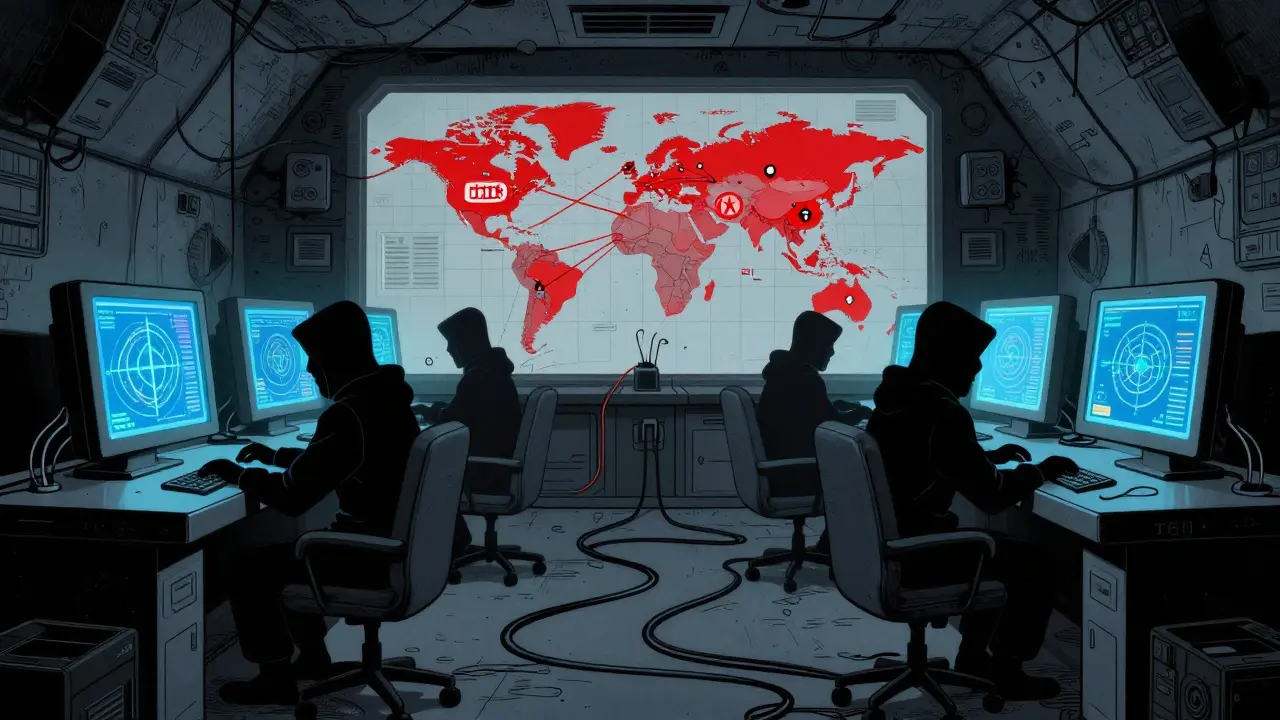
Groups linked to the North Korean government, such as the Lazarus Group, have been responsible for some of the largest heists in crypto history. They hack centralized exchanges, deploy phishing scams, and run rug pulls on DeFi platforms. In 2023 alone, estimates suggested that North Korean hackers stole billions of dollars in cryptocurrency. But stealing the money is only half the battle. Cashing it out is the real challenge.
If they simply moved stolen funds to an exchange and tried to withdraw fiat currency, red flags would fly immediately. Compliance teams at major exchanges monitor for known malicious addresses. So, they don't go direct. They go through layers of obfuscation. Mixing services act as the buffer zone. By washing the funds through a tumbler, the "dirty" crypto becomes "clean" enough to pass initial automated screening algorithms at exchanges.
The Cat-and-Mouse Game with Regulators
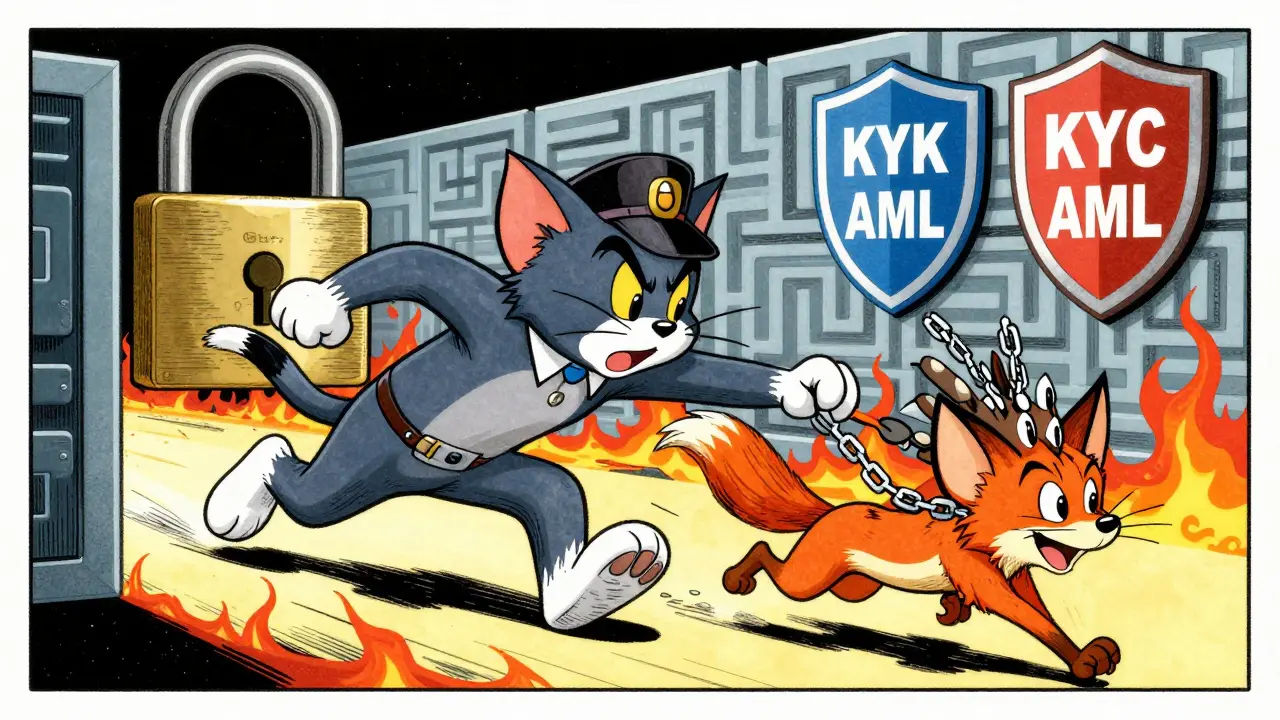
The relationship between crypto mixers and regulators is tense. Financial Action Task Force (FATF), the global money laundering watchdog, has repeatedly warned that virtual asset service providers (VASPs) must implement strict Anti-Money Laundering (AML) and Know Your Customer (KYC) rules. Mixers, by definition, resist KYC. You cannot verify the identity of someone who wants to remain anonymous.
This puts legitimate crypto businesses in a difficult spot. If an exchange accepts deposits from a known mixer address, they risk losing their license or facing massive fines. As a result, many exchanges now block transactions originating from mixing services entirely. This creates a bottleneck for launderers.
North Korean operatives have adapted. They don't just use one mixer. They chain them. Funds might move from a stolen wallet to a centralized mixer, then to a decentralized protocol, then through several intermediate wallets before finally reaching an exchange. This technique, known as "peeling," breaks the trail into smaller, less suspicious chunks. It’s tedious, costly (due to fees and gas costs), and slow, but effective enough to evade basic detection systems.
| Feature | Centralized Mixers | Decentralized Mixers |
|---|---|---|
| Custody Risk | High (Operator holds funds) | Low (Smart contracts hold funds) |
| Traceability | Moderate (Logs may exist) | Low (No central logs) |
| Regulatory Target | Primary target (Indictments common) | Secondary target (Harder to shut down) |
| User Skill Required | Low | High |
| Cost | 1-3% fee | Variable (Gas fees + protocol fees) |
Why This Matters to Everyday Users
You might think, "I'm not a North Korean hacker. Why should I care?" Here is the reality: when illicit money floods the crypto ecosystem, it devalues the entire network. Exchanges become stricter, fees go up, and legitimate privacy-focused transactions get scrutinized alongside criminal ones.
Moreover, if you accidentally receive funds that were previously mixed by a bad actor, your own wallet could be flagged. This is called "tainted" crypto. Imagine buying a house with crypto, only for the seller to discover that part of your funding came from a mixer linked to a ransomware attack. The deal falls through. The title gets frozen. Your reputation takes a hit.
Understanding the mechanics of mixing helps you avoid these pitfalls. It encourages you to use reputable platforms that perform proper due diligence. It highlights the importance of checking the source of your funds, not just the destination.
The Future of Privacy vs. Compliance
As regulatory pressure mounts, the landscape is shifting. We are seeing a rise in "privacy-preserving" technologies that claim to offer anonymity without the stigma of illegal mixing. Zero-knowledge proofs (ZKPs) allow users to prove they have sufficient funds or meet certain criteria without revealing the underlying data. This technology is being integrated into newer blockchains and Layer-2 solutions.
However, governments are pushing back. The European Union's MiCA regulation and similar frameworks in Asia and North America require transparency. The tension is clear: developers want to protect user privacy; regulators want to stop crime. North Korea and other illicit actors exploit this gray area. They push the boundaries of what is technically possible, forcing regulators to catch up.
We are likely to see more crackdowns on centralized mixers. Expect more indictments, more seized domains, and more blacklisted addresses. Decentralized mixers will become more popular among those seeking to hide trails, but they will also face increased scrutiny from blockchain analytics firms. Companies like Chainalysis and Elliptic are getting better at identifying patterns associated with mixing, even in decentralized environments.
Protecting Yourself in a Transparent World
If you are involved in cryptocurrency, whether as an investor, a business owner, or a developer, awareness is your best defense. Here are practical steps to ensure you stay on the right side of compliance:
- Know Your Source: Never accept funds from unknown wallets without verification. Use blockchain explorers to check the history of incoming transactions.
- Avoid Mixers Unless Necessary: If you do not have a legitimate legal reason to obscure your transactions (such as protecting sensitive business data in competitive markets), avoid using mixers. The risk of being associated with illicit activity is too high.
- Use Reputable Exchanges: Stick to regulated platforms that comply with AML/KYC laws. They invest heavily in filtering out tainted funds.
- Monitor Wallet Health: Tools exist that scan your wallet for exposure to known malicious addresses. Run these checks regularly.
- Stay Informed on Regulations: Laws change quickly. What was acceptable last year might be illegal today. Keep up with updates from FATF and local financial authorities.
The intersection of cryptocurrency mixing and North Korean money laundering is a stark reminder that digital money is not outside the law. It is subject to the same forces of greed, power, and control as traditional finance. But unlike traditional finance, the ledger is public. With the right tools and knowledge, we can expose the darkness rather than hide in it.
What is a cryptocurrency mixer?
A cryptocurrency mixer, also known as a tumbler, is a service that mixes cryptocurrencies from multiple users together to make it difficult to trace the path of individual transactions. It breaks the link between the sender and the receiver, enhancing privacy but also raising concerns about potential misuse for money laundering.
Does North Korea actually use crypto mixers?
Yes, intelligence reports and blockchain analysis suggest that North Korean hacking groups, such as the Lazarus Group, use mixing services to obscure the trail of stolen cryptocurrency. This allows them to move funds through the financial system without immediate detection by sanctions monitors.
Is using a crypto mixer illegal?
The legality varies by jurisdiction. In some countries, using a mixer is not explicitly illegal for privacy reasons, but it is highly scrutinized. In others, particularly if linked to tax evasion or money laundering, it can lead to severe legal consequences. Many regulated exchanges ban transactions from known mixer addresses.
How do decentralized mixers differ from centralized ones?
Centralized mixers are operated by a company that holds your funds temporarily, creating a single point of failure and potential logging risk. Decentralized mixers use smart contracts and peer-to-peer protocols (like CoinJoin) to mix funds without a trusted intermediary, offering higher security against hacks and seizures but requiring more technical skill to use.
Can blockchain analytics track mixed funds?
While mixing makes tracking harder, it is not impossible. Advanced blockchain analytics firms use clustering techniques, timing analysis, and behavioral patterns to identify likely mixer usage. If the output of a mixer interacts with a known entity or exchange, the trail can often be reconstructed partially or fully.

Alexander DeVries
June 7, 2026 AT 16:07Wake up people! The article is spot on but it’s just the tip of the iceberg. North Korea isn’t just playing around, they are running a massive cyber-empire funded by your stolen coins. It is absolutely critical that we stop pretending these mixers are some harmless privacy tool when they are clearly being weaponized by hostile state actors. We need to shut this down now before our entire financial system gets compromised.
Sylvia Mossman
June 8, 2026 AT 06:14You guys are acting like crypto is some new invention that needs saving. It’s not. It’s just digital money and it works exactly how money always has. If you don’t want it used for crime, fix your laws instead of whining about technology. Also, the US government loves to blame NK for everything while ignoring their own shady dealings. Typical propaganda.
dan kaffeman
June 10, 2026 AT 03:35The fact that American exchanges are so weak they let this happen is embarrassing. We should be banning all foreign wallets immediately. These commies are laughing at us while stealing from our citizens. It’s a national security disaster and nobody in DC seems to care except for the usual suspects who are probably on the take.
Meg Gran
June 11, 2026 AT 17:44Oh please, spare me the patriotic nonsense. The US government is more interested in controlling the narrative than actually stopping anything. They let banks launder billions for terrorists because it’s convenient. Now they pretend to care about crypto because they can’t tax it yet. Hypocrisy is their middle name.
Caitlin Donahue
June 12, 2026 AT 23:25I mean, its kinda scary how easy it is to lose track of where money goes. I just use my wallet for small stuff and try to stay away from the big exchanges. But reading this makes me think i should be more careful even then. Maybe i will start checking the source of funds like the article says. Its better safe than sorry right?
Karthikeyan S
June 13, 2026 AT 06:25lol u guys are so naive. mixing is just basic privacy. if u cant handle ur own money without the gov watching every move, thats ur problem not mine. also north korea is probly doing less damage than wall street bankers but sure lets blame the little guy 😂🤡
Dinesh Pattigilli
June 14, 2026 AT 10:40Your understanding of blockchain analytics is pathetic. Of course they can trace it if you make one mistake. The elites know this which is why they use centralized mixers with backdoors. You commoners think you are smart using coinjoin but you are just creating noise for the real players to hide in. Educate yourself before typing garbage.
Mark Corpuz
June 16, 2026 AT 03:00It is fascinating to see how the technology intended for transparency has become a tool for opacity. The distinction between centralized and decentralized mixers is crucial here. While centralized services offer convenience, they introduce a single point of failure and potential surveillance. Decentralized protocols, although technically demanding, provide a more robust framework for privacy without relying on trusted third parties. This evolution reflects a broader tension in digital finance between accessibility and security.
Yogendra Dwivedi
June 17, 2026 AT 06:27This raises an important question about the balance between privacy and regulation. While it is understandable that governments want to prevent illicit activities, completely removing privacy tools might drive transactions underground. Perhaps there is a middle ground where privacy-preserving technologies like zero-knowledge proofs can be regulated without compromising user anonymity entirely. What do you think?
Alexis Abster
June 17, 2026 AT 20:37I am truly heartbroken by how much trust has been broken in this space. It feels like every time we try to build something beautiful and free, bad actors ruin it. But we cannot give up! We must keep pushing for ethical solutions and hold each other accountable. Your safety matters, and together we can create a brighter future for cryptocurrency!
Brad Ranks
June 19, 2026 AT 19:30Can you believe these hackers? Stealing billions and getting away with it because the tech is too complex for cops. Meanwhile regular people get rug pulled daily. It’s a circus out there. I’m done holding bags until someone fixes this mess.
Madhu Menon
June 20, 2026 AT 21:59The philosophical implications of anonymous currency are profound. Is privacy a fundamental human right or a shield for criminality? 🤔 North Korea exploits the former to enable the latter. We must navigate this duality carefully.
Narendra Kulkarni
June 21, 2026 AT 15:06hey friends, good read. i agree we need to be careful. maybe we can help each other by sharing tips on safe wallets. no need to panic though. lets stay positive and informed. thanks for posting this useful info.
verna kennedy
June 21, 2026 AT 20:36If you are stupid enough to use mixers, you deserve to get scammed. Stop complaining and follow the rules. The law exists for a reason. Don’t be a victim of your own ignorance.
Kelly Tenney
June 23, 2026 AT 18:49I really appreciate this detailed breakdown. It helps us understand the risks better. Let’s support each other in staying compliant and safe. We can learn from these mistakes and build a stronger community together.
Caralee Robertson
June 24, 2026 AT 17:06i found this really interesting but also a bit overwhelming. there is so much to keep track of. i hope things get simpler soon. for now im just sticking to the basics and avoiding anything shady. thanks for the heads up everyone.
Greg Lewis
June 26, 2026 AT 07:45why does everyone assume north korea is the only problem? what about the cia or fbi laundering money through shell companies? its all corruption. you’re focusing on the wrong enemy. wake up sheeple.
JEVON HALL
June 28, 2026 AT 04:26Hey folks! Just wanted to add that using reputable exchanges is key. Check out CoinMarketCap for verified lists. Don’t fall for scams! Stay safe out there 🚀💰
Dr Lynea LaVoy
June 30, 2026 AT 03:09As a professional in this field, I can confirm that the advice given here is sound. Monitoring wallet health is non-negotiable. Please ensure you are using tools that comply with local regulations. Your financial security depends on diligence.
Matthew Malone
July 1, 2026 AT 23:31Typical liberal fear-mongering. North Korea is a sovereign nation and they have the right to manage their economy however they see fit. The US should stop interfering in other countries’ affairs. This whole crypto thing is just another excuse for imperialism.