

If you're looking for a new place to trade your digital assets, you might have come across BitWell is a cryptocurrency exchange that launched in 2020 with a heavy focus on derivatives and DeFi options. It initially promised a professional environment backed by veterans from companies like Amazon and PayPal. But here is the reality: as of 2026, BitWell is widely considered a dead or fraudulent platform. If you have money there, your priority should be getting it out, and if you're thinking of signing up, you should stop immediately.
The Red Flags: Why You Should Be Careful
At first glance, BitWell looked like a powerhouse. They claimed to have a team from Morgan Stanley, IBM, and Tencent. They even touted a "world's first DeFi option" that let people trade DeFi markets without actually holding the tokens. While that sounds like a great feature, it was mostly a marketing gimmick that never stood up to independent technical scrutiny.
The biggest warning sign is the lack of regulation. While giants like Binance and Coinbase spend millions to comply with agencies like the SEC or Dubai's VARA, BitWell chose the path of least resistance. They registered in the Seychelles. In the world of finance, a Seychelles registration for a crypto entity is often a red flag; the Financial Action Task Force (FATF) even flagged these entities as high-risk back in 2024. When a company hides its physical address and doesn't provide a clear license, they aren't protecting their privacy-they're avoiding accountability.
Trading Fees vs. Actual Risk
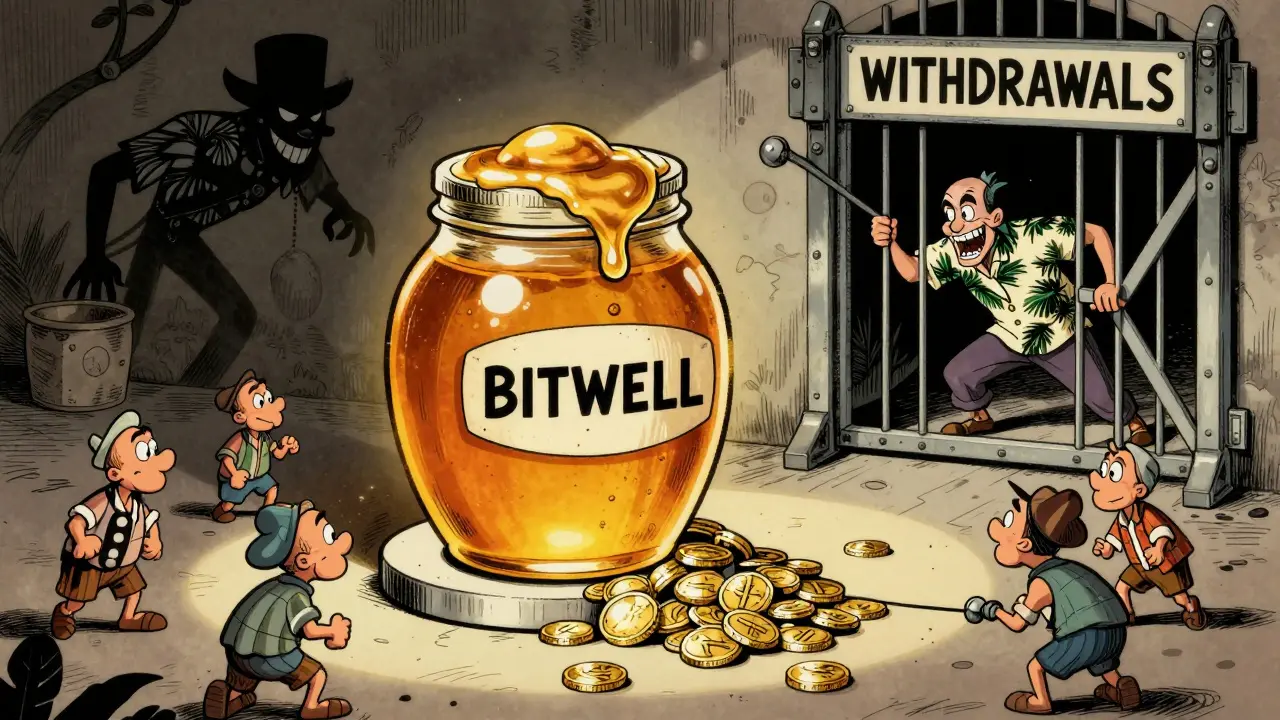
When the platform was operational, its fees looked incredibly attractive. In fact, their spot trading fees were about 59% lower than the industry average. For most traders, a taker fee of 0.09% is a steal compared to the global average of around 0.221%. However, these low fees were a "honey pot" designed to attract deposits.
The real danger wasn't how much it cost to trade, but how hard it was to leave. One of the most glaring omissions in BitWell's documentation was the total lack of information regarding withdrawal fees. In a legitimate exchange, fees are transparent. At BitWell, the lack of transparency was a precursor to the nightmare many users eventually faced.
| Fee Type | BitWell Value | Industry Average | Verdict |
|---|---|---|---|
| Spot Taker Fee | 0.09% | 0.221% | Unusually Low |
| Spot Maker Fee | 0.08% | ~0.15% | Unusually Low |
| Derivatives Taker | 0.06% | 0.065% | Competitive |
| Withdrawal Fees | Not Disclosed | Varies by Coin | Major Red Flag |
The Nightmare of Withdrawing Funds
The most disturbing part of the BitWell crypto exchange review process is the user testimony. If you look at reports from Traders Union, nearly 78% of verified complaints center on the inability to withdraw funds. This isn't just about a slow system; it's about a deliberate scam pattern.
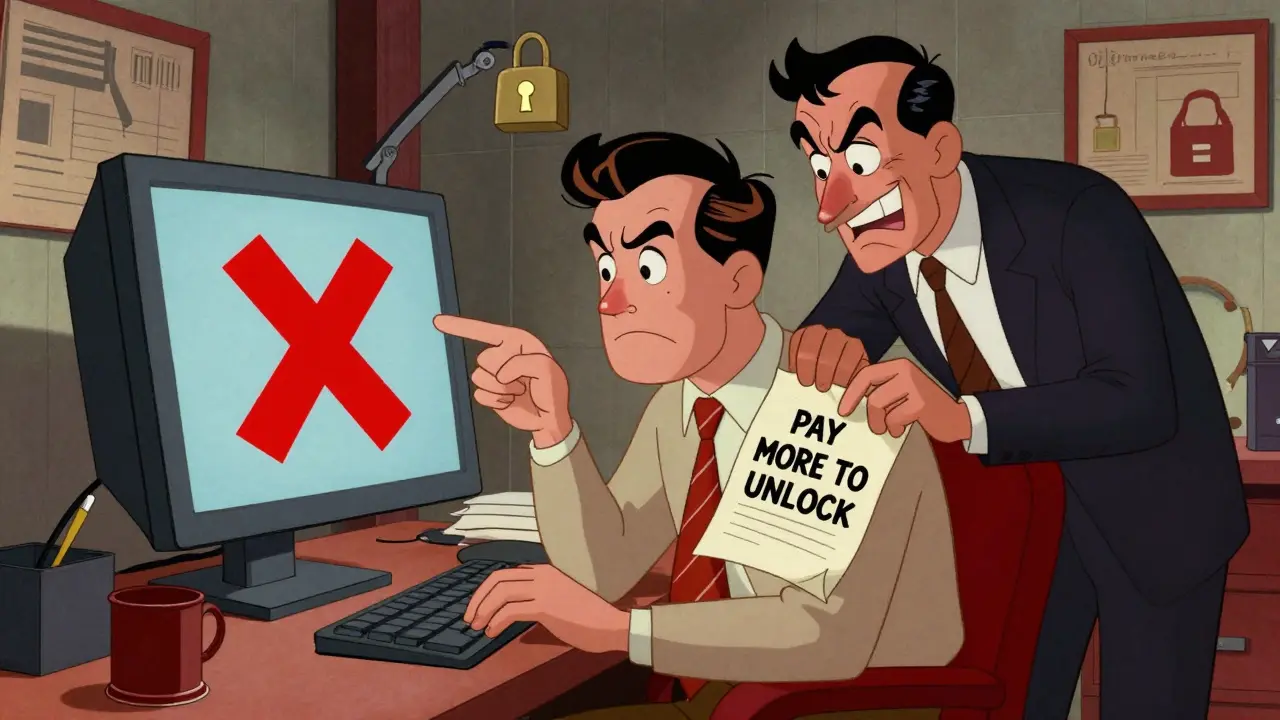
Users reported that once they tried to move their money, the exchange suddenly invented "artificial obstacles." This includes demanding "insurance fees," "verification fees," or claiming there was "suspicious activity" on the account. For example, one trader reported that BitWell locked an account with over $12,000 and demanded an additional $2,400 just to release it. This is a textbook recovery scam: the platform asks for more money to "unlock" the money you already have. You will never get that money back by paying those fees.
Is bitwellex.net a Legitimate Alternative?
After the main site (bitwell.com) stopped working, some users were redirected to bitwellex.net. Some claim they managed to recover funds there, but most experts, including the forensic team at Cryptolegal UK, warn that this is likely a rebranding effort or a secondary scam targeting former victims.
When an exchange "crashes" and then reappears under a slightly different domain without a formal legal explanation or a new regulatory license, it's not a recovery-it's a shell game. Legitimate businesses don't just vanish and reappear on a new URL while ignoring thousands of customer support tickets.
Comparing BitWell to Real Exchanges
To understand why BitWell failed, look at the platforms that actually survive. A company like Deribit dominates the Bitcoin options market not by having the lowest fees, but by providing a reliable, transparent environment that professional traders trust. BitWell tried to compete on a "DeFi options" feature without the underlying infrastructure or legal standing to support it.
The contrast is simple: safe exchanges prioritize security and legality (KYC/AML compliance). BitWell prioritized aggressive marketing and low entry fees to lure in users, then cut off the exit ramps when it became profitable to do so.
Final Verdict: Stay Away
There is no scenario where using BitWell is a good idea in 2026. The platform has been marked as "dead" by industry trackers like Cryptowisser and blacklisted by major brokerage evaluators. With a sustainability rating of only 2.3/100 from the Blockchain Research Institute, the project is effectively a ghost.
If you are looking for a place to trade, stick to platforms that are listed on public stock exchanges or have clear, verifiable licenses in jurisdictions like the US, Japan, or Switzerland. A low fee is never worth the risk of losing 100% of your principal because the exchange decided to disappear.
Is BitWell a scam?
Yes, based on reports from Cryptolegal UK and Traders Union, BitWell is categorized as a scam entity. It has been flagged for fraudulent activity, including locking user funds and demanding fake "verification fees" to release them.
Can I recover my funds from BitWell?
It is very unlikely. While a few users mentioned bitwellex.net, most experts warn that these are recovery scams. Do not send any more money to any BitWell-related site under the guise of "unlocking" your account.
Why did BitWell have such low fees?
Low fees are often used by fraudulent exchanges to lure in a high volume of new users. By offering rates significantly below the industry average, they make their platform more attractive than legitimate, regulated competitors.
Was BitWell regulated?
No. BitWell was registered in the Seychelles, a jurisdiction often used by unregulated brokers. It lacked licenses from reputable financial authorities, which is a primary reason for its current "dead" status.
What should I do if my account is locked on BitWell?
Stop sending money immediately. Do not pay any "insurance" or "verification" fees. Report the incident to your local financial crimes authority and be wary of anyone claiming they can "hack" your funds back for a fee-these are also scams.

Jan Conrad
April 30, 2026 AT 12:39The mention of the Seychelles registration is the most critical part here. Most people ignore the 'About Us' page until their funds are gone, but a lack of a verifiable physical address and a license from a tier-1 jurisdiction is a death sentence for any platform claiming to be professional.
Noel Mandotah
May 2, 2026 AT 07:31Imagine actually falling for a Seychelles-based exchange in 2020. Truly impressive levels of gullibility. 🙄
Aaron Zeiler
May 2, 2026 AT 22:25classic honey pot strategy honestly just bait them with low fees then lock the door
Tracy McBurney
May 4, 2026 AT 17:24The technical analysis of their so-called DeFi options was predictably shallow. It is quite evident that the operators relied on the general public's lack of understanding regarding smart contracts to facilitate this fraud. The audacity to pivot to a .net domain to prey on the same victims is a level of depravity that requires specific mention.
Sri Astuti
May 5, 2026 AT 19:58It is just so heartbreaking how these predatory platforms target people who are just trying to build a better future for themselves and then they have the nerve to ask for an 'insurance fee' which is honestly the most disgusting part of the whole scam because they are literally stealing from the victims twice 😭💔 and the fact that they used a .net site to lure them back shows they have absolutely no shame in their corporate greed!
Elle Kharitou
May 7, 2026 AT 09:47We must remember that these experiences, while devastating, are often the catalysts for a deeper awakening regarding digital sovereignty and the importance of self-custody. 🌟 If we view the loss as a tuition fee for the school of hard knocks, we can find the strength to educate others so they don't stumble into the same traps! Let's hold each other up and move toward a more transparent ecosystem where the community protects its own. 🌈✨💖
Michael Repak
May 8, 2026 AT 06:48Absolutely spot on!!! I really appreciate the warning here... It is so important for beginners to double-check those licenses!!!
Livvy Cooper
May 9, 2026 AT 00:29Who cares about the licenses anyway. Most of these big ones are just as bad but with better lawyers.
Arun Prabhu
May 9, 2026 AT 09:58The sheer banality of this grift is almost poetic in its simplicity. A plebeian attempt at financial engineering that merely serves as a testament to the endless appetite of the naive. Truly a wretched display of corporate masquerading.
edie rosa
May 10, 2026 AT 21:57It's the moral bankruptcy for me. These people sleep soundly while families lose their life savings over a few percentage points in trading fees. It's an absolute sickness in the industry.
Jehan ZA
May 11, 2026 AT 11:24I believe it is prudent to maintain a high degree of skepticism toward any entity that operates without a transparent physical presence. This situation serves as a sobering reminder to prioritize security over cost.
Chloe Fletcher
May 11, 2026 AT 22:17Just stay away everyone! 🛑 Please don't let the low fees trick you into thinking it's a deal. It's a trap! 🙅♀️
Rachel S
May 12, 2026 AT 17:50The red flags here are simply screaming at us! 😱 It is absolutely an emergency if you still have funds on this platform! Please, for the love of everything, do not send another penny to 'unlock' your account because that is just throwing good money after bad! 🚩 This is a textbook recovery scam and it is absolutely devastating to see people falling for it! I cannot stress enough how vital it is to use cold storage or reputable, regulated exchanges to avoid this kind of nightmare! 📉 If you've been hit, please report it to the authorities immediately because these criminals thrive on our silence! It is just so tragic that this happens so often in the crypto space! Stay safe out there and always, always do your own research before trusting a platform with your hard-earned money! 🛡️✨