

You see the ticker thUSD or THUSD on a chart, and your brain immediately thinks "stablecoin." But here is the catch: that ticker actually belongs to two completely different projects with opposing philosophies. One relies on crypto collateral like Bitcoin and Ethereum. The other leans heavily on real-world assets like gold and real estate. If you mix them up, you might end up buying a high-risk yield product when you wanted a safe harbor, or vice versa.
This confusion isn't just annoying; it’s dangerous in crypto. Before you swap any dollars for thUSD, you need to know exactly which protocol you are interacting with. Let's break down the two distinct entities sharing this name so you can make an informed decision.
The Ticker Confusion: Two Coins, One Name
In the world of decentralized finance (DeFi), ticker symbols are not regulated like stock tickers. Anyone can technically create a token with a symbol similar to another. However, in the case of thUSD, we have two legitimate but distinct protocols that happen to use the same abbreviation.
- Threshold USD (thUSD) is a decentralized borrowing stablecoin issued by the Threshold Network, backed by ETH and tBTC. It uses a lowercase 't' usually, signaling its DeFi-native roots.
- Tharwa USD / Theo thUSD (THUSD) is an RWA-backed multi-chain stablecoin created by the Theo/Tharwa stack, generating yield from gold futures and diversified portfolios. It typically uses uppercase letters.
Why does this matter? Because their risk profiles are opposites. One is about leveraging crypto holdings without selling them. The other is about earning yield through complex off-chain asset management. Let's look at each one individually.
Threshold USD (thUSD): The Crypto-Collateralized Lender
Threshold USD operates within the Threshold Network, a decentralized infrastructure project focused on privacy-preserving services like threshold signatures and wrapped Bitcoin. Think of thUSD as a tool for liquidity rather than savings.
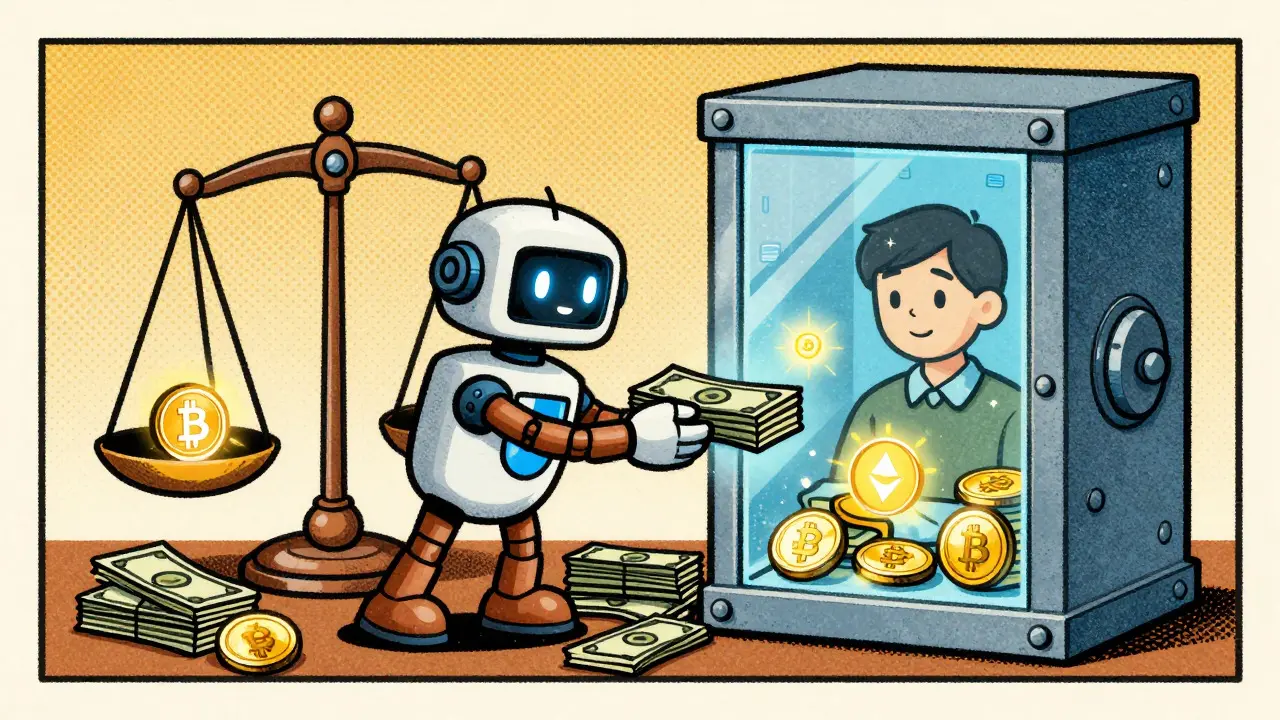
Here is how the mechanism works. You don't buy thUSD with dollars directly in most cases. Instead, you lock up digital assets-specifically Ethereum (ETH) and tBTC (Threshold Bitcoin)-into a smart contract. The protocol then lends you thUSD against that collateral. This is known as an over-collateralized loan.
| Attribute | Value / Detail |
|---|---|
| Backing Assets | ETH and tBTC |
| Collateral Ratio | Minimum 110% |
| Interest Rate | No interest charged on loans |
| Peg Type | Soft peg (redeemable at face value) |
| Market Cap (Approx.) | $516,000 - $520,000 |
The standout feature here is the "no-interest" model. Unlike traditional lending platforms where you pay APY to borrow against your Bitcoin, Threshold allows you to mint thUSD interest-free. You simply maintain a collateral ratio above 110%. If the price of ETH or BTC drops too low, your position gets liquidated to protect the peg. You can redeem your thUSD back into tBTC at any time, effectively closing the loan.
However, the market presence is tiny. Data from CoinGecko shows a circulating supply of around 520,000 tokens with daily trading volumes often dipping below $25. This means liquidity is thin. If you try to move large amounts quickly, you will likely face significant slippage. It is designed for niche DeFi users who already hold tBTC and want exposure to dollar-denominated assets without triggering taxable sell events on their crypto holdings.
Tharwa / Theo thUSD: The Real-World Asset Yield Play
On the other side of the spectrum sits Tharwa USD (often listed as Theo thUSD). This project attempts to bridge the gap between traditional finance (TradFi) and blockchain by using Real-World Assets (RWAs) as physical or financial assets like gold, real estate, or bonds that are tokenized on the blockchain.
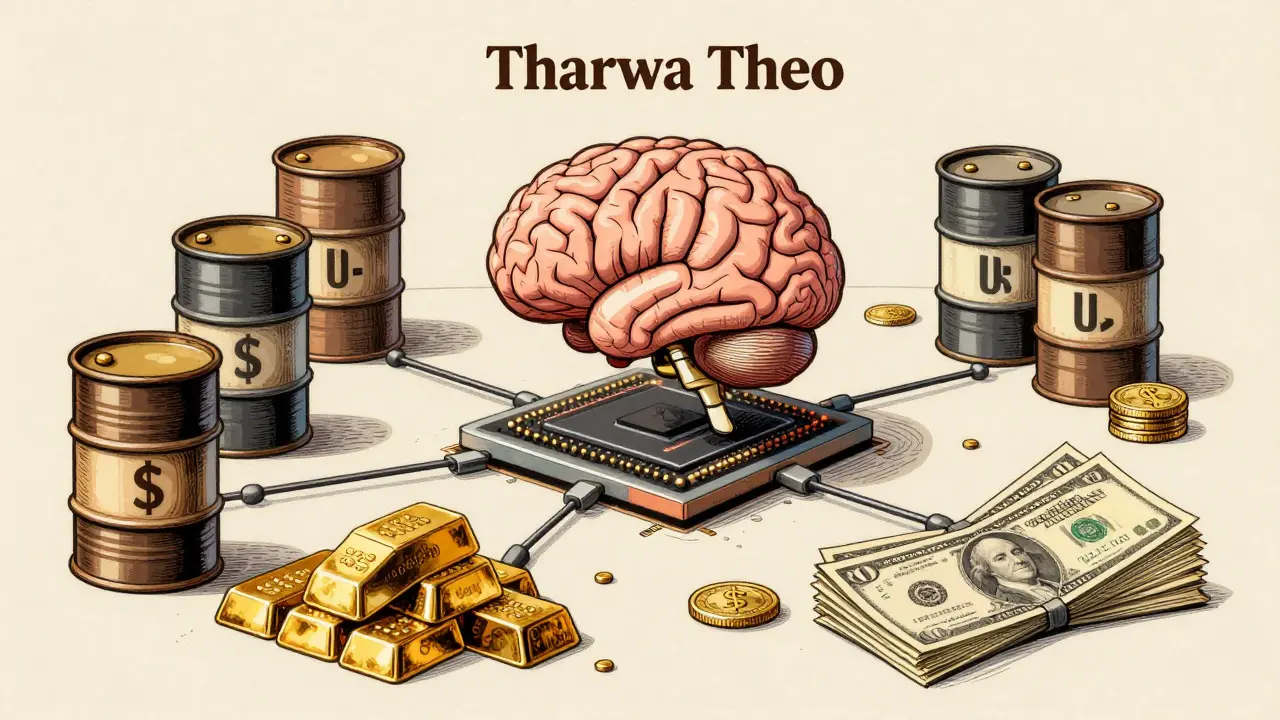
Unlike Threshold, which stays purely on-chain with crypto assets, Tharwa claims its backing comes from a diversified portfolio including gold, UAE-based real estate, oil, and U.S. Treasury bills. The goal here isn't just stability; it's yield. The project argues that fiat-backed stablecoins like USDC offer zero return to holders, while algorithmic ones are risky. Tharwa aims to sit in the middle by generating returns through a structured facility called the Genesis Vault, a structured financial product with $100 million capacity utilizing gold futures trading strategies.
The workflow described by the team involves a cycle: Users deposit USD -> receive thUSD -> Protocol invests in RWAs/Gold Futures -> Returns are generated -> Peg is maintained. They claim to use AI-driven quantitative auto-rebalancing to manage this portfolio, aiming to beat both traditional bank rates and standard on-chain yields.
| Attribute | Value / Detail |
|---|---|
| Backing Assets | Gold, UAE Real Estate, Oil, US Treasuries |
| Yield Source | Gold futures trading & RWA portfolios |
| Management | AI & Quantitative Auto-rebalancing |
| Market Cap (Approx.) | $168,000 - $170,000 |
| Circulating Supply | ~169,000 THUSD |
The Genesis Vault reportedly closed its $100 million capacity within 24 hours of opening, suggesting some institutional interest in the underlying strategy. However, for the retail investor holding the THUSD token, the picture is murkier. The token itself has a micro-cap status, with a market capitalization hovering around $168,000. Daily trading volume is often less than $60. This indicates extremely low liquidity and limited exchange support, primarily found on platforms like Bybit or Coinbase India, while major aggregators like CoinGecko sometimes list it as unavailable for trading.
Risk Assessment: What Could Go Wrong?
When dealing with micro-cap stablecoins, risk management is your primary job. Neither of these thUSD variants offers the safety net of USDT or USDC, which have billions in reserves and deep regulatory scrutiny.
For Threshold USD, the main risks are smart contract vulnerabilities and crypto volatility. Since it is backed by ETH and BTC, a massive crash in crypto markets could trigger widespread liquidations if the 110% collateral buffer isn't managed carefully. Additionally, because it is part of the Threshold Network ecosystem, its success is tied to the adoption of tBTC. If no one uses tBTC, the utility of thUSD diminishes.
For Tharwa / Theo thUSD, the risks are structural and opaque. RWA-backed stablecoins rely heavily on the integrity of the off-chain managers. Are the gold futures actually being traded? Is the AI rebalancing working as advertised? Without transparent, real-time third-party audits of the underlying physical assets (which are currently lacking in public documentation), you are trusting the protocol's word. Furthermore, the extremely low liquidity means that if everyone tries to redeem their tokens at once, there might not be enough cash on hand to honor the $1.00 peg instantly.
Comparison: thUSD vs. Traditional Stablecoins
To put things in perspective, let's compare these thUSD variants to a well-established fiat-backed stablecoin like TrueUSD (TUSD), a fiat-backed stablecoin issued by TrustToken, fully backed 1:1 by US dollars held in regulated accounts.
- Liquidity: TUSD has a market cap exceeding $1.5 billion and trades on almost every major exchange. Both thUSD variants have market caps under $1 million. Moving money in and out of thUSD is difficult and expensive due to slippage.
- Transparency: TUSD provides regular attestations from independent auditors proving the existence of dollar reserves. Tharwa claims AI-managed RWA backing but lacks comparable public audit trails for its specific asset allocations.
- Utility: TUSD is used for everyday trading pairs and hedging. Threshold thUSD is a niche tool for leveraging crypto positions. Tharwa thUSD is a speculative yield vehicle.
If you need a stablecoin to park funds safely while waiting for a trade setup, neither thUSD option is ideal. They are experimental instruments designed for specific strategies, not general-purpose currency.
Who Should Use thUSD?
You should consider Threshold USD if you are an advanced DeFi user who already holds tBTC or ETH, wants to access dollar liquidity without paying interest, and understands the mechanics of liquidation risks. It is a capital efficiency tool, not a savings account.
You might look at Tharwa / Theo thUSD if you believe in the thesis of tokenized real-world assets and want exposure to gold and commodity yields via blockchain. Be aware that you are betting on the success of their proprietary AI management and the integrity of their off-chain vaults. Given the micro-cap size, treat any investment here as high-risk speculation.
For the average investor looking for a simple way to hold dollars on-chain, sticking to larger, more liquid options remains the prudent choice until these projects demonstrate deeper liquidity and clearer transparency.
Is thUSD the same as THUSD?
Not necessarily. While they share the same ticker symbol, "thUSD" usually refers to Threshold USD (crypto-backed), while "THUSD" often refers to Tharwa/Theo USD (RWA-backed). Always check the contract address and the underlying protocol before trading, as they are completely different assets with different risk profiles.
Which blockchain is thUSD on?
Threshold USD (thUSD) is primarily native to the Ethereum network, as it relies on ETH and tBTC. Tharwa/Theo thUSD is described as a multi-chain stablecoin, meaning it may exist on various blockchains depending on the Theo platform's integrations, but liquidity is currently fragmented across a few centralized exchanges like Bybit.
Does thUSD earn interest?
It depends on which version you mean. Threshold USD loans are interest-free for the borrower. Tharwa/Theo thUSD is marketed as a yield-bearing asset, claiming to generate returns through gold futures and RWA investments, though historical performance data for retail holders is limited.
Is thUSD safe compared to USDT?
Currently, no. USDT has significantly higher liquidity, broader exchange support, and established reserve reporting. Both versions of thUSD are micro-cap assets with very low trading volumes (often under $100/day), making them susceptible to high volatility and liquidity crunches during market stress.
How do I buy thUSD?
Buying thUSD is difficult due to low liquidity. Threshold thUSD is accessed via the Threshold Network borrowing contracts on Ethereum. Tharwa/Theo thUSD may be available on select centralized exchanges like Bybit or Coinbase India, but availability changes frequently. Always verify the contract address on a trusted aggregator like CoinGecko or CoinMarketCap before purchasing.
