

Launching your own blockchain used to be a nightmare. You needed six to twelve months just to set up validators, configure RPCs, and get indexing right. It was expensive, slow, and technically exhausting. That reality changed with the rise of Tanssi, a decentralized infrastructure protocol that lets teams deploy application-specific blockchains-called appchains-in minutes. If you have heard the ticker symbol TANSSI popping up on charts or in developer circles, you are looking at the fuel that powers this new model.
This article breaks down what Tanssi actually does, how the TANSSI token works, and why it matters for the future of Web3 development. We will look at the technology, the economics, and the real-world use cases without getting lost in hype.
The Core Problem: Why Do We Need Appchains?
Most developers start by building smart contracts on existing networks like Ethereum or Solana. But as applications grow, they hit walls. High gas fees, congestion, and rigid rules make it hard to scale. The solution many projects choose is an "appchain"-a dedicated blockchain built specifically for one application.
The problem is the setup. Building a chain from scratch requires heavy lifting. You need to recruit validators, ensure data availability, and manage security. For a startup or a small team, this is often impossible. This is where Tanssi steps in. It acts as an infrastructure layer that handles all the boring, complex backend work so developers can focus on their product.
What exactly is an appchain?
An appchain is a blockchain tailored for a specific application or ecosystem. Unlike general-purpose chains (like Bitcoin or Ethereum) that run thousands of different apps, an appchain runs only one. This allows for custom rules, higher speed, and lower costs for that specific use case.
How Tanssi Works: The ContainerChain Model
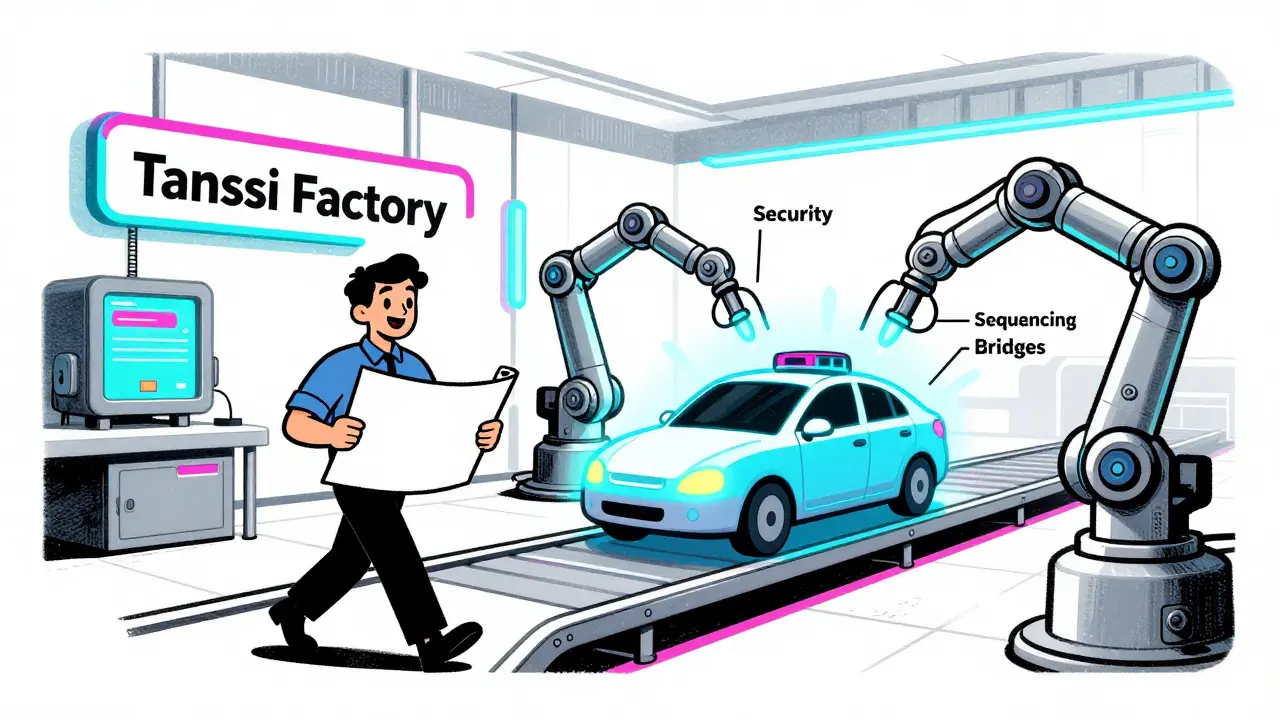
Tanssi turns traditional chains into what it calls ContainerChains. Think of Tanssi as a factory. Instead of you building a car engine from raw metal, you walk into the factory, pick your specifications, and drive out with a fully assembled vehicle in minutes.
When a developer registers a ContainerChain on Tanssi, the protocol automatically provisions:
- Validators: Nodes that secure the network.
- Decentralized Sequencing: Ordering transactions fairly and efficiently.
- RPC Endpoints: The connection points for wallets and dApps.
- Indexers and Explorers: Tools to track transactions.
- Bridges: Connections to other networks like Ethereum.
This automation is powered by the Substrate framework, originally developed by Polkadot. Substrate is highly flexible, allowing Tanssi to create modular, sovereign chains that still share security benefits. The result is a system that combines the speed of rollups with the autonomy of Layer-1 blockchains.
The Role of the TANSSI Token
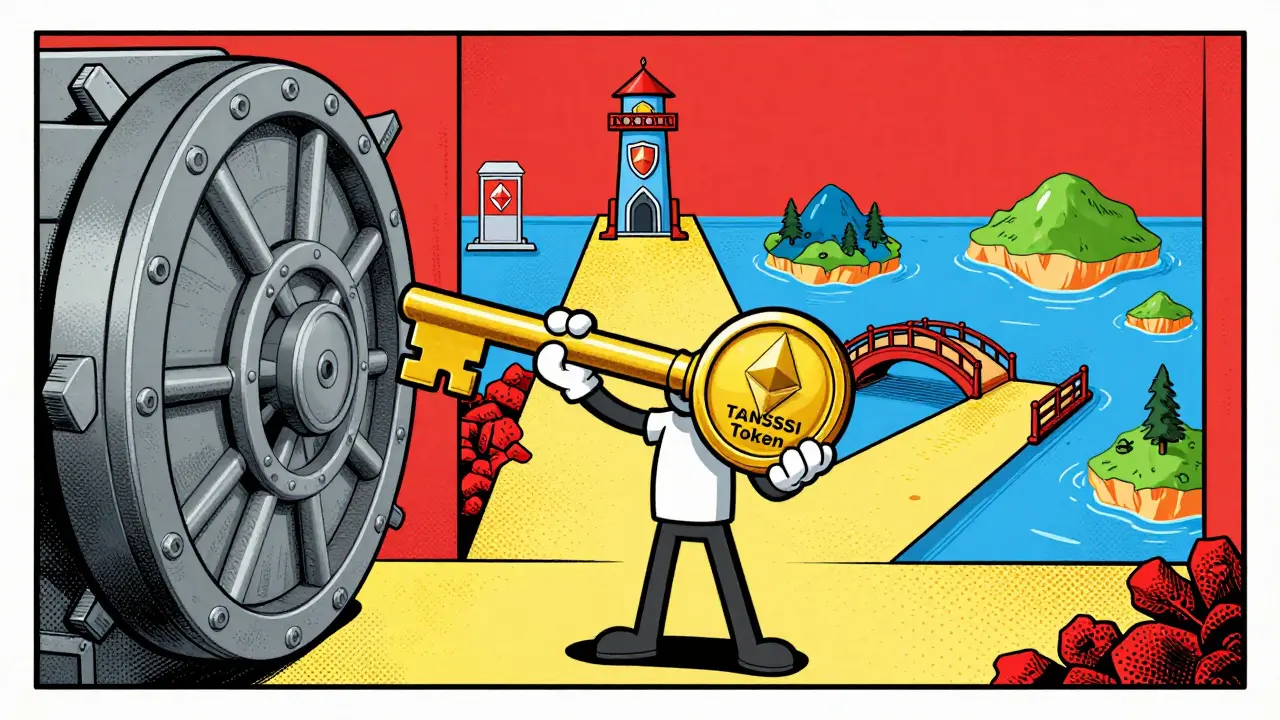
You cannot interact with the Tanssi network without the TANSSI token. It is not just a speculative asset; it is the economic backbone of the entire ecosystem. Here is what you actually do with it:
- Deploying Appchains: Developers pay TANSSI to register and launch a new ContainerChain.
- Paying for Services: Running a chain costs money. Users pay TANSSI for "sequencing as a service" to keep their appchain live and processing transactions.
- Governance: Holders vote on protocol upgrades, treasury spending, and rule changes. Since all transaction fees go into a protocol treasury, voters decide how those funds are spent on public goods.
- Staking and Security: This is critical. You can stake TANSSI on two types of actors:
Operators (Validators): These nodes secure the network. Staking here carries slashing risk. If an operator goes offline or behaves maliciously, staked tokens are burned as a penalty. However, rewards are generally higher to compensate for this risk.
Sequencers: These provide transaction ordering services. Staking on sequencers currently carries no slashing risk, offering a safer but potentially lower-reward profile for passive holders.
Tokenomics and Supply Details
Understanding the supply is crucial because market data can be confusing. Tanssi has a fixed genesis supply of 1 billion TANSSI tokens. However, not all of these are available immediately. The supply unlocks over time according to vesting schedules designed to align long-term incentives.
As of mid-2026, the circulating supply varies across data aggregators due to different tracking methodologies. Some platforms report around 418 million tokens in circulation, while others show different figures based on when they last updated their data. This discrepancy is common in early-stage protocols where liquidity and vesting events happen rapidly.
The token exists in two forms:
- Native Tanssi Chain: Used for governance, staking, and fees within the Tanssi network.
- ERC-20 on Ethereum: A canonical representation that allows trading on decentralized exchanges like Uniswap. This bridge connects the Tanssi ecosystem to the broader Ethereum DeFi world.
Security: Shared and Restaked
Security is the biggest concern for any new blockchain. Tanssi addresses this through a layered approach. First, it uses validator orchestration. By automating the selection and management of validators, it reduces the risk of human error or centralized control.
Second, it integrates with restaking protocols like Symbiotic. This allows Tanssi to leverage "Ethereum-grade security." Essentially, capital already staked on Ethereum can be reused to secure Tanssi, making it much harder and more expensive for attackers to compromise the network. This hybrid model gives smaller appchains the security profile of major Layer-1s without the massive cost.
Who Is Tanssi For?
Tanssi isn't trying to replace Ethereum. It is targeting specific niches where dedicated chains make sense. The primary users include:
- RWA Platforms: Real-world assets often require specific compliance rules and privacy features that general-purpose chains struggle to provide efficiently.
- Stablecoin Issuers: Projects launching their own stablecoins benefit from having a dedicated chain for faster settlement and lower fees.
- Coordination Protocols: DAOs and governance systems that need high throughput and custom logic.
If you are a developer building a complex dApp that is being throttled by mainnet congestion, Tanssi offers a way out. You get your own lane on the highway, complete with traffic lights and maintenance crews provided by the protocol.
Market Context and Risks
As with any crypto project, there are risks. The most immediate one is data inconsistency. Because Tanssi is relatively new, price trackers like CoinMarketCap, CoinGecko, and CoinDesk sometimes show wildly different market caps and circulating supplies. One might list the price at $0.008 while another shows $0.04. Always check multiple sources and verify the contract address if you are trading the ERC-20 version.
Liquidity is another factor. Trading volume on pairs like TANSSI/USDC on Uniswap can be modest compared to top-tier coins. This means large trades could impact the price significantly. Additionally, the value of TANSSI is tied to the adoption of the infrastructure. If developers don't build appchains on Tanssi, the demand for the token drops. It is a bet on the utility of the network, not just speculation.
Conclusion
Tanssi represents a shift toward modular, developer-friendly infrastructure. By turning blockchain deployment into a service, it lowers the barrier to entry for innovation. The TANSSI token is the key that unlocks this system, serving as currency, collateral, and voting power. Whether it succeeds depends on whether enough builders find value in its "minutes-to-launch" promise. For now, it stands as a serious contender in the appchain race, bridging the gap between complex Layer-1 tech and practical application needs.
Is Tanssi a scam?
There is no evidence suggesting Tanssi is a scam. It is backed by Moondance Labs, has open-source code on GitHub, and lists transparent tokenomics. However, as with any cryptocurrency, investment carries risk due to market volatility and technical uncertainty.
How do I buy TANSSI?
You can buy the ERC-20 version of TANSSI on decentralized exchanges like Uniswap using ETH or USDC. Ensure you use the correct contract address (0x553f4cb7256d8fc038e91d36cb63fa7c13b624ab) to avoid fake tokens.
What is the difference between Tanssi and Polkadot?
Polkadot is a multi-chain network that connects independent blockchains. Tanssi is built using Polkadot's Substrate framework but operates as a standalone infrastructure protocol focused specifically on rapid appchain deployment and shared security services.
Can I stake TANSSI safely?
Staking involves risks. Staking on operators carries slashing risk if validators misbehave. Staking on sequencers currently has no slashing risk. Always research the performance history of the operator or sequencer you delegate to.
When did Tanssi launch?
The Tanssi mainnet launched in June 2025, followed shortly by the ERC-20 token generation event on Ethereum. Development began earlier, with initial code commits dating back to February 2023.
