
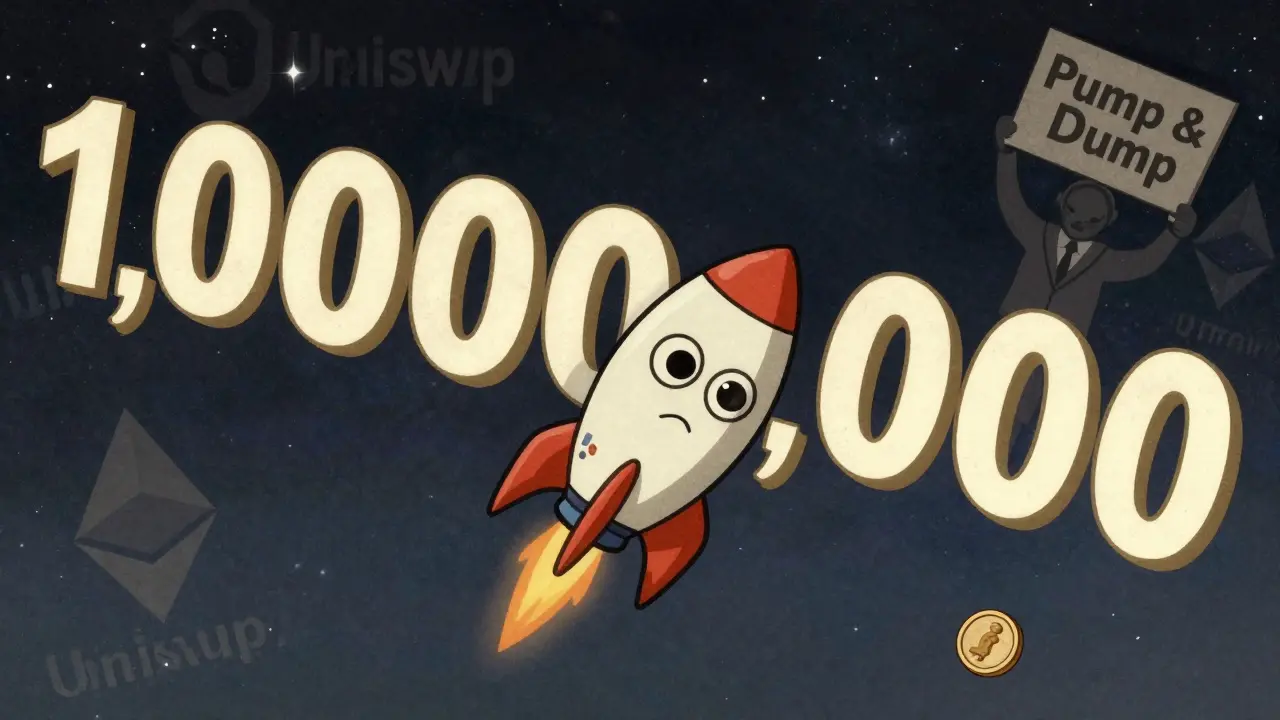
SpacePi (SPACEPI) is a cryptocurrency token built on the Ethereum blockchain, but calling it an investment is misleading. It’s not a project with a team, a roadmap, or real utility. It’s a low-liquidity, ultra-high-supply token trading at fractions of a cent - the kind that shows up on decentralized exchanges like Uniswap and disappears just as fast.
What you actually get with SPACEPI
SpacePi has a total supply of 1 quadrillion tokens - that’s 1,000,000,000,000,000. The maximum supply is just a bit higher at 1,000,261,100,000,000. That sounds massive, and it is. But here’s the catch: you’re not buying one token. You’re buying 100 billion of them to make up one dollar. That’s not practical. It’s designed to look like a meme coin - think Dogecoin or Shiba Inu - but without the community, the hype, or the volume.
As of January 2026, SPACEPI trades at $0.000081306. That’s less than one hundredth of a cent. Its all-time high was $0.000076469 back in March 2024. That means even at its peak, it was worth less than today. The all-time low? $0.000094951 in April 2025 - which was actually higher than the current price. That’s not a recovery. That’s a decline.
Where you can trade it (and why you shouldn’t)
SPACEPI is only available on decentralized exchanges, mostly Uniswap V2 on Ethereum. You won’t find it on Binance, Coinbase, or Kraken. Binance even says it’s “not listed for trade.” That’s a red flag. Major exchanges don’t list tokens without basic checks - liquidity, team, security, and demand. SPACEPI has none of those.
The 24-hour trading volume is around $21,350. That’s tiny. For comparison, Shiba Inu trades over $1 billion a day. Even Dogelon Mars moves $100 million. SPACEPI’s volume is so low that a single large trade can swing the price by 5% or more. That’s not market movement - that’s manipulation.
Market cap? More like market illusion
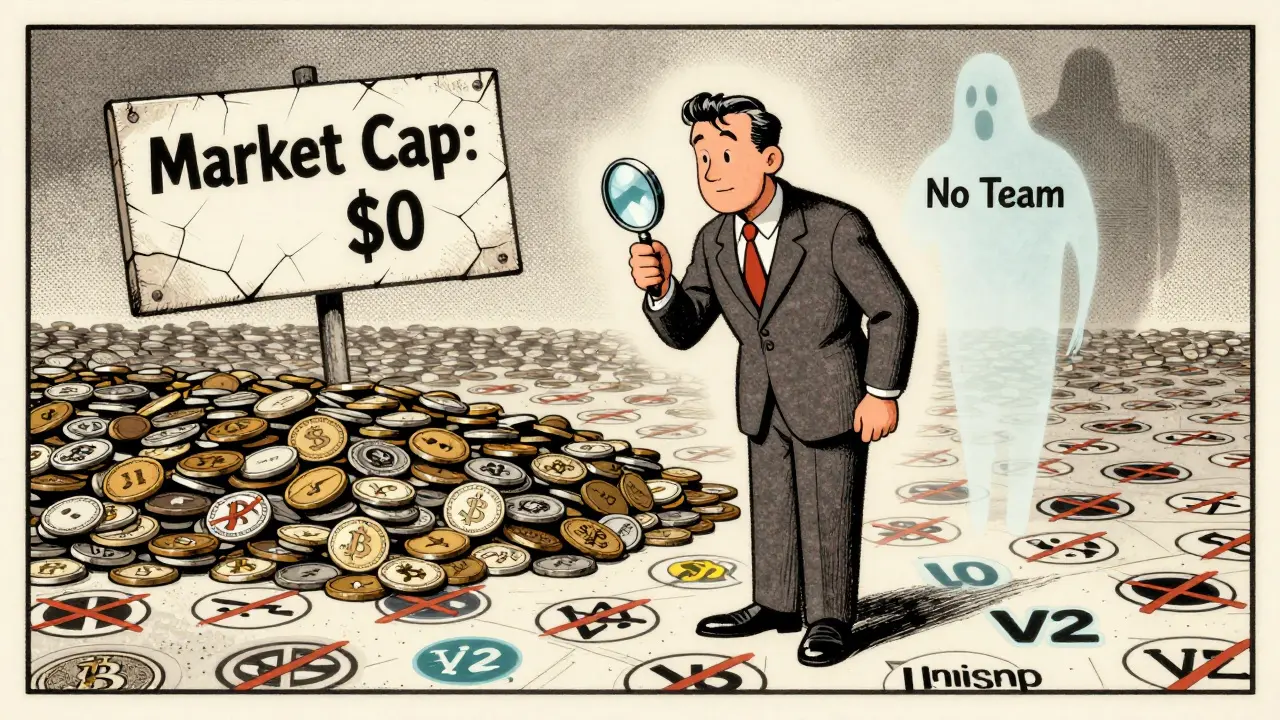
Here’s where things get messy. Different sites show wildly different numbers. CoinGecko calculates a market cap based on its own pricing model. TradingView says it’s around $689,730. Binance says it’s $0 because they claim the circulating supply is zero. Which one’s right? None of them. The truth is, nobody knows how many tokens are actually out there. That’s not transparency - that’s opacity.
The fully diluted valuation (FDV), which assumes every single token is in circulation, is around $1.57 million. That’s less than the cost of a small startup’s server farm. In a $1.8 trillion crypto market, SPACEPI is invisible. It’s ranked #6625 by market cap - meaning there are over 6,600 other cryptocurrencies with more value. That’s not a niche project. That’s a footnote.
Why it looks like a pump and dump
SpacePi follows the classic pattern of micro-cap tokens that vanish: massive supply, tiny price, no team, no whitepaper, no website, no social media presence. There’s no official Discord, no Telegram group, no GitHub repo. Reddit has zero active threads about it. Trustpilot has no reviews. Even the MEXC exchange’s promotional article about “Mobile SpacePi Trading” doesn’t link to any real user data or community.
Its 7-day price increase of 24.6% sounds good - until you realize that’s just a $0.0000168 move. That’s not growth. That’s noise. And the 24-hour price range? Only $0.000000096 difference between high and low. That’s not volatility - that’s stagnation. The token isn’t moving because people are trading it. It’s moving because bots or whales are shuffling tiny amounts to create fake momentum.
Can you even use it?
You can add SPACEPI to MetaMask using its contract address: 0x69b14e8d3cebfdd8196bfe530954a0c226e5008e. But what then? You can’t pay for coffee with it. You can’t use it in any app. You can’t stake it. You can’t earn interest on it. There’s no DeFi protocol built around it. No NFTs. No games. No utility. It exists only as a ticker on a decentralized exchange - and even then, the liquidity pool for SPACEPI/ETH on Uniswap holds just $42,700. That’s not enough to support even a modest trade without slippage.
If you buy 10 million SPACEPI tokens, you’ll have $0.81. To get $100, you need to buy over 1.2 trillion tokens. That’s not a purchase. That’s a data entry error waiting to happen.
Who’s behind it?
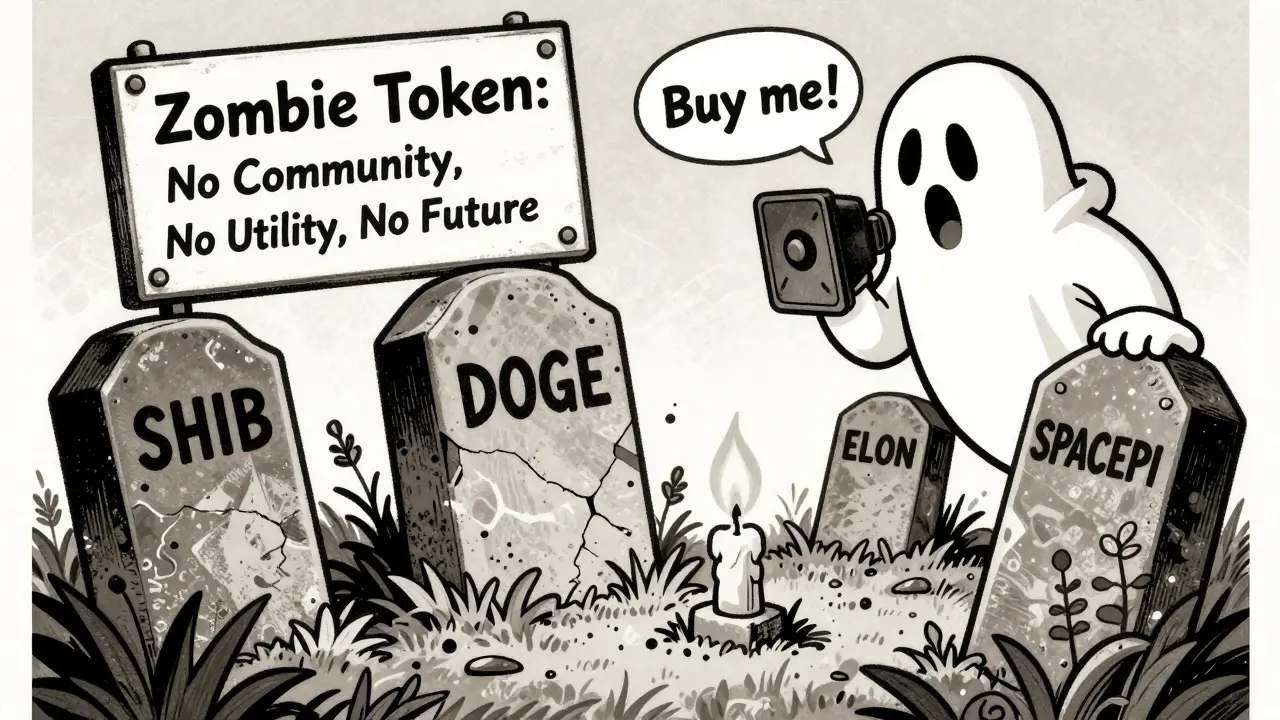
No one knows. There’s no team listed. No founders named. No development updates since 2024. No roadmap. No blog. No press releases. The token was likely created by a single person using a template - the kind you can generate in under 10 minutes on platforms like Mintable or Remix. It’s not a project. It’s a placeholder.
Some sites claim SpacePi is “the pioneering entity in the blockchain industry by overcoming technical obstacles and integrating multiple cross-chain protocol tokens.” That’s pure fiction. There’s zero evidence of cross-chain activity, no bridges, no wrapped tokens, no multi-chain contracts. That description was probably copied from a generic AI-generated template and pasted onto CoinMarketCap by someone trying to make it look legit.
Is it worth buying?
No. Not for any rational reason.
If you’re looking for a speculative gamble, there are hundreds of micro-cap tokens with better liquidity, active communities, and actual development. SPACEPI offers none of that. It’s a zombie token - listed on a few exchanges, with no movement, no energy, and no future.
Professional traders on TradingView are warning users: “extremely high risk due to negligible liquidity.” That’s not a suggestion. That’s a red alert.
Even if the price doubles tomorrow, you’d still be holding a token worth less than a penny. And if the price drops 50% - which is likely - you’ll lose half your investment on a token that has no real value to begin with.
What should you do instead?
If you’re interested in Ethereum-based tokens with real potential, look at projects with:
- Clear teams with verifiable backgrounds
- Active GitHub repositories with recent commits
- Public roadmaps with deadlines
- Real user adoption - not just trading volume
- Liquidity over $10 million
SpacePi has none of these. It’s a ghost in the crypto machine - visible, but not real.
Is SpacePi (SPACEPI) a real cryptocurrency project?
No. SpacePi is not a real project. It has no team, no whitepaper, no website, no development activity, and no community. It’s a token created on Ethereum with a massive supply and minimal liquidity - designed to look like a meme coin but lacking any of the traits that make those successful.
Can I buy SpacePi on Binance or Coinbase?
No. SpacePi is not listed on any major centralized exchange, including Binance and Coinbase. It’s only available on decentralized exchanges like Uniswap V2, which means you need a crypto wallet like MetaMask and some Ethereum to trade it.
Why is the price so low?
The price is low because the total supply is 1 quadrillion tokens. To make the math work, each token must be worth a fraction of a cent. This is common in meme coins, but unlike Dogecoin or Shiba Inu, SpacePi has no community or use case to support its value.
Is SpacePi a good investment?
No. SpacePi is a high-risk, zero-utility token with negligible liquidity and no development. It’s classified by analysts as a “zombie token” - one with no activity for over 18 months. Even if the price rises slightly, the risk of losing your entire investment is extremely high.
What’s the contract address for SpacePi?
The contract address for SpacePi is 0x69b14e8d3cebfdd8196bfe530954a0c226e5008e. You can add it to MetaMask using this address to track your holdings. But be warned - this doesn’t mean the token is safe or legitimate. Always verify contract addresses yourself and never send funds to unknown addresses.
How much liquidity does SpacePi have?
As of December 2025, the SPACEPI/ETH liquidity pool on Uniswap V2 held only $42,700. That’s extremely low. Even a small trade of $5,000 could swing the price by 10% or more. This makes it easy for large holders to manipulate the price - and hard for regular users to buy or sell without losing money.
Why do some sites say the market cap is $0?
Binance says the market cap is $0 because they report a circulating supply of zero. Other sites like TradingView estimate a circulating supply of 1,000 trillion tokens, giving a market cap of around $689,730. The discrepancy shows there’s no transparency. Nobody knows how many tokens are actually in circulation - which is a major red flag.
Has SpacePi ever been profitable for anyone?
It’s possible early buyers who purchased near the all-time high of $0.000076469 in March 2024 made small profits before the price dropped. But since then, it’s lost over 16% of its value. Most people who bought after April 2025 are underwater. There are no verified success stories - only speculation and losses.
SpacePi (SPACEPI) isn’t a cryptocurrency you invest in. It’s a warning sign. If you see it pop up on your exchange, walk away. There’s no future here - only risk.

Callan Burdett
January 18, 2026 AT 15:19Man, I saw this token pop up on my Uniswap feed and thought it was a joke at first. Then I checked the liquidity pool and nearly choked on my coffee. $42k? That’s less than my monthly rent. This isn’t crypto, it’s a digital ghost town with a ticker symbol.
Nishakar Rath
January 19, 2026 AT 12:01lol why are people even talking about this like its real crypto its just a meme template with a billion zeros after the decimal point if you think this is an investment you deserve to lose everything
Katherine Melgarejo
January 21, 2026 AT 06:00SPACEPI: where your portfolio goes to nap forever.
Alexis Dummar
January 21, 2026 AT 07:47It’s weird how the crypto space still lets these things exist. Like, we’ve got AI-generated whitepapers, fake teams, and liquidity pools smaller than my Netflix subscription. SpacePi isn’t even a scam-it’s an accident. Someone clicked ‘deploy token’ on Mintable, typed ‘SpacePi’ in the name field, and walked away. No one’s even trying to make it look real anymore. The fact that people still chase these tokens says more about us than the token itself.
kristina tina
January 21, 2026 AT 14:16I just want to say thank you for this breakdown. I almost bought some because the chart looked ‘upward’-but then I checked the volume and realized I was looking at a flickering candle in a hurricane. You saved me from a dumb mistake. Seriously, this is the kind of clarity the crypto world needs more of.
Patricia Chakeres
January 22, 2026 AT 23:03Let’s be honest-this isn’t just a bad token. It’s a coordinated distraction. The 24.6% ‘gain’? Bot-driven pump. The $689k market cap? Fabricated by a dozen wallets owned by the same guy. And don’t get me started on CoinGecko’s ‘estimate’-they’re complicit. This is how they drain retail money while the ‘whales’ quietly dump into ETH. This isn’t crypto. It’s a surveillance economy with a blockchain skin.
Tony Loneman
January 24, 2026 AT 16:14Oh wow, so you’re telling me this isn’t the next Bitcoin? The one that’s gonna make me rich while I nap? The one that’s gonna fund my yacht and my three cats named ‘Degen’? The one that’s gonna get me invited to the Solana beach party? I’m crushed. I thought this was my ticket out of accounting. Now I have to actually work for money. My soul is bleeding.
Christina Shrader
January 26, 2026 AT 11:06I’ve been following crypto since 2017 and I’ve seen a lot of garbage-but this one feels different. It’s not even trying. No Discord. No Twitter. No dev updates. Just a contract address and a price chart that looks like a flatline after a heart attack. I’m not mad. I’m just… disappointed. Like someone made a PowerPoint titled ‘Crypto 101’ and then left the room.
Jason Zhang
January 26, 2026 AT 22:31I checked the contract. It’s got no mint function, no burn, no fee structure. It’s literally just a token with a name and a decimal point. The whole thing feels like a placeholder someone left in a codebase and forgot to delete. If this were a movie, it’d be the background prop that never gets removed in the final cut.
Stephanie BASILIEN
January 28, 2026 AT 11:07While I appreciate the thoroughness of this analysis, I must respectfully point out that the absence of a centralized exchange listing does not inherently invalidate the legitimacy of a decentralized asset. One must consider the philosophical underpinnings of permissionless finance. That said, the liquidity profile remains deeply concerning, and the lack of verifiable on-chain activity suggests a high degree of informational asymmetry. Proceed with extreme caution, as one might approach a riddle written in a language no one remembers.
Deb Svanefelt
January 28, 2026 AT 14:50There’s something haunting about tokens like this. They’re not malicious-they’re just… empty. Like a house with all the furniture removed, but the door still open. People wander in, take a few photos, and leave. No one lives there. No one ever will. But they still post pictures of it on Instagram. That’s the real tragedy-not the money lost, but the hope wasted on something that was never alive to begin with.
Telleen Anderson-Lozano
January 29, 2026 AT 16:37Okay, so I’ve been thinking about this-why do we even care about tokens like this? Is it because we want to believe in the next big thing? Or is it because we’re bored? Or maybe we’re just addicted to the dopamine hit of seeing a number go up-even if it’s 0.00000001? I think it’s all of the above. And that’s the real problem. Not the token. Not the liquidity. Not even the scam artists. It’s us. We keep showing up. Even when we know it’s a ghost.
Anthony Ventresque
January 31, 2026 AT 12:47Just a quick note: I ran the contract address through Etherscan’s token analyzer. The top 10 wallets hold 98% of the supply. One wallet alone owns 62%. That’s not decentralization. That’s a single person holding a shovel, digging a hole labeled ‘Your Savings’ and then waving at you to jump in. I’m not saying don’t take risks-I’m saying don’t take stupid ones. This is the crypto equivalent of buying a lottery ticket… from a guy who wrote the numbers himself.