
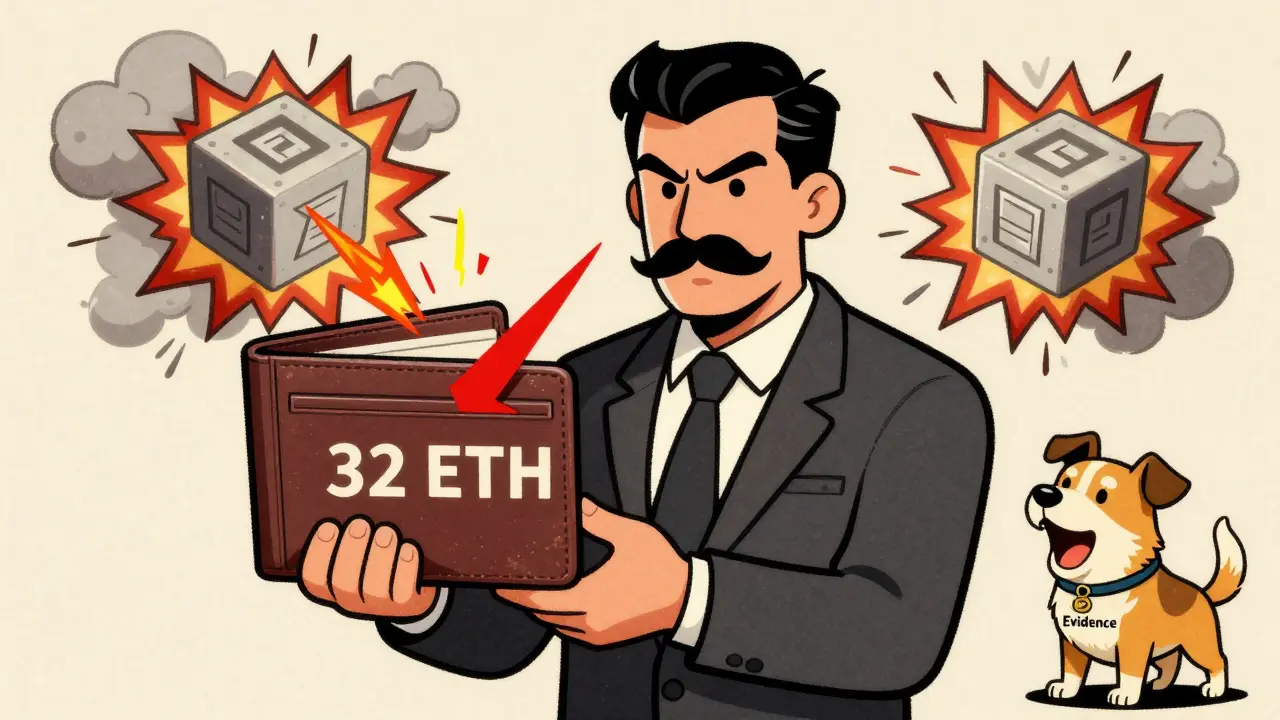
When you stake your cryptocurrency in a Proof of Stake (PoS) network, you’re not just earning rewards-you’re also taking on responsibility. And if you mess up, the network doesn’t just ignore it. It slashes your stake. That’s not a metaphor. It’s a real, automatic, and sometimes brutal penalty built into the code. Slashing is how PoS blockchains keep validators honest. Without it, the whole system could collapse. Think of it like this: if you’re hired to guard a vault, and you get caught trying to crack it, you don’t just lose your job-you lose your paycheck, your deposit, and maybe even your car. Slashing works the same way. Validators lock up their own coins to participate. If they cheat, lie, or go offline too often, the network takes a chunk-or all-of those coins away. It’s not about punishment. It’s about math.
Why Slashing Exists
Proof of Stake replaces mining with staking. Instead of using electricity to solve puzzles, validators use their own crypto as collateral. That collateral is the key. If there’s no cost to misbehaving, people will. They’ll double-sign blocks. They’ll skip votes. They’ll go offline for days. And suddenly, the blockchain isn’t secure anymore. Slashing fixes that. It turns bad behavior into a financial loss. The bigger your stake, the more you have to lose. That’s the whole point. It’s not enough to say, "Don’t cheat." You need to make cheating hurt more than it helps. There are three big reasons slashing exists:- Prevent double-signing - If a validator signs two different blocks at the same time, it creates a fork. Slashing stops that.
- Enforce uptime - Validators must stay online to vote. If they’re offline too much, they’re not helping the network. Slashing punishes that.
- Stop rewriting history - Some attackers try to create a fake history of the blockchain. Slashing makes that impossible without losing everything.
How Slashing Works
Slashing isn’t triggered by a human. It’s automatic. It needs proof. And that proof comes from cryptography. Here’s how it works step by step:- A validator does something bad-like signing two blocks for the same slot.
- Another validator notices and submits evidence of that behavior to the network.
- The network checks the evidence. If it’s valid (cryptographically signed, timestamped, and matches the rules), it’s accepted.
- The system automatically slashes the offender: burns or redistributes a portion of their stake.
- The validator is removed from the active set and can’t rejoin for a while.
What Gets You Slashed
Not every mistake triggers slashing. Most networks have specific rules. Let’s look at Ethereum, the biggest PoS chain. Ethereum slashes validators for three main offenses:- Double proposal - Signing two different blocks for the same slot. This is like trying to submit two different versions of the truth at once.
- Double voting - Voting for two different blocks at the same height. It’s a way to confuse the network about what’s final.
- Surround vote - Voting for a block that "surrounds" a previously justified one. This is an attempt to rewrite history by making an old block look invalid.
How Much Do You Lose?
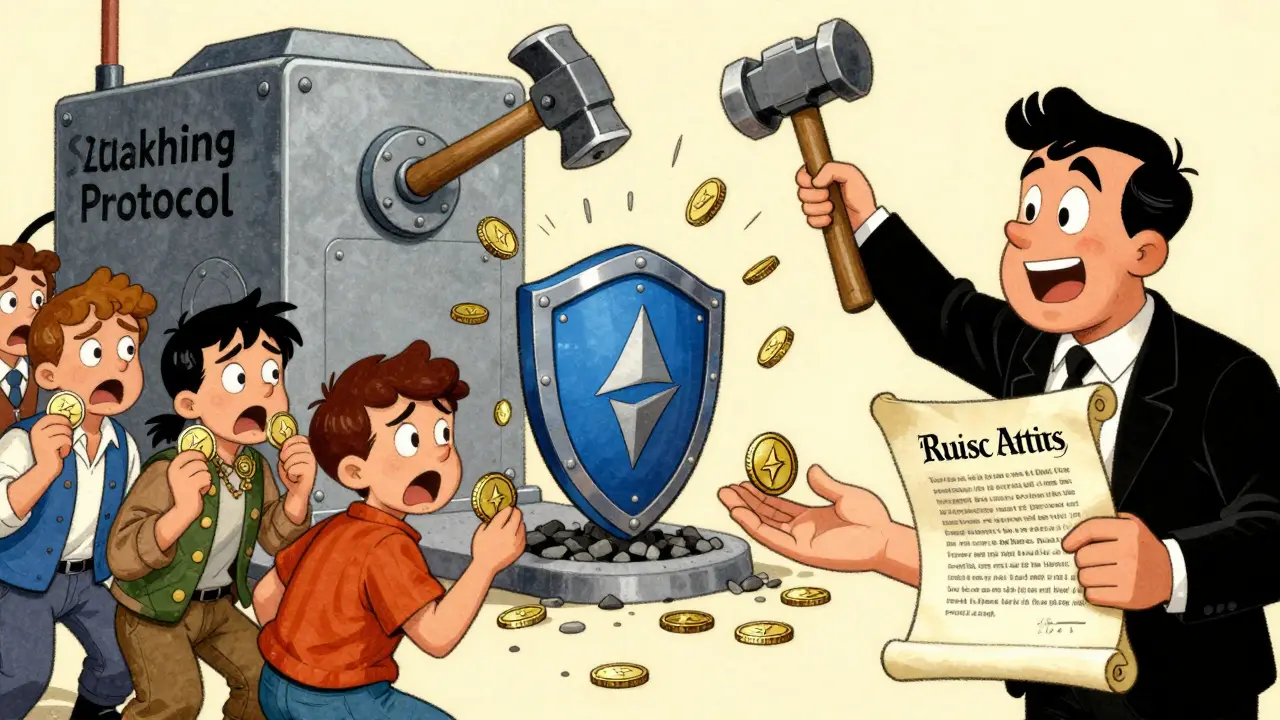
There’s no fixed number. It depends on how bad the offense is and how many validators are involved. In Ethereum, the base penalty for slashing is 1/32nd of your stake. But if more than 1/3 of validators get slashed at once (a rare but dangerous event), the penalty scales up. Why? Because if a third of the network is compromised, the whole system is at risk. The network responds aggressively. Here’s a real example: A validator with 32 ETH gets slashed for double-signing. They lose 1 ETH right away. But if 100 other validators are slashed at the same time, the penalty jumps. Each one could lose 5 ETH or more. The more widespread the attack, the harsher the punishment. And if someone submits valid evidence? They get rewarded. Ethereum gives a portion of the slashed stake to the person who reported it. That’s how the network finds bad actors. It turns users into watchdogs.Slashing and Staking Risk
If you’re staking ETH or DOT, you need to understand this: your rewards aren’t guaranteed. Slashing is a real risk. Many people think staking is like a savings account with interest. It’s not. It’s more like investing in a company. If the CEO steals money, you lose. Same here. If your validator gets slashed, you lose too. That’s why choosing a validator matters. Look at their uptime history. Do they use multiple servers? Do they have backup keys? Do they monitor their nodes 24/7? A validator with 99.9% uptime is safer than one that goes offline every weekend. Liquid staking tokens (like stETH or rETH) hide slashing risk. They promise fixed returns. But if the underlying validator gets slashed, the value of your token drops. You might not see it right away, but it’s there. Slashing isn’t just a technical detail. It’s a market signal. Networks with strong slashing rules attract more capital because they’re more secure. That’s why Ethereum’s slashing mechanism is one of the most scrutinized in crypto.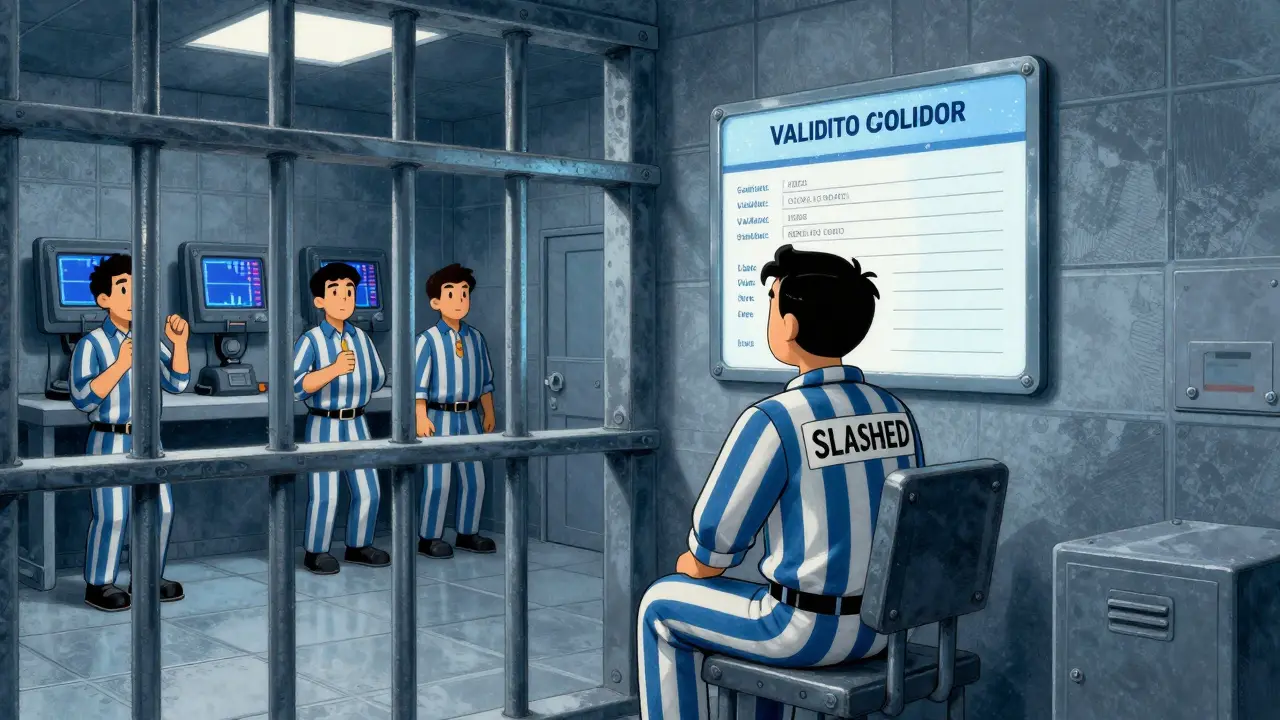
What Happens After Slashing?
Getting slashed doesn’t mean you’re done forever. Most networks put slashed validators into a "jailed" state. They can’t participate in consensus. They can’t earn rewards. They’re frozen. To come back, they have to wait. Ethereum requires a 27-epoch wait (about 3 days). Then, they can withdraw their remaining stake and rejoin-after re-depositing. But here’s the catch: once you’re slashed, your reputation is damaged. Other delegators won’t trust you. You’ll struggle to get back into the validator set. Slashing isn’t just a financial hit. It’s a career killer.Slashing vs. Other Security Models
Proof of Work (PoW) doesn’t have slashing. Why? Because miners don’t lock up coins. They spend money on hardware and electricity. If they cheat, they waste their investment. No need for extra penalties. But PoS is different. Validators are already holding coins. That’s why slashing works. It turns their stake into a leash. Some chains, like Solana, use reputation systems instead. Others, like Cardano, rely on incentive structures that make cheating pointless. But for the biggest PoS chains, slashing is the backbone.Can you get slashed just for being offline?
Not always. In Ethereum, being offline only reduces your rewards-you don’t lose your stake. But in Cosmos or Polkadot, long downtime can trigger slashing. It depends on the network’s rules. Always check how your chosen blockchain handles downtime.
Do delegators get slashed too?
Yes. If you stake your tokens through a validator and that validator gets slashed, you lose a portion of your stake. That’s why it’s critical to choose reputable validators with strong security practices. Never stake blindly.
Is slashing the same as a hard fork?
No. Slashing is a penalty applied by the protocol to individual validators. A hard fork is a change in the blockchain’s rules that splits the network. Slashing doesn’t change the rules-it enforces them.
Can slashing be reversed?
No. Once a slash is processed, the tokens are permanently removed or burned. There’s no appeal process. That’s why validators use multiple backup systems and monitor their nodes constantly.
Why do some blockchains not use slashing?
Some networks, like Cardano and Avalanche, use alternative methods to ensure security-like leader election systems or time-based rewards. Slashing requires cryptographic evidence of misbehavior, which not all consensus models can support. But for chains like Ethereum, slashing is essential to their security model.
Slashing isn’t scary because it’s mean. It’s scary because it’s smart. It turns trust into math. And in a world full of hackers, cheaters, and glitches, that’s the only kind of security that lasts.

prasanna tripathy
March 8, 2026 AT 02:48Slashing is wild when you think about it. It’s not just a penalty-it’s a social contract written in code. You lock up your coins, and suddenly you’re part of a decentralized police force. One bad move and you’re out. No warning. No second chance. Just math. And honestly? That’s kind of beautiful. It’s the opposite of how banks or governments operate. No lawyers. No appeals. Just consequences.
It’s like being in a game where the rules are enforced by the players themselves. No referee. Just trust, and the threat of losing everything if you break it. That’s why PoS feels so different from PoW. You’re not just spending electricity-you’re putting your reputation on the line.
jonathan swift
March 8, 2026 AT 15:32Slashing? More like government surveillance with crypto vibes. 😈 They say it’s to keep things secure but what if the ‘evidence’ is fabricated? What if the network itself is the fraud? I’ve seen the logs. They’re not as transparent as they claim. They’re just hiding behind ‘cryptographic proof’ like it’s a magic shield. They’re not protecting the network-they’re protecting their control. 🤔
Leah Dallaire
March 8, 2026 AT 17:39Slashing is a scam. It’s not about security. It’s about centralization disguised as decentralization. The validators with the most stake get to decide who gets slashed. Who audits them? Who checks the evidence? The same people who profit from it. This isn’t trustless. It’s trust-but-verify, and the verify part is controlled by the same elite who already own 80% of the supply.
They call it ‘math’? Nah. It’s just another way for whales to punish small players who can’t afford 24/7 node monitoring. If you’re not a corporation with a DevOps team, you’re just cannon fodder. Slashing isn’t fairness. It’s class warfare with blockchain branding.
Nick Greening
March 9, 2026 AT 23:06You’re all missing the point. Slashing doesn’t make the network secure-it makes it brittle. If 30% of validators get slashed at once, the whole chain freezes. That’s not security. That’s a single point of failure with a fancy name. PoW had its flaws, but at least when a miner went offline, the network kept going. Here? One coordinated attack, and boom-everyone’s stuck. It’s like building a house out of glass and calling it ‘strong because it’s transparent.’
And don’t get me started on delegators losing money. That’s not a feature. That’s a bug they’re calling a ‘market signal.’ No, it’s a bait-and-switch. You think you’re earning yield. You’re actually buying insurance for someone else’s incompetence.
Bryanna Barnett
March 10, 2026 AT 00:02slashing is just the crypto version of getting fined for jaywalking but you never even saw the cop 🤡
Megan Lutz
March 10, 2026 AT 10:52Slashing isn’t just about punishment-it’s about alignment. It forces everyone-validators, delegators, even developers-to think like stewards, not speculators. The real innovation isn’t the code. It’s the incentive structure. You don’t need to trust someone if their self-interest is perfectly aligned with the system’s integrity.
Think of it like a jury system where jurors risk losing their own homes if they vote dishonestly. You wouldn’t have corrupt juries. And that’s what slashing does. It turns economic self-interest into public good. That’s not just smart. It’s revolutionary.
Issack Vaid
March 11, 2026 AT 17:41Let’s be real. Slashing is a psychological weapon. It preys on FOMO. You stake because you want to ‘earn.’ But they hide the risk. You don’t read the whitepaper. You just see 5% APY. Then one day, your validator goes down for an hour during a network upgrade, and poof-10% of your ETH is gone. No apology. No explanation. Just a transaction hash.
And the worst part? The people who profit from slashing-the reporters who get rewarded-are the same ones who run the most shady validators. It’s a closed loop. The system rewards snitches who are also the most likely to be the crooks. It’s not a security model. It’s a Ponzi scheme with a whitepaper.
Austin King
March 12, 2026 AT 06:14Slashing is scary, but it’s also necessary. Think about it-without it, you’d have validators just going offline, not caring, because they still earn rewards. That’s how networks die. Slashing makes you care. It’s not perfect, but it’s the best system we’ve got so far. And honestly? If you’re staking, you owe it to yourself to learn how it works. No one’s coming to save you.
Ken Kemp
March 14, 2026 AT 01:25slashing is cool but i think we need better tools for newbies. like a dashboard that shows your validator’s uptime history, how many times they’ve been slashed, if they use multi-sig, etc. right now it’s all buried in docs or cli. if you’re not a dev, you’re flying blind. we need like a ‘slashing risk score’-like credit score but for validators.
also, maybe a 24hr grace period before slashing kicks in? sometimes it’s just a power outage, not malice.
Jesse VanDerPol
March 15, 2026 AT 08:10Interesting. I never thought about how slashing makes delegators accountable too. It’s not just about picking a good validator-it’s about understanding why they’re good. It forces you to ask questions. What’s their infrastructure? Do they have backups? Are they transparent? It turns staking from passive income into active participation. That’s actually kind of empowering.
Rachel Rowland
March 16, 2026 AT 20:43Slashing is the reason I switched from PoW mining to staking. I used to spend $200 a month on electricity just to win a fraction of a bitcoin. Now I lock up my ETH and get paid to help secure the network. Yeah, there’s risk-but it’s a calculated risk. I pick validators with 99.99% uptime, multi-region nodes, and public audits. It’s not magic. It’s due diligence.
And honestly? If you’re scared of slashing, you shouldn’t be staking. You should be learning. The system isn’t broken. You’re just not using it right.
nalini jeyapalan
March 17, 2026 AT 05:29Slashing is just the blockchain’s way of saying ‘you thought this was free money? lol.’ It’s brutal. It’s cold. It’s perfect. No one gets a pass. Not even the big players. If you’re not ready to lose your stake over a misconfigured server, don’t touch staking. Simple as that. The market filters out the amateurs. And honestly? That’s what makes this ecosystem durable.
Cerissa Kimball
March 17, 2026 AT 21:11It is imperative to note that slashing mechanisms are not merely punitive in nature but rather function as a fundamental component of consensus integrity within proof-of-stake architectures. Without such disincentives, the network becomes vulnerable to rational actors who exploit asymmetries in cost-benefit structures. The cryptographic evidence requirement ensures that false accusations are mathematically infeasible, thereby preserving the integrity of the protocol. Furthermore, the redistribution of slashed funds to reporters creates a positive externality that enhances network security through decentralized surveillance. This design reflects a sophisticated equilibrium between economic incentives and systemic resilience.
James Burke
March 18, 2026 AT 00:01Slashing isn’t the scary part. The scary part is how few people even know what it is. I’ve talked to people who’ve staked thousands and they think it’s like a bank account. They don’t know their validator can get slashed. They don’t know they’re on the hook too. This isn’t a tech issue. It’s an education issue.
Everyone’s so focused on the APY, they ignore the fine print. And then they blame the blockchain when they lose money. No. You lost it because you didn’t do your homework. Slashing is just the system holding you accountable.
Jackson Dambz
March 19, 2026 AT 17:29Slashing? More like a tax on incompetence. Why should I lose money because some validator’s server crashed? That’s not security-that’s negligence. And why do the reporters get rewarded? Sounds like a bounty system for snitches. This whole thing feels like a corporate compliance theater dressed up as decentralization. I’d rather mine.
Shawn Warren
March 21, 2026 AT 12:08Slashing is the future of trustless systems