

Have you ever sent money to a friend or paid for a service online and worried about getting the address wrong? In the world of cryptocurrency, that worry is valid. If you mistype even one character in a wallet address, your funds are gone forever. There is no bank to call, no customer support line, and usually, no way to reverse the transaction. This is exactly the problem that Request Network aims to solve.
At the heart of this solution is the REQ token, which is the utility token powering the Request Network protocol. But what is it actually used for? It’s not just another speculative coin you buy hoping it goes up. REQ is the fuel that keeps a decentralized invoicing and payment system running smoothly across multiple blockchains. Let’s break down how it works, why it matters, and whether it has a place in your portfolio.
The Problem with Traditional Crypto Payments
Imagine you run a small business. You sell digital services to clients around the world. Traditionally, you might use PayPal, Stripe, or a wire transfer. These systems work, but they come with high fees, slow processing times, and strict rules. They also require you to give up some control over your data and funds.
Cryptocurrency promised to fix this by removing intermediaries. You can send Bitcoin or Ethereum directly to someone anywhere in the world. Sounds great, right? But there’s a catch. Sending crypto directly is risky. As mentioned earlier, if you send funds to the wrong address, they are lost. Also, traditional invoicing software doesn’t talk to blockchain wallets. You still have to manually enter amounts, check balances, and update spreadsheets. It’s messy, error-prone, and inefficient.
Request Network was built to bridge this gap. It combines the transparency and security of blockchain with the user-friendly experience of traditional invoicing.
How Request Network Works
Instead of the payer guessing the recipient’s wallet address and sending funds blindly, Request Network flips the script. The process starts with the payee (the person or business expecting payment).
- Create an Invoice: The payee creates a smart contract-based invoice on the Request Network. This invoice includes the amount due, the currency, and any terms and conditions.
- Share the Link: The payee sends a simple link to the payer. No long, confusing wallet addresses to copy-paste.
- Approve and Pay: The payer clicks the link, reviews the details, and approves the payment. The network then handles the rest.
This approach eliminates human error. Since the invoice is tied to a specific smart contract, the funds go exactly where they are supposed to go. Every step of this process is recorded on the blockchain, creating an immutable audit trail. This is huge for businesses that need to comply with tax laws and accounting standards.
The Role of the REQ Token
So, where does the REQ token fit into all this? Think of REQ as the operational backbone of the network. It serves several critical functions:
- Paying Network Fees: When you create or settle a payment request, there is a small fee involved. You pay this fee in REQ tokens. The network then automatically converts these tokens into the necessary gas fees for the underlying blockchain (like ETH for Ethereum). This means you don’t need to hold every type of cryptocurrency to use the platform.
- Governance: REQ holders can vote on proposals that shape the future of the network. This ensures the protocol evolves based on community consensus rather than a central authority.
- Staking and Security: Users can stake REQ tokens to participate in network operations and earn rewards. This helps secure the network and incentivizes honest behavior.
- Anti-Spam Mechanisms: To prevent abuse, the network uses REQ to enforce spam controls. This keeps the platform clean and efficient for everyone.
Importantly, REQ is an ERC-20 token, which means it is compatible with the broader Ethereum ecosystem, including most wallets and exchanges. This makes it easy to store, trade, and use.
Multi-Chain Compatibility: Beyond Ethereum
One of the biggest advantages of Request Network is its blockchain agnosticism. While it started on Ethereum, it now supports more than 25 different blockchains. This includes popular networks like Polygon, Celo, Fantom, and Near.
Why does this matter? Different blockchains have different strengths. Ethereum is secure but can be expensive during peak times. Polygon offers faster transactions at lower costs. By supporting multiple chains, Request Network allows users to choose the best option for their needs without being locked into one ecosystem.
The REQ token facilitates this cross-chain activity. When a transaction happens on a non-Ethereum chain, the network still uses REQ to handle fees and governance, ensuring a consistent experience regardless of the underlying technology.
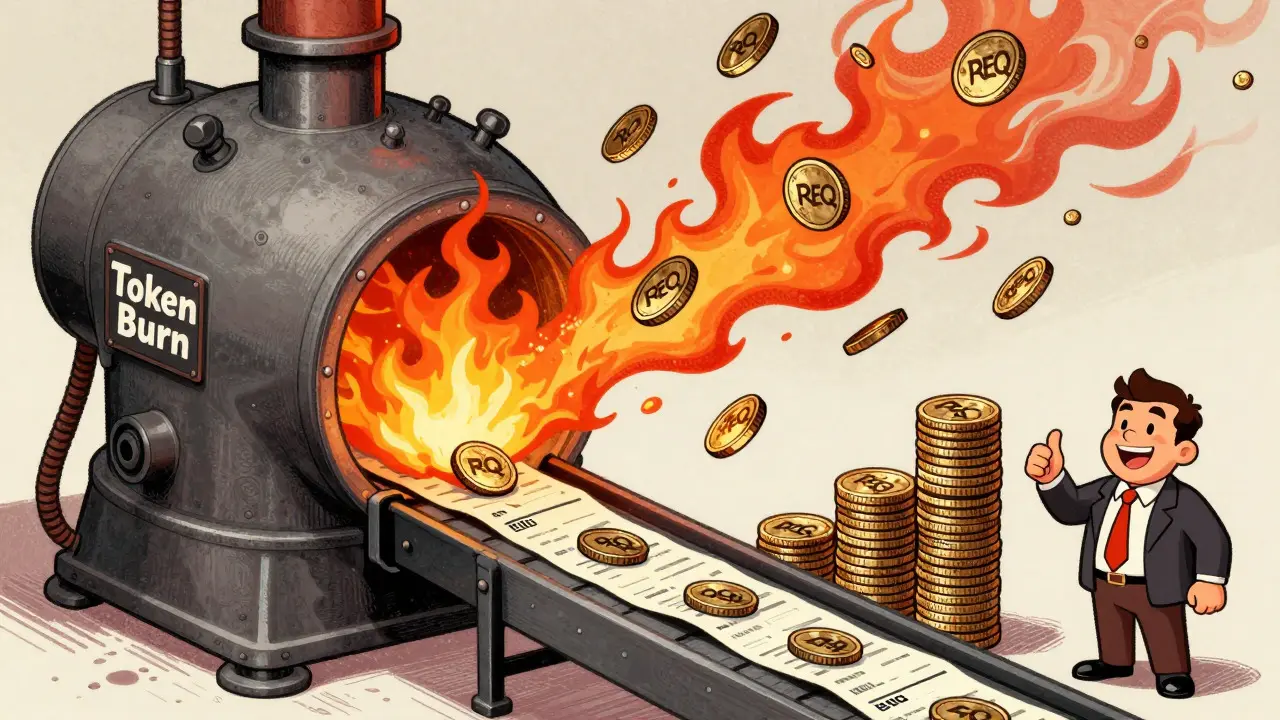
Deflationary Mechanics: Burning Tokens
Many cryptocurrencies suffer from inflation, where new tokens are constantly created, diluting the value of existing holdings. REQ takes a different approach. It features a deflationary mechanism through token burning.
Here’s how it works: A portion of the REQ tokens used for transaction fees is permanently removed from circulation. These tokens are sent to a "burning address," effectively locking them away forever. Over time, as more transactions occur, the total supply of REQ decreases. This creates natural scarcity, which can potentially increase the value of the remaining tokens for holders.
This model aligns the interests of users and investors. As the network grows and more people use it for invoicing and payments, more REQ is burned, reducing supply while demand remains steady or increases.
Tools for Businesses and Individuals
Request Network isn’t just a theoretical concept; it offers practical tools for real-world use. Here are some key applications:
- Request Finance: A suite of financial tools for managing crypto transactions, tracking balances, and analyzing spending.
- Request Create: Allows anyone to generate and share payment requests easily. Perfect for freelancers and small businesses.
- WooReq Plugin: Integrates crypto payments into WooCommerce stores. This enables e-commerce sites to accept cryptocurrency without technical hassle.
- Request Invoicing: Transforms blockchain transactions into accounting-compliant invoices. This helps businesses meet regulatory requirements in various countries.
These tools make crypto accessible to non-technical users. You don’t need to understand smart contracts or gas fees to get started. The interface handles the complexity behind the scenes.
Is REQ a Good Investment?
That depends on your goals. If you’re looking for a quick flip, REQ might not be the best choice. Its value is tied closely to the adoption and usage of the Request Network. As more businesses and individuals use the platform for invoicing and payments, the demand for REQ should grow.
Consider these factors:
- Utility: REQ has clear use cases beyond speculation. It powers a functional protocol with real-world applications.
- Adoption: Look at the number of supported blockchains and integrations. Growing compatibility suggests increasing relevance.
- Tokenomics: The deflationary burning mechanism provides long-term value accrual for holders.
However, like all cryptocurrencies, REQ is volatile. Prices can swing dramatically based on market sentiment, regulatory news, and broader economic trends. Always do your own research before investing.
Comparing Request Network to Alternatives
| Feature | Request Network | Traditional Banking | Direct Crypto Transfer |
|---|---|---|---|
| Fees | Low (paid in REQ) | High (intermediaries) | Variable (gas fees) |
| Error Risk | Low (smart contract invoicing) | Low (reversible) | High (manual entry) |
| Transparency | High (on-chain records) | Low (private ledgers) | Medium (public ledger) |
| Accounting Integration | Automated | Manual | Manual |
| Blockchain Support | Multi-chain (25+) | N/A | Single-chain per transaction |
As the table shows, Request Network sits comfortably between traditional banking and raw crypto transfers. It offers the speed and low costs of crypto while mitigating the risks and complexities that often scare off mainstream users.
Getting Started with REQ
If you want to try out Request Network or invest in REQ, here’s what you need to know:
- Where to Buy: REQ is listed on major centralized exchanges like Binance, Kraken, and Coinbase Pro. You can also find it on decentralized exchanges (DEXs) like Uniswap.
- Storage: Since REQ is an ERC-20 token, you can store it in any Ethereum-compatible wallet. Popular options include MetaMask, Trust Wallet, and Ledger hardware wallets.
- Using the Platform: Visit the official Request Network website to access Request Finance and other tools. Connect your wallet, create an account, and start generating invoices.
Remember to keep your private keys safe. Never share them with anyone, and consider using a hardware wallet for larger amounts.
The Future of Decentralized Invoicing
The global economy is slowly moving towards digital currencies. Central Bank Digital Currencies (CBDCs) are being explored by governments, and stablecoins are gaining traction for cross-border payments. In this evolving landscape, infrastructure protocols like Request Network play a crucial role.
By providing a standardized, transparent, and efficient way to handle invoices and payments, Request Network positions itself as a foundational layer for the future of finance. As more businesses adopt blockchain technology, the demand for seamless invoicing solutions will likely increase.
For individuals, this means easier ways to receive payments from anywhere in the world. For businesses, it means reduced administrative overhead and better compliance. And for investors, it represents exposure to a growing sector of the crypto economy.
What is the main purpose of the REQ token?
The REQ token is primarily used to pay for network fees within the Request Network. It also enables governance voting, staking, and anti-spam mechanisms. Essentially, it powers the operations of the decentralized invoicing protocol.
Is REQ only available on Ethereum?
No, while REQ originated as an ERC-20 token on Ethereum, the Request Network supports over 25 blockchains, including Polygon, Celo, Fantom, and Near. This multi-chain approach allows for greater flexibility and lower costs.
How does Request Network prevent sending funds to the wrong address?
Instead of manually entering wallet addresses, users create smart contract-based invoices. The payer approves the invoice via a link, ensuring the funds are sent to the correct destination defined by the contract. This eliminates human error.
What happens to the REQ tokens used for fees?
A portion of the REQ tokens used for transaction fees is burned, meaning they are permanently removed from circulation. This deflationary mechanism reduces the total supply over time, potentially increasing the value of remaining tokens.
Can I use Request Network for my e-commerce store?
Yes, Request Network offers a WooReq plugin that integrates crypto payments into WooCommerce stores. This allows you to accept cryptocurrency seamlessly while maintaining accounting compliance.
Is Request Network free to use?
There are small network fees associated with creating and settling invoices, which are paid in REQ tokens. However, these fees are generally much lower than those charged by traditional payment processors like banks or credit card companies.
How does Request Network help with accounting?
Every transaction on the Request Network is recorded on the blockchain, creating an immutable audit trail. The Request Invoicing tool transforms these records into accounting-compliant documents, simplifying tax reporting and financial tracking for businesses.
Who founded Request Network?
Request Network was founded by a team of developers and entrepreneurs focused on building decentralized financial infrastructure. While specific founder names may vary in public records, the project is community-driven and governed by REQ token holders.
What is the difference between Request Network and PayPal?
PayPal is a centralized intermediary that holds your funds and charges high fees. Request Network is a decentralized protocol that uses blockchain technology to enable peer-to-peer payments without middlemen, offering lower fees and greater transparency.
Can I stake REQ tokens?
Yes, REQ token holders can stake their tokens to participate in network operations and earn rewards. Staking also helps secure the network and gives participants a voice in governance decisions.
