
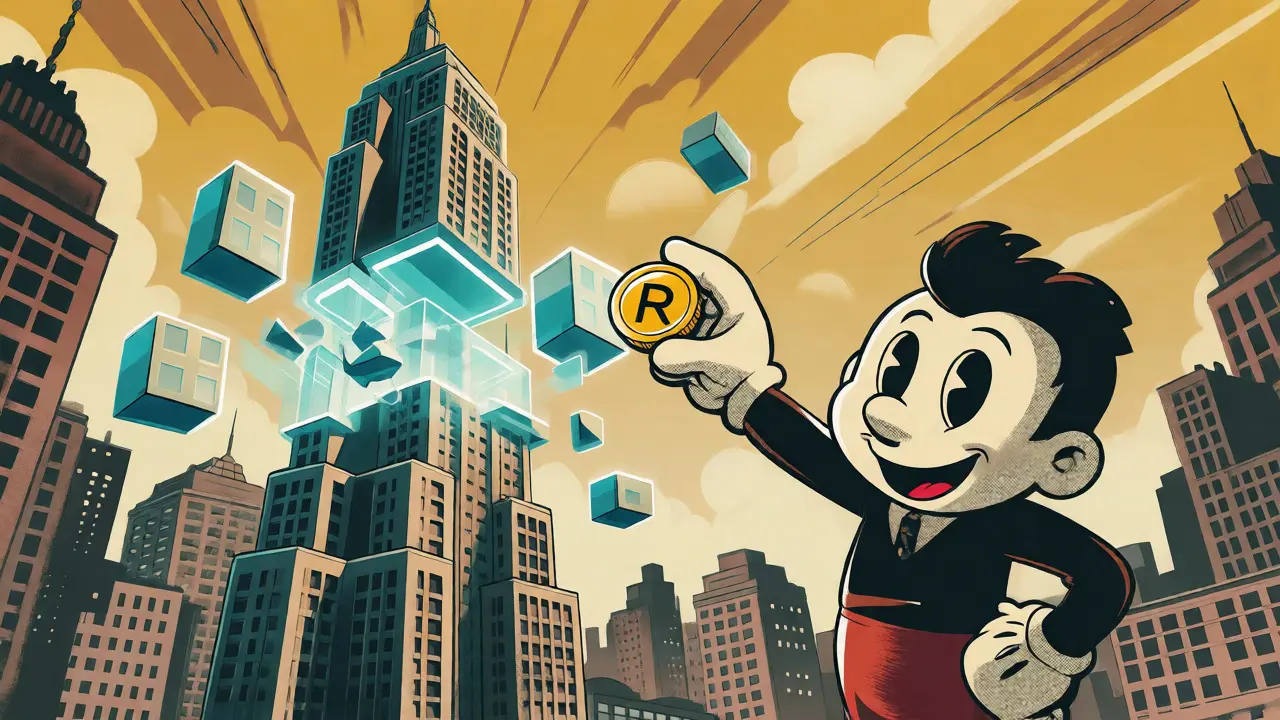
Imagine owning a fraction of a skyscraper in New York or a share of a high-performance supercomputer, all without needing millions in the bank. This isn't science fiction; it's the core promise of Realvirm (RVM), a cryptocurrency project aiming to bridge the gap between physical reality and digital finance. If you've been hearing whispers about Real-World Asset (RWA) tokenization and wondering if RVM is the next big thing or just another ghost town on the blockchain, you're in the right place. Let's cut through the noise and look at what this protocol actually does, how it works, and whether it holds water.
The Core Mission: Digitizing the Physical World
At its heart, Realvirm is an RWA trading protocol. Its job is simple yet ambitious: take tangible assets-like real estate, vehicles, computing power, and bonds-and turn them into digital tokens on the blockchain. Why bother? Because traditional markets for these things are messy. Selling a house takes months. Buying a bond often requires institutional connections. Realvirm tries to fix this by creating a transparent marketplace where these assets can be traded instantly, securely, and in fractions.
This approach addresses a massive inefficiency. The global market for real-world assets is worth trillions, far exceeding the current crypto market cap. By bringing these assets onto the blockchain, Realvirm aims to unlock liquidity that has been stuck in illiquid forms for decades. It’s not just about speculation; it’s about accessibility. You don't need to be a hedge fund manager to invest in commercial real estate anymore.
How It Works: The Magic of dNFTs
You might know NFTs as those expensive JPEGs of monkeys or pixelated punks. Realvirm uses a twist on this concept called dNFTs (Destroyable Non-Fungible Tokens). Unlike standard NFTs that persist forever, dNFTs are designed specifically for asset representation. They ensure data security and immutability, meaning once an asset is tokenized, its record cannot be tampered with by malicious actors.
Here’s the flow:
- Asset Selection: A physical asset, say a server farm, is identified.
- Tokenization: The asset’s details are encoded into a dNFT.
- Smart Contract Execution: Automated agreements handle ownership transfer and payments without intermediaries.
- Trading: Users buy and sell shares of these assets on the Realvirm platform.
The use of smart contracts eliminates the middlemen-brokers, lawyers, clearinghouses-that usually slow down and inflate the cost of transactions. This automation guarantees integrity and efficiency, making the process faster and cheaper than traditional methods.
Understanding RVM Tokenomics
The RVM token is the lifeblood of the ecosystem. It serves two main purposes: governance and incentives. Holding RVM allows users to vote on platform decisions, giving the community a say in how the protocol evolves. Additionally, active traders earn rewards in RVM, encouraging participation and liquidity provision.
As of late 2026, the token operates with a maximum supply of 1 billion units. The price has hovered around $0.00057, reflecting its early-stage status. With a fully diluted valuation (FDV) roughly equivalent to $450,000-$500,000 USD, RVM is currently a micro-cap asset. This low valuation means high potential upside but also significant risk. The token is primarily traded on decentralized exchanges (DEXs) via wallets like Binance Web3, rather than being listed on major centralized exchanges like Coinbase or Kraken.
| Metric | Value / Detail |
|---|---|
| Max Supply | 1,000,000,000 RVM |
| Current Price | ~$0.00057 |
| Primary Use Case | Governance & Trading Rewards |
| Technology | dNFTs & Smart Contracts |
| Founders | Undisclosed |
The Pros and Cons of Investing in RVM
No project is perfect, and Realvirm has clear strengths and weaknesses. On the plus side, the focus on RWAs aligns with a major industry trend. Institutions like BlackRock are diving into tokenization, suggesting the sector has legs. Realvirm’s use of dNFTs offers a unique technical angle focused on data integrity, which is crucial for trust in financial applications.
However, there are red flags. The most glaring issue is the lack of public information about the founders. In crypto, anonymity isn't new, but it makes accountability difficult. Who is responsible if the code breaks? Who manages the treasury? Without known leaders, investors rely heavily on the technology and community trust.
Another concern is liquidity. With a 24-hour trading volume under $5,000, buying or selling large amounts of RVM could move the price significantly. This volatility can scare off serious investors looking for stability. Plus, the project is still in its infancy, meaning widespread adoption is far from guaranteed.
How to Buy and Hold RVM
If you’re interested in getting involved, you won’t find RVM on every exchange. Currently, it’s mostly accessible through decentralized platforms. Here’s a quick path:
- Set up a Web3 Wallet: Download a wallet like MetaMask or use the Binance Web3 Wallet.
- Fund Your Wallet: Deposit ETH or BNB, depending on the network the DEX supports.
- Connect to a DEX: Use a platform that lists RVM pairs (check CoinGecko for live links).
- Swap Tokens: Exchange your base currency for RVM.
- Store Securely: Keep your tokens in a self-custody wallet to maintain control over your private keys.
Remember, always verify the contract address before swapping. Scam tokens with similar names are common in the DeFi space.
The Future of Realvirm
Will Realvirm succeed? That depends on execution. The idea of tokenizing real-world assets is powerful, but many competitors are entering the race. Projects like Ondo Finance and Centrifuge have gained more traction and institutional backing. For Realvirm to stand out, it needs to attract real asset issuers-not just hype. It must prove that its dNFT infrastructure provides better security or lower costs than existing solutions.
The team’s roadmap focuses on expanding the types of assets supported and improving user experience. If they can onboard even a handful of high-value real estate or commodity projects, the demand for RVM could spike. But until then, it remains a speculative bet on the future of digital ownership.
Frequently Asked Questions
Is Realvirm (RVM) a good investment?
It is a high-risk, high-reward option. As a micro-cap token with low trading volume, it offers potential growth if the RWA sector explodes. However, the lack of public founders and limited exchange listings make it risky for conservative investors.
Who founded Realvirm?
The founders of Realvirm remain undisclosed. This is not uncommon in early-stage crypto projects, but it means investors cannot assess the track record or credibility of the leadership team directly.
What are dNFTs?
dNFTs, or Destroyable Non-Fungible Tokens, are a specialized form of NFT used by Realvirm. They represent real-world assets and are designed to ensure data security and immutability, differing from standard NFTs which are often used for art or collectibles.
Where can I buy RVM tokens?
RVM is primarily available on decentralized exchanges (DEXs). You can access it using Web3 wallets like Binance Web3 Wallet or MetaMask. Check aggregators like CoinGecko or CoinMarketCap for the most current exchange listings.
What is the max supply of RVM?
The maximum supply of RVM is capped at 1 billion tokens. This fixed supply helps prevent inflation, assuming the emission schedule is managed correctly by the protocol.
