

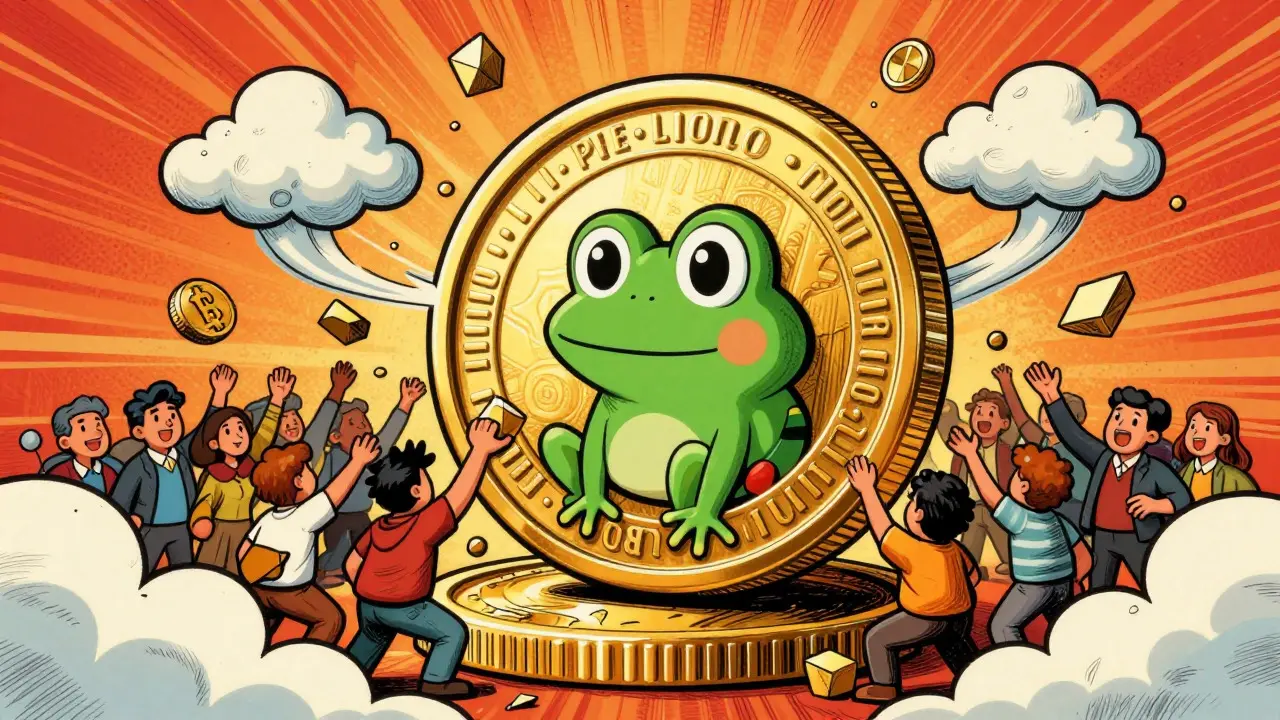
You might have seen that green frog everywhere on social media lately. If you are wondering what Pepe Coin actually is, you are not alone. It is one of the most talked-about names in the crypto world right now, but for many people, it remains a mystery wrapped in a meme.
At its core, PEPE is an ERC-20 token built on the Ethereum blockchain. Unlike Bitcoin or Ethereum, which serve as digital money or platforms for apps, PEPE has no specific function. It does not pay interest, it does not unlock special features, and it does not govern any network. Instead, it exists purely because people like the character behind it: Pepe the Frog.
The Origins of the Frog: From Comic to Crypto
To understand why a frog is worth billions, you have to look back at internet culture. The character was created by cartoonist Matt Furie in 2005 for his comic "Boy's Club." For years, Pepe the Frog was just a quirky image used in online forums. But in the late 2010s, he exploded into mainstream consciousness as a political and cultural symbol. He became the face of internet humor, irony, and community identity.
In April 2023, developers decided to capitalize on this massive cultural footprint. They launched PEPE with a simple goal: create a token that represents the spirit of the meme. There was no whitepaper detailing a complex technological breakthrough. There was no team allocation where insiders got free coins. It was a "fair launch," meaning anyone could buy in from day one. This approach resonated with traders who were tired of projects where founders held large percentages of the supply.
How PEPE Works: The Technical Side
Technically, PEPE is straightforward. It follows the ERC-20 standard, which is the common rulebook for tokens on the Ethereum network. This means it works seamlessly with popular wallets like MetaMask and can be traded on decentralized exchanges like Uniswap without needing custom software.
One of the most distinctive features of PEPE is its supply cap. The total number of tokens ever created is fixed at 420,690,000,000,000 (420.69 trillion). Why those numbers? Because they are meme staples. "420" and "69" are well-known internet references, adding to the playful nature of the project. Since the supply is hard-capped, no new tokens can be minted. This makes it deflationary in theory, though in practice, the price moves based on buying and selling pressure rather than scarcity mechanics.
| Feature | Detail |
|---|---|
| Blockchain | Ethereum |
| Token Standard | ERC-20 |
| Total Supply | 420.69 Trillion |
| Utility | None (Speculative/Meme) |
| Launch Date | April 2023 |
Why Does PEPE Have Value?
This is the question that confuses traditional investors. If PEPE doesn't do anything, why do people buy it? The answer lies in attention and liquidity. In the crypto world, value often comes from consensus. If enough people agree that a token is cool, fun, or a good bet, they buy it. As more people buy, the price goes up. That gain attracts more attention, creating a feedback loop.
PEPE benefits from being one of the most recognizable memes on the planet. It acts as a vehicle for retail traders who want exposure to the meme coin sector without dealing with obscure projects. Major exchanges like Coinbase and Kraken listing the token added a layer of legitimacy and accessibility, allowing regular users to trade PEPE easily without navigating complex decentralized finance interfaces.
Risks and Volatility: What You Need to Know
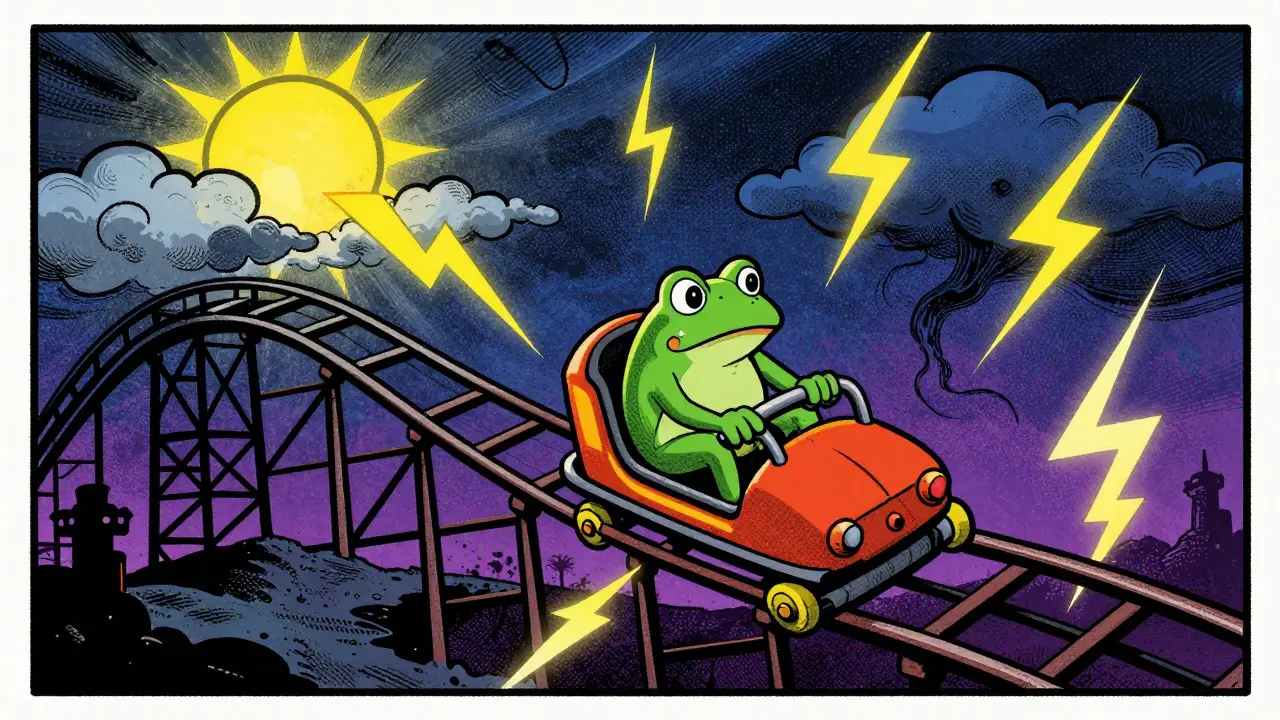
Before you jump in, it is crucial to understand the risks. PEPE is a high-beta asset. This means it tends to move much more violently than the broader market. When Bitcoin rises, PEPE might rise twice as much. But when Bitcoin falls, PEPE can drop even harder.
Because there is no underlying business generating cash flow, the price is entirely dependent on sentiment. If the meme loses popularity, or if traders lose interest, the price can plummet rapidly. Historical data shows that meme coins often experience cycles of boom and bust. A 50% or 80% drawdown from a local high is not uncommon in this sector.
Additionally, because PEPE lives on the Ethereum network, you have to deal with gas fees. During busy times, transferring your PEPE can cost several dollars in ETH. This is a hidden cost that affects smaller trades significantly.
How to Buy and Store PEPE
Getting started with PEPE is relatively simple if you already have some crypto experience. Here is the general process:
- Choose an Exchange: Find a reputable centralized exchange (like Coinbase or Kraken) or a decentralized exchange (like Uniswap) that lists PEPE.
- Acquire Base Currency: If using a DEX, you need ETH. If using a CEX, you can usually swap directly from USD or other stablecoins.
- Swap for PEPE: Execute the trade. Be mindful of slippage settings if using a DEX, as volatility can cause your execution price to differ slightly from the quoted price.
- Store Safely: For long-term holding, consider moving your tokens to a self-custody wallet like MetaMask. This protects you from exchange hacks or freezes, though it requires you to manage your own private keys securely.
Is PEPE a Good Investment?
There is no single answer here. If you view PEPE as a speculative bet on internet culture and short-term momentum, it fits the profile of a high-risk, high-reward trade. Many traders use technical analysis to time their entries and exits, treating it like a stock ticker rather than a long-term hold.
However, if you are looking for fundamental growth driven by technology adoption or utility, PEPE may not be the right fit. It is important to only invest what you can afford to lose. Diversification is key; keeping PEPE as a small percentage of your portfolio helps manage the inherent volatility.
Frequently Asked Questions
What is the maximum supply of PEPE?
The maximum supply of PEPE is 420,690,000,000,000 tokens. This number is fixed and cannot be increased, making the token deflationary in structure, although no active burn mechanism is currently driving significant reduction.
Does PEPE have any real-world utility?
No, PEPE does not have inherent utility. It is not used for payments, governance, or staking rewards. Its value is derived from speculative trading, community engagement, and its association with the Pepe the Frog meme.
Where can I buy PEPE coin?
You can buy PEPE on major centralized exchanges such as Coinbase, Kraken, and Binance, as well as on decentralized exchanges like Uniswap. Availability may vary depending on your region and the specific platform's listings.
Who created the PEPE coin?
The developers behind PEPE remain anonymous. The project was launched as a community-driven initiative without a visible founding team or central authority, emphasizing its decentralized and fair-launch nature.
Is PEPE safer than other meme coins?
PEPE operates on the secure Ethereum network, which reduces smart contract risks compared to tokens on less established chains. However, it still carries high market risk due to volatility and lack of fundamental backing. Its wide exchange support adds a layer of trust regarding liquidity and counterparty risk.
