
When you hear "JOJO" in crypto, you might think of a meme coin or a fun NFT project. But the real JOJO - JOJO is a cryptocurrency token powering JoJoWorld, a decentralized platform that turns real-world 3D scans into digital assets. This isn't another joke coin. It's built on the BNB Smart Chain and connects creators with AI companies using actual spatial data.
What JoJoWorld actually does
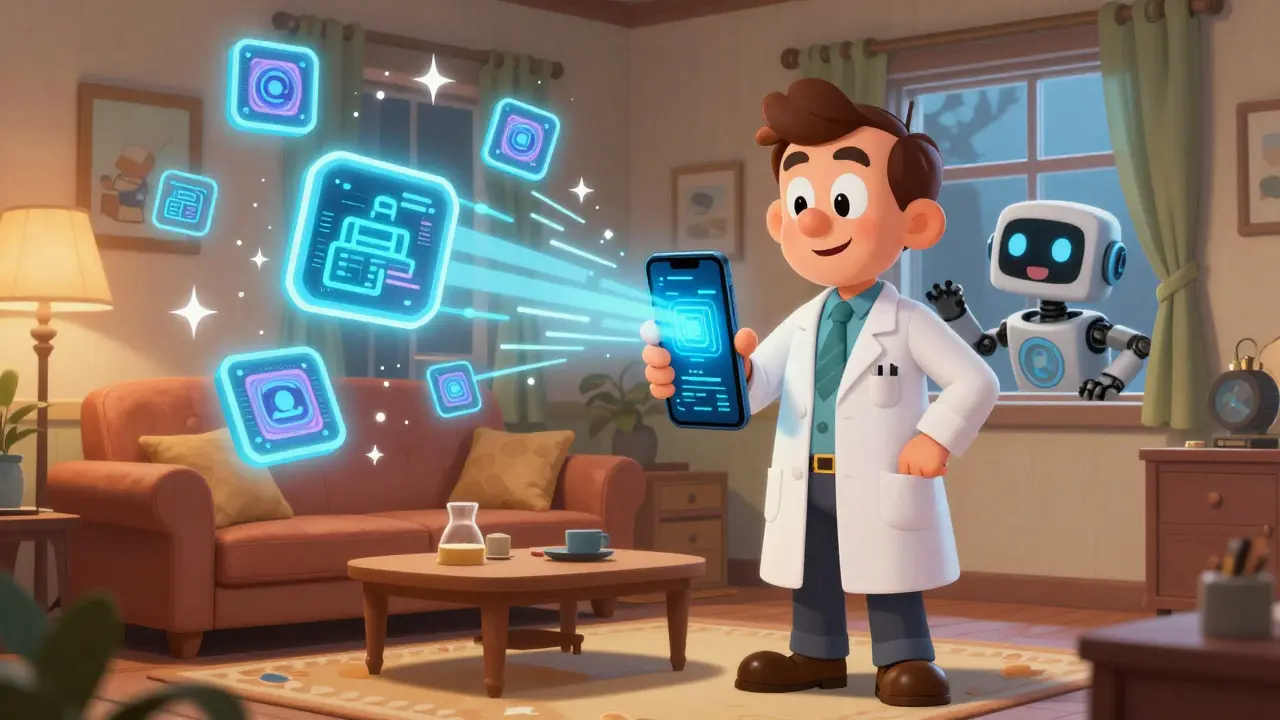
Most crypto projects promise the future. JoJoWorld is building something you can touch today. Imagine walking through your living room with your phone, scanning every corner, every chair, every lamp. That scan gets turned into a 3D model, verified, and uploaded to JoJoWorld. Now, that model becomes a digital asset - a kind of NFT - owned by you, the creator.
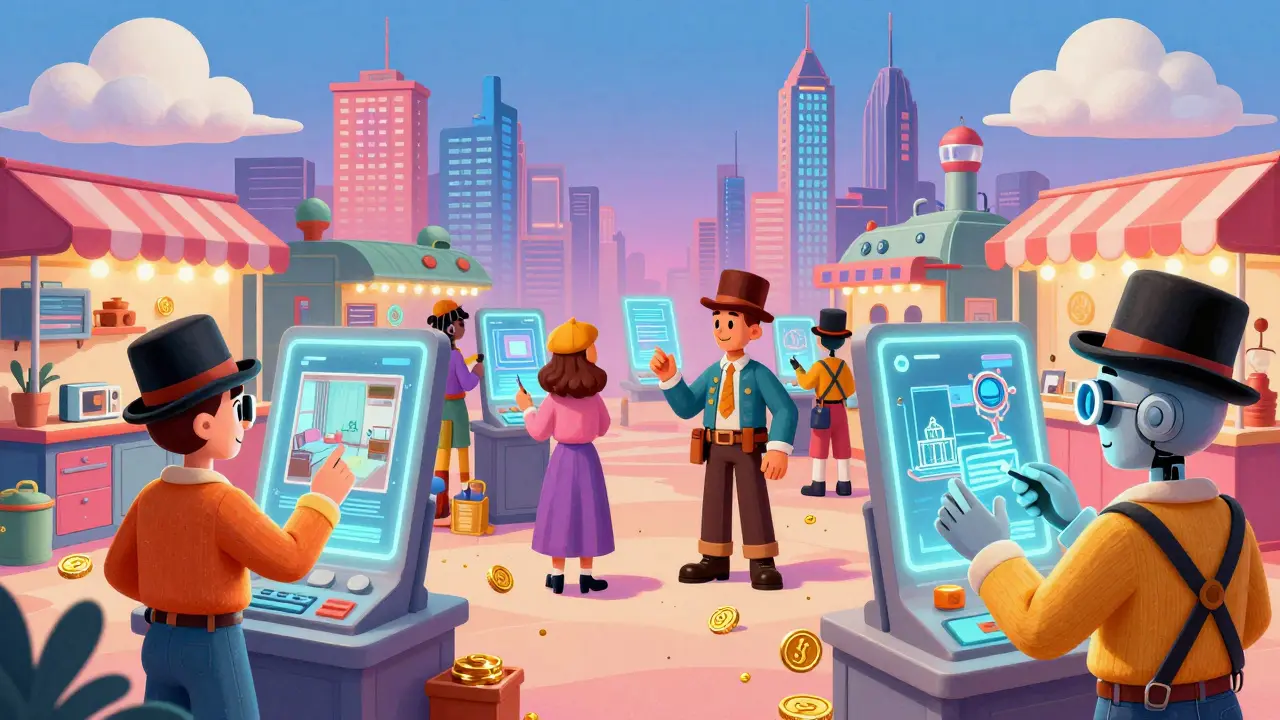
Who buys these? Companies building robots, AR apps, or virtual worlds need accurate 3D maps of real spaces. A robotics firm testing navigation in a kitchen? They’ll pay for a scanned kitchen from JoJoWorld. A game studio designing a virtual museum? They’ll license scans of real museum halls. No more expensive 3D scanning teams. No more blurry, low-quality models.
This is called DePIN - Decentralized Physical Infrastructure Networks. Instead of one company owning all the data, thousands of people contribute, and the network grows. JOJO tokens keep this system running.
How the JOJO token works
The JOJO token isn’t just for trading. It’s the fuel for the whole platform. Here’s how it gets used:
- Creators earn JOJO when they upload verified 3D scans. The better the scan, the more they get.
- Businesses spend JOJO to access datasets, use AI tools for annotation, or license NFTs for their projects.
- Token holders vote on platform upgrades, fee structures, and new features. If you hold JOJO, you help decide the platform’s future.
There’s no middleman. No corporate gatekeeper. Just direct value exchange between people who create and people who need the data.
Price history: A wild ride
JOJO’s price tells a story of ambition and volatility. At its peak, it hit $0.8320 - a value that seems impossible now. As of February 13, 2026, it trades around $0.0150. That’s a 98.19% drop from its high. But here’s the twist: it’s also up 6.75% from its all-time low of $0.0141.
It’s not a smooth path. In the last 90 days, JOJO dropped 60.28%. But over the past 60 days, it rebounded 37.64%. The last 24 hours saw a 3.59% dip, but within that hour, it jumped 1.14%. This kind of back-and-forth is common in small-cap tokens with limited liquidity.
Market cap sits at $11.35 million. Fully diluted (if all 800 million tokens were out), it’d be $81.05 million. Right now, only 112 million are circulating. That means there’s room - but also risk - if more tokens enter the market.
Who’s behind it?
JoJoWorld wasn’t built by anonymous devs. The founder, Tae Oh, co-created Gluwa and Creditcoin - two blockchain projects focused on real-world credit and financial infrastructure. Stuart Gardner, the operational lead, brings experience in aerospace and data systems. This isn’t a team that just saw a meme trend and jumped in.
Their background matters. Building a platform that handles precise 3D data, secures user uploads, and ensures fair payouts requires serious engineering. The team uses institutional-grade security: cold storage for funds, mandatory two-factor authentication, and encrypted data pipelines. They’re not just selling a token. They’re building a data infrastructure.
Why it’s different from meme coins
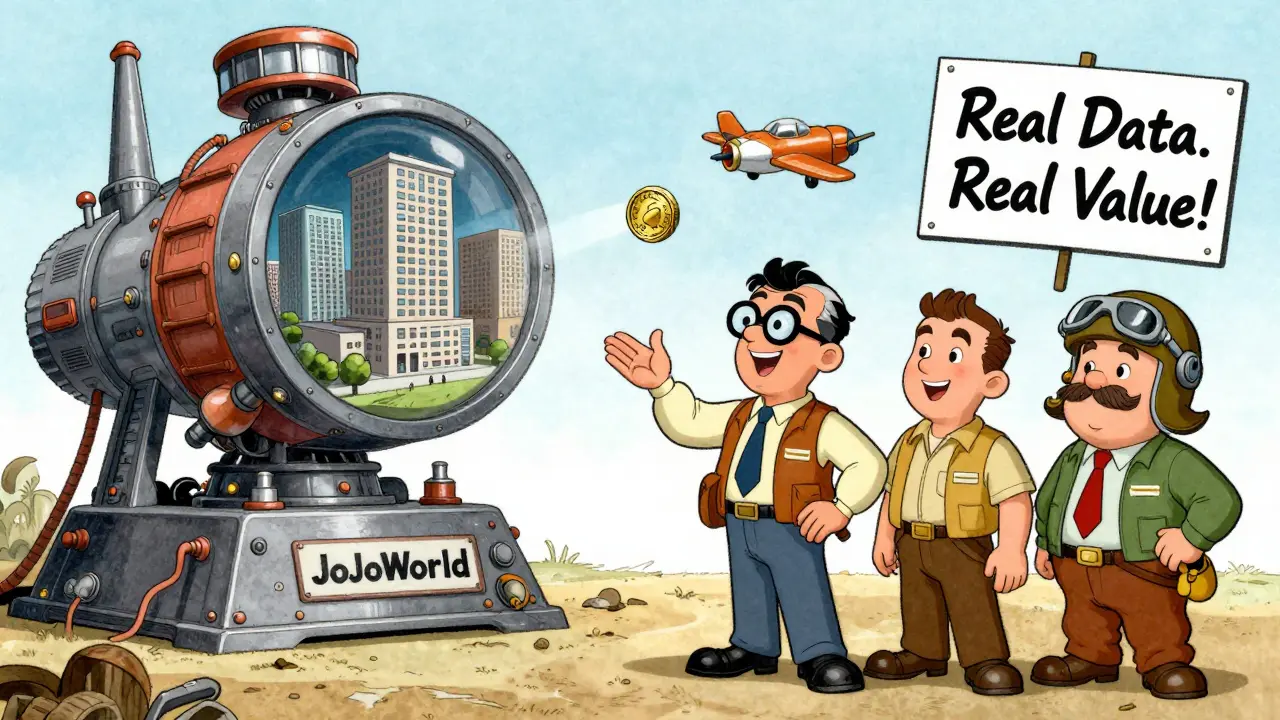
There are dozens of coins named after anime characters. Most vanish within months. JOJO stands out because it has a working product. You can’t trade a meme. But you can trade a 3D scan of a real warehouse, a real factory, a real city street.
Real utility = real demand. If a robotics company needs 500 scans of warehouse layouts to train their AI, they’ll pay for them. If they pay in JOJO, the token gains usage. That usage drives value - not hype.
Compare that to a coin that only exists because someone posted a dog wearing a hat. JOJO has a marketplace. It has users. It has revenue streams. That’s not luck. That’s product-market fit.
What’s holding it back?
Even with solid tech, JOJO faces challenges:
- Low liquidity - only $1.37 million in on-chain liquidity. Big buyers can’t move in without crashing the price.
- Concentrated holders - just 5,056 addresses hold the token. A few wallets could move the market.
- Market noise - some sites still list JOJO as a "NFT Metaverse MEME coin," confusing new users.
- Slow adoption - the platform needs more creators and more enterprise users to scale.
The project’s survival depends on one thing: getting real people to use it. Not just speculators. Not just traders. Actual 3D scanners. Actual AI engineers. Actual companies that need data.
Is JOJO worth your attention?
If you’re looking for a quick flip, JOJO is risky. The price has been down for months. Trading volume is low. It’s not on major exchanges like Binance or Coinbase.
But if you believe in decentralized infrastructure - if you think the future of AI, robotics, and AR depends on real-world data - then JOJO is one of the few tokens actually building that future. It’s not about being the next Bitcoin. It’s about being the first real platform that turns physical space into digital value.
Right now, it’s a small project with big potential. The team has the experience. The tech works. The token has three real uses. All it needs now is adoption. And that’s the hardest part of any crypto project.
Where to find JOJO
JOJO trades on a few decentralized exchanges (DEXs) on the BNB Smart Chain. You’ll need a wallet like MetaMask or Trust Wallet, connected to BNB Chain. Look for the token contract address - always verify it yourself. Scams with similar names are common.
Don’t trust price charts alone. Check the platform’s official website for updates on new data uploads, enterprise partnerships, and token emission schedules. The real story isn’t in the price. It’s in the scans being uploaded.

Ace Crystal
February 14, 2026 AT 15:42SAKTHIVEL A
February 15, 2026 AT 09:26krista muzer
February 17, 2026 AT 05:52Claire Sannen
February 18, 2026 AT 20:04Elizabeth Choe
February 19, 2026 AT 02:16Crystal McCoun
February 20, 2026 AT 06:46Elijah Young
February 22, 2026 AT 01:50monique mannino
February 23, 2026 AT 22:36Peggi shabaaz
February 25, 2026 AT 01:01Ben Pintilie
February 26, 2026 AT 00:56Sakshi Arora
February 26, 2026 AT 06:48Robbi Hess
February 26, 2026 AT 20:39Christopher Wardle
February 28, 2026 AT 05:27Grace Mugambi
February 28, 2026 AT 19:58Michelle Cochran
March 1, 2026 AT 16:26Kaz Selbie
March 2, 2026 AT 17:04Lindsey Elliott
March 4, 2026 AT 12:39Joe Osowski
March 4, 2026 AT 21:18Donna Patters
March 5, 2026 AT 23:00Brittany Meadows
March 6, 2026 AT 10:11Desiree Foo
March 8, 2026 AT 07:50Santosh kumar
March 8, 2026 AT 17:59Keturah Hudson
March 8, 2026 AT 21:16