
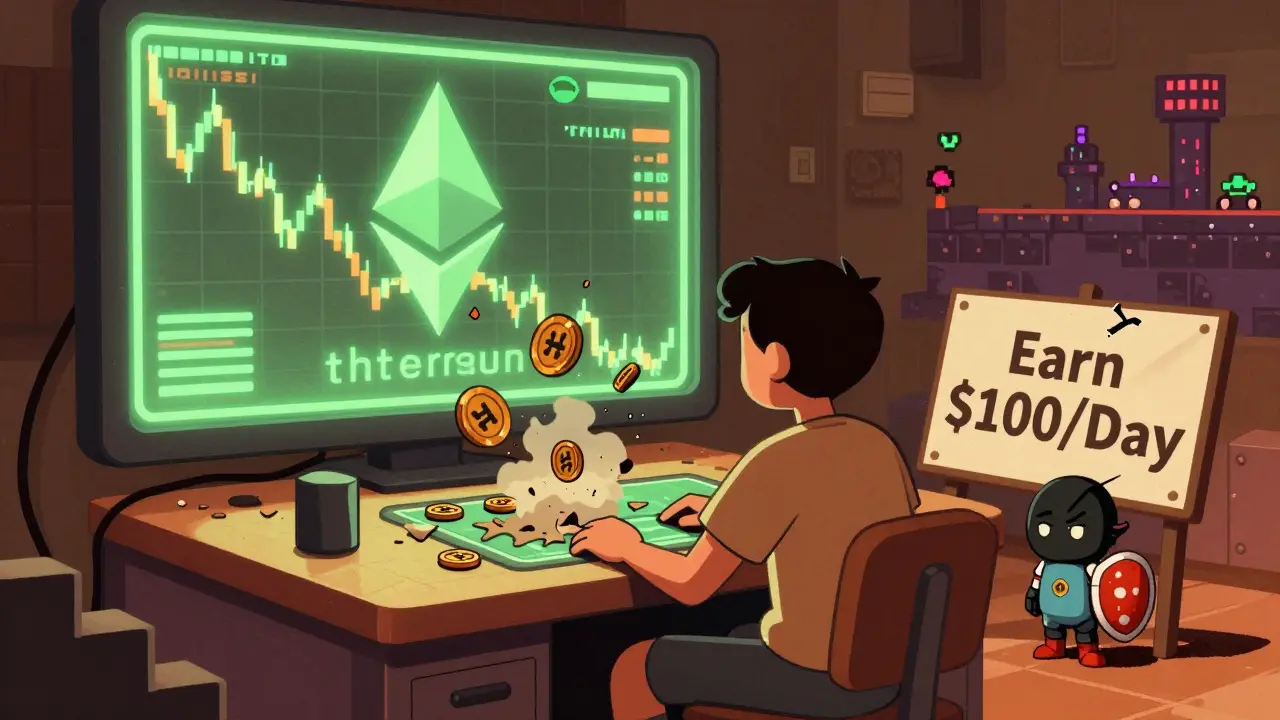
HeroesTD (HTD) isn’t just another crypto coin. It’s the fuel for a specific blockchain game that launched in late 2021 and hasn’t shaken off its niche status since. If you’ve heard about HTD as a way to make money playing games, you need to know the full story - especially how little most players actually earn and why the token’s value has crashed more than 89% from its peak.
What HTD Actually Does
HTD is the native token of HeroesTD, a tower defense Play-to-Earn game built on Ethereum. It’s not used for buying coffee or paying for services. It has one job: keep the game running. You need HTD to summon new Heroes - the digital characters you use to attack enemy bases and defend your own. Without it, you can’t progress past the beginner level.
The game splits Heroes into two types: Non-NFT Heroes and NFT Heroes. New players get a few Non-NFT Heroes for free, but if you want to compete in ranked matches or tournaments, you need NFT Heroes. And those? You can only get them by spending HTD on the in-game marketplace or by combining two existing NFT Heroes in a process called ‘hailing.’
HTD also lets you buy weapons, armor, and other upgrades inside the game. Plus, you can stake unused HTD tokens to earn more HTD or even rare NFTs through the game’s staking system, which was added in early 2023. But here’s the catch: staking doesn’t fix the core problem. The token’s value keeps dropping.
The Tokenomics Are Broken
When HeroesTD launched in November 2021, early investors paid as little as $0.04 per HTD. By mid-2022, the price hit an all-time high of around $0.025 - a 60x return for those who bought early. But that was the peak. As of October 2023, HTD trades at roughly $0.003. That’s an 89% drop from its high.
Why? The tokenomics don’t balance. For HTD to hold value, players need to constantly spend it - summoning Heroes, buying gear, upgrading NFTs. But most players aren’t earning enough to keep buying. One Reddit user reported earning less than $0.50 after 20 hours of gameplay. Another spent $300 on NFT Heroes and got back only $15 in HTD after two months.
There’s no real sink for HTD. Players aren’t burning tokens. They’re hoarding them or selling them for stablecoins. Meanwhile, the total supply is 468 million HTD, but only 18.11 million are circulating. That’s a red flag. It means most tokens are locked up, likely with early investors waiting to cash out. And when those big holders start selling, the price crashes.
Trading Volume? Almost None
HTD trades on small decentralized exchanges like Uniswap and PancakeSwap. You won’t find it on Binance, Coinbase, or Kraken. The 24-hour trading volume hovers around $36 - yes, thirty-six dollars. Compare that to Axie Infinity (AXS), which trades over $100 million daily. That’s a 2.7 million times difference.
Low volume means one thing: liquidity problems. If you want to sell your HTD, you might not find a buyer. Or if you do, you’ll have to accept a steep discount. Many players report being stuck with tokens they can’t convert to cash without losing 30-50% of their value.
Is the Game Fun? Yes. Is It Profitable? Not Really
The gameplay itself isn’t bad. It’s a solid tower defense experience with simple controls and retro-style graphics. Many players say it feels like a modern version of classic games like Kingdom Rush. If you just want to play a fun, free-to-start game with blockchain elements, HeroesTD delivers.
But if you’re in it to earn? You’re setting yourself up for disappointment. The average player earns about $0.025 per hour. That’s 2.5 cents an hour. Even if you play 8 hours a day, you’d make less than $0.20. After paying Ethereum gas fees (which can be $1-$3 per transaction), you’re in the red.
Experienced players on the official Discord server say the only way to make it work is to focus on daily quests, stake only when APY exceeds 100%, and never buy NFT Heroes unless you’re ready to lose money. That’s not a sustainable business model - it’s a survival tactic.
Who’s Still Playing?
There are maybe 1,200 to 1,500 active players per month, based on token transaction data. Most are crypto veterans who’ve played Axie Infinity, The Sandbox, or other early P2E games. They know the drill: buy low, hope for a pump, sell before the crash.
New players? They show up after seeing YouTube videos promising “earn $100/day with HeroesTD.” They download the game, spend hours grinding, then leave after realizing their earnings won’t cover their phone bill. Trustpilot reviews show a 3.2/5 average rating. The positive ones praise the gameplay. The negative ones all say the same thing: “I lost money.”
What’s Next for HeroesTD?
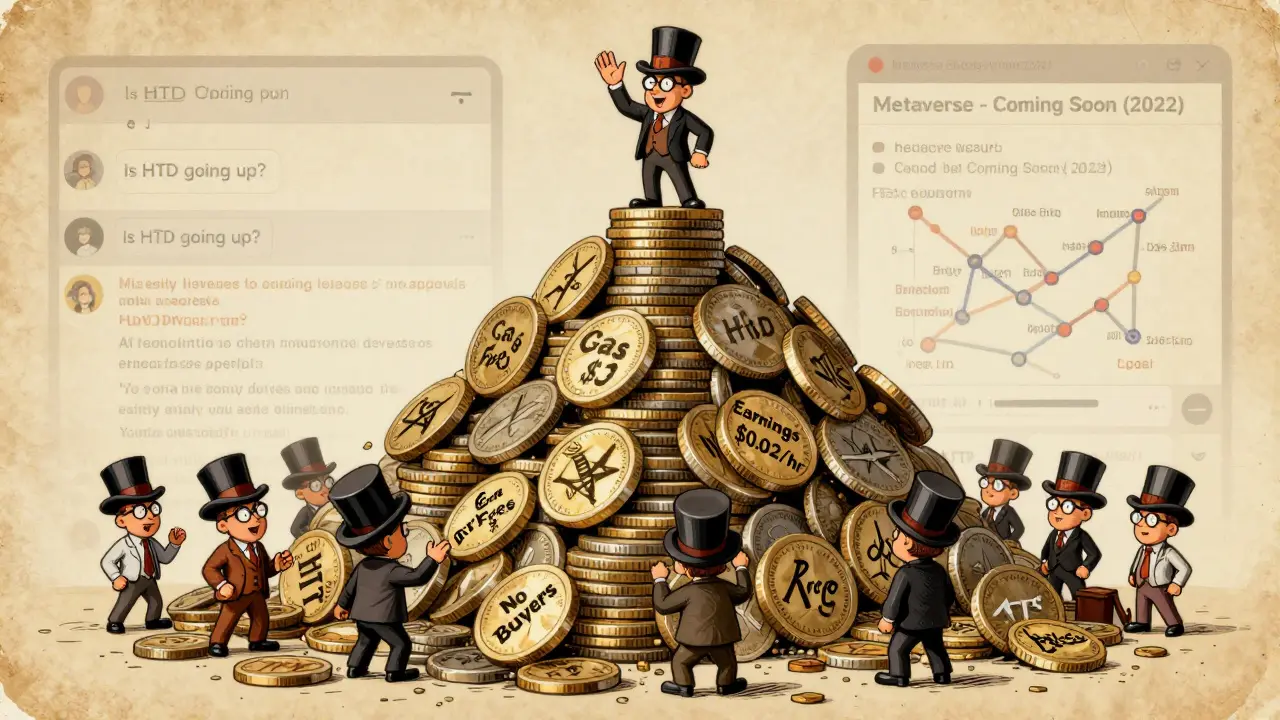
The project’s roadmap from 2022 promised metaverse integration and cross-game NFT compatibility. Nothing has happened. The GitHub repo hasn’t had a meaningful update since August 2023. The Discord server has over 4,000 members, but most activity is people asking, “Is HTD going up?” or “Where can I sell?”
Industry analysts call HeroesTD a textbook example of a failed P2E model. It’s not the game’s fault - the tower defense mechanics work. It’s the token. The design forces players to buy in to play well, but gives them no way to earn enough to stay in. It’s a classic pyramid: early buyers profit, latecomers lose.
As blockchain gaming shifts toward “play-and-earn” models - where tokens are secondary to fun and community - HeroesTD looks increasingly outdated. It’s stuck in the old “gamble to play” mindset that made Axie Infinity collapse in 2022.
Should You Buy HTD?
If you’re looking for a long-term investment? No. The token has no real utility outside a dying game. Its value depends entirely on new players joining and old players dumping. Neither is happening.
If you want to try the game for fun? Go ahead. Connect your MetaMask wallet, grab your free Non-NFT Heroes, and play. Don’t spend money. Don’t stake. Just enjoy the tower defense mechanics. Treat it like a free mobile game with a blockchain twist.
If you already own HTD? Don’t panic-sell. But don’t expect it to rebound. The odds are stacked against it. The only people who made money were the ones who bought in 2021 and sold before 2023. Everyone else is just waiting for the final drop.
HeroesTD isn’t a crypto coin you invest in. It’s a digital toy with a broken economy. Play it if you like it. But don’t let it cost you your savings.
Is HeroesTD (HTD) a good investment?
No, HTD is not a good investment. The token’s value has dropped over 89% from its all-time high, trading volume is extremely low ($36/day), and there’s no evidence of sustainable demand. The game’s economic model relies on new players buying in to keep the token afloat - a model that has failed in every similar project since Axie Infinity. Early investors made money, but current buyers are likely to lose it.
Can you earn real money playing HeroesTD?
Technically yes, but realistically, no. Most players earn less than $0.025 per hour of gameplay. After accounting for Ethereum gas fees (often $1-$3 per transaction), you’re losing money. Some players have reported earning $0.50 after 20 hours of play. The only way to make significant money is to have bought HTD early and sold at its peak - not by playing the game.
How do you get started with HeroesTD?
You need a web3 wallet like MetaMask or Trust Wallet. Connect it to the HeroesTD DApp website. You’ll get a few free Non-NFT Heroes to start playing. There’s no way to buy HTD directly with credit cards or bank transfers - you need to buy ETH or BNB first on an exchange, then swap it for HTD on a decentralized exchange like Uniswap. No fiat on-ramp exists.
What’s the difference between NFT and Non-NFT Heroes?
Non-NFT Heroes are free starter characters with basic stats. You can use them to play casual matches and complete daily quests. NFT Heroes are rare, upgradeable, and required for ranked play and tournaments. You can only get them by spending HTD on the marketplace or by combining two existing NFT Heroes. NFT Heroes cost hundreds or thousands of HTD - and rarely pay back their cost through gameplay earnings.
Why is HTD’s trading volume so low?
Because almost no one is buying or selling it. The game has fewer than 1,500 active players monthly. Most holders are either early investors waiting to dump their tokens or new players who bought high and now can’t sell without a huge loss. There’s no liquidity, and major exchanges like Binance won’t list it because of the lack of demand and transparency issues.
