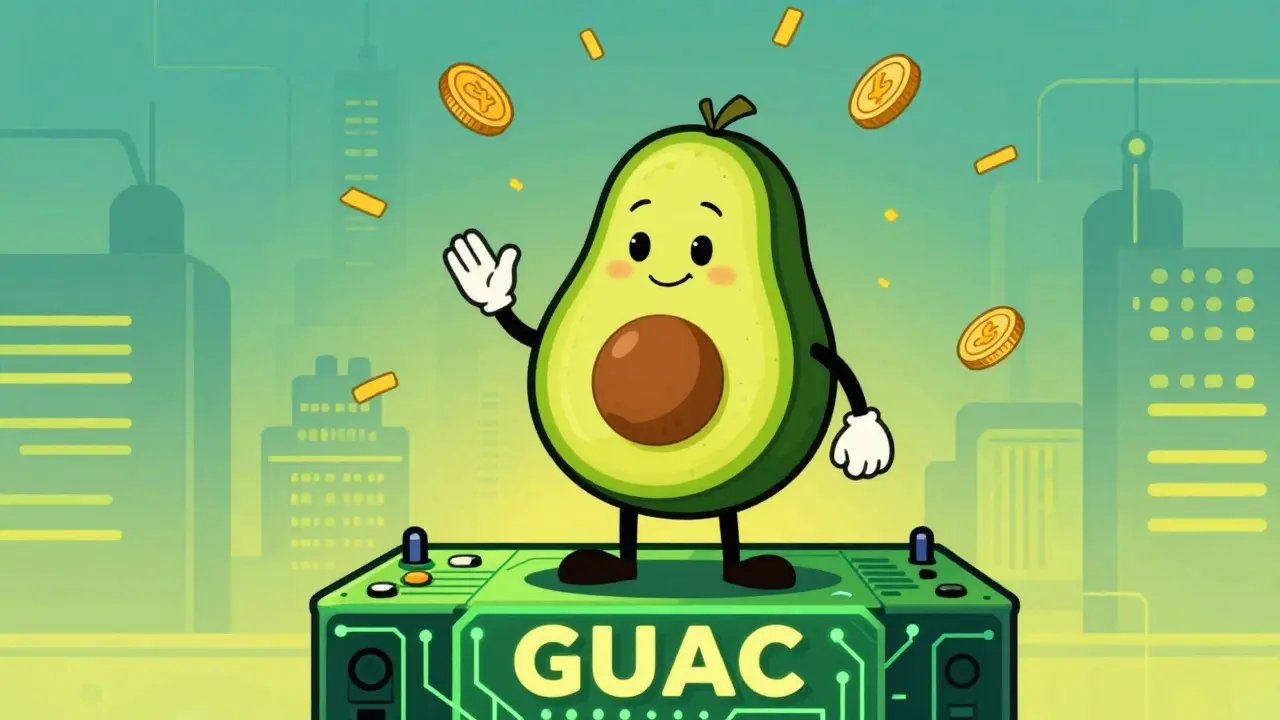
You’ve probably seen the charts spike and dip, heard the memes, or scrolled past a green avocado logo on your feed. But what actually is Guacamole (GUAC)? Is it just another joke coin destined for zero, or does it have teeth? If you’re looking at the ticker GUAC on your screen right now, you’re staring at a project that started as a playful meme during Cinco de Mayo 2023 but has since grown into a functional part of the Solana ecosystem.
Unlike many tokens that vanish after their initial hype cycle, GUAC has stuck around. It operates not just as a speculative asset but as a utility token within the AvocaDAO community. This means it’s tied to governance, rewards, and even play-to-earn mechanics. Before you throw money at it, though, you need to understand how it works, where it trades, and why the price looks so different depending on which website you check.
The Origin Story: From Meme to Utility
Let’s rewind to May 2023. The crypto market was buzzing with meme coins, and most of them followed the same tired script: anonymous team, presale for insiders, massive dump on retail buyers. Guacamole did the opposite. It launched stealthily. There were no presales. No venture capital allocations. No insider advantages. The team simply deposited liquidity and posted the contract address on social media.
This "fair launch" strategy is crucial to understanding GUAC’s current standing. By pairing 94% of the total supply against USDC (USD Coin) in a new Raydium pool immediately upon launch, they created deep initial liquidity. This prevented the immediate price manipulation common in lesser projects. Over time, the branding evolved from a simple joke about avocados into a broader ecosystem managed by AvocaDAO. Today, GUAC is used to trade, shop, learn, and earn within this community-driven structure.
How GUAC Works on the Solana Blockchain
Guacamole lives exclusively on the Solana blockchain. If you’re trying to find it on Ethereum or Binance Smart Chain, you won’t find the official token. This singular focus allows for low transaction fees and fast processing times, which are essential for a token designed for frequent micro-transactions in gaming and shopping apps.
The official contract address is AZsHEMXd36Bj1EMNXhowJajpUXzrKcK57wW4ZGXVa7yR. Always double-check this before buying. Scammers love to create fake versions of popular meme coins with similar names. Since GUAC doesn’t have widespread listings on major centralized exchanges like Coinbase Pro or Kraken yet, most users interact with it via decentralized exchanges (DEXs). This requires a self-custody wallet like Phantom or Solflare.
Tokenomics: Supply and Distribution
When analyzing any crypto, you have to look at the supply. GUAC has a circulating supply of approximately 98 to 99 trillion tokens. Yes, trillion. That sounds like a lot, but in the world of meme coins, large supplies are standard to keep the unit price accessible to small investors.
The distribution model remains community-centric. Because there was no presale, the early holders were primarily retail traders who bought in during the first hours of trading. This creates a more distributed holder base compared to tokens where 20% of the supply is locked up by early investors waiting to sell. However, always check the current top holders on a block explorer like Solscan to ensure no single whale has accumulated too much power.
| Metric | Value / Detail |
|---|---|
| Blockchain | Solana |
| Total Supply | ~99 Trillion GUAC |
| Launch Date | May 2023 |
| Primary Use Case | DeFi, Gaming, Community Rewards |
| Contract Address | AZsHEMXd36Bj1EMNXhowJajpUXzrKcK57wW4ZGXVa7yR |
Understanding the Price Volatility
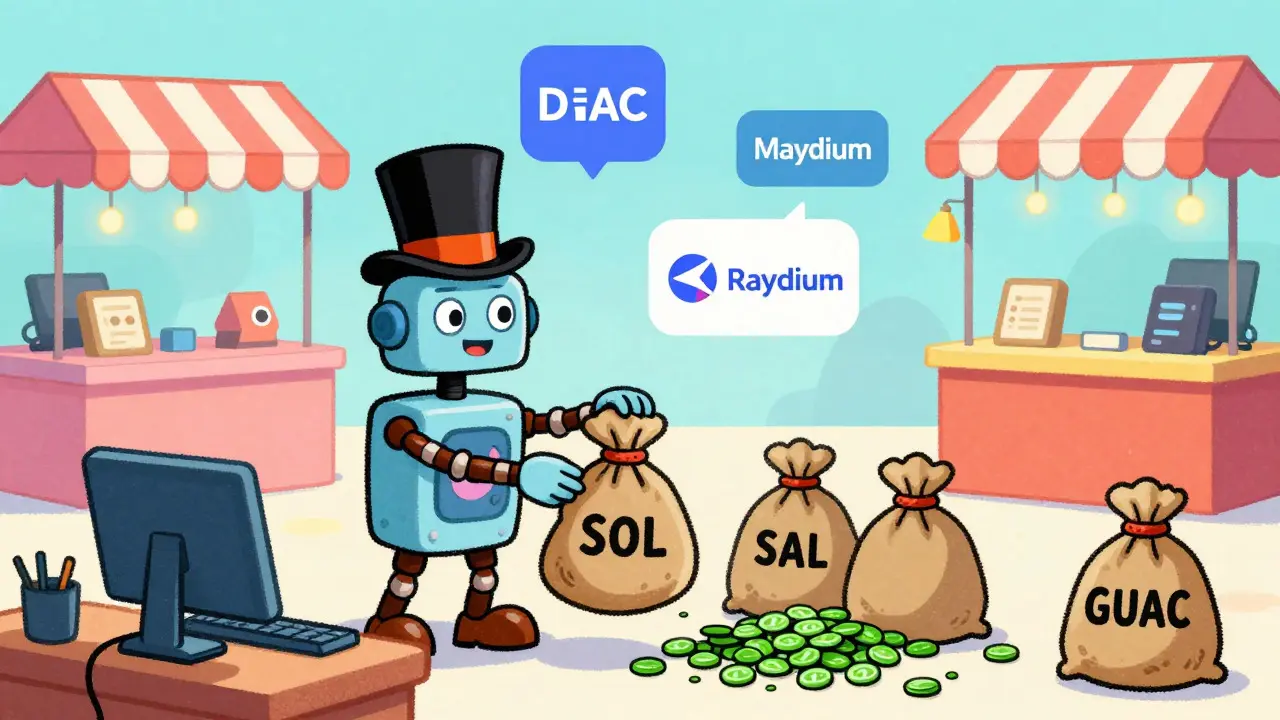
If you’ve checked the price of GUAC recently, you might be confused. One site says it’s worth fractions of a penny, while another shows a slightly higher figure. This isn’t necessarily a scam; it’s a feature of decentralized trading. GUAC trades primarily on DEXs like Raydium, Meteora, and Orca. Each platform has its own liquidity pool, meaning prices can differ slightly between them due to arbitrage delays.
As of mid-2026, data aggregators show varying prices. For instance, CoinGecko might report a price around $0.000000008, while other sources might show slight variations based on the specific trading pair (like GUAC/USDC vs. GUAC/SOL). The market cap hovers between $900,000 and $1.2 million USD, placing it firmly in the micro-cap category. This means high volatility. A relatively small amount of buying pressure can send the price up significantly, just as easily as selling pressure can crash it.
The 24-hour trading volume typically ranges from $6,000 to $22,000 across various platforms. While this isn’t huge compared to Bitcoin or Solana itself, it indicates active daily participation from the community. The volume-to-market-cap ratio suggests moderate liquidity-you can usually enter and exit positions without slippage destroying your trade, provided you aren’t moving millions of dollars at once.
Where to Buy GUAC
You won’t find GUAC listed directly on Binance’s main centralized exchange interface. Instead, you’ll need to use a decentralized approach. Here is the typical path:
- Get a Wallet: Download Phantom or Solflare and secure your seed phrase.
- Buy SOL: Purchase Solana on a centralized exchange like Coinbase or Kraken and send it to your wallet.
- Connect to a DEX: Go to Raydium, Meteora, or Orca. Connect your wallet.
- Swap: Paste the official GUAC contract address to avoid fakes. Swap your SOL for GUAC.
Some users also access GUAC through the Binance Web3 Wallet, which integrates DEX functionality directly into the Binance app, bridging the gap between centralization and decentralization.

Risks and Considerations
Is GUAC a safe investment? In crypto, nothing is truly safe. As a micro-cap token with a history rooted in memes, GUAC carries significant risk. The primary risks include:
- Liquidity Risk: If the community loses interest, trading volume could dry up, making it hard to sell.
- Smart Contract Risk: Although the code appears stable, all DeFi interactions carry inherent smart contract vulnerabilities.
- Regulatory Uncertainty: Meme coins and community tokens often face stricter scrutiny from regulators like the SEC as laws evolve.
However, the presence of AvocaDAO adds a layer of legitimacy. Governance structures mean the community has a say in the future development, reducing the risk of a "rug pull" where developers abandon the project. The long-term viability depends on whether the ecosystem can continue to attract users for its shopping, learning, and gaming features beyond just speculation.
Conclusion: Is GUAC Worth Your Attention?
Guacamole (GUAC) is more than just a funny name. It represents a slice of the Solana ecosystem that values community ownership and fair launches. If you believe in the potential of meme-inspired utility tokens and want exposure to the Solana network’s growth, GUAC offers an entry point with relatively low barrier to cost per token. But remember, you are buying into a volatile, niche asset. Do your own research, start small, and never invest more than you can afford to lose.
Is Guacamole (GUAC) a good investment?
GUAC is a high-risk, high-reward asset. As a micro-cap meme coin with utility features, it can see significant price swings. It may be suitable for speculative portfolios if you believe in the Solana ecosystem and the AvocaDAO community, but it should not form the core of a conservative investment strategy.
Which blockchain is GUAC on?
Guacamole (GUAC) operates exclusively on the Solana blockchain. Ensure you are using a Solana-compatible wallet and checking the correct contract address when trading.
Can I buy GUAC on Binance?
You cannot buy GUAC directly on Binance’s centralized exchange. However, you can acquire it using the Binance Web3 Wallet by swapping SOL for GUAC on integrated decentralized exchanges like Raydium or Meteora.
What is the total supply of GUAC?
The circulating supply of GUAC is approximately 98 to 99 trillion tokens. This large supply is typical for meme coins to keep individual token prices low and accessible.
Who controls the GUAC project?
GUAC is governed by the AvocaDAO community. This decentralized autonomous organization allows token holders to participate in decision-making regarding the ecosystem's development and funds.
