
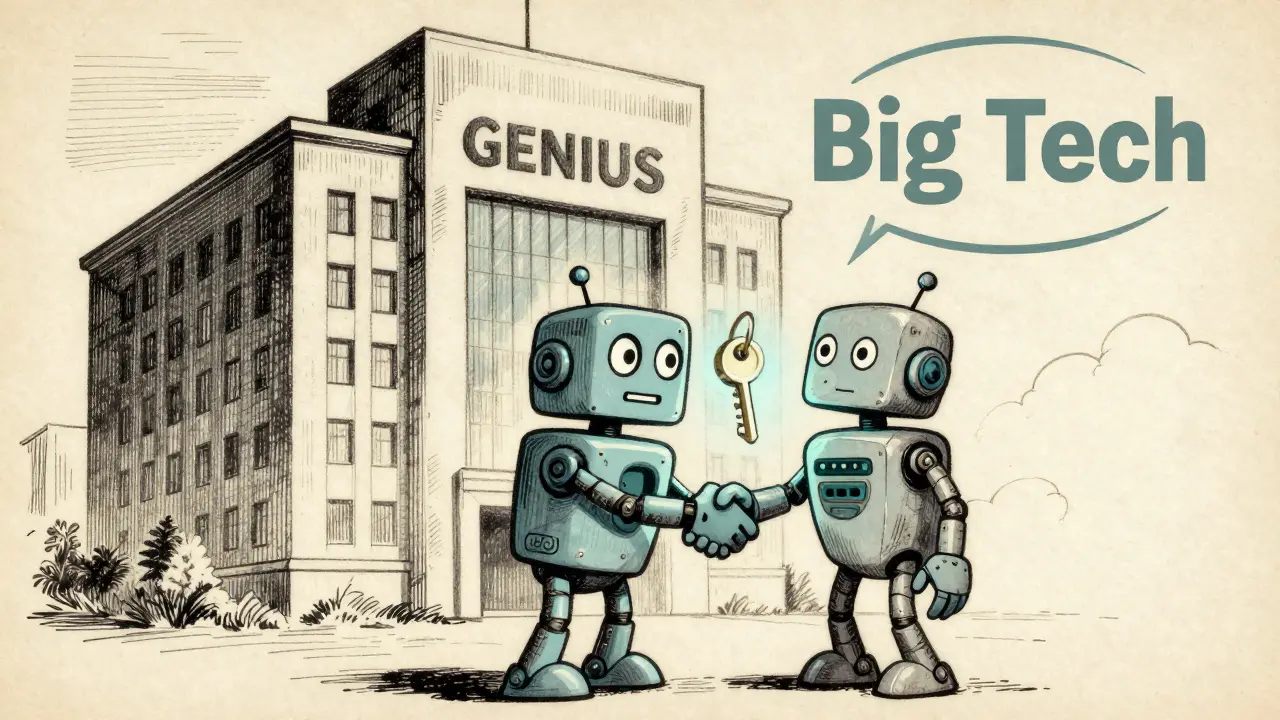
Artificial intelligence and blockchain have been trying to shake hands for years. Most projects just slap an "AI" label on a standard token and hope for the best. GENIUS AI, trading under the ticker symbol GNUS, claims to do something different. It isn't just another hype-driven meme coin; it attempts to build actual infrastructure that lets people access powerful AI tools without relying on big tech giants. But does the technology back up the promise?
If you are looking at GNUS right now, you probably want to know three things: what the token actually does, how the network works under the hood, and whether the current price makes sense given the supply dynamics. This guide breaks down the technical reality behind the marketing buzz.
The Core Mission: Democratizing AI Access
Centralized AI providers control the most advanced models today. They decide who gets access, how much it costs, and what data they can use. GENIUS AI was built to flip this model. The project aims to create a decentralized ecosystem where anyone-developers, businesses, or individual users-can leverage sophisticated machine learning capabilities without going through a corporate gatekeeper.
Founded by Peter Kell (blockchain development), Robert Genito (fintech strategy), and Roger James Hamilton (business development), the team positioned GNUS as a utility token. You don't hold it just to watch the chart go up. You use it to pay for AI services, interact with decentralized applications (dApps), and participate in the network's governance. According to documentation from platforms like Cryptohopper, GNUS fuels the entire economy of the GENIUS AI network.
How the Technology Works: Proof of Intelligence
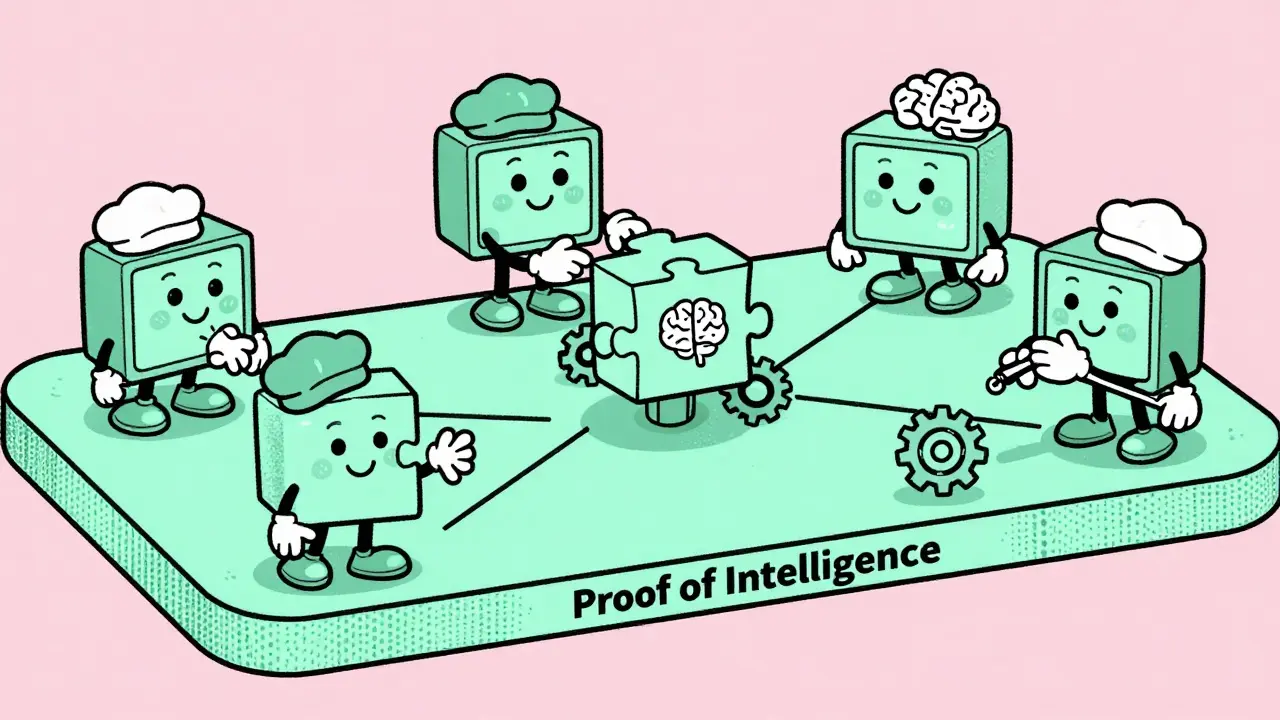
Most blockchains rely on Proof of Work (mining) or Proof of Stake (holding tokens). GENIUS AI uses a hybrid mechanism called Proof of Intelligence (PoI). This is where the project gets interesting technically.
PoI combines traditional staking with AI-driven problem-solving. Validators don't just sit on their wallets; they contribute computational power to solve complex problems. This dual approach secures the network while simultaneously training and improving the AI systems running on it. Think of it as mining that actually produces useful work rather than burning electricity for nothing.
The architecture also leans heavily on two other key technologies:
- Federated Learning: Instead of sending all your private data to a central server, the AI learns from data stored locally on user devices. This keeps sensitive information private while still improving the model.
- Decentralized GPU Mining: The network distributes heavy computing tasks across thousands of Graphics Processing Units (GPUs) owned by participants. This prevents bottlenecks and makes the system harder to attack since there is no single point of failure.
To add another layer of security, GENIUS AI employs zero-knowledge proofs. These allow the network to verify transactions and data integrity without revealing the underlying data itself. For a platform dealing with AI and potentially sensitive user inputs, this privacy feature is critical.
The Role of "Cognitive Miners" and Staking
In Bitcoin, miners secure the network and earn rewards. In GENIUS AI, these contributors are called "cognitive miners." They provide GPU resources and computational power to run AI algorithms. In return, they earn GNUS tokens based on the quality and quantity of their contribution.
This creates a self-sustaining loop. The more people contribute hardware, the faster and smarter the AI becomes. The smarter the AI, the more valuable the service becomes, which drives demand for the GNUS token. Regular holders can also stake their tokens to help secure the network and earn passive rewards, similar to Ethereum or Solana.
Tokenomics: Supply, Cap, and Dilution Risks
When evaluating any crypto asset, you need to look closely at the supply schedule. Here is the breakdown for GNUS as of May 2026:
| Metric | Value |
|---|---|
| Circulating Supply | ~12 million to 12.4 million GNUS |
| Maximum Supply Cap | 50 million GNUS |
| Circulating Percentage | Approximately 24-25% |
| Contract Address (EVM) | 0x127e47aba094a9a87d084a3a93732909ff031419 |
The gap between circulating supply and maximum supply is significant. Only about one-quarter of all GNUS tokens exist right now. This means substantial inflation could occur over time as new tokens are emitted to reward cognitive miners and developers. If demand doesn't grow fast enough to absorb this new supply, the price per token could face downward pressure. Always check the emission schedule before committing long-term capital.
Current Market Performance and Liquidity
As of mid-May 2026, GNUS trades in a relatively narrow band. Prices vary slightly depending on the exchange:
- CoinMarketCap: ~$0.5084 USD
- CoinGecko: ~$0.5049 USD
- Kraken: Between $0.48 and $0.52 USD
The market capitalization hovers around $5.9 million to $7.1 million USD. While this might sound small compared to giants like Ethereum, it places GNUS firmly in the mid-tier micro-cap category (ranked roughly #1140 on CoinGecko). Trading volume is modest, often dipping below $200 daily on some trackers, though spikes have occurred during periods of increased interest.
This low liquidity means large buy or sell orders can move the price significantly. Slippage can be high if you try to trade too many tokens at once. It is not yet a coin for institutional whales looking to park millions safely.
Multi-Chain Accessibility
One practical advantage of GNUS is its multi-chain design. The token operates on Ethereum Virtual Machine (EVM) compatible networks. This means you can easily add it to MetaMask or Trust Wallet using the contract address mentioned above. You aren't locked into a single proprietary chain, which broadens accessibility for traders and developers familiar with the Ethereum ecosystem.
This interoperability allows users to trade GNUS on various decentralized exchanges (DEXs) and bridges, reducing friction when moving assets between different blockchain environments.
Risks and Criticisms to Consider
No investment is risk-free, and GNUS has specific vulnerabilities worth noting:
- Dilution Risk: With 75% of tokens yet to enter circulation, future inflation is a real concern.
- Execution Risk: Building functional AI infrastructure is hard. Many projects promise "decentralized AI" but fail to deliver usable products. You need to monitor their GitHub activity and product updates closely.
- Market Volatility: As a smaller cap coin, GNUS is highly susceptible to broader crypto market trends and speculative pumps.
- Regulatory Uncertainty: AI regulations are evolving globally. How decentralized AI data handling fits into upcoming laws remains unclear.
Despite these risks, the combination of federated learning and PoI offers a theoretically sound framework for scaling AI without centralization. The question remains whether they can execute at scale against competitors backed by deeper pockets.
Who Is GNUS For?
GENIUS AI appeals to a specific type of investor and developer. If you are interested in the intersection of artificial intelligence and blockchain decentralization, GNUS offers a direct way to participate in that narrative. Developers building dApps that require accessible, private AI processing might find the infrastructure useful. Traders looking for high-risk, high-reward opportunities in the micro-cap space may see potential in the low float and growing utility.
However, if you prefer stable, blue-chip assets with established track records, GNUS likely doesn't fit your portfolio. It is an early-stage project with significant technological ambition but limited historical performance data.
Is GENIUS AI (GNUS) a safe investment?
Like all cryptocurrencies, GNUS carries risk. Its low market cap and high unsold supply mean it is volatile. While the technology stack (PoI, federated learning) is innovative, execution risks remain. Only invest what you can afford to lose and do your own research.
How do I buy GNUS tokens?
You can buy GNUS on exchanges like Kraken or via decentralized exchanges (DEXs) on EVM-compatible chains. To add it to MetaMask, use the contract address: 0x127e47aba094a9a87d084a3a93732909ff031419. Always verify the address before importing.
What is Proof of Intelligence (PoI)?
PoI is GENIUS AI's consensus mechanism. It combines staking with AI-driven problem solving. Validators earn rewards by contributing computational power to train AI models, securing the network while improving the system's intelligence.
Why is the circulating supply so low?
Only about 24-25% of the 50 million max supply is currently in circulation. The remaining tokens are reserved for future emissions to reward cognitive miners, developers, and ecosystem growth. This creates potential inflation pressure.
Does GENIUS AI protect user privacy?
Yes. The platform uses zero-knowledge proofs and federated learning. Zero-knowledge proofs verify data without revealing it, while federated learning trains AI models on local devices, keeping personal data private.
Can I stake GNUS for rewards?
Yes. Holding GNUS allows you to participate in staking to secure the network. Additionally, providing GPU resources as a "cognitive miner" earns rewards based on the quality and quantity of computational contributions.
