

You might have stumbled upon FantOHM (FHM) while digging through old crypto charts or listening to a podcast about the wild days of 2021. It sounds promising on paper: a decentralized reserve currency built on the Fantom Network, designed to fight inflation and offer high staking rewards. But here is the hard truth you need to know before spending even one second thinking about buying it: FantOHM is effectively dead.
If you are asking "What is FantOHM?" in 2026, you are likely looking for historical context rather than investment advice. This protocol was an attempt to clone the success of Olympus DAO, but like hundreds of similar projects, it failed to survive the market correction. Understanding why it failed is just as important as knowing what it was, especially if you want to avoid similar traps in your future DeFi journey.
The Promise: What Was FantOHM Supposed to Be?
To understand the failure, you first have to understand the ambition. FantOHM launched as a decentralized reserve currency protocol. In plain English, this means it tried to create a stable digital asset backed by a basket of other cryptocurrencies, rather than relying on pure algorithmic magic or fiat backing.
The core idea was simple. Users would buy FHM tokens at a discount using assets like MIM (a stablecoin) or liquidity pool tokens. These assets went into the FantOHM treasury. Theoretically, this gave FHM intrinsic value-it couldn't drop below the value of the assets backing it. Plus, holders could stake their FHM to earn rewards, creating a flywheel effect that was supposed to drive the price up indefinitely.
This model was directly inspired by Olympus DAO, which saw its token, OHM, skyrocket in 2021. FantOHM positioned itself as the version of this experiment tailored specifically for the Fantom Opera blockchain. It promised lower fees and faster transactions than Ethereum-based competitors, targeting users who were already active in the Fantom ecosystem.
The Reality Check: Why It Failed
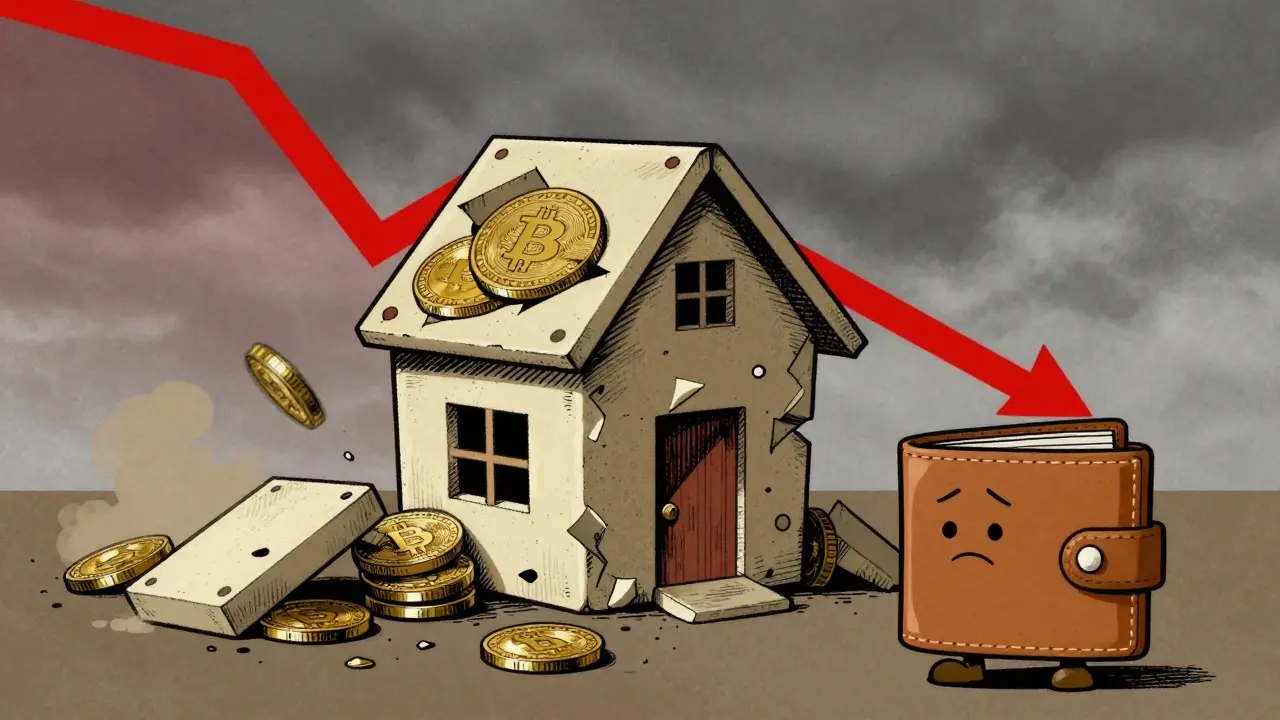
The gap between the promise and the reality of FantOHM is massive. While the whitepaper talked about overcoming inflation and creating sustainable yield, the mechanics relied on a Ponzi-like structure common to all "OHM forks." New buyers had to constantly enter the system to pay rewards to early adopters. When new money stopped flowing in, the house of cards collapsed.
By late 2023, the data told a grim story. The total value locked (TVL) in the protocol plummeted from $1.2 million in January 2022 to a mere $18,432 by November 2023. That is not a dip; that is a death spiral. With such a tiny treasury, the protocol could no longer offer competitive staking rewards. Reports from that period showed a 0.0% APY (Annual Percentage Yield), meaning there was zero incentive for anyone to hold or bond the token.
Furthermore, the market capitalization shrank to roughly $54,000. To put that in perspective, major cryptocurrencies have market caps in the billions. A $54k market cap means the project has virtually no liquidity. You might find a chart showing a price, but you wouldn't be able to sell any meaningful amount without crashing the price entirely.
Technical Breakdown: How FHM Worked
For those interested in the technical weeds, FHM operated as an ERC-20 compatible token on the Fantom chain. It wasn't mined like Bitcoin. Instead, supply was managed through bonding curves. Here is how the mechanism worked when it was alive:
- Bonding: Users deposited assets (like MIM or FTM-MIM LP tokens) into the contract.
- Discount: In return, they received newly minted FHM tokens at a discount to the current market price.
- Treasury Backing: The deposited assets remained in the protocol's treasury, theoretically backing the value of the circulating FHM.
- Staking: Holders locked their FHM in a smart contract to earn a share of the protocol's revenue and newly minted tokens.
The critical flaw was the reliance on perpetual growth. If the price of FHM dropped, the discount on bonds had to increase to attract buyers. This eroded the treasury faster than it could grow. Eventually, the treasury became depleted, leaving the token unbacked and worthless.
| Feature | FantOHM (FHM) | Olympus DAO (OHM) |
|---|---|---|
| Network | Fantom Opera | Ethereum / Multi-chain |
| Status (2026) | Defunct / Abandoned | Active (Restructured) |
| Peak TVL | ~$1.2 Million | ~$1.4 Billion |
| Current Staking APY | 0% | Variable (Low) |
| Development Activity | None since 2022 | Ongoing |
The Liquidity Trap: Can You Even Trade It?
Let’s say you somehow still hold some FHM tokens. What can you do with them? Unfortunately, very little. Trading pairs for FHM existed primarily on SpookySwap, the leading decentralized exchange on Fantom. However, liquidity was practically nonexistent.
Data from late 2023 showed severe fragmentation. One pair traded at $0.0137 while another traded at $0.0267. That huge discrepancy indicates a lack of arbitrageurs and deep liquidity. If you tried to sell a significant amount, you would face extreme slippage-meaning you’d get pennies for your tokens. Major centralized exchanges like Bittrex delisted FHM in July 2022, cutting off easy access for retail investors.
Today, finding a working trading pair is nearly impossible. The smart contracts may still exist on the blockchain, but without liquidity providers willing to risk their capital against a dead token, the market has evaporated.

Red Flags: Signs of an Abandoned Project
If you are analyzing FantOHM as a case study in what *not* to invest in, look at these clear red flags that appeared long before the end:
- Zero Development Activity: The GitHub repository for FantOHM hasn’t seen a commit in over three years. No code updates mean no security patches and no new features.
- Dead Social Channels: Discord and Telegram groups, once buzzing with hype, fell silent. Community sentiment shifted from excitement to skepticism, then to abandonment.
- Incomplete Documentation: Even professional trackers like CoinMarketCap left their entries incomplete, signaling a lack of interest from the broader industry.
- Treasury Depletion: As mentioned, the TVL dropped to under $20k. A reserve currency with no reserves is just a meme coin with worse utility.
Expert analysis from firms like Delphi Digital categorized FantOHM as "Terminal" in their sustainability indices. Blockchain forensics firm Nansen labeled it an "Abandoned Project." These aren't just opinions; they are assessments based on on-chain data showing no treasury management transactions since early 2023.
Lessons for DeFi Investors
So, why does FantOHM matter today? It serves as a cautionary tale. The "OHM fork" era taught us that high yields are never free. They are paid out of new investor capital, not real profit. When the music stops, the last people holding the bag lose everything.
If you are exploring DeFi on Fantom or other chains, focus on protocols with:
- Real Revenue: Income from transaction fees, lending interest, or actual product usage, not just token emissions.
- Transparent Treasuries: Assets that are diversified and auditable, not just more of the native token.
- Active Development: Regular code commits and responsive teams.
- Sustainable Tokenomics: Rewards that don't require exponential user growth to sustain themselves.
FantOHM failed because it ignored these fundamentals. It chased hype instead of building value. Today, it remains a ghost on the Fantom blockchain-a reminder that in crypto, survival is the hardest metric to achieve.
Is FantOHM (FHM) a good investment in 2026?
No. FantOHM is considered defunct and abandoned. It has no active development, negligible liquidity, and a near-zero market capitalization. Investing in it carries extreme risk of total loss with no realistic path to recovery.
Where can I buy FHM tokens?
You generally cannot buy FHM on major exchanges. It was delisted from platforms like Bittrex in 2022. Any remaining trading pairs on decentralized exchanges like SpookySwap have extremely low liquidity, making purchases risky due to high slippage.
What happened to the FantOHM treasury?
The treasury was depleted through unsustainable staking rewards and bond discounts. By late 2023, the Total Value Locked (TVL) had dropped from over $1 million to less than $20,000, leaving the protocol unable to back its token value.
Is FantOHM safe to use?
While the smart contracts may not be actively hacked, they are unmaintained. This means any undiscovered vulnerabilities remain open exploits. Additionally, interacting with dead protocols often involves hidden risks like rug pulls or malicious updates by compromised admin keys.
How is FantOHM different from Olympus DAO?
FantOHM was a fork of the Olympus DAO model, adapted for the Fantom Network. However, unlike Olympus, which managed to restructure and survive (albeit with much lower valuations), FantOHM failed to gain traction, lost its liquidity, and was abandoned by developers and users alike.
Why did FantOHM fail?
It suffered from the classic "impossible trinity" of reserve currencies: trying to maintain price stability, high yields, and decentralization simultaneously. Without real revenue generation, it relied on new investors to pay old ones. When new capital dried up, the system collapsed.
