

Ever wonder what happens when the founder of a major blockchain platform tweets about a random food item? In December 2023, Justin Sun, the controversial yet influential founder of TRON, asked his community to create a meme token called "Coconut Chicken." The result was Coconut Chicken (CCC), a cryptocurrency that exists purely because the internet said so. It is not a utility token with a complex roadmap or a DeFi protocol promising high yields. It is a digital joke built on the TRON blockchain.
If you are seeing CCC pop up in your feed or hearing whispers in crypto Discord servers, you probably want to know if it is worth your time or money. The short answer is: it is highly speculative, volatile, and driven entirely by community sentiment rather than technological innovation. This guide breaks down exactly what CCC is, how its numbers work, and why you should be cautious before clicking "buy."
The Origin Story: A Tweet That Became a Token
To understand Coconut Chicken, you have to look at its birth certificate. Unlike Bitcoin, which had a whitepaper, or Ethereum, which had a vision for decentralized apps, CCC was born from a single tweet. On December 23, 2023, Justin Sun challenged the TRON community to build a meme token named "Coconut Chicken." Within days, developers complied.
This origin story matters because it defines the token's purpose. Meme coins like Dogecoin or Shiba Inu started as jokes but eventually gained cultural staying power. CCC is trying to do the same thing within the TRON ecosystem. It relies heavily on the attention economy. If people talk about it, the price moves. If they forget about it, the price stagnates. There is no underlying business generating revenue; there is only the collective belief that the next person will pay more for it than you did.
Technical Specs: How CCC Works on TRON
Under the hood, Coconut Chicken is a standard token on the TRON network. Specifically, it follows the Tron20 standard. Think of Tron20 as the equivalent of ERC-20 on Ethereum. It means CCC is compatible with most TRON wallets, such as TronLink, and can be traded on decentralized exchanges (DEXs) like SunSwap or centralized platforms that support TRON assets.
Because it runs on TRON, transactions are generally fast and cheap compared to Ethereum mainnet. However, this also means it inherits the centralization criticisms often leveled at the TRON network itself. For a casual trader, this makes buying and selling CCC easy. You don't need a computer science degree to swap TRX for CCC. But ease of access does not equal safety.
Tokenomics: Supply and Circulation
Let's look at the hard numbers. Understanding supply is crucial for any crypto investment, especially meme coins where inflation can dilute value quickly.
- Maximum Supply: 10,000,000,000 (10 billion) CCC tokens.
- Circulating Supply: Approximately 9.34 billion CCC tokens.
- Inflation Potential: Low. With over 93% of the total supply already in circulation, there is very little room for new tokens to flood the market.
This high circulating supply percentage is actually a positive signal for stability compared to newer meme coins that might release 50% of their supply over five years. When 93% of tokens are already out there, early investors cannot easily dump massive amounts of newly minted coins onto latecomers. However, "low inflation" doesn't mean "high demand." Without buyers, those 9.34 billion tokens just sit in wallets.
Price Performance: The Rollercoaster Ride
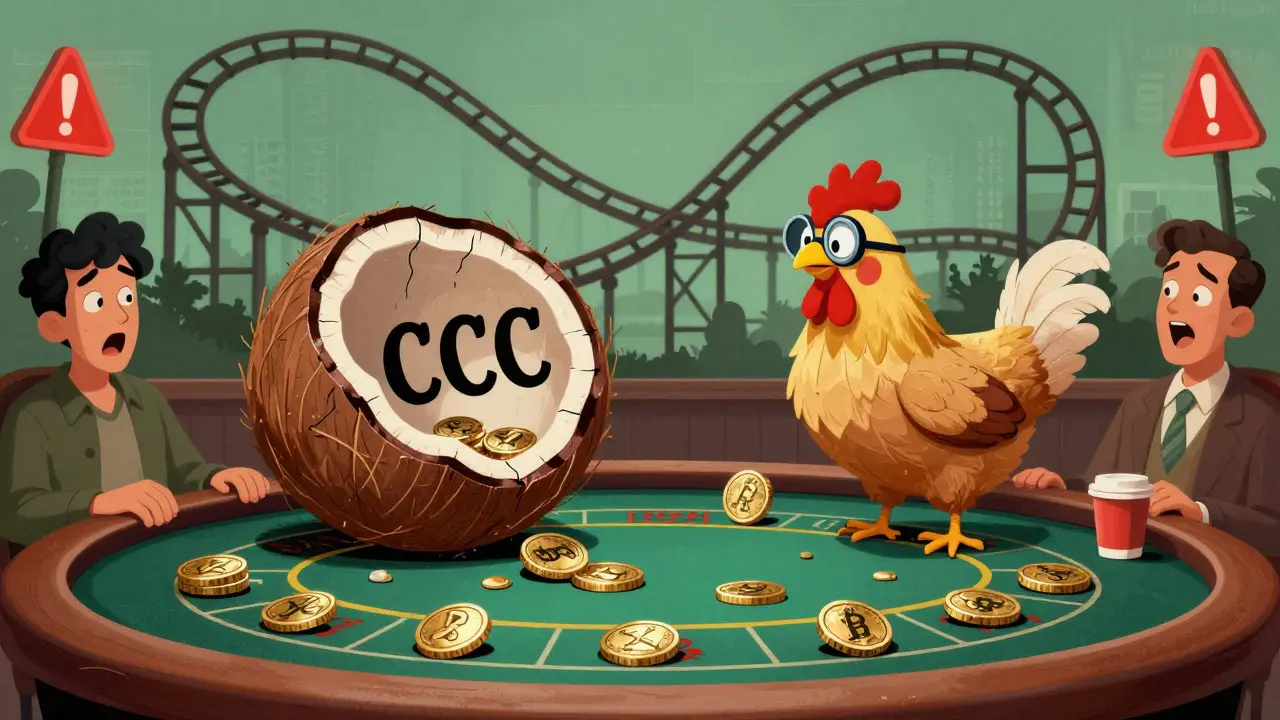
If you check the price of CCC today, you might see conflicting numbers depending on which exchange you look at. This is normal for low-cap meme coins. Data aggregation varies wildly between platforms like CoinGecko, CoinMarketCap, and individual exchanges.
| Metric | Value / Range | Context |
|---|---|---|
| Current Price Range | $0.000014 - $0.000079 USD | Varies by exchange liquidity |
| All-Time High (ATH) | $0.001533 (July 2024) | Peak hype period |
| All-Time Low (ATL) | $0.0000138 (Feb 2026) | Recent bearish bottom |
| Market Cap | $133K - $932K USD | Highly dependent on data source |
| 24h Volume | $0 - $3.46 Million | Indicates sporadic trading activity |
Notice the discrepancy in market cap and volume? Some sources show zero volume, while others show millions. This fragmentation is a red flag. It suggests that liquidity is thin and concentrated on specific venues. If you buy CCC on one exchange, you might not be able to sell it easily on another without significant slippage (the difference between expected price and executed price).
Historically, CCC peaked in mid-2024. Since then, it has dropped nearly 98% from its highs. As of early 2026, it is hovering near its all-time lows. For every buyer hoping for a 100x return, there are likely many sellers trapped from the 2024 rally. This creates overhead resistance-price levels where previous buyers are eager to sell at break-even, capping upward momentum.
Where Can You Trade CCC?
You won't find Coconut Chicken on the biggest tier-1 exchanges like Coinbase Pro or Binance (as of current listings). Instead, it trades on smaller or regional platforms. Common venues include:
- Bybit: Offers spot trading pairs. Users must complete identity verification (KYC) Level 1 to trade.
- MEXC: Often lists lower-cap altcoins and meme tokens early.
- Decentralized Exchanges (DEXs): Swaps directly via TRON wallets using liquidity pools.
Before buying, check the liquidity depth on your chosen platform. If the order book is empty, a small sale could crash the price by 20%. Always verify the contract address to avoid scams. Fake tokens with similar names are common in the meme coin space.
Risks vs. Rewards: Is CCC Worth It?
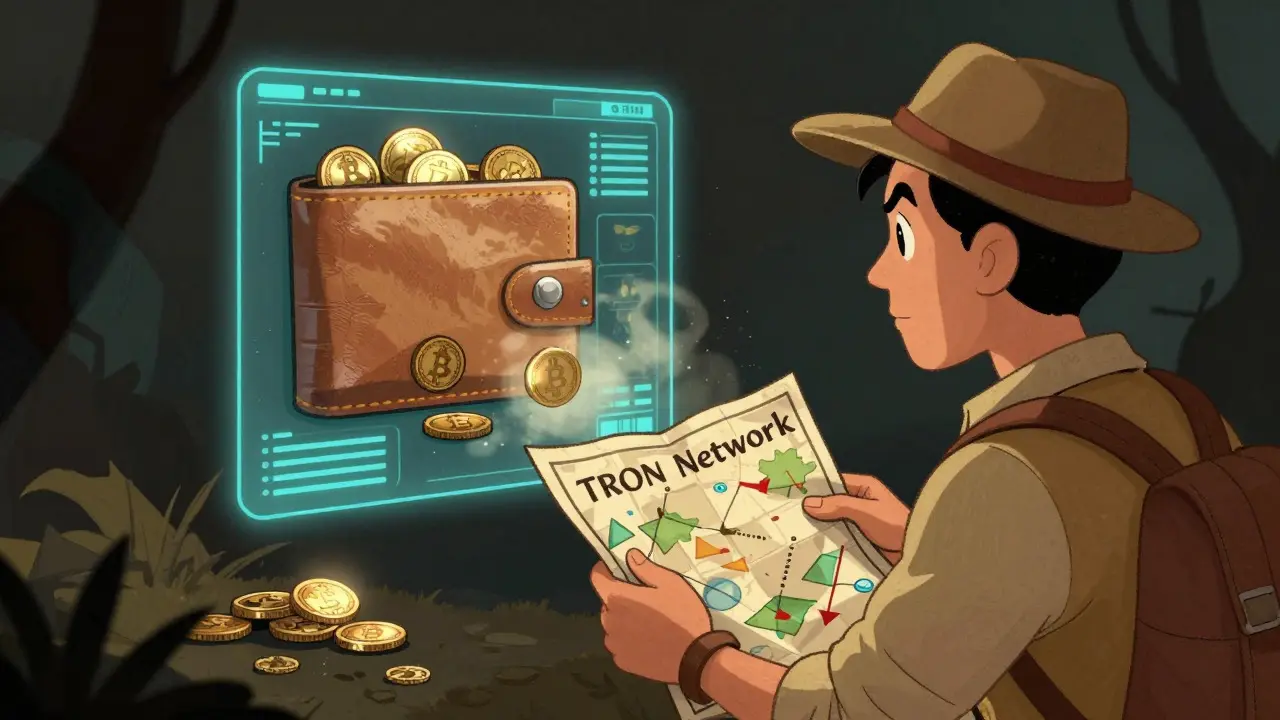
Investing in Coconut Chicken is not investing in technology; it is betting on culture. Here is the reality check:
The Risks:
1. Volatility: CCC has medium-to-high volatility. A 50% swing in a day is possible.
2. Liquidity Risk: Low trading volume means you might get stuck holding the bag.
3. No Utility: If the meme dies, the token has no fallback value.
4. Data Discrepancies: Conflicting price data makes technical analysis unreliable.
The Potential Upside:
1. Community Hype: If Justin Sun tweets again, or if TRON sees a resurgence, CCC could spike.
2. Low Entry Cost: With prices in fractions of a cent, psychological barriers to entry are low.
3. Fixed Supply: No future inflation protects existing holders from dilution.
If you decide to play, treat it like gambling money. Only allocate funds you are comfortable losing entirely. Never invest rent money into a meme coin born from a tweet about poultry.
How to Buy Coconut Chicken (Step-by-Step)
If you are convinced you want some CCC in your portfolio, here is how to do it safely:
- Choose an Exchange: Sign up for Bybit or MEXC. Complete KYC verification if required.
- Fund Your Account: Deposit USDT or TRX. Using TRX is often cheaper due to native network fees.
- Find the Pair: Search for "CCC/TRX" or "CCC/USDT". Verify the contract address matches the official one.
- Place an Order: Use a limit order to set your desired price. Market orders can suffer from slippage in low-liquidity environments.
- Withdraw to Wallet: For long-term holding, transfer CCC to a non-custodial wallet like TronLink. Not your keys, not your coins.
Conclusion: The Verdict on Coconut Chicken
Coconut Chicken (CCC) is a classic example of the modern meme coin phenomenon. It has no intrinsic value, no product, and no service. Its entire existence rests on the shoulders of the TRON community and the occasional spotlight from Justin Sun. While its tokenomics are relatively stable with a fixed supply, its price action tells a story of decline since its 2024 peak.
For seasoned traders looking for quick flips based on social media trends, CCC offers opportunities. For long-term investors seeking store-of-value assets, it is noise. Always do your own research, check live liquidity on your preferred exchange, and never let FOMO drive your decisions.
Is Coconut Chicken (CCC) a scam?
Not necessarily a scam in the traditional sense, as it is a publicly traded token on the TRON blockchain with transparent supply metrics. However, like all meme coins, it carries high risk due to lack of utility and potential for rapid devaluation. Always verify the contract address to avoid fake tokens.
Why is the price of CCC different on various websites?
Price discrepancies occur because CCC trades on multiple exchanges with varying liquidity levels. Aggregators like CoinGecko and CoinMarketCap use different formulas to calculate average prices. Thin liquidity means a few large trades can skew the price significantly on one platform but not another.
Can I buy CCC on Binance?
As of recent data, Coconut Chicken is not officially listed for trading on Binance. You may see price charts on Binance due to API aggregations, but actual trading pairs are unavailable. Check Bybit or MEXC for active markets.
What is the maximum supply of CCC?
The maximum supply of Coconut Chicken is 10 billion tokens. Currently, approximately 9.34 billion are in circulation, meaning less than 7% remains unissued. This limits future inflation risks.
Who created Coconut Chicken?
The token was inspired by a tweet from Justin Sun, founder of TRON, who asked the community to create a meme token with this name. Developers within the TRON ecosystem built the token using the Tron20 standard.
Is CCC a good investment for beginners?
Generally, no. Meme coins are highly volatile and speculative. Beginners should start with established cryptocurrencies like Bitcoin or Ethereum before exploring high-risk assets like CCC. Only invest what you can afford to lose.

Matt Kay
August 4, 2026 AT 17:58trash.
Ken G
August 6, 2026 AT 12:28it is just another scam to steal money from poor people who do not understand how blockchain really works. Justin Sun is a criminal and everyone should know this by now. the whole crypto industry is built on lies and greed. we need more regulation to stop these fraudsters. why do people still fall for these memes it is embarrassing. the economy is suffering and you buy chicken coins. shame on you all
Carl Michaud
August 8, 2026 AT 03:20The liquidity fragmentation is merely a symptom of the deeper systemic rot within the TRON ecosystem, which is essentially a centralized ledger masquerading as decentralized freedom. The 'community sentiment' driving CCC is nothing more than herd behavior orchestrated by whale wallets looking to offload their positions before the inevitable rug pull. Notice how the price discrepancies align perfectly with the trading hours of specific offshore exchanges? This is not organic market activity; it is coordinated manipulation designed to exploit the cognitive biases of retail investors who lack the technical acumen to analyze order book depth. The tokenomics are a facade. A fixed supply means nothing when the demand curve is artificially inflated by bots. You are not investing in culture; you are donating to the venture capitalists who hold the majority of the pre-mine tokens hidden behind privacy mixers. Wake up. The matrix is feeding you digital poultry to keep you docile while they liquidate your assets.
Lorraine Surringer
August 8, 2026 AT 06:57i feel like everyone here is so negative about it. maybe there is something special about coconut chicken that we are missing. i mean if justin sun likes it then surely it has some value right? i just want to believe in good things again. please tell me im not wrong about this one because my heart is broken already
Rita Dutta
August 10, 2026 AT 06:55the existential dread of holding a token based on a tweet is profound. we are witnessing the death of meaning in finance. why do we assign value to symbols without substance. it is like worshipping an idol made of smoke. the indian perspective is clear. karma will catch up to those who gamble with other people's hope. the volatility is just the universe laughing at our arrogance. do not buy it. save your soul instead of your cents. the spiritual cost of FOMO is too high. think about the energy you put into watching charts. couldnt that energy be used for meditation or helping others. crypto is a distraction from real life. wake up sheeple
Paul Smith
August 11, 2026 AT 05:23Hey guys! 👋 I actually tried buying a little bit of CCC on Bybit last week and it was super easy 😊 Just make sure you double check the contract address though because there are so many fakes out there 🚫 It’s fun to have a little meme coin in your portfolio for the laughs 🐔🥥 Don’t take it too seriously but hey, why not have some fun with spare change? 🤑 Good luck everyone! ✨
Prudence Flemming
August 11, 2026 AT 20:52liquidity is an illusion. slippage is the truth. you think you are buying at market price but you are getting rekt by the spread. the dex pools are thin. one big sell order wipes out the buffer. it is pure chaos theory applied to gambling. no utility means no floor. just gravity pulling it down to zero. typical meme coin lifecycle. pump dump repeat. boring.
Dave Kjendal
August 13, 2026 AT 13:49looks like another dead end to me. why bother reading all this when the answer is obvious. its a joke coin. treat it like a lottery ticket and expect to lose. simple as that. dont overthink it. just move on to something real. this stuff is noise. total waste of time honestly.
Kat Bennett
August 15, 2026 AT 08:54I’ve been following the TRON ecosystem for a while now and while most people dismiss meme coins as worthless, I find there is a certain psychological comfort in owning a piece of internet history, even if it is just a silly food item. The fact that the circulating supply is so high actually makes me feel a bit safer because it means the early insiders can’t just print more money to dilute us, which is a common tactic in newer projects that often fail spectacularly after a few months of hype. I know the price has dropped significantly since the peak in mid-2024, but markets are cyclical and sometimes the best opportunities arise when everyone else is panicking and selling off their assets out of fear rather than logic. If you only invest what you can afford to lose, like the cost of a nice dinner out, then the potential upside could be quite rewarding if Justin Sun decides to tweet about it again or if the broader crypto market enters a bullish phase once more. It is really about patience and understanding the narrative rather than just looking at the technical charts which can be misleading for low cap tokens anyway.
Candice Cornett
August 16, 2026 AT 23:55you are all idiots for believing this garbage. it is not worth anything. never will be. stop wasting your time. get a job. real jobs not clicking buttons on a screen hoping for magic money. pathetic.
Lance Jantz
August 17, 2026 AT 02:32Oh, the tragic beauty of Coconut Chicken! 🎭 It is not just a token, my dear friends, it is a mirror reflecting our collective desperation for meaning in a void! 🌌 When Justin Sun tweeted that phrase, he didn't just create a coin; he created a cultural artifact of our times, a digital relic of the absurdity we live in! 🎪 Why do we laugh? Because if we don't, we might cry! 😂 The price action is a dance, a tango between hope and despair, and oh, how I love to watch it spin! 💃🕺 Do not fear the dip, embrace the fall! For in the bottom lies the seed of the next explosion! 🌋 Buy the rumor, sell the news, or in this case, buy the meme, sell the reality! It is art, pure and unadulterated financial performance art! 🎨✨
Don Fizy
August 19, 2026 AT 00:27Hey there! :D Just wanted to chime in with a helpful tip for anyone thinking of dipping their toes into CCC. Make sure you use a limit order instead of a market order because the liquidity can be pretty thin on some exchanges and you dont want to get hit with huge slippage fees. Also, always withdraw to your own wallet like TronLink if you plan to hold for a bit longer. Not your keys, not your coins! :) Hope that helps you stay safe out there in the wild west of crypto!
Phil Babb
August 20, 2026 AT 11:45LISTEN UP!!! If you are going to trade this trash you better be smart about it!!! Check the volume on MEXC and Bybit before you buy!!! Do not be a sheep!!! Follow the whales!!! But also remember that whales eat sheep!!! So be careful!!! This is a dangerous game!!! Only play if you have the stomach for it!!! Otherwise stay away!!! Crypto is not for the weak!!! Prove yourself!!! Or go back to your fiat savings account!!! BOOOO!!!