
You want the upside of Broadcom Inc. a major semiconductor and infrastructure software company without dealing with a traditional brokerage account. You’ve heard about AVGOon the Ondo tokenized version of Broadcom stock. But what exactly are you buying? Is it a new coin? A scam? Or just your regular AVGO shares wrapped in blockchain code?
The short answer: AVGOon is a digital receipt. It tracks the price of Broadcom stock on the blockchain. When you hold AVGOon, you aren’t technically an owner of Broadcom. You don’t get to vote at shareholder meetings. Instead, you hold a financial derivative that mirrors the economic value of the stock, including automatic dividend reinvestment. This product comes from Ondo Finance a protocol specializing in institutional-grade tokenized securities, which has become a key player in the Real-World Assets (RWA) blockchain sector bridging traditional finance and crypto movement.
How AVGOon Works Under the Hood
To understand AVGOon, you have to look past the ticker symbol and see the mechanics. Unlike Bitcoin or Ethereum, which generate value through network usage or mining rewards, AVGOon derives its entire value from one source: the share price of Broadcom Inc. on traditional stock markets like the Nasdaq.
Ondo Finance uses a custodian to hold the actual Broadcom shares off-chain. For every share held in custody, they mint corresponding tokens on-chain. This creates a 1:1 peg between the token’s value and the underlying stock. If Broadcom’s stock goes up 5%, your AVGOon tokens should also increase by roughly 5%.
Here is where it gets interesting for investors. The token includes an automatic dividend reinvestment mechanism. In traditional investing, if you own stocks that pay dividends, you often have to manually reinvest those cash payouts to buy more shares. With AVGOon, the protocol handles this automatically. The dividends earned by the underlying shares are used to buy more Broadcom stock, which increases the total supply of tokens but keeps your percentage ownership stable. This means the price per token reflects both capital appreciation and accumulated dividends.
Where Does AVGOon Live? Multi-Chain Deployment
One of the biggest hurdles for crypto newcomers is choosing the right blockchain. Gas fees on Ethereum the leading smart contract platform can be high, while other chains might lack liquidity. Ondo solved this by deploying AVGOon across multiple networks simultaneously.
Currently, AVGOon operates primarily on two blockchains:
- Ethereum: The original deployment. As of early 2026, there were nearly 4,000 tokens in circulation here. This chain attracts larger holders and institutions due to its security reputation.
- BNB Chain: A secondary deployment offering lower transaction costs. This version saw significant activity, with hundreds of transfers monthly, appealing to retail traders who want to move funds cheaply.
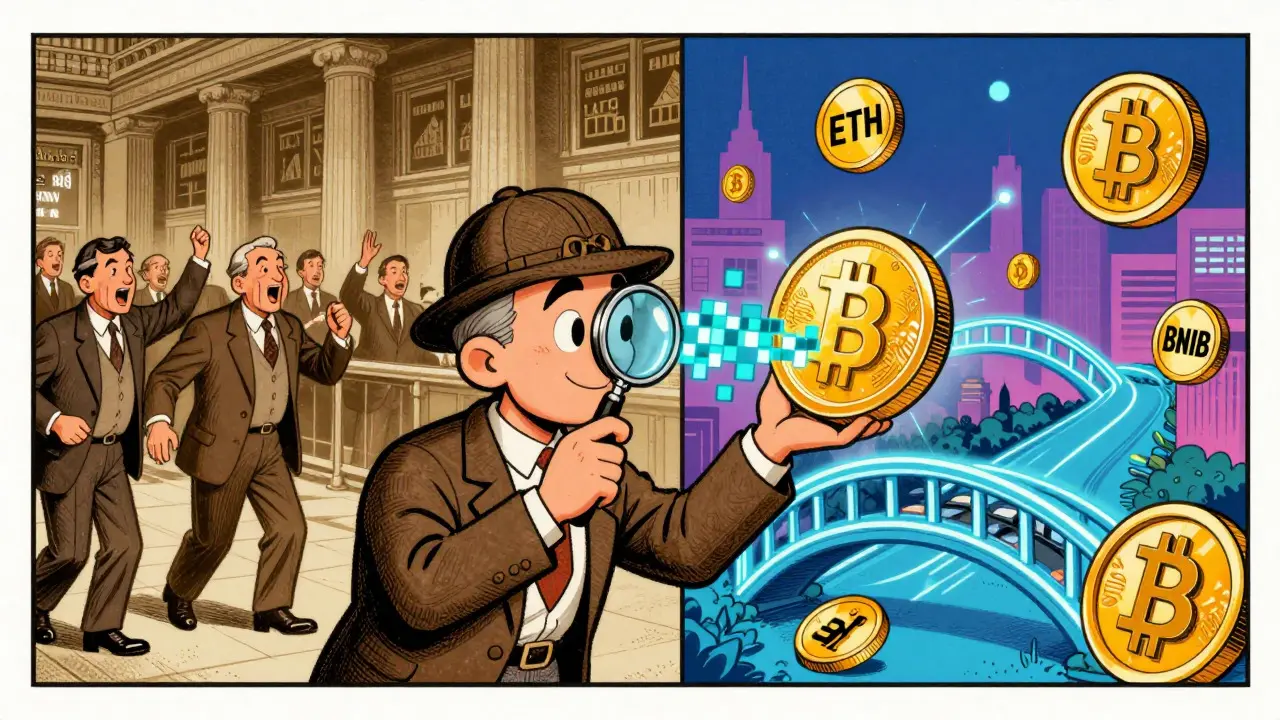
This multi-chain approach means you aren’t locked into one ecosystem. However, it does add a layer of complexity. You need to ensure your wallet supports the specific network where your tokens reside. Transferring AVGOon from Ethereum to BNB Chain isn’t as simple as sending Bitcoin; it often involves bridging services or using exchanges that support cross-chain swaps.
Buying and Trading AVGOon: A Practical Guide
You won’t find AVGOon on Robinhood or Fidelity. To buy it, you need to navigate the decentralized exchange (DEX) landscape or use centralized crypto exchanges that list RWA tokens. Here is how most people actually get their hands on these tokens.
Step 1: Choose an Exchange
Major platforms like Gate.io a global cryptocurrency exchange and MEXC a cryptocurrency trading platform list AVGOon. These platforms allow you to trade AVGOon against stablecoins like USDT or even against Bitcoin. This is crucial because it provides liquidity. You can sell your tokens instantly during market hours without waiting for a traditional stock settlement period.
Step 2: Funding Your Account
Direct credit card purchases for niche RWA tokens are rare. Most users deposit fiat currency (USD, EUR) onto the exchange, convert it to a major crypto like Bitcoin or USDT, and then swap that for AVGOon. Some users prefer to keep everything in crypto, transferring funds from wallets like MetaMask directly to the exchange.
Step 3: Understanding Minimums
The barrier to entry is low. On most platforms, the minimum purchase is around $10. At a price point of approximately $325 per token (as seen in late 2026 data), a $10 investment buys you a fraction of a token-about 0.03 AVGOon. This fractionalization is a key benefit. You don’t need thousands of dollars to gain exposure to Broadcom’s performance.
| Feature | Traditional Broadcom Stock (AVGO) | Tokenized AVGOon |
|---|---|---|
| Ownership Rights | Full legal ownership, voting rights | Economic exposure only, no voting rights |
| Trading Hours | Market hours only (Mon-Fri) | 24/7/365 via crypto exchanges |
| Dividends | Cash payout to bank/brokerage | Automatic reinvestment into token supply |
| Access Barrier | Brokerage account, KYC required | Crypto wallet, lower minimums ($10) |
| Settlement Time | T+1 or T+2 days | Near-instant on-chain settlement |
Price Performance and Market Reality
Let’s talk numbers. Crypto prices are volatile, but RWA tokens like AVGOon behave differently than meme coins. Their volatility is tied to the underlying asset. Since Broadcom is a large-cap tech stock, its movements are relatively stable compared to the broader crypto market.
In late February 2026, AVGOon traded in a tight range between $325.83 and $326.13. By mid-2026, prices hovered around $340. This stability is attractive to conservative crypto investors. The market cap for AVGOon stood at approximately $1.4 million, with total holdings valued near $1.8 million. While small compared to Bitcoin, the growth rate is notable. Holder counts on Ethereum jumped over 90% in a single month, signaling growing interest in tokenized equities.
Why does this matter? Liquidity. As more people hold AVGOon, it becomes easier to buy and sell without slippage (the difference between expected price and execution price). High transfer volumes on both Ethereum and BNB Chain indicate that people are actively trading this asset, not just holding it forever.
Risks You Need to Know Before Buying
No investment is risk-free, and tokenized stocks introduce unique dangers beyond standard market fluctuation.
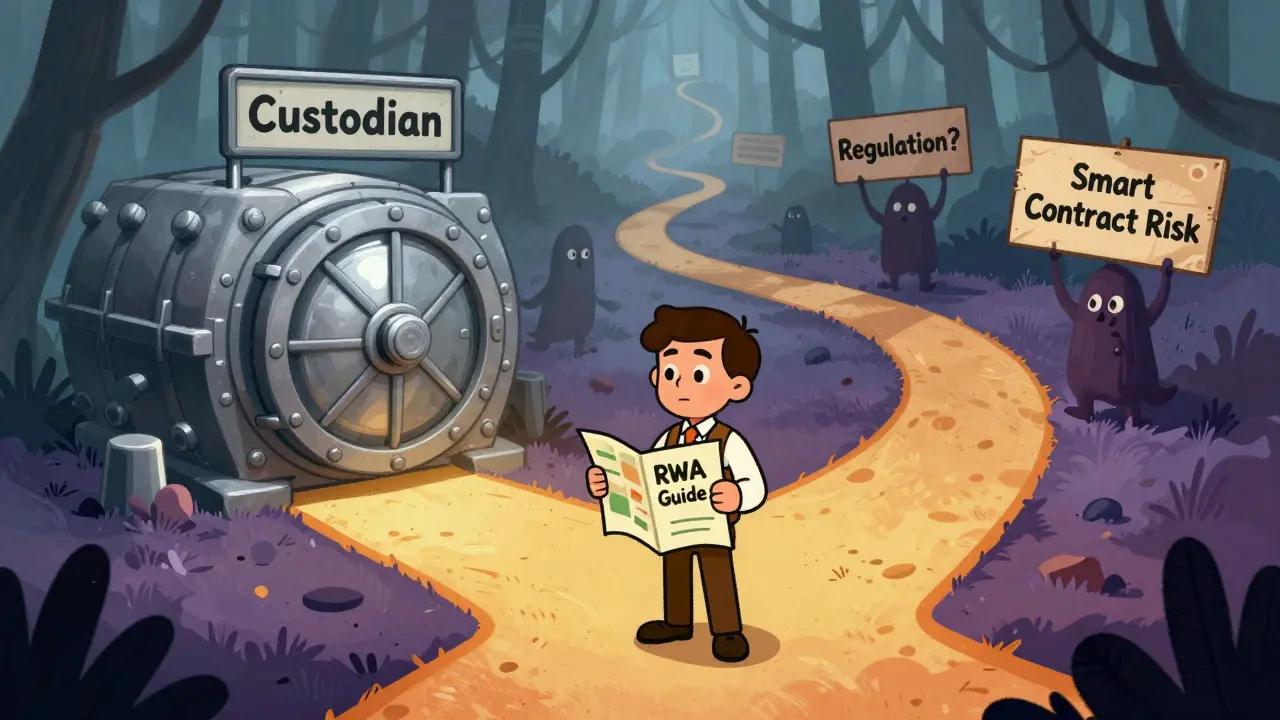
Counterparty Risk: Who holds the actual Broadcom shares? Ondo relies on custodians. If that custodian fails, goes bankrupt, or acts maliciously, your tokens could lose value regardless of what Broadcom’s stock price does. Always research the custodian’s reputation.
Regulatory Uncertainty: Governments are still figuring out how to classify tokenized securities. In some jurisdictions, holding AVGOon might be treated as holding a security, triggering tax events or legal restrictions. In others, it might be unregulated. Check local laws before investing significant capital.
Smart Contract Risk: The code governing AVGOon lives on the blockchain. If there is a bug in the smart contract, hackers could exploit it. While Ondo undergoes audits, no code is perfect. Keeping your tokens in a secure hardware wallet rather than leaving them on an exchange reduces this risk.
Future Outlook: Where is AVGOon Headed?
Analysts view AVGOon as part of a larger trend. The RWA sector is expected to grow exponentially as traditional finance embraces blockchain efficiency. Price predictions for 2026-2030 vary, but most models suggest moderate growth tracking Broadcom’s fundamentals. LiteFinance projects an average value near $338 for 2026, while long-term models extend to $350+ by 2030 if trends continue.
However, remember that these are algorithmic guesses based on historical data. They do not account for black swan events, regulatory crackdowns, or sudden shifts in Broadcom’s business strategy. Treat predictions as scenarios, not guarantees.
If you believe in the future of decentralized finance and want exposure to big-tech stocks with 24/7 trading flexibility, AVGOon offers a compelling bridge. Just make sure you understand that you are buying a derivative, not the underlying company itself.
Is AVGOon the same as owning Broadcom stock?
No. AVGOon is a tokenized derivative. You gain economic exposure to the stock's price and dividends, but you do not have legal ownership or voting rights in Broadcom Inc. The actual shares are held by a custodian on behalf of token holders.
Which blockchain is AVGOon on?
AVGOon is deployed on multiple blockchains, primarily Ethereum and BNB Chain. This allows users to choose between higher security (Ethereum) and lower transaction fees (BNB Chain). Ensure your wallet supports the specific network where your tokens are located.
Can I buy AVGOon with a credit card?
Direct credit card purchases for AVGOon are limited. Most investors deposit fiat currency onto a centralized exchange like Gate.io or MEXC, convert it to a stablecoin or Bitcoin, and then swap for AVGOon. Some platforms may offer direct fiat-to-crypto pairs, but options are fewer than for major coins.
Does AVGOon pay dividends?
Yes, but indirectly. The underlying Broadcom shares earn dividends, which are automatically reinvested to purchase more shares. This increases the total supply of AVGOon tokens but maintains the value per token relative to the net asset value. You don't receive cash dividends; instead, your token's value reflects the compounded growth.
Is AVGOon regulated?
Regulation varies by jurisdiction. Tokenized securities exist in a gray area in many countries. While Ondo Finance aims for compliance, investors should verify the legal status of holding tokenized equities in their specific region. Tax implications may also differ from traditional stock investments.
