
You’ve seen the ticker MONSTA pop up on your screen. Maybe it was in a Discord chat, a Twitter thread, or just while scrolling through a list of new tokens on Base Chain. The name sounds cool-"Based Monsta." It promises vaults, burning mechanisms, and legendary rewards. But before you connect your wallet, you need to know exactly what you are looking at. This isn’t Bitcoin. It isn’t even a mid-tier altcoin with deep liquidity. This is a micro-cap experiment in the world of gamified decentralized finance.
Based Monsta is a specific type of asset: an ERC-20 token built on the Base Chain, which is a Layer-2 scaling solution for Ethereum developed by Coinbase. Its pitch is simple but aggressive. It combines "burn-to-earn" mechanics with NFT-based challenges. You burn tokens to access vaults, you play games like "Keys to the Vault," and you hope to stack rewards, sometimes paid in other major tokens like $CAKE. Sounds fun, right? It’s also incredibly risky. With a market cap hovering under $1 million and trading volumes that can drop to near zero, MONSTA is not an investment for the faint of heart. It is a speculative play for those who understand how thin liquidity works.
The Core Concept: Gamified DeFi on Base
To understand MONSTA, you have to look past the price chart and look at the mechanics. The project describes itself as a "vault-driven, gamified DeFi platform." In plain English, this means the token has a utility function tied to interaction rather than just holding.
The ecosystem relies on three main pillars:
- Burn-to-Earn Vaults: This is the deflationary hook. Instead of staking tokens passively, users may need to burn (destroy) MONSTA tokens to enter certain yield-generating vaults. Burning reduces supply, which theoretically increases scarcity if demand remains constant. However, in low-liquidity environments, burning can also reduce the available float for trading, making prices more volatile.
- NFT-Based Challenges: The platform features elements like "Keys to the Vault." These are non-fungible tokens that likely act as multipliers or access keys for bonus rounds. This adds a layer of complexity; you aren’t just buying a coin, you are potentially buying into a game where assets have different rarity tiers.
- Cross-Token Rewards ($CAKE): CoinGecko notes that users can "stack $CAKE." CAKE is the native token of PancakeSwap, a massive DeFi protocol. This suggests that MONSTA vaults might bridge value or farm yields from external protocols, distributing CAKE to participants. This integration attempts to give MONSTA holders exposure to larger ecosystems without needing to move their funds manually.
All of this happens on Base Chain. Why Base? Because gas fees are low. If you were trying to burn small amounts of ETH on the mainnet, the transaction costs would eat your profits instantly. On Base, transactions are cheap and fast, making high-frequency interactions like burning and claiming rewards feasible.
Tokenomics: Supply and Circulation
When evaluating any crypto project, the numbers tell the real story. For Based Monsta, the data is consistent across several trackers, though the exact figures shift slightly depending on when you look.
| Attribute | Value / Detail |
|---|---|
| Maximum Supply | 10,000,000,000 (10 Billion) |
| Circulating Supply | ~9.07 - 9.10 Billion |
| Network | Base Chain (ERC-20 compatible) |
| Contract Address | 0xf5c83ea805e5aeff5de24c7da23ef246c2bf8ec7 |
| Market Cap Range | $0.5M - $1M (Highly Volatile) |
Notice the circulating supply. Nearly 91% of all MONSTA tokens ever created are already in circulation. There is very little room for inflation. New tokens aren’t being printed rapidly to dilute holders. That is actually a positive sign for long-term stability, assuming there is demand. However, with such a high percentage already out there, the initial distribution phase is over. You are buying into a mature, albeit tiny, market.
The maximum supply is capped at 10 billion. This is a large number, but in the world of meme-inspired or gamified tokens, it’s standard. The key is how many are actively traded versus locked in wallets or burned. Since the mechanism encourages burning, the effective supply could decrease over time, but only if enough people are participating in the vaults.
Liquidity and Trading Reality Check
Here is where most newcomers get hurt. You see a price on Binance or Bybit, and you think you can buy and sell easily. Look closer.
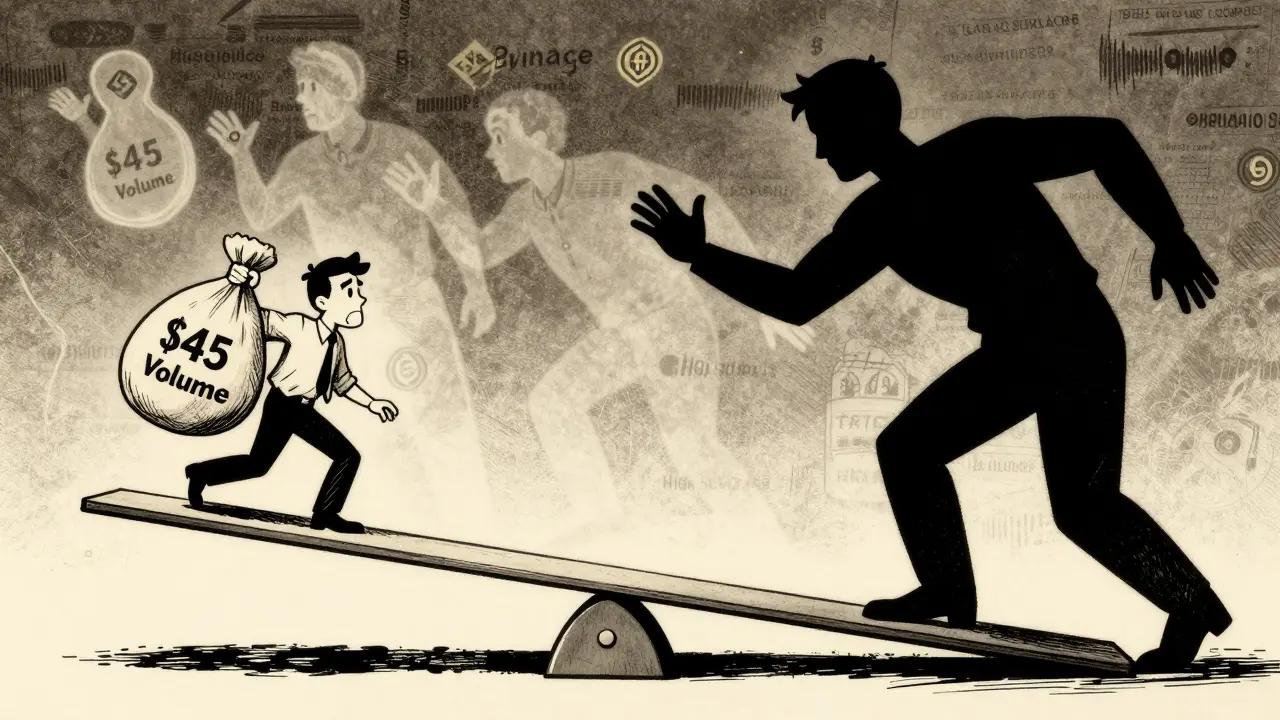
As of mid-2026, MONSTA is primarily traded on decentralized exchanges (DEXs), specifically Uniswap V2 on the Base network. The primary trading pair is MONSTA/WETH. The 24-hour trading volume on this pair has been reported as low as $45. Yes, forty-five dollars.
Why does this matter? Liquidity depth determines slippage. If you try to buy $1,000 worth of MONSTA in a pool with $45 in daily volume, you will not get the price you see on the screen. You will push the price up significantly, buying at a much higher average cost. Worse, when you try to sell, you might find no buyers. Your order could slip down so hard that you lose 20%, 30%, or more of your value just exiting the position.
Centralized exchanges like Binance, Bybit, and Crypto.com track the price, but they often show $0 volume or stale data because they don’t host active spot markets for it. They aggregate data from DEXs. If the DEX is quiet, the CEX price becomes a ghost number-it looks real, but there’s no money behind it. Always check the actual pool depth on Uniswap or Basescan before entering a trade.
Security and Audit Status
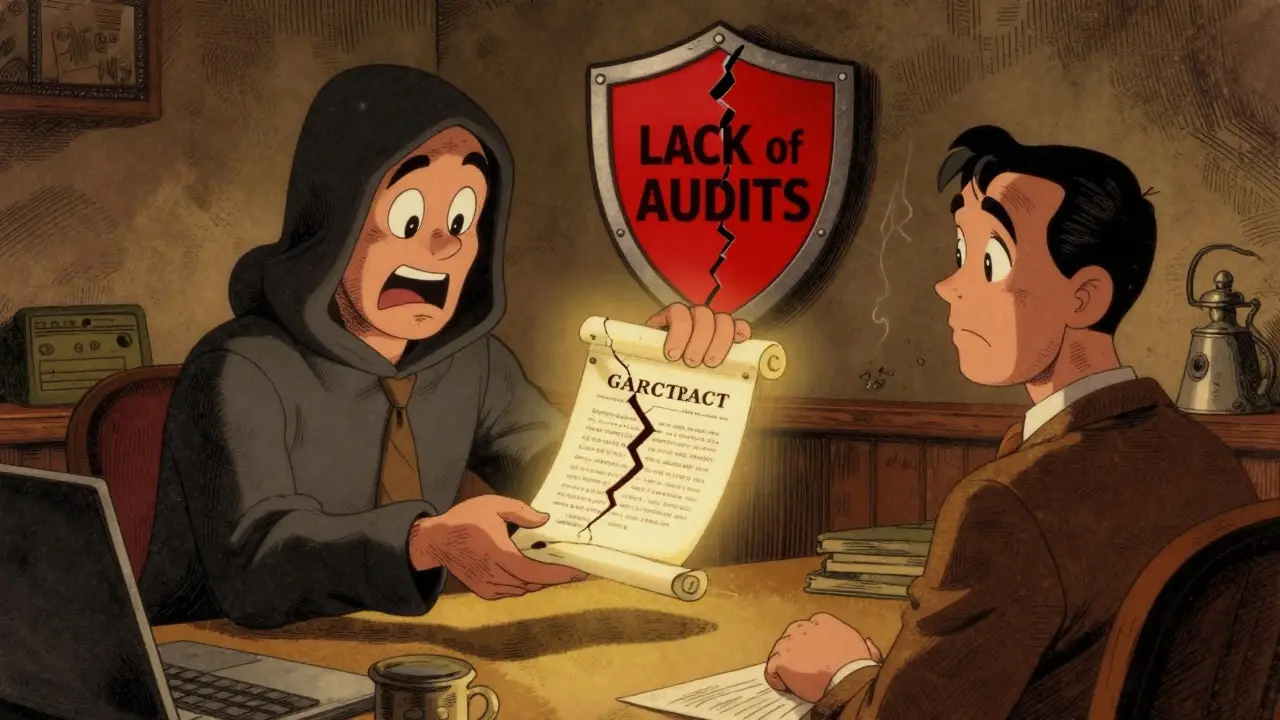
I need to be direct here: There are no public audit reports from reputable firms like CertiK, OpenZeppelin, or Trail of Bits for the MONSTA smart contract. I checked multiple sources. None listed one.
In DeFi, an unaudited contract is a loaded gun. It doesn’t mean the code is malicious, but it means no independent expert has verified that the "burn" function actually burns, that the vaults can’t be drained by admins, or that the NFT logic holds up under stress. When you interact with Based Monsta, you are trusting the anonymous or semi-anonymous developers completely.
The contract address is public: 0xf5c83ea805e5aeff5de24c7da23ef246c2bf8ec7. You can view the code on Basescan. If you have the technical skills, read it. If you don’t, assume the worst-case scenario: that you could lose everything if the team decides to rug pull or if a bug is exploited. Never put money into MONSTA that you wouldn’t mind setting on fire.
How to Get Started (If You Still Want To)
If you understand the risks and still want to participate in the gamified DeFi aspect, here is the practical path. This requires basic DeFi literacy.
- Set Up a Wallet: You need an EVM-compatible wallet. MetaMask or Coinbase Wallet are the standards. Ensure your wallet is configured to use the Base network. You can add Base via Chainlist or directly in your wallet settings.
- Fund with ETH: You need Ether (ETH) on the Base chain to pay for gas fees and to swap for MONSTA. If your ETH is on Ethereum Mainnet, you must bridge it to Base using the official Base Bridge or a third-party bridge like Orbiter or Stargate. Do not send ETH directly to your Base wallet address from an Ethereum wallet; it will get stuck.
- Connect to Uniswap: Go to the Uniswap interface and switch the network to Base. Paste the MONSTA contract address (
0xf5c83ea805e5aeff5de24c7da23ef246c2bf8ec7) into the token field. Verify the symbol matches. - Swap Carefully: Swap a small amount of WETH for MONSTA. Set your slippage tolerance appropriately (often 1-3% for low caps, but check the pool). Start small. Treat this as tuition for learning how the vaults work.
- Interact with the Platform: Once you hold MONSTA, visit the official Based Monsta dashboard (linked from their social channels, not this article). Connect your wallet. Explore the "Burn-to-Earn" vaults. Read the instructions carefully. Understand what you are burning and what reward rate is promised.
Comparison: MONSTA vs. Other Projects
It is easy to confuse tokens with similar names. Don’t make that mistake.
| Feature | Based Monsta (MONSTA) | Monsta Infinite (MONI) |
|---|---|---|
| Network | Base Chain | Various (Often Solana/Ethereum) |
| Type | Gamified DeFi / Burn-to-Earn | Competitive Gaming P2E |
| Market Cap | Micro (<$1M) | Low-Mid (~$500k-$1M range) |
| Primary Utility | Vault Access, Burning | In-Game Currency, Rewards |
Monsta Infinite (MONI) is a separate entity entirely. It focuses on competitive gaming. Based Monsta (MONSTA) focuses on DeFi vaults and burning mechanics. Mixing them up will lead to lost funds. Always double-check the contract address.
Final Verdict: Is It Worth It?
Based Monsta is a niche product for a niche audience. It appeals to degens who love Base Chain, enjoy complex DeFi mechanics, and are comfortable with extreme volatility. The "burn-to-earn" model is innovative but unproven at scale. The lack of audits is a red flag that cannot be ignored. The liquidity is dangerously thin.
If you are looking for a safe store of value, look elsewhere. If you are curious about how gamified DeFi works on Layer-2 networks and want to experiment with a tiny budget, MONSTA offers a live case study. Just remember: in micro-caps, the exit is always harder than the entry. Plan your exit before you enter.
Is Based Monsta (MONSTA) a scam?
There is no definitive proof that Based Monsta is a scam, but it carries high risk due to the lack of security audits and extremely low liquidity. In crypto, "scam" can range from outright theft to slow decay. Without audits, you cannot verify the safety of the smart contracts. Treat it as highly speculative.
Where can I buy MONSTA token?
You can primarily buy MONSTA on decentralized exchanges (DEXs) on the Base Chain, such as Uniswap V2. You will need to swap WETH for MONSTA. Centralized exchanges like Binance or Bybit may track the price but do not currently offer active spot trading pairs with significant volume.
What is the contract address for MONSTA?
The official contract address for Based Monsta on Base Chain is 0xf5c83ea805e5aeff5de24c7da23ef246c2bf8ec7. Always verify this address on Basescan before interacting with any dApp to avoid phishing scams.
Does MONSTA have a maximum supply?
Yes, the maximum supply of MONSTA is capped at 10 billion tokens. As of late 2025 and early 2026, approximately 9.1 billion tokens were in circulation, meaning most of the supply is already distributed.
What does "burn-to-earn" mean in Based Monsta?
Burn-to-earn is a mechanic where users destroy (burn) their MONSTA tokens to gain access to yield-generating vaults or rewards. This reduces the total supply of the token, which can create deflationary pressure if demand for the vaults remains high.
Is MONSTA listed on Coinbase?
No, Based Monsta (MONSTA) is not listed on Coinbase for spot trading. Coinbase lists a different project called Monsta Infinite (MONI). Do not confuse the two. MONSTA is traded primarily on decentralized platforms on Base Chain.
How do I withdraw my earnings from Based Monsta?
Earnings typically come in the form of MONSTA tokens or integrated reward tokens like CAKE. You would claim these rewards within the Based Monsta dApp dashboard, then swap them back to ETH or USDC on a DEX like Uniswap, and finally bridge or transfer them to your preferred exchange or wallet.
Why is the trading volume so low?
MONSTA is a micro-cap asset with a niche user base. Low volume indicates that few people are actively buying and selling at any given moment. This results in high slippage and price instability, making it difficult to execute large trades without affecting the market price.
