
Social Token Value Calculator
How Social Tokens Gain Value
Social tokens gain value through community growth and utility. As creators build their audience and deliver real benefits, token value can increase. This calculator estimates potential value based on key factors like community size and growth rate.
Important Note: Social tokens are highly volatile investments. This calculator shows potential scenarios but does not guarantee returns. Always research thoroughly before investing.
Estimated Results
Current Market Cap:
Total Value Held:
Note: Value calculations assume steady growth at your selected rate. Actual returns may vary significantly based on community engagement, utility development, and market conditions.
Important Risk Factors
- Price volatility - Social tokens can lose value rapidly
- Regulatory uncertainty - Laws around social tokens are still evolving
- Creator dependency - If the creator stops active development, value may decline
- Market sentiment - Value depends heavily on community trust and engagement
Imagine being a fan of a musician, podcaster, or artist - and instead of just liking their posts or buying merch, you actually own a piece of their success. That’s what social tokens do. They’re not just another crypto trend. They’re a new way for creators to build real economic relationships with their audience - and for fans to get more than just content in return.
What Exactly Is a Social Token?
A social token is a digital asset built on a blockchain - like Ethereum, Solana, or Polygon - that’s created and issued by an individual or community. Think of it as a personal cryptocurrency tied to a person’s brand. If you own one, you’re not just following someone online; you’re part of their economy.
Unlike NFTs, which represent unique digital items like art or collectibles, social tokens are fungible. That means every token is the same as another - just like a dollar bill. You can trade them, send them, or use them like currency within a community. Their value rises or falls based on demand, and creators often set limits on how many are ever created to keep scarcity high.
People also call them creator coins or community tokens. They’re all the same thing. The name doesn’t matter as much as what they do: they turn passive followers into active participants.
How Do Social Tokens Work?
Creating a social token doesn’t require coding skills. Platforms like Rally and Roll let anyone launch a token in minutes. A creator announces the token to their audience, explains what it does, and sets up rules for how it will be used. Once it’s live, fans can buy it using crypto or even credit cards on exchanges - both centralized (like Coinbase) and decentralized (like Uniswap).
After buying, fans store the tokens in a crypto wallet - MetaMask, Phantom, or others. From there, they unlock benefits:
- Exclusive access to private Discord or Telegram groups
- Voting rights on future projects - like what song to release next or where to tour
- Early or discounted access to merchandise, tickets, or events
- Special content: unreleased tracks, behind-the-scenes footage, Q&As
- The ability to trade or sell the token for profit if its value increases
Creators benefit too. They earn money upfront from token sales, then keep a percentage every time someone trades the token. That means they make money not just when they post, but when their community grows and interacts.
Why Are Social Tokens Better Than Traditional Fan Clubs?
Traditional fan clubs rely on platforms like Patreon or Substack. You pay monthly, get some perks, and that’s it. The platform takes a cut. You don’t own anything. If the platform shuts down or changes rules, you lose access.
Social tokens change that. They live on the blockchain - no single company controls them. Even if the creator disappears, your tokens still exist in your wallet. And because they’re tradeable, they have real market value. If a creator becomes more popular, the token price goes up - and you could make money just by holding it.
It’s not charity. It’s a two-way street. Fans get more than content. Creators get more than donations. Everyone has skin in the game.
Real Examples of Social Tokens in Action
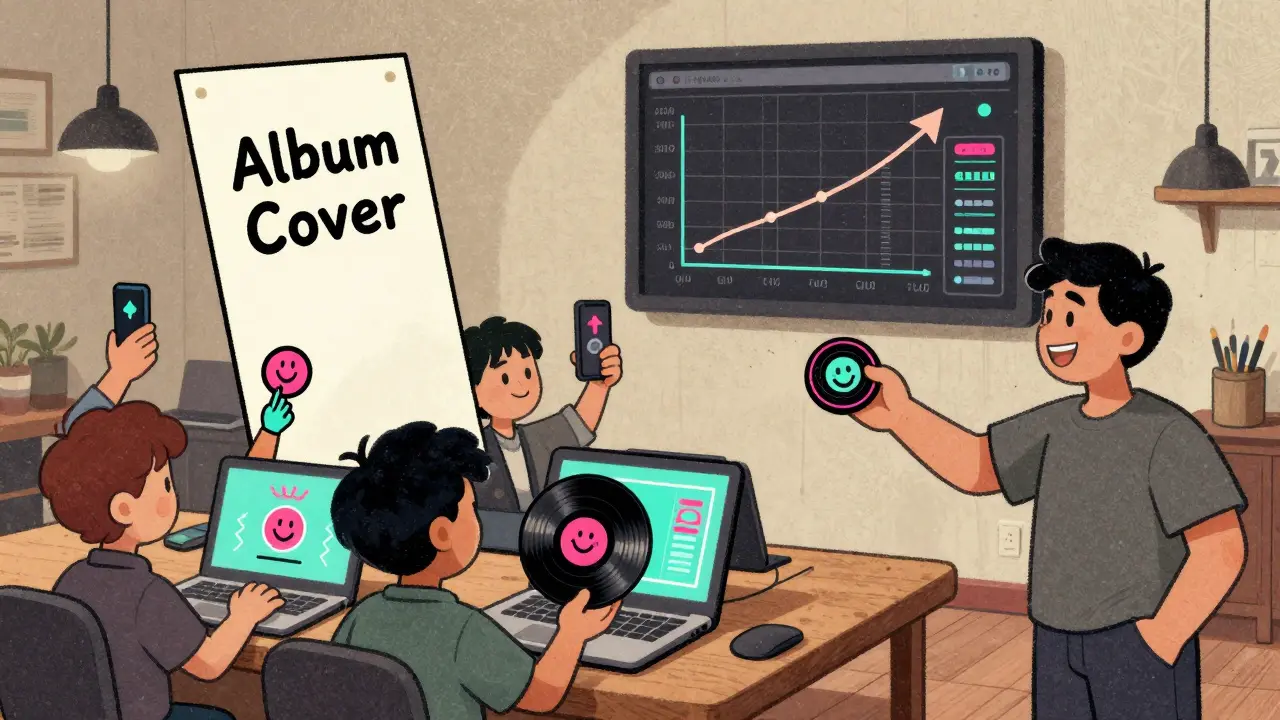
Let’s say a indie musician launches a token called $MUSIC. Here’s what happens:
- Top 100 token holders get invites to a private live stream before the album drops
- Token holders vote on the album cover design
- Anyone holding 500+ tokens gets a free vinyl copy
- Token holders can resell their tokens on a DEX - and if the artist goes viral, the price jumps 300%
Another example: a popular podcast host uses a token to let fans vote on guest selection. One episode even had a live debate where token holders asked questions in real time - only those with at least 100 tokens could submit questions.
Even non-celebrities are using them. A local artist in Austin launched a token for her art collective. Holders got first dibs on prints, helped choose gallery locations, and even got paid a share of sales. Within six months, she made more from token sales and trading fees than she had in two years from Etsy.
How Social Tokens Relate to NFTs
Social tokens and NFTs often work together - but they serve different roles.
Social tokens are the foundation. They’re the currency of the community. Everyone can hold them. They’re easy to trade. They’re used for access and voting.
NFTs are the premium layer. They’re unique. Maybe it’s a limited-edition digital artwork, a signed video clip, or a virtual seat at a concert. You need to hold the social token to even buy the NFT. That creates a hierarchy: the more social tokens you have, the more NFTs you can access.
This combo builds a full ecosystem. The social token keeps the community active. The NFTs reward loyalty and create scarcity. Together, they turn a fan base into a self-sustaining economy.
Who Can Create a Social Token?
You don’t need millions of followers. You don’t need a record deal or a big brand. Anyone with a dedicated audience can launch one.
Small creators benefit the most. A TikTok animator with 50,000 followers can offer token holders exclusive animation tutorials. A fitness coach with a loyal Instagram group can let token holders pick next month’s workout plan. A writer with a newsletter can give token holders early access to chapters.
The barrier to entry is low. Tools like Rally let you create a token with a few clicks. You set the supply, the price, and the perks. Then you promote it. If your audience believes in you, they’ll buy in.
What Are the Risks?
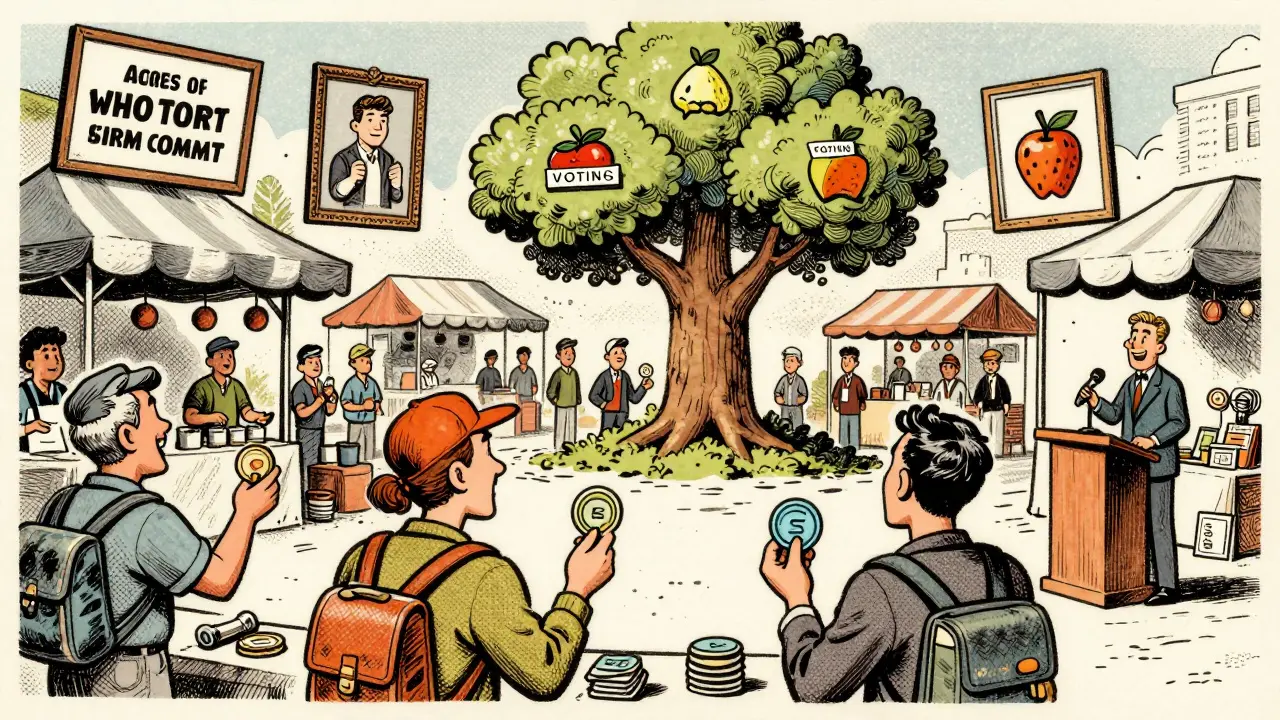
It’s not all smooth sailing. Social tokens are still new, and risks exist:
- Price volatility: If interest drops, the token value can crash. Some tokens have lost 90% of their value in weeks.
- Regulatory uncertainty: Governments are still figuring out how to classify these. In the U.S., the SEC could decide a token is a security - which changes everything.
- Creator burnout: Running a token economy takes work. You have to keep delivering value, responding to votes, and managing community expectations.
- Scams: Some people launch fake tokens pretending to be famous creators. Always verify the official link before buying.
That’s why smart creators start small. They test with a few hundred tokens. They focus on real value - not hype. They build trust before scaling.
The Bigger Picture: Social Tokens and the Future of Work
Social tokens are more than a way to make money. They’re changing how we think about online influence.
For years, platforms like YouTube and Instagram took 45% of ad revenue. Creators had no control. Now, with social tokens, creators own their audience’s economy. They set the rules. They keep most of the profits. Fans become investors, not just consumers.
This model could reshape the entire creator economy. Instead of chasing algorithms, creators build real communities. Instead of selling ads, they sell participation. And instead of waiting for a brand deal, they let their fans fund their next project.
It’s early days. But millions are already flowing into social tokens. Platforms are getting better. Regulations are slowly catching up. And more people are realizing: if you care about someone’s work, you should be able to help them succeed - and benefit when they do.
How to Get Started
If you’re a fan: find creators you love who are launching tokens. Look for clear explanations of what the token does. Check their official website or verified social media. Don’t buy from random links.
If you’re a creator: start simple. Pick one perk - like a private Discord or early access to content. Launch a small supply (10,000-50,000 tokens). Price it low at first ($0.10-$1). Promote it honestly. Reward early holders. Listen to feedback. Grow slowly.
You don’t need to be rich. You don’t need to be famous. You just need a group of people who believe in you. And now, you can build an economy around that belief - on the blockchain.
Are social tokens the same as NFTs?
No. Social tokens are fungible - meaning each one is identical and can be traded like money. NFTs are unique digital items, like a one-of-a-kind artwork or video. Social tokens are the currency of a community; NFTs are collectibles within that community. You often need a social token to buy an NFT, but not the other way around.
Can I make money from social tokens?
Yes - but it’s not guaranteed. If you buy a social token early and the creator grows in popularity, the token’s value may rise. You can then sell it for a profit. Creators also earn from sales and trading fees. But if interest fades, the price can drop. Treat it like investing in a small business - not a get-rich-quick scheme.
Do I need crypto to buy social tokens?
Not always. Platforms like Rally let you buy with credit cards or PayPal. But once you own the token, you’ll need a crypto wallet (like MetaMask) to store it. If you want to trade it later on decentralized exchanges, you’ll need to convert it to crypto like ETH or SOL.
Are social tokens legal?
The legal status is still unclear in many countries. In the U.S., the SEC may classify some social tokens as securities if they promise financial returns. Creators who market tokens as investments risk legal trouble. The safest approach is to focus on utility - access, voting, perks - not profits. Always check local regulations before launching or buying.
What happens if the creator quits or disappears?
Your tokens still exist in your wallet. They’re stored on the blockchain, so no one can delete them. But the perks tied to them - like Discord access or exclusive content - may stop if the creator stops maintaining them. That’s why it’s important to support creators who are committed long-term, not just chasing trends.
Can I create a social token for my own fan group?
Absolutely. Platforms like Rally, Roll, and Zora let anyone launch a token in under 10 minutes. You just need a clear idea of what your fans will get in return - whether it’s early content, voting rights, or exclusive events. Start small, test with a few people, and grow from there.

Alex Warren
December 11, 2025 AT 13:10Still, the shift from platform-dependent fan clubs to on-chain loyalty is real. If creators can keep the perks meaningful and avoid over-saturating supply, this could stick.
Claire Zapanta
December 12, 2025 AT 20:31Jeremy Eugene
December 14, 2025 AT 19:38Hari Sarasan
December 15, 2025 AT 23:58And yes, I'm holding $MUSIC and $VIBES. The ROI isn't just financial - it's cultural sovereignty.
Stanley Machuki
December 16, 2025 AT 16:56Lloyd Cooke
December 17, 2025 AT 15:12Kurt Chambers
December 17, 2025 AT 16:46Kelly Burn
December 17, 2025 AT 23:05Andy Walton
December 19, 2025 AT 17:32Lois Glavin
December 20, 2025 AT 06:21Bridget Suhr
December 20, 2025 AT 12:46Jessica Petry
December 20, 2025 AT 22:11Scot Sorenson
December 21, 2025 AT 18:38Ike McMahon
December 21, 2025 AT 20:32JoAnne Geigner
December 23, 2025 AT 07:56Joey Cacace
December 25, 2025 AT 04:17Taylor Fallon
December 25, 2025 AT 08:45PRECIOUS EGWABOR
December 26, 2025 AT 13:32Kathleen Sudborough
December 27, 2025 AT 02:36Vidhi Kotak
December 27, 2025 AT 06:08Kim Throne
December 28, 2025 AT 12:38Caroline Fletcher
December 30, 2025 AT 00:43Heath OBrien
December 31, 2025 AT 18:29Taylor Farano
January 2, 2026 AT 01:54Toni Marucco
January 2, 2026 AT 16:33