
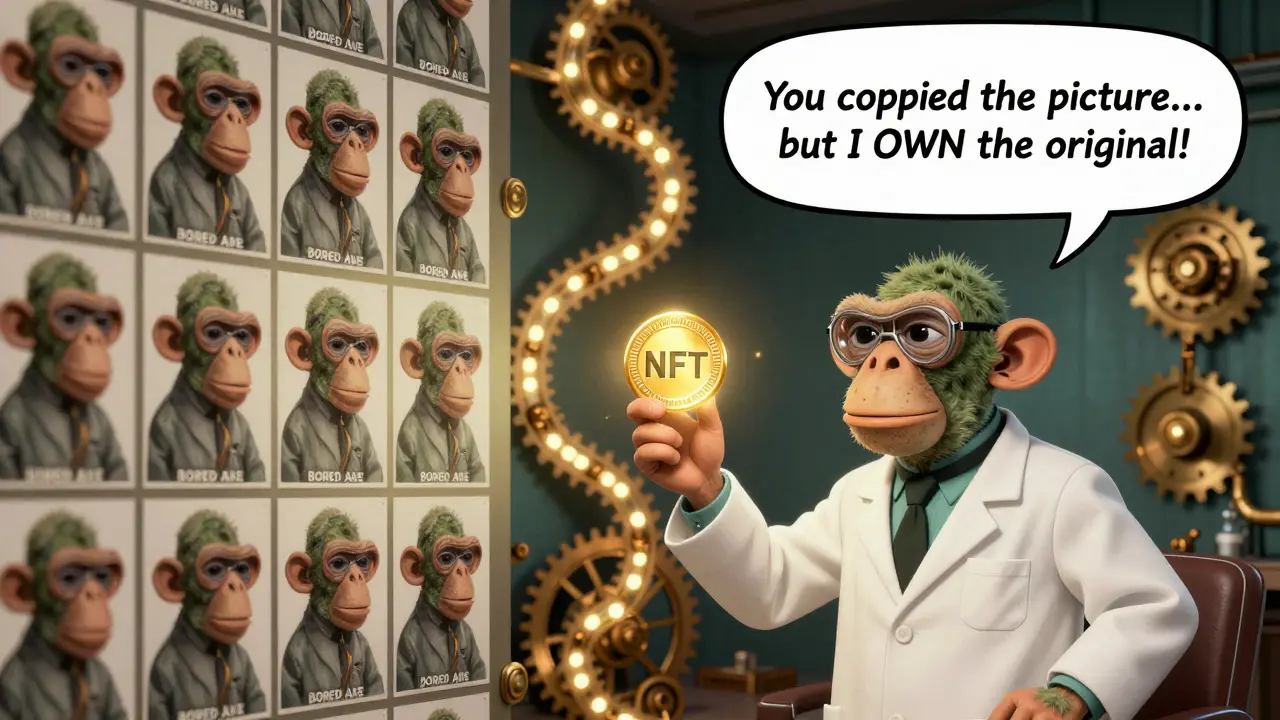
Think of NFTs as digital ownership certificates. Unlike Bitcoin or Ethereum, where one coin is exactly the same as another, each NFT is one-of-a-kind. You can’t split it, copy it, or swap it like regular money. That’s what "non-fungible" means - it’s unique. NFTs live on blockchains, mostly Ethereum, and they prove you own something digital - a piece of art, a song, a video clip, even a virtual shoe. No middleman. No guesswork. Just a public, unchangeable record that says, "This is yours." NFTs aren’t the digital file itself. If you download a JPEG of a Bored Ape, you don’t own the NFT. You just have a copy. The NFT is the blockchain record tied to that file - the original, verified version. It’s like owning the original painting vs. having a poster of it. The poster might look the same, but only the original has the provenance, the history, the signature.
How NFTs Work: Smart Contracts and Blockchains
NFTs are created using smart contracts - self-running code on a blockchain. The most common standard is ERC-721 on Ethereum. When someone mints an NFT, the smart contract writes details into the blockchain: who made it, when, what it represents, and who owns it now. This data can’t be erased or altered. Even if the image gets deleted from a server, the NFT record stays. Most NFTs store a link to the actual file (like a JPEG or MP4) on decentralized storage like IPFS. This means the file isn’t on one company’s server - it’s spread across thousands of computers. If one goes down, the file still exists. The NFT points to it. That’s why some NFTs survive even when the website that sold them shuts down.Where NFTs Are Used - Beyond Just Art
People often think NFTs are just weird monkey pictures. But they’re being used in real ways:- Digital Art: Artists sell unique pieces directly to collectors. Some have earned millions from primary sales, and they keep earning 5-10% every time the NFT resells thanks to built-in royalties.
- Gaming: In games like Axie Infinity or Gods Unchained, NFTs are your characters, weapons, or land. You own them. You can sell them outside the game. Some players earn real income by playing.
- Music and Media: Musicians release albums or concert tickets as NFTs. Fans get exclusive access, behind-the-scenes content, or even voting rights on future releases.
- Virtual Real Estate: Platforms like Decentraland and The Sandbox let people buy land as NFTs. Companies build virtual stores or events there. Some plots sold for over $1 million.
- Utility NFTs: These aren’t just collectibles. They act as keys - to private Discord servers, early access to software, or even real-world discounts. Some brands use them as digital loyalty cards.
The Market: Boom, Bust, and What’s Left
The NFT market exploded in 2021. Sales hit $1.58 billion in one year. CryptoPunks and Bored Apes became household names. But by 2023, prices crashed. Many projects vanished. Trading volume dropped over 80% from its peak. By 2024, things stabilized. Revenue hovered around $600-700 million annually. Some analysts still see big growth: CoinLedger says the market will hit $61 billion by 2025. Others, like Exploding Topics, point to more realistic numbers - around $2.5 billion in annual revenue after the hype faded. What’s changed? People stopped buying NFTs as get-rich-quick schemes. Now, interest is growing in NFTs that do something. Utility-focused projects are gaining traction. Gaming and real-world access are the new frontiers.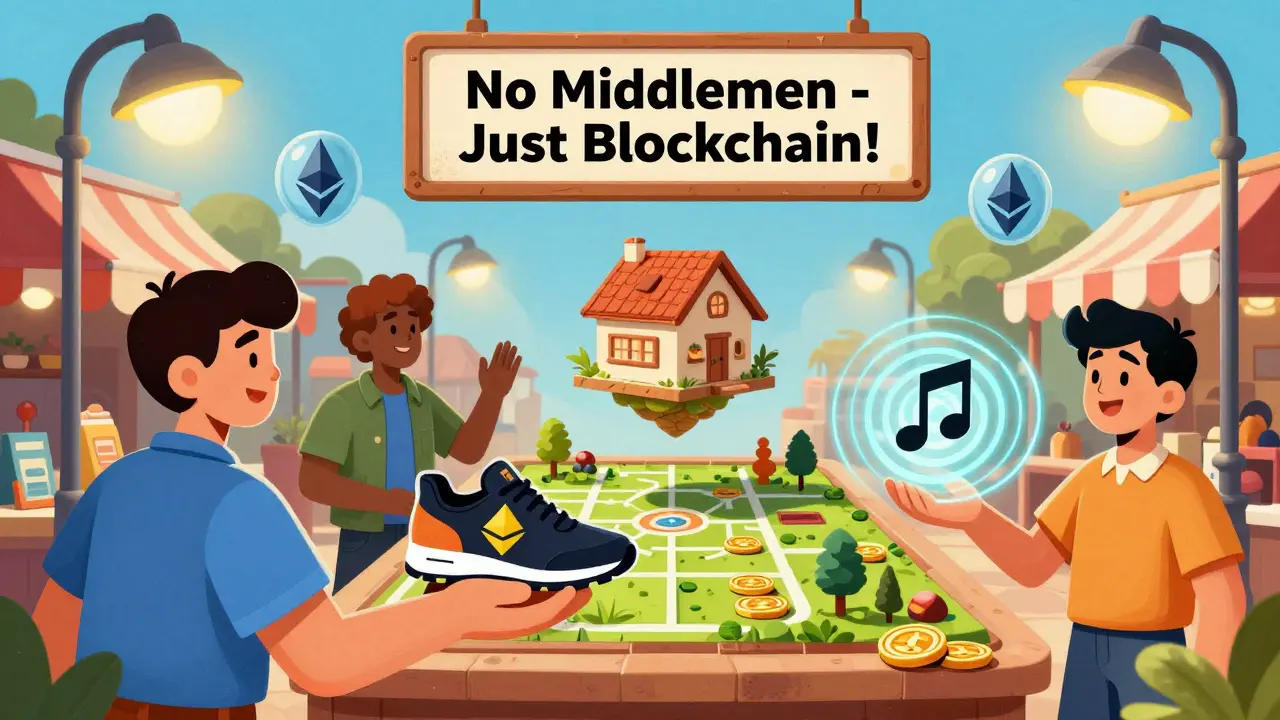
Why NFTs Are Different From Regular Digital Files
You can copy a song, screenshot a meme, or download a video. But you can’t copy an NFT. Here’s why:- Proof of Ownership: The blockchain shows every owner since the NFT was created. No one can fake that.
- Scarcity: An artist can make 10 NFTs of the same image. Only 10 exist. That’s scarcity. Digital files normally have infinite copies.
- Automated Royalties: Every time your NFT sells, you get paid. No agent. No paperwork. The smart contract handles it automatically.
- Global Access: You don’t need a gallery or a record label. Anyone with a wallet can buy or sell.
The Downsides: Risks You Can’t Ignore
NFTs aren’t magic. They come with real problems:- High Fees: Minting an NFT on Ethereum used to cost $50-$100 in gas fees. That’s changed with newer chains, but it’s still a barrier for many.
- Volatility: Prices swing wildly. An NFT worth $10,000 one day might be $200 the next.
- Scams: Fake marketplaces, copycat projects, and phishing links are everywhere. If it looks too good to be true, it is.
- Environmental Impact: Ethereum used to consume massive energy. It switched to a greener system in 2022, but skepticism remains.
- Legal Uncertainty: Who owns the art? Can you sue if a project fails? No clear answers yet.
What’s Next? AI, VR, and the Future of Ownership
The next wave of NFTs isn’t just static images. It’s interactive.- AI-Generated NFTs: Platforms like Art Blocks use AI to create unique art pieces on the spot. Each one is different. Some even evolve over time based on user interaction.
- VR and Metaverse Integration: Imagine wearing an NFT jacket in a virtual world. Or walking through your NFT land in VR. That’s already happening.
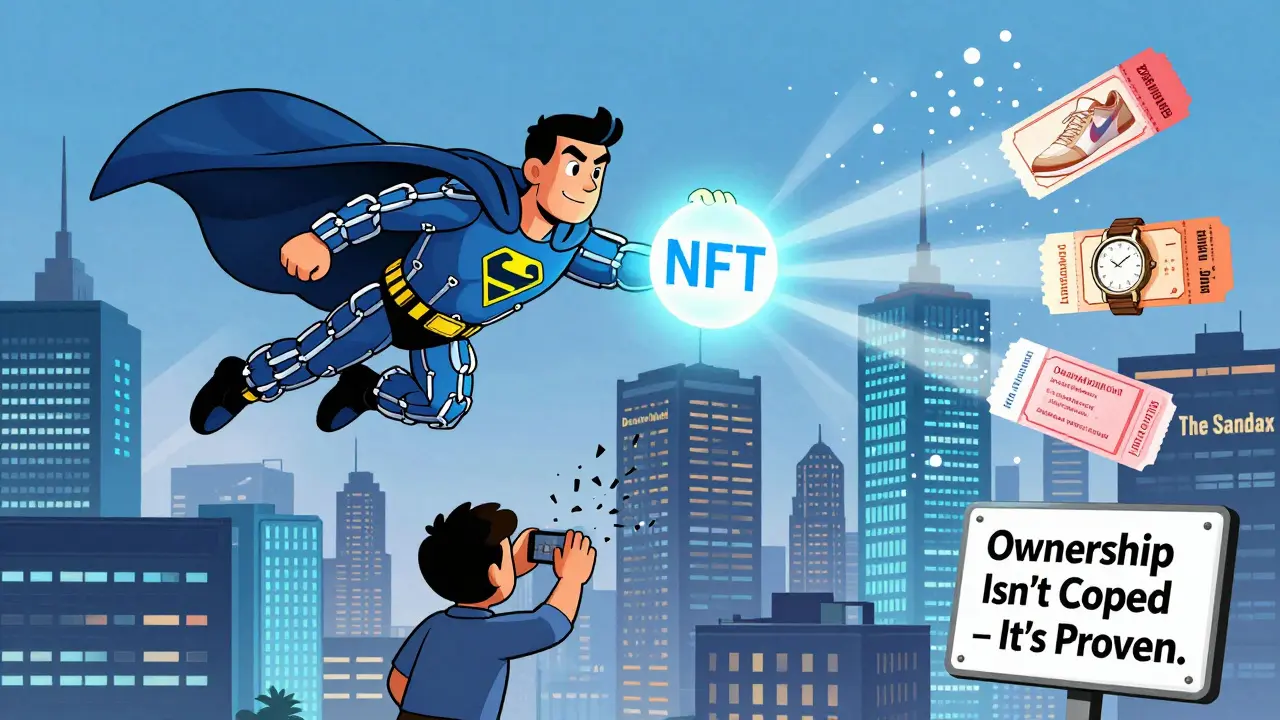
- Enterprise Use: Companies like Walmart and BMW are testing NFTs for product authentication. Want proof your sneakers are real? Scan the NFT.
Should You Buy an NFT?
If you’re curious, start small. Don’t invest money you can’t afford to lose. Look for projects with:- Clear utility (not just art)
- Active communities
- Transparent teams
- Low gas fees (use Polygon or Solana instead of Ethereum)
Final Thought
NFTs are still young. They’re messy, controversial, and full of hype. But they’re also changing how we think about ownership in the digital world. For the first time, you can truly own something online - not just have access to it. That’s powerful. Whether they last or fade, the idea behind them - verifiable, decentralized ownership - isn’t going away.Are NFTs the same as cryptocurrency?
No. Cryptocurrency like Bitcoin or Ethereum is fungible - each unit is identical and interchangeable. NFTs are non-fungible, meaning each one is unique. You can use cryptocurrency to buy NFTs, but they’re not the same thing.
Can I just screenshot an NFT and own it?
No. Taking a screenshot copies the image, but not the ownership record. The real NFT is the blockchain token linked to that image. Owning the token is what gives you proof of ownership, not the file itself.
Do I need Ethereum to buy NFTs?
Not necessarily. While Ethereum is the most common blockchain for NFTs, others like Solana, Polygon, and Flow are cheaper and faster. Many marketplaces now support multiple blockchains. Choose one with lower fees if you’re starting out.
What happens if the website hosting my NFT shuts down?
If the NFT’s metadata is stored on IPFS or another decentralized network, the file will still exist. The blockchain record stays intact. The link might break, but the ownership proof doesn’t. That’s why decentralized storage matters.
Can NFTs be used for real-world items?
Yes. Some brands use NFTs as digital certificates for physical goods - like limited-edition sneakers or luxury watches. Owning the NFT proves authenticity and can unlock physical access or services.
Why do some NFTs cost millions?
Price is based on scarcity, community, and perception. A rare Bored Ape might sell for millions because it’s one of 10,000, has a famous owner, and is tied to a strong brand. It’s not about the image - it’s about what the community values.
Are NFTs legal?
Yes, in most countries. But regulations vary. In the U.S., NFTs are treated as property for tax purposes. In the EU, rules around consumer protection are being developed. Always check local laws before buying or selling.
Can I make money creating NFTs?
Yes, but it’s not easy. Successful creators focus on utility, community, and quality - not just making art. Royalties help, but they’re not guaranteed anymore. Building a loyal audience matters more than minting thousands of NFTs.
Is the NFT market dead?
No. The hype is over, but the technology is evolving. Sales are lower, but more focused. Projects with real use cases - in gaming, identity, or digital access - are growing. The market is maturing, not dying.
What’s the difference between ERC-721 and ERC-1155?
ERC-721 is for unique, one-of-a-kind NFTs. ERC-1155 allows both unique and multiple identical items in one contract. Think of ERC-721 as a rare trading card, and ERC-1155 as a pack of 10 identical cards - useful for games with bulk items.

Colin Lethem
February 27, 2026 AT 10:52lori sims
March 1, 2026 AT 07:59Reggie Fifty
March 3, 2026 AT 01:25Ryan Burk
March 4, 2026 AT 02:06Ifeanyi Uche
March 4, 2026 AT 14:47Jeff French
March 4, 2026 AT 23:08Elana Vorspan
March 5, 2026 AT 17:46Kenneth Genodiala
March 6, 2026 AT 16:24Trenton White
March 6, 2026 AT 20:34Cheryl Fenner Brown
March 6, 2026 AT 22:25Michael Teague
March 7, 2026 AT 12:16kati simpson
March 8, 2026 AT 23:54Cory Derby
March 9, 2026 AT 18:36Jeremy buttoncollector
March 11, 2026 AT 17:38Michelle Xu
March 12, 2026 AT 06:26Amanda Markwick
March 13, 2026 AT 11:30Sriharsha Majety
March 13, 2026 AT 18:01Tabitha Davis
March 15, 2026 AT 09:57Vishakha Singh
March 16, 2026 AT 07:27Don B.
March 17, 2026 AT 05:49Colin Lethem
March 17, 2026 AT 09:46