
Remember when every new decentralized exchange promised to be the next big thing? In 2024 and early 2025, WaultSwap was a decentralized exchange on the Binance Smart Chain that positioned itself as part of an all-in-one DeFi ecosystem seemed like one of those projects. It had a sleek interface, low fees, and high-yield farming promises. But fast forward to mid-2026, and the story has changed dramatically. If you are looking at WaultSwap today, you aren't just looking at a trading platform; you are looking at a cautionary tale about liquidity, developer activity, and community trust.
This isn't a generic 'how-to' guide because, honestly, I wouldn't recommend putting significant capital here right now. Instead, this review breaks down exactly what happened to WaultSwap, why its metrics have collapsed, and whether there is any remaining value for the bold speculator or if it’s time to walk away.
The Current State of WaultSwap in 2026
Let's get the bad news out of the way first. As of July 2026, WaultSwap is effectively a ghost town compared to its competitors. The platform still exists, and the smart contracts are technically active, but the lifeblood of any exchange-trading volume and user engagement-has dried up.
Data from late 2025 and continuing into 2026 shows a stark decline. CoinMarketCap lists WaultSwap as an 'Untracked Listing,' which means they no longer verify its volume data because it’s so inconsistent or negligible. When you look at the numbers, it’s sobering:
- Daily Transactions: Approximately 127 per day (compared to millions on major DEXs).
- Active Trading Pairs: Only three main pairs remain with any semblance of activity: WEX/BUSD, WEX/BNB, and WEX/ETH.
- Liquidity Depth: Extremely shallow. A market depth analysis showed only $382 available within a 2% price range. This means even a small sell order can crash the price significantly.
- Community Size: The Telegram group dropped from nearly 5,000 members in early 2025 to just over 1,200 by late 2025, a trend that has continued into 2026.
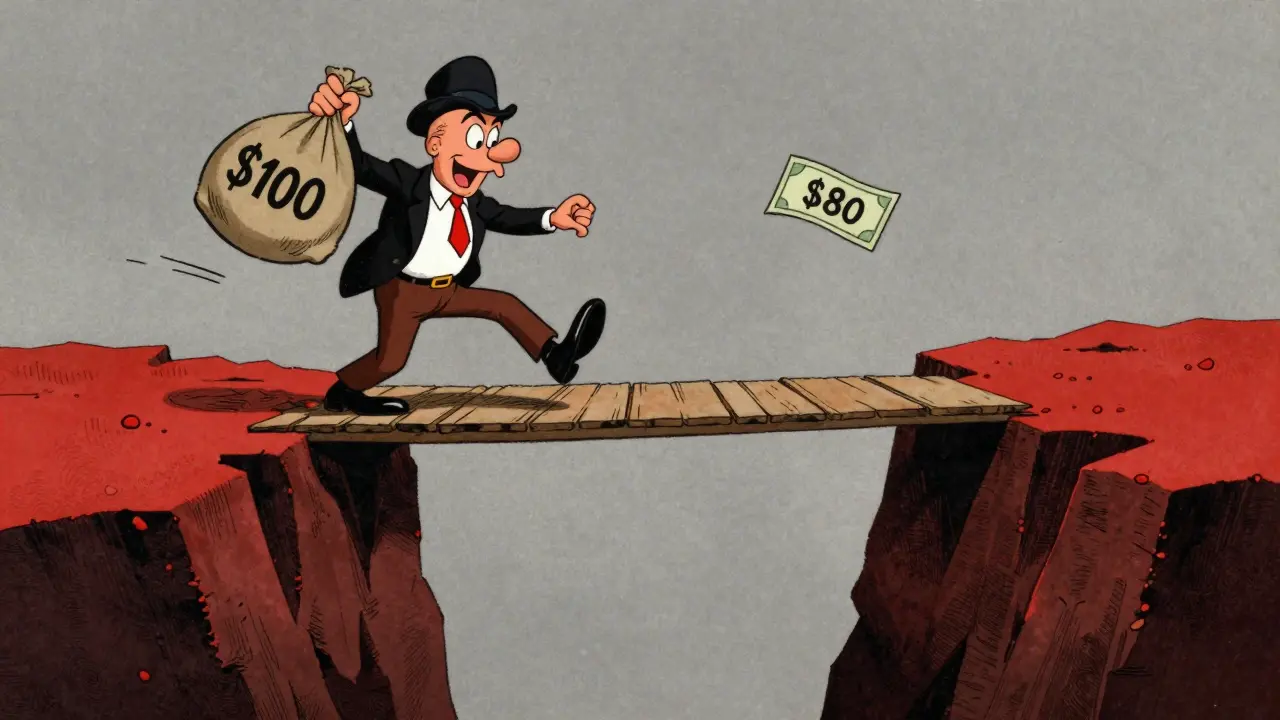
Why does this matter? Because in decentralized finance, liquidity is king. Without deep liquidity pools, you face massive slippage. Users reported slippage rates averaging 15.7%, with some trades suffering over 22%. That means if you try to swap $100 worth of tokens, you might only receive $80 worth back due to the thin market. For most traders, that’s not a feature; it’s a bug that makes the platform unusable.
How WaultSwap Works (And Why It Struggles)
To understand why WaultSwap failed to gain traction, we need to look at how it operates. Like most DEXs on the Binance Smart Chain (BSC), it uses an Automated Market Maker (AMM) model. You don't trade against another person directly; you trade against a pool of funds provided by other users.
Technically, WaultSwap tried to copy features from successful platforms like Uniswap V3, offering concentrated liquidity. On paper, this sounds great. It allows liquidity providers to earn more fees by focusing their capital in specific price ranges. However, execution is everything. While the code might support these advanced features, the lack of users means those pools are empty.
The native token, WEX, serves as the governance token. Holding WEX gives you voting rights in the DAO (Decentralized Autonomous Organization). But here’s the catch: governance power is meaningless if there are no proposals being made and no developers implementing changes. Since early 2025, there have been zero major roadmap updates. The last significant code commit was minor UI fixes. In the fast-moving world of crypto, silence from a development team is usually interpreted as abandonment.
Fees, Security, and User Experience
One of WaultSwap’s original selling points was its fee structure. At 0.17%, it was cheaper than PancakeSwap’s standard 0.25% and Uniswap’s 0.30%. Does this save you money? Technically, yes. But it saves you pennies on trades that are already risky due to slippage.
For example, if you trade $1,000 on PancakeSwap with 0.25% fees, you pay $2.50. On WaultSwap, you pay $1.70. You save $0.80. But if WaultSwap’s slippage eats 15% of your trade value, you lose $150. The fee savings are irrelevant when the structural costs are so high.
Security-wise, WaultSwap claims its smart contracts are audited. However, audits are snapshots in time. They check the code at a specific moment. If the team stops updating security patches or ignores emerging threats, that initial audit becomes less valuable. More concerning are the user reports. Throughout 2025, Reddit threads filled with complaints about failed transactions where gas fees were burned, but tokens never arrived. Support response times averaged 72 hours, which is an eternity in crypto markets.
WaultSwap vs. The Giants: PancakeSwap and Biswap
You shouldn't evaluate WaultSwap in isolation. To see its true position, you have to compare it to the platforms that dominate the BSC ecosystem. Here is how they stack up in 2026:
| Feature | WaultSwap | PancakeSwap | Biswap |
|---|---|---|---|
| Trading Fee | 0.17% | 0.25% | 0.10% |
| Market Cap | ~$3,750 (Negligible) | $412 Million+ | $50 Million+ |
| Daily Volume | Untracked / <$5k | $1.2 Billion+ | $100 Million+ |
| Developer Activity | Inactive since 2025 | High (Regular Updates) | Moderate |
| Liquidity Depth | Very Low | Very High | Medium-High |
| User Trust | Low | High | Medium |
The table tells a clear story. PancakeSwap is the industry standard on BSC for a reason. It has the liquidity, the brand recognition, and the continuous development. Biswap offers lower fees (0.10%) with much better volume than WaultSwap. WaultSwap sits in a dangerous middle ground: it’s too small to be safe, but not small enough to be a hidden gem with potential. It’s simply stuck.
Is There Any Value Left? The Speculator’s View
I know what some of you are thinking. "If everyone left, isn't that the perfect buying opportunity?" This is the contrarian investor mindset. And yes, there is a tiny sliver of speculative interest.
Some analysts, like those at CoinDataFlow, predicted short-term spikes based on historical volatility patterns. They suggested potential ROI for those willing to gamble on dead projects reviving. However, bearish analysts like Sarah Kim from CoinCodex pointed out a 90%+ probability of further decline due to lack of utility.
If you are considering entering WaultSwap now, ask yourself these questions:
- Do I understand the risk of total loss? With such low liquidity, a single large seller could wipe out the pool.
- Am I relying on a comeback? There is no evidence of a comeback plan. No new partnerships, no cross-chain bridges, no marketing campaigns.
- Can I exit easily? Try selling a large amount. You will likely fail or accept a terrible price.
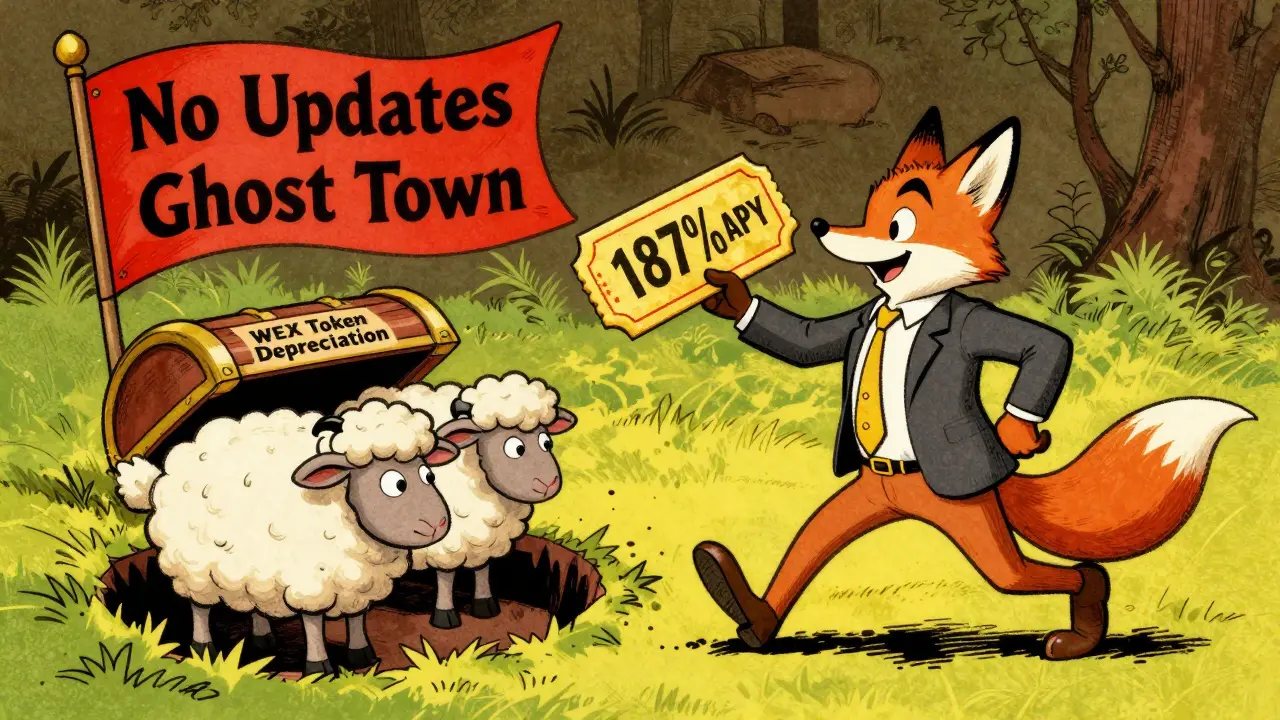
For 99% of users, the answer is no. The risks far outweigh the potential rewards. The 'high APY' farms advertised (up to 187%) are classic traps. They attract liquidity by promising insane returns, but those returns are paid out in the depreciating WEX token. Once the token price drops, your 'profits' are worth nothing.
Red Flags Every User Should Watch For
Whether you are evaluating WaultSwap or any other small-cap DEX, keep these red flags in mind. These are signs that a project is losing momentum or potentially heading toward failure:
- Declining Social Metrics: A shrinking Telegram or Discord community is often the first sign of trouble. People leave when they stop seeing value.
- Stagnant GitHub Activity: If developers haven't committed code in months, the product isn't evolving. In tech, standing still is falling behind.
- Unverified Volume Data: When major trackers like CoinMarketCap stop verifying volume, it suggests the data is either fake or non-existent.
- High Slippage on Small Trades: If swapping $10 causes a noticeable price change, the liquidity is dangerously thin.
- Lack of Roadmap Execution: Promises of 'cross-chain functionality' or 'institutional upgrades' that never materialize indicate a lack of resources or intent.
What Should You Do Instead?
If you want to trade on BSC, stick to the established players. PancakeSwap remains the safest bet for general trading. If you are hunting for lower fees, Biswap or ApeSwap offer competitive rates with significantly better liquidity and active communities.
If you are interested in yield farming, do your own research (DYOR) on protocols with transparent audit histories and consistent TVL (Total Value Locked) growth. Avoid platforms that promise triple-digit APYs without explaining the source of those yields. Usually, it comes from inflationary token emissions, which dilute the value of your holdings.
WaultSwap serves as a reminder that in DeFi, technology alone isn't enough. You need liquidity, community, and continuous development. Without those pillars, even a well-coded platform will eventually fade into obscurity.
Is WaultSwap still operational in 2026?
Yes, the website and smart contracts are still accessible, but activity is extremely low. It processes fewer than 150 transactions daily, making it functionally inactive for most serious traders.
Why did WaultSwap lose popularity?
WaultSwap suffered from a combination of factors: lack of developer updates after early 2025, declining liquidity leading to high slippage, and failure to execute on its roadmap promises like cross-chain integration. Competitors like PancakeSwap offered better security and volume.
Is it safe to store WEX tokens?
Storing BEP-20 tokens in a reputable wallet like MetaMask or Trust Wallet is generally safe from a technical standpoint. However, the financial safety is questionable due to the token's low liquidity and high risk of value depreciation.
What are the best alternatives to WaultSwap on BSC?
The best alternatives are PancakeSwap for overall reliability and volume, and Biswap or ApeSwap for users seeking lower transaction fees while maintaining decent liquidity.
Does WaultSwap require KYC?
No, WaultSwap is a decentralized exchange and does not require Know Your Customer (KYC) verification. However, this also means there is no customer support recourse if issues arise with transactions.
