
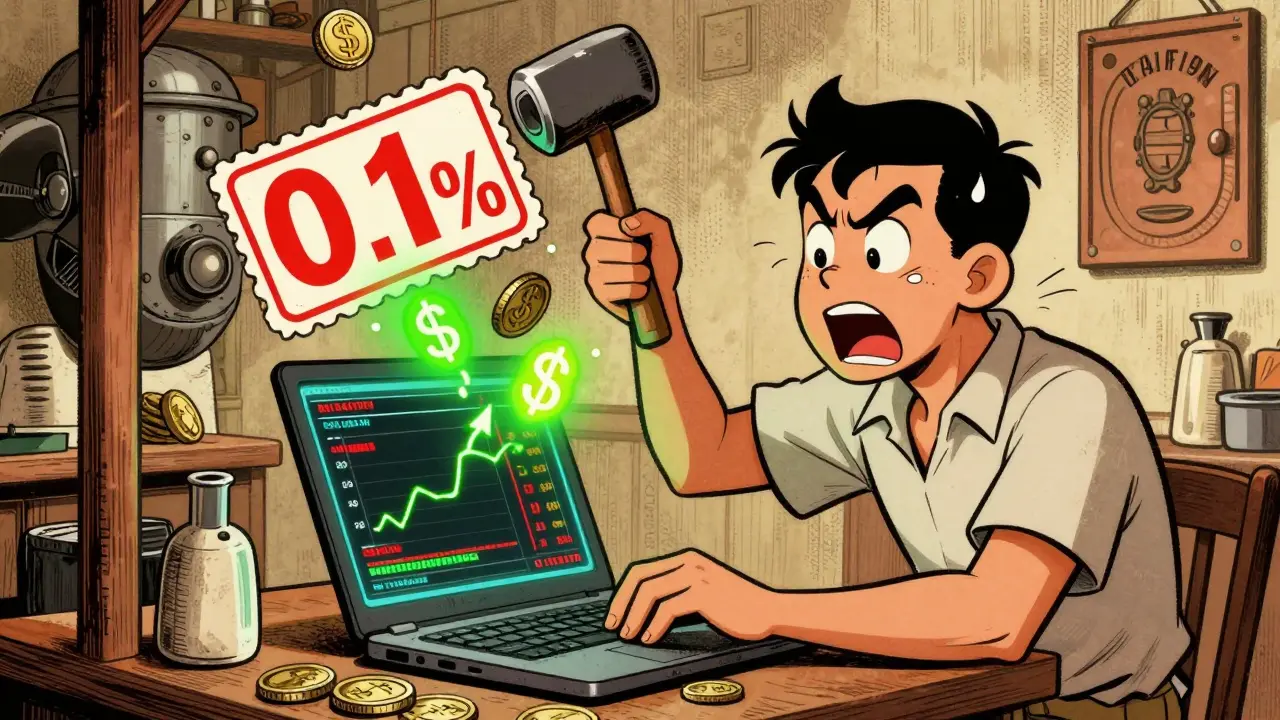
On January 1, 2026, Vietnam took a bold step that sent ripples through its crypto community: a 0.1% tax on every cryptocurrency transaction became law. Not on profits. Not on gains. On every single trade-buying, selling, swapping, or transferring digital assets. If you traded $10,000 worth of Bitcoin, you owed $10. If you made 50 trades in a day, you paid $500 in taxes, regardless of whether you made money or lost it.
This isn’t a theoretical proposal anymore. It’s active. And for the 17 million Vietnamese who own crypto, it’s changed everything.
How the Tax Works
The tax applies to any transfer of crypto assets, including Bitcoin, Ethereum, and altcoins. It’s calculated on the gross transaction value, not net profit. That means even if you swap ETH for USDT and lose money in the process, you still pay 0.1% of the total trade amount. There’s no exemption for small trades, no threshold for personal use, and no distinction between long-term holding and day trading.
It’s modeled after Vietnam’s existing securities trading tax, which charges the same rate for stock sales. The government’s logic? Crypto is just another financial instrument. But unlike stocks, crypto trades happen constantly-sometimes dozens of times a day. And unlike stocks, most retail traders aren’t making huge profits. Many are just trying to hedge against inflation or earn a little extra income.
The law also introduces separate taxes:
- 20% capital gains tax on crypto-to-fiat conversions
- 5%-35% progressive tax on mining, staking, and airdrops
- 20% corporate tax for businesses dealing in crypto
- 10% VAT on exchange service fees
There’s one small relief: the first 10 million VND (about $415) in annual crypto gains are tax-free. But that doesn’t help if you’re trading frequently-even small, losing trades trigger the 0.1% fee.
Why This Matters
Vietnam isn’t trying to shut down crypto. Far from it. The government wants to lead Southeast Asia’s digital economy. The country ranks third globally in international crypto platform usage, according to Chainalysis. The market value of crypto held by Vietnamese citizens exceeds $100 billion. The Ministry of Finance estimates the 0.1% tax could bring in over $800 million a year.
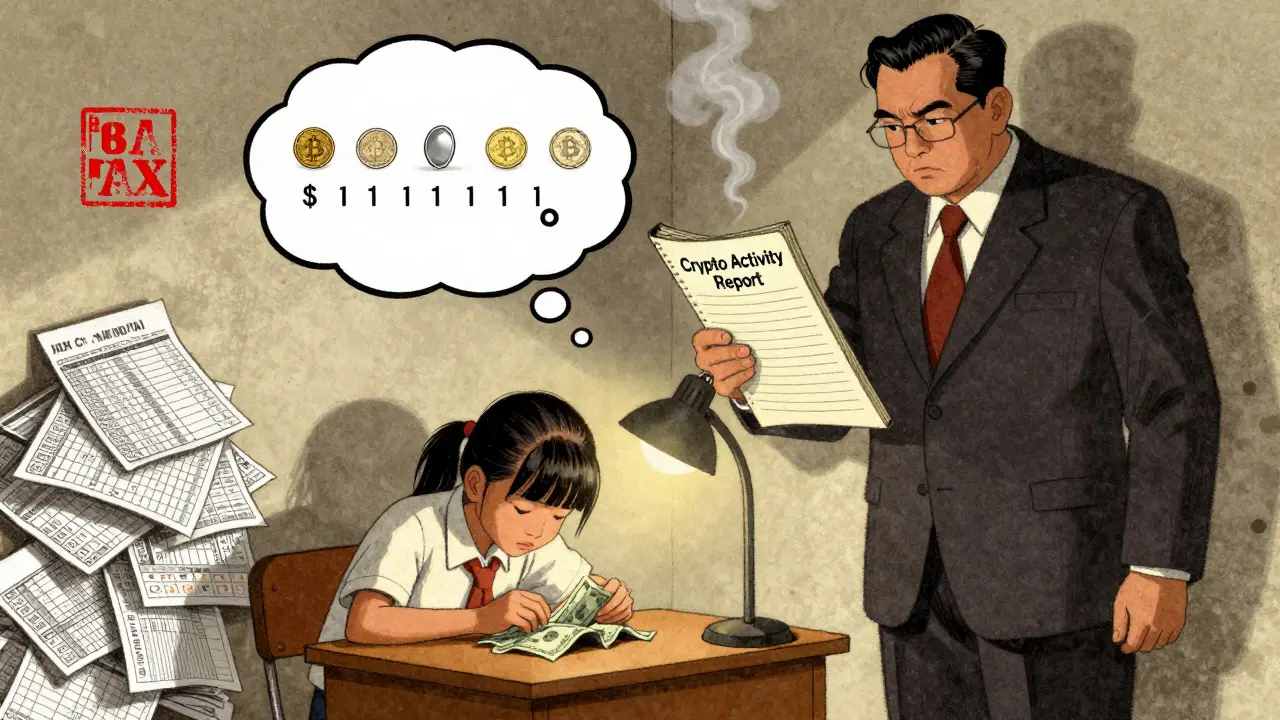
That’s not chump change. It’s enough to fund public infrastructure, digital literacy programs, or even a national blockchain initiative. But revenue isn’t the only goal. The government is also trying to bring crypto into the formal economy. By requiring annual reports to the General Department of Taxation, they’re building a paper trail. That helps fight money laundering, tax evasion, and unregulated gambling disguised as trading.
But here’s the problem: this tax doesn’t just target criminals. It hits everyday traders-the ones using Binance, Bybit, or local platforms to buy a little BTC when they get paid, or swap tokens to avoid volatility. For them, the 0.1% fee isn’t a cost of doing business. It’s a tax on effort.
What Exchanges Are Saying
On October 1, 2025, Binance formally asked Vietnam’s Ministry of Finance to reconsider. Their argument? The tax is ten times higher than market-making margins.
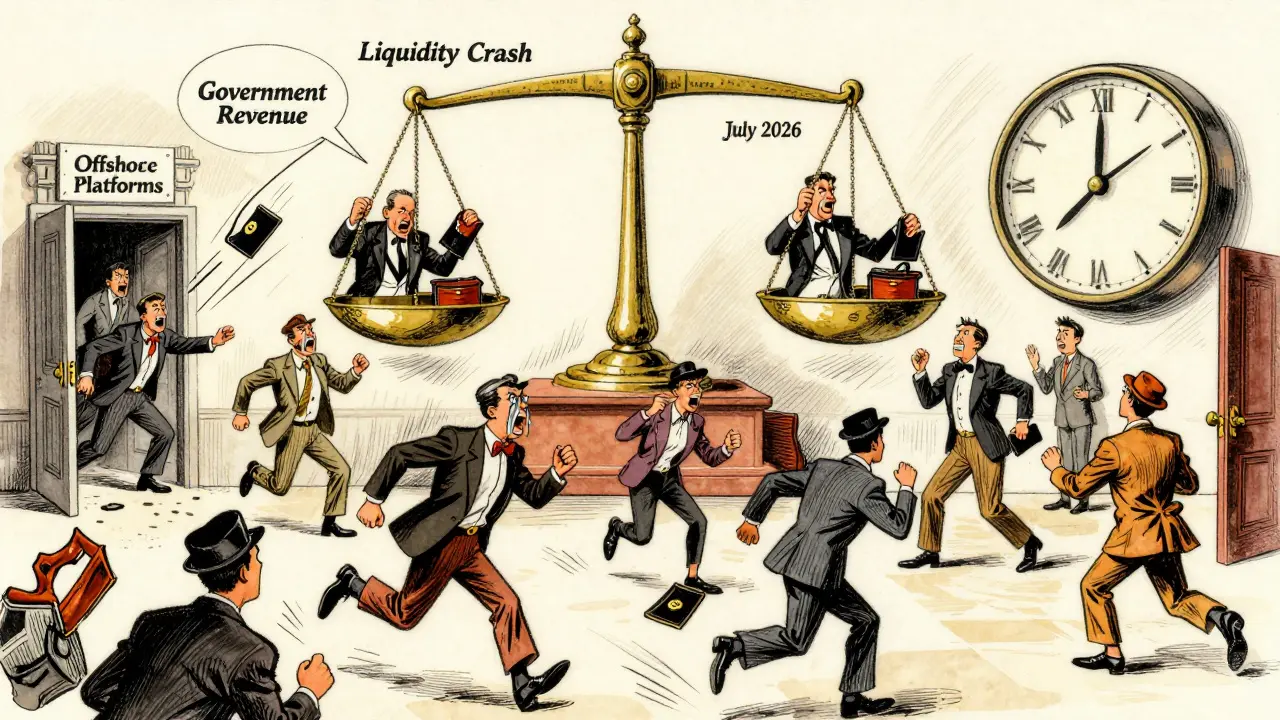
Market makers-those who provide liquidity by constantly buying and selling-rely on tiny spreads. A typical profit margin is 0.01% per trade. A 0.1% tax eats up all their profit and then some. If they can’t make money, they pull out. And when market makers leave, trading spreads widen. That means you pay more to buy and get less when you sell.
Analysts from Singapore and South Korea have seen this before. When Australia introduced a similar gross-value tax in 2024, order book depth dropped by 37% in three months. Liquidity dried up. Retail traders got worse prices. And volume fell by 22%.
Vietnam’s exchanges are now caught between two pressures: follow the law, or lose customers. Some platforms have started hiding the tax calculation from users, hoping they won’t notice. Others are pushing users to trade on offshore platforms, where the tax doesn’t apply. But that creates a new problem: it makes compliance impossible, and the government is watching.
Who’s Really Affected?
The 0.1% tax hits different people in different ways:
- Day traders-They’re hit hardest. Five trades a day? That’s $50 in taxes on a $10,000 account. Many are quitting.
- Long-term holders-They’re mostly fine. If you buy and hold, you only pay when you sell. But if you swap stablecoins to avoid volatility, you still pay.
- Stakers and miners-They pay income tax on earnings, but not on the transfers. So staking rewards are taxed, but moving them to a wallet isn’t.
- Businesses-They pay corporate tax and VAT, but they also have legal teams to handle compliance. They’re adapting.
The real victims? The ones who thought crypto was their ticket out of low wages. A 22-year-old student in Ho Chi Minh City who used to trade $200 a week to pay rent now makes $15 a week after taxes. She’s not alone.
The Bigger Picture
Vietnam’s move isn’t unique. The OECD has long pushed for digital asset taxation. The U.S. taxes capital gains. The EU taxes every transaction. But most countries tax profits. Vietnam is taxing activity.
That’s why experts like Dr. Chu Thanh Tuan from RMIT University Vietnam say it’s smart-if it’s balanced. He supports the tax as a way to capture revenue from a booming sector. But he warns: if the government doesn’t adjust, it could drive traders away.
That’s why the pilot program matters. The government hasn’t rolled this out nationwide yet. It’s testing it with a few exchanges, monitoring volume, spreads, and user complaints. They’re listening.
There are whispers of changes:
- A 10% corporate tax break for exchanges in their first five years
- VAT exemptions for crypto-to-crypto trades
- Lowering the transaction tax to 0.05% for retail traders
These aren’t promises. But they’re signals. The government knows it’s walking a tightrope.
What You Should Do
If you’re trading crypto in Vietnam, here’s what you need to do right now:
- Track every transaction-Use a crypto tax tool like Koinly or CoinTracker. Manual tracking won’t cut it.
- File your annual report-By March 31, you must submit your crypto earnings to the General Department of Taxation. Use their online portal.
- Don’t assume you’re invisible-Exchanges are required to report user activity. Your wallet address is now linked to your ID.
- Save for the tax-Set aside 0.1% of every trade. It adds up fast.
- Watch for updates-The pilot ends in July 2026. Changes are coming.
There’s no way around the tax. But there is a way to survive it. Stay informed. Stay compliant. And don’t let fear drive you out of the market.
What’s Next?
The government isn’t done. They’re working on a national digital wallet system for crypto. They’re testing a CBDC. They’re talking about taxing NFT sales at 5-10%. This is just the beginning.
Vietnam is betting that a well-designed tax can turn crypto from a gray-market phenomenon into a regulated, transparent, and profitable part of the economy. Whether it works depends on one thing: whether they listen to traders-or just count the cash.
Is the 0.1% crypto tax in Vietnam applied to every trade, even if I lose money?
Yes. The tax is based on the gross value of the transaction, not profit or loss. Whether you make $1,000 or lose $500 on a trade, you still pay 0.1% of the total amount traded. For example, a $5,000 swap from ETH to USDT triggers a $5 tax, regardless of the outcome.
Do I need to report small crypto transactions under $100?
Yes. There is no minimum threshold for the 0.1% transaction tax. Every transfer, no matter how small, is taxable. However, the first 10 million VND ($415) in annual capital gains are exempt from the 20% capital gains tax. But this exemption does not apply to the transaction tax.
What happens if I don’t report my crypto trades?
Penalties start at 2 million VND ($82) or 2% of unpaid taxes, whichever is higher. The government now requires exchanges to report user activity to tax authorities. If you’re caught evading taxes, you could face fines, frozen assets, or even legal action. Compliance is no longer optional.
Can I avoid the tax by using a foreign exchange?
Technically, yes-but it’s risky. Vietnamese law applies to residents, regardless of where they trade. If you’re a Vietnamese citizen or resident, your crypto activity is subject to taxation, even on offshore platforms. Exchanges like Binance and Bybit are required to share user data with Vietnamese authorities. Avoiding reporting could lead to penalties or loss of access to local banking services.
Is the 0.1% tax going to change in 2026?
It’s likely. The government is running a pilot program through mid-2026 to assess market impact. Early signs show reduced liquidity and trader churn. Proposals under review include lowering the rate to 0.05% for retail trades, exempting crypto-to-crypto swaps from the tax, or introducing tiered rates based on trade volume. No changes are official yet, but adjustments are expected before full implementation.

James Burke
March 4, 2026 AT 11:45Jonathan Chretien
March 5, 2026 AT 23:04Nick Greening
March 6, 2026 AT 02:31Issack Vaid
March 7, 2026 AT 02:22Shawn Warren
March 7, 2026 AT 17:47Jackson Dambz
March 8, 2026 AT 07:03jack carr
March 9, 2026 AT 13:35Ken Kemp
March 9, 2026 AT 20:08prasanna tripathy
March 11, 2026 AT 10:34Bill Pommier
March 11, 2026 AT 16:04Olivia Parsons
March 12, 2026 AT 13:22Emily Pegg
March 13, 2026 AT 00:08Ethan Grace
March 14, 2026 AT 05:06Denise Folituu
March 14, 2026 AT 11:05Eva Gupta
March 16, 2026 AT 03:46Nancy Jewer
March 17, 2026 AT 17:25Julie Potter
March 18, 2026 AT 01:24Leah Dallaire
March 19, 2026 AT 16:56Bryanna Barnett
March 20, 2026 AT 16:20Basil Bacor
March 22, 2026 AT 15:39Jane Darrah
March 24, 2026 AT 15:03Jesse VanDerPol
March 25, 2026 AT 06:37Lydia Meier
March 26, 2026 AT 13:45Cerissa Kimball
March 26, 2026 AT 14:37James Burke
March 26, 2026 AT 14:55