
North Macedonia Crypto Risk Calculator
How Safe Is Your Crypto Trade?
This tool helps you evaluate risks based on your transaction size and payment method in North Macedonia's underground crypto market.
Recommended Platform
Estimated Time
Risk Level
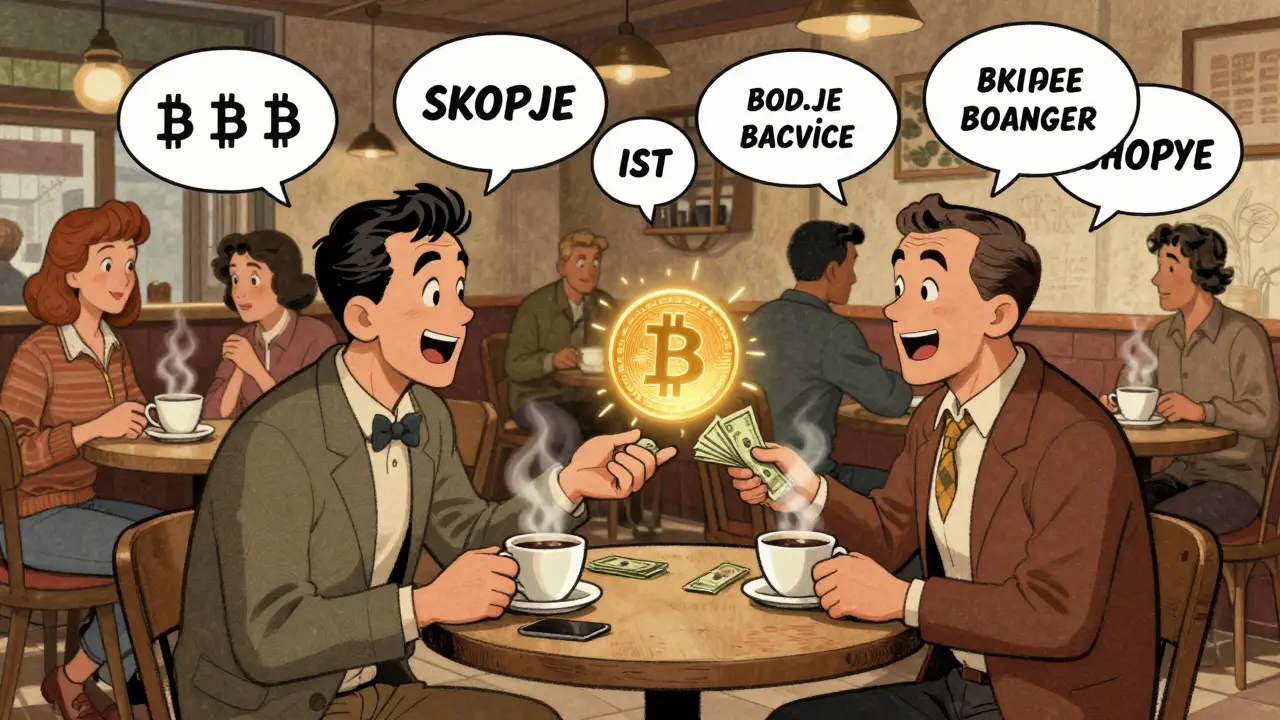
North Macedonia has one of the strangest crypto stories in Europe. On paper, trading cryptocurrency is illegal. The National Bank of the Republic of Macedonia banned it back in 2017, calling it equivalent to trading foreign securities - something citizens weren’t allowed to do under EU association rules at the time. But if you walk into any coffee shop in Skopje or Bitola today, you’ll hear people talking about Bitcoin like it’s just another investment. Some are buying with cash. Others are trading via apps that don’t even ask for ID. The law says one thing. Reality says another.
How the Ban Still Works - On Paper
The 2017 ban wasn’t a suggestion. It was a formal directive from the National Bank. It said no one could trade crypto on foreign platforms, no one could use local banks to move money for crypto, and no one could set up exchanges inside the country. The reasoning? Fear. Fear of money laundering. Fear of financial instability. Fear that people would lose everything in a volatile market with no protection. But here’s the twist: the bank never said crypto itself was illegal. They said trading it was. That small distinction became the loophole everyone used. If you’re not running a business, not advertising, not taking deposits - you’re just buying Bitcoin from a guy who pays you in cash? That’s not regulated. It’s not monitored. And until recently, it wasn’t prosecuted. In February 2022, things started to shift. The government passed new anti-money laundering rules that officially recognized cryptocurrencies as “virtual assets.” For the first time, they defined terms like “wallet,” “service provider,” and “transaction.” This wasn’t legalization - but it was a signal. The state was no longer pretending crypto didn’t exist. It was starting to build a framework. And by 2023, the National Bank quietly admitted: “Just because it’s not regulated doesn’t mean it’s illegal.” That’s the gray zone North Macedonians live in today.How People Actually Trade Crypto
You won’t find a single crypto exchange registered in North Macedonia. But you’ll find dozens of people trading daily - not on apps like Binance or Coinbase, but on peer-to-peer platforms built for exactly this kind of underground market. Symlix.com is one of the most popular. It’s not based in North Macedonia, but it’s optimized for it. You sign up, you pick a payment method - cash, bank transfer, PayPal, even gift cards - and you find someone nearby willing to trade. The platform holds your crypto in escrow until you confirm the cash was handed over. No bank involvement. No ID checks beyond basic email verification. A 15-minute trade can happen in a park, a gas station, or even a university library. LocalCoinSwap works the same way. It supports over 300 payment methods, including ones locals actually use: cash deposits at post offices, mobile top-ups, and even Western Union transfers. Users filter offers by location, price, and payment type. One common tactic? Buy small amounts first - €50 or €100 - to test if the seller is legit. If the cash arrives, you go bigger. And then there are the international brokers. Swissquote, Interactive Brokers, MultiBank - these are regulated EU firms. You can open an account from North Macedonia. But here’s the catch: you can’t link your local bank account. You have to send money through third-party services like Wise or Revolut, which often freeze transactions flagged as “crypto-related.” Users report waiting weeks for funds to clear. Swissquote charges high fees, but it’s reliable. Interactive Brokers has lower fees but only offers a handful of coins and no built-in wallet. For many, it’s a last resort.The Risks Are Real
This system works - until it doesn’t. There are stories of people losing thousands. One user on Reddit posted in October 2024 about €1,200 frozen by his bank after a crypto purchase. The bank called it “suspicious activity.” He spent two weeks fighting to get it back. Another user met a seller in a mall parking lot, paid in cash, and the crypto never arrived. No escrow. No chat log. Just a handshake and a promise. Scams happen. So do bank freezes. So does confusion over taxes. Since there’s no legal framework, the government hasn’t said if crypto profits are taxable. Most people assume they’re not. But if the rules change tomorrow - and they will - those who didn’t report earnings could face penalties. The biggest fear? Regulatory whiplash. The 2017 ban is still on the books. If the government suddenly decides to enforce it, every P2P trade could be deemed illegal. Sellers could be fined. Buyers could lose assets. Platforms like Symlix could be blocked overnight. No warning. No grace period.
Who’s Trading - And Why
It’s not just speculators. It’s teachers, students, freelancers, and retirees. Many are tired of low wages and inflation. A 2025 survey found that 92% of crypto activity in North Macedonia is retail trading - not business use. People see crypto as a way out. One Telegram group called “MK Crypto” has over 1,200 members. They share lists of trusted traders, safe meetup spots, and tips on avoiding bank flags. “Never use your main account,” one user wrote. “Use a separate one with just enough to cover your trades.” Another posted a photo of a cash handoff at a bus stop in Tetovo, captioned: “100 EUR for 0.003 BTC. No ID needed.” The average user spends five minutes setting up a Symlix account. But they spend weeks learning how to stay safe. They study price movements. They track bank policies. They learn which payment methods are least likely to trigger alerts. Some even use burner phones for communication.Why This Won’t Last
The market is growing fast. LocalCoinSwap says Macedonian user activity jumped 300% between 2022 and 2024. BrokerChooser estimates there are now about 42,000 active crypto users in a country of 1.8 million. That’s 2.3% adoption - low compared to the EU average of 5.1%, but growing. The government knows it can’t ignore this anymore. Draft legislation is expected by late 2025 that would create a licensing system for crypto service providers. That’s the next step. Not a ban. Not a free-for-all. A regulated market. Experts say North Macedonia will follow the EU’s MiCA rules - the same framework that will govern crypto across all member states by 2026-2027. The February 2022 law was just the first draft. The real change is coming. And when it does, the underground market won’t vanish. It’ll transform.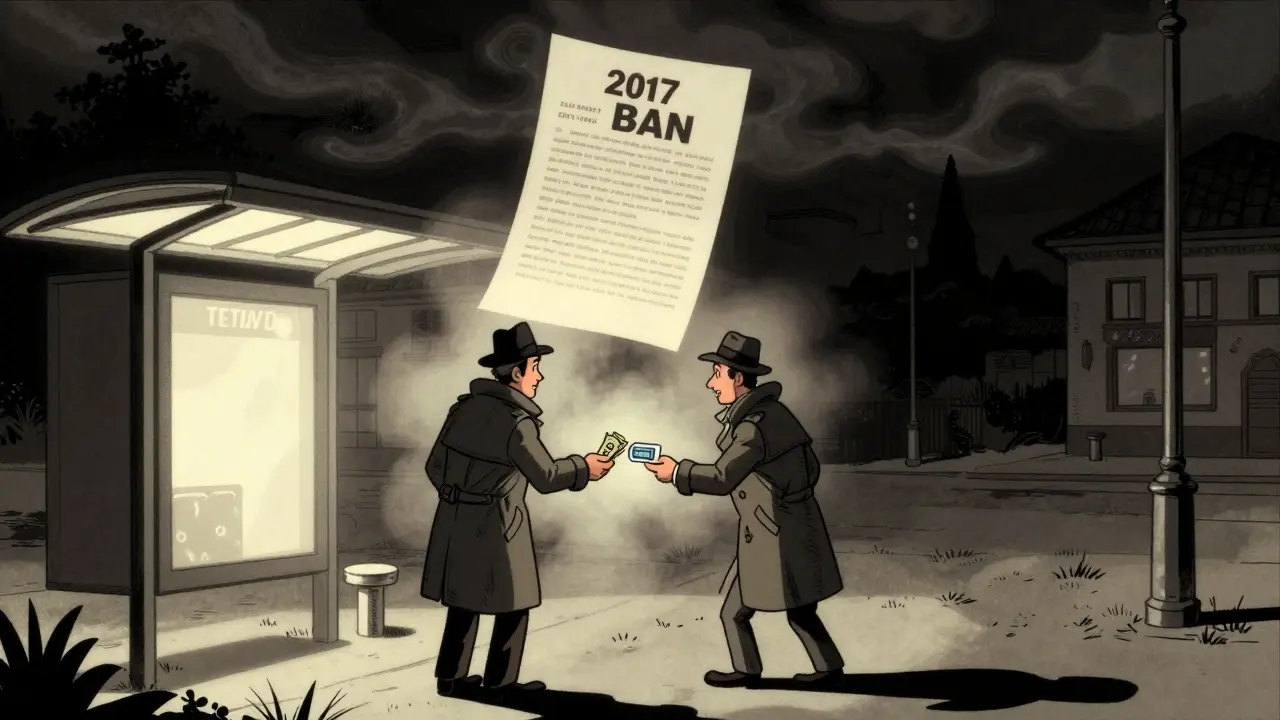
What to Do Right Now
If you’re in North Macedonia and want to trade crypto:- Use escrow platforms like Symlix or LocalCoinSwap - never direct cash deals without verification.
- Start small. Test with €50 before going bigger.
- Never link your primary bank account to any crypto service.
- Keep records of every trade - even if taxes aren’t required now, they might be later.
- Join local Telegram groups to learn who’s trustworthy.
- Consider international brokers like Swissquote if you can handle the fees and delays.

Jessica Eacker
December 10, 2025 AT 13:36Start small. Use escrow. Never link your main account. Keep records. These aren't just tips-they're survival tactics.
Simple. Clean. Effective.
Ike McMahon
December 12, 2025 AT 01:09That Symlix platform is wild-like a digital bazaar with escrow built in. People are trading Bitcoin like it's street-corner lemonade, but with more risk and zero regulation.
And yet… it works. For now.
amar zeid
December 13, 2025 AT 11:49Interesting how the law lags behind reality. In India too, we have gray zones-crypto isn't banned, but banks treat it like a dirty secret. The fear isn't the tech-it's losing control.
North Macedonia isn't alone. Just louder about it.
Lloyd Cooke
December 14, 2025 AT 12:15There’s a metaphysical irony here: the state bans an asset class because it fears chaos, yet the very act of prohibition creates a more chaotic, unmonitored ecosystem.
The bank’s directive was a mirror-it reflected not the danger of crypto, but the fragility of institutional authority.
What is legality, if not a consensus of power? And when consensus shifts, laws become relics-like typewriters in a world of neural interfaces.
North Macedonia didn’t ban Bitcoin. It banned its own inability to adapt.
And now, in coffee shops and bus stops, the people have written a new constitution-with wallets instead of parchment.
The real revolution isn’t decentralized finance-it’s decentralized trust.
And trust, unlike law, doesn’t need a signature to be real.
They say crypto is volatile. But what’s more volatile? A market or a government that refuses to evolve?
Every handshake in that parking lot is a quiet act of civil disobedience.
Not violent. Not loud. Just… persistent.
And persistence, in the face of bureaucratic inertia, is the most dangerous force of all.
They thought they could outlaw money.
They forgot: money is just belief, dressed in code.
Kurt Chambers
December 15, 2025 AT 21:58usa got it right-no crypto nonsense in europe. these macedonian clowns think they’re crypto cowboys but they’re just getting robbed by scammers and frozen by banks.
who even cares about some tiny country’s black market? it’s a joke.
they should’ve just stayed in the eu and followed rules like adults.
lol
Kelly Burn
December 16, 2025 AT 08:46OMG this is sooo fascinating!! 🤯 Like, imagine being a teacher in Skopje and just quietly buying BTC with cash at the bus stop 🚍💸
It’s like a crypto heist but… cozy?
Also, Symlix is 🔥-I’ve used it for my crypto swaps and the escrow system is next-level. No ID? YES PLEASE. 🙌
And the Telegram group? I’m joining rn. #CryptoUnderground #NoIDNoProblem
Jessica Petry
December 16, 2025 AT 10:46Of course they’re trading crypto. The moment a government bans something, it becomes a status symbol for the uneducated masses.
It’s not innovation-it’s rebellion dressed up as finance.
And now we’re supposed to admire their ‘resourcefulness’? No.
This isn’t a grassroots movement. It’s financial illiteracy with Wi-Fi.
Let them lose their money. Then maybe they’ll learn that not everything that glitters is a blockchain.
JoAnne Geigner
December 18, 2025 AT 08:42I love how this story shows the quiet resilience of ordinary people… they’re not trying to overthrow the system-they’re just trying to survive it.
Teachers, retirees, students-all of them learning how to navigate a world that doesn’t want them to have tools to build wealth.
It’s not about speculation-it’s about dignity.
And the fact that they’ve built trust networks without banks? That’s beautiful.
Maybe the future isn’t in centralized exchanges or government licenses.
Maybe it’s in parking lots, in cash handoffs, in whispered warnings on Telegram.
We should be listening-not judging.
Anselmo Buffet
December 19, 2025 AT 14:14Kinda wild how this is just… happening. No fanfare. No press. Just people figuring it out.
Not cool. Not hot. Just real.
And honestly? It’s kinda admirable.
They’re not asking for permission.
They’re just trading.
PRECIOUS EGWABOR
December 20, 2025 AT 12:37Let’s be real-this isn’t ‘crypto innovation.’ It’s a desperate workaround by a country that can’t even get its banking system to function properly.
Meanwhile, the EU is building actual infrastructure.
North Macedonia’s ‘underground market’ is just a symptom of institutional decay.
And now we’re supposed to romanticize it? No thanks.
I’ve seen this movie before. It ends with people holding worthless coins and a government that never apologized.
Caroline Fletcher
December 21, 2025 AT 15:36you think this is underground? lol
the feds are already tracking every cash handoff.
every symlix user is on a watchlist.
they’re letting it happen so they can arrest everyone later.
it’s a trap.
they want you to get comfortable.
then boom-asset seizure.
they’ve been waiting for this moment since 2017.
you’re not free.
you’re being prepped.
Claire Zapanta
December 22, 2025 AT 23:03Britain would never allow this. We have rules. We have order.
These people think they’re rebels, but they’re just pawns in a global game.
And the fact that Americans are praising this as ‘resilience’? Pathetic.
Real sovereignty isn’t trading crypto in parking lots.
It’s having a government that doesn’t need to be circumvented.
Andy Walton
December 23, 2025 AT 19:20you know what’s funny? the bank says crypto trading is illegal… but they’ve never arrested anyone.
so is it illegal or just… inconvenient?
also, i met a guy in a park in skopje last year who sold me btc for cash.
he had a dog named satoshi.
we didn’t even shake hands.
he just nodded.
i think that’s the most honest transaction i’ve ever made.
the system is broken.
and these people? they’re just trying to fix it with their hands.
and honestly? i respect that.
even if i’d never do it myself.
because i’m scared.
but they’re not.
Madison Surface
December 24, 2025 AT 09:49This isn’t just about crypto.
This is about people who’ve been told ‘no’ for too long, and quietly said, ‘I’m still going to try.’
Teachers who can’t afford retirement. Students who can’t get loans. Freelancers paid in euros that lose value every month.
They didn’t start a movement.
They just started trading.
One €50 deal at a time.
One handshake in a bus stop.
One encrypted message in a Telegram group.
They didn’t ask for permission.
They didn’t need a law.
They just needed each other.
And that’s the most powerful thing here.
Not the tech.
Not the money.
But the trust.
They built a network where no one had to be perfect-just honest.
And maybe, just maybe, that’s the future we’re all supposed to be building.
Not with regulations.
But with humanity.