
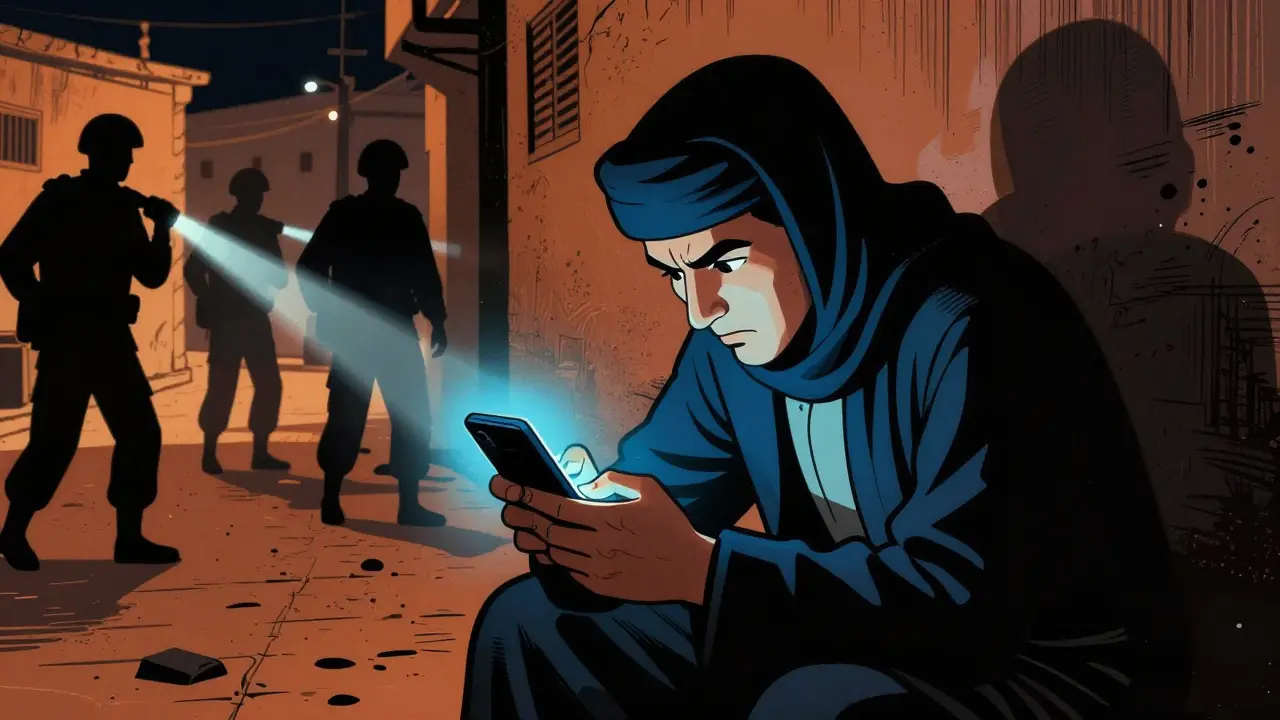
Imagine trying to send money to your family across a border that doesn't officially exist for you. Now imagine doing it while the government declares the method of payment illegal and shuts down the internet to stop you. This is the daily reality for millions of Afghans navigating the underground cryptocurrency market under Taliban rule.
Since the Taliban returned to power in August 2021, Afghanistan has faced severe economic isolation. Traditional banking systems collapsed as international sanctions froze foreign reserves. In this vacuum, cryptocurrency didn't just become an investment option; it became a lifeline. Despite a strict ban declared in August 2022 labeling crypto as haram (forbidden) under Islamic law, peer-to-peer (P2P) trading continues to thrive in the shadows. It’s a story of digital resilience against authoritarian control, where Bitcoin and USDT serve as vital tools for survival rather than speculation.
The Collapse of Trust and the Rise of Digital Cash
To understand why people risk arrest to trade crypto, you have to look at the state of the Afghan economy. Before the takeover, the country relied heavily on foreign aid and traditional banking. When the Taliban seized control, those channels vanished overnight. The World Bank and UN agencies warned that up to 97% of the population would fall below the poverty line by 2022. That’s not a statistic; that’s a humanitarian crisis.
In such an environment, cash becomes king-but only if you can get it. For Afghans living abroad, sending remittances home through traditional banks or services like Western Union became difficult, expensive, or impossible due to sanctions. Cryptocurrency offered a way around these barriers. Data from early 2022 showed an 80% spike in crypto transfers into Afghanistan immediately after the regime change. People weren't buying Bitcoin because they believed in its long-term value; they were buying it because it was the only pipe open to their families.
| Factor | Impact on Financial System | Crypto Response |
|---|---|---|
| Banking Freeze | Foreign reserves frozen; cross-border transfers blocked | P2P networks bypass traditional SWIFT systems |
| Poverty Spike | 97% of population below poverty line (2022) | Crypto used for essential remittances/food purchases |
| Taliban Ban | Trading declared haram; licenses revoked | Operations move offline/encrypted apps |
| Internet Blackouts | Connectivity drops below 1% in some regions | Traders use mesh networks or travel to hubs |
How the Underground Market Actually Works
You might think that banning something stops it. History shows otherwise. The Taliban banned crypto trading, mining, and usage in August 2022, citing Sharia law concerns about speculation and lack of tangible assets. But you can’t ban a protocol that lives on a decentralized ledger. Instead of disappearing, the market went dark.
The primary vehicle for this underground economy is Peer-to-Peer (P2P) trading. Unlike centralized exchanges like Binance or Coinbase, which require KYC (Know Your Customer) verification and can be shut down with a license revocation, P2P trading happens directly between individuals. Here’s how a typical transaction looks:
- Connection: A buyer in Kabul connects with a seller via encrypted messaging apps like Telegram or Signal. These platforms are often monitored, so users employ burner accounts and code words.
- Negotiation: They agree on a price. Because crypto is volatile, prices fluctuate wildly based on local supply and demand. USDT (Tether) is preferred over Bitcoin for daily transactions because its value stays pegged to the US dollar, reducing risk.
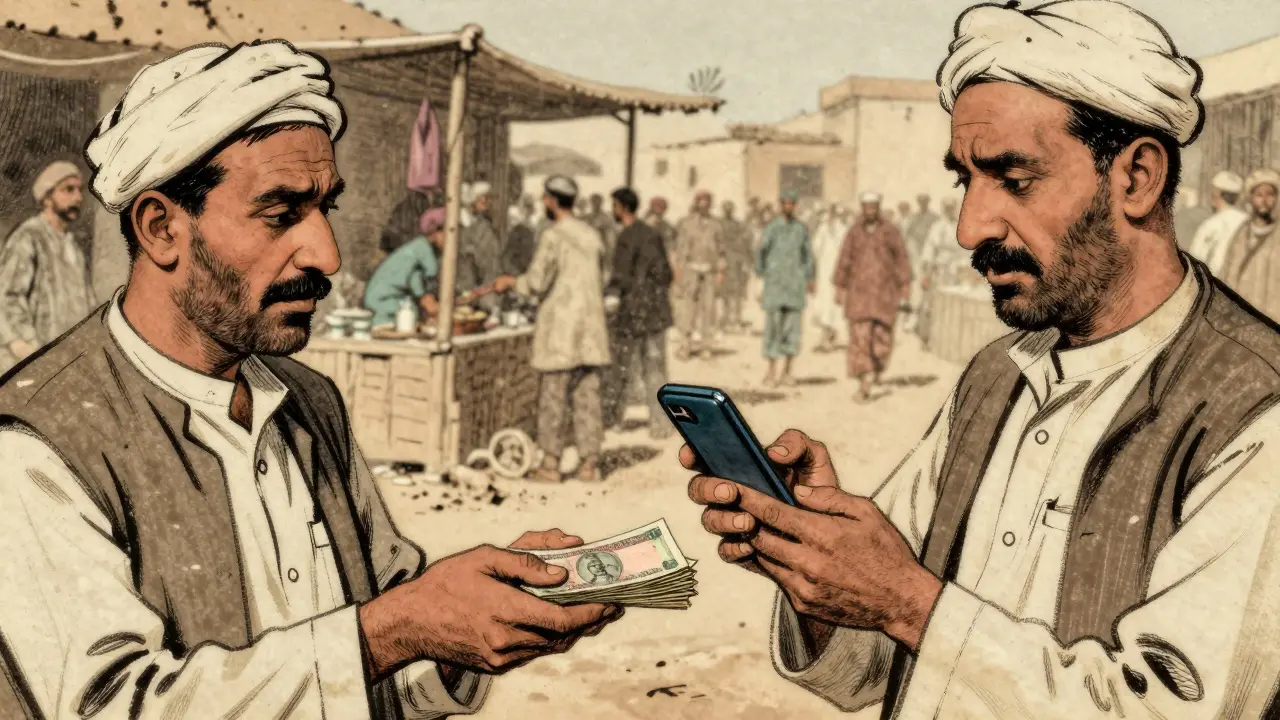
- Transfer: The seller sends USDT to the buyer’s digital wallet. Simultaneously, the buyer transfers Afghan Afghani (AFN) or Pakistani Rupee (PKR) via mobile money services or cash handover.
- Verification: Once both parties confirm receipt, the deal is closed. No bank records. No paper trail.
This system relies on trust, which is scarce. To mitigate fraud, traders often meet in person in neutral locations or use trusted intermediaries known as "market makers." These aren't formal businesses; they’re individuals who maintain liquidity by holding large amounts of crypto and fiat currency, earning a spread on each transaction.
HesabPay and the Local Innovation Boom
Before the crackdown intensified, Afghan developers tried to build legitimate infrastructure. One standout example was HesabPay, a fintech startup that aimed to simplify fund transfers between mobile phones. Launched in late 2021, HesabPay gained over 380,000 users in its first three months. It wasn't a crypto exchange per se, but it integrated digital wallets that could interface with global payment rails, effectively acting as a bridge for informal economies.
The success of HesabPay proved two things: first, there was massive demand for digital financial tools in Afghanistan; second, the local tech talent was capable of building scalable solutions despite infrastructure challenges. However, when the Taliban moved to revoke all crypto-related licenses in 2022, startups like HesabPay faced an existential threat. Many pivoted to purely offline services or shut down operations entirely. The lesson? In authoritarian regimes, innovation survives only if it remains invisible.
The Internet Blackout Strategy
If you can’t stop the code, stop the connection. Recognizing that enforcement alone wasn’t working, the Taliban escalated their tactics in 2024 and 2025. Supreme Leader Hibatullah Akhundzada ordered sweeping internet blackouts, initially targeting five northern provinces: Kunduz, Badakhshan, Baghlan, Takhar, and Balkh. The official reason? To combat "vice" and "immoral activities," particularly online pornography. The real effect? Severing the digital arteries of the underground economy.
By mid-2025, nationwide outages reduced internet connectivity to less than 1% of normal levels in affected areas. For crypto traders, this is catastrophic. You need internet access to check blockchain confirmations, communicate with counterparts, and execute trades. Without it, the P2P network freezes.
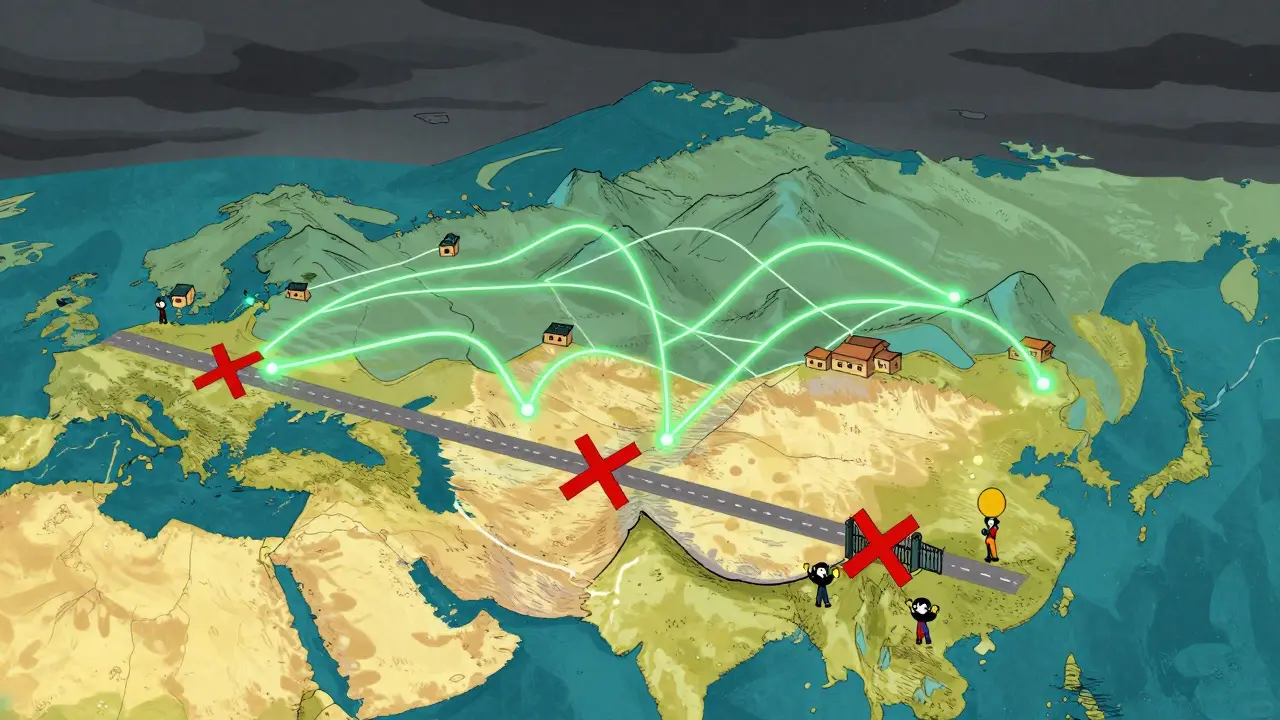
Yet, even here, adaptation occurs. Traders report using satellite internet terminals where available, or traveling to border towns like Torkham (near Pakistan) where connectivity is more stable. Some utilize mesh networking technologies-local Wi-Fi networks that don’t rely on central ISPs-to share information within small communities. It’s slow, inefficient, and risky, but it keeps the flow of funds moving.
Risks, Rewards, and Humanitarian Realities
Let’s be clear: trading crypto in Afghanistan is dangerous. The Taliban conducts periodic raids on suspected miners and traders. Arrests have been documented since 2022, leading to fines, confiscation of equipment, and imprisonment. Recorded transaction values dropped from millions to approximately $80,000 per month by late 2022 following initial crackdowns. But "recorded" is the key word. Most transactions now happen off-chain or through privacy-focused coins, making them invisible to authorities.
Why do people take these risks? Because the alternative is starvation. For a family in Herat receiving $100 a month from a relative in Germany, that money buys food, medicine, and heating fuel. If the bank blocks the transfer, that money sits useless. Crypto allows that $100 to arrive instantly, converted into local currency without bureaucratic hurdles.
This isn't about getting rich quick. It's about survival. The underground crypto market in Afghanistan is less of a financial ecosystem and more of a humanitarian aid channel disguised as speculative trading. Every USDT transferred represents a vote against total economic suffocation.
Future Outlook: Can Control Win?
As we move through 2026, the situation remains precarious. The Taliban’s grip on digital infrastructure is tightening, but so is the desperation of the population. International sanctions show no signs of lifting, meaning traditional banking will remain inaccessible for most Afghans. This structural gap ensures demand for alternative finance persists.
We may see further innovation in offline crypto solutions, such as hardware wallets being passed hand-to-hand, or community-based ledgers that operate without constant internet access. Meanwhile, the Taliban faces a dilemma: complete internet shutdown harms their own administrative capabilities and revenue streams, while allowing connectivity enables dissent and illicit finance. They are likely to settle for fragmented, heavily censored access-a middle ground that still leaves room for clandestine crypto activity.
For the global crypto community, Afghanistan serves as a stark reminder of what decentralization truly means. It’s not just about freedom from banks; it’s about freedom from borders, censorship, and political oppression. While regulators elsewhere debate tax codes and compliance rules, Afghans are using blockchain technology to keep their families alive. That’s a use case no amount of legislation can erase.
Is cryptocurrency legal in Afghanistan?
No. The Taliban government banned all forms of cryptocurrency trading, mining, and usage in August 2022, declaring it forbidden (haram) under their interpretation of Islamic law. Engaging in crypto activities carries legal risks including arrest and asset confiscation.
How do people trade crypto without reliable internet?
Traders use various workarounds, including traveling to border areas with better connectivity, using satellite internet terminals, or employing mesh networking technologies that create local wireless networks independent of central ISPs. Transactions are often coordinated via encrypted messaging apps when connectivity allows.
What cryptocurrencies are most popular in Afghanistan?
USDT (Tether) is the most widely used cryptocurrency for daily transactions and remittances because its value is pegged to the US dollar, minimizing volatility risk. Bitcoin is also used but primarily for larger stores of value or cross-border transfers due to its higher fees and slower transaction times.
Why did the Taliban ban cryptocurrency?
The Taliban cited religious grounds, arguing that cryptocurrencies lack tangible asset backing and constitute speculative gambling, which is prohibited under Sharia law. Additionally, the ban helps the regime maintain control over financial flows and prevent capital flight.
Did any local crypto startups survive the ban?
Most formal startups struggled significantly. HesabPay, which had 380,000+ users, faced severe operational challenges after licenses were revoked. Many companies pivoted to non-crypto services or operated informally. There are no major publicly traded crypto firms currently operating legally within Afghanistan.
