
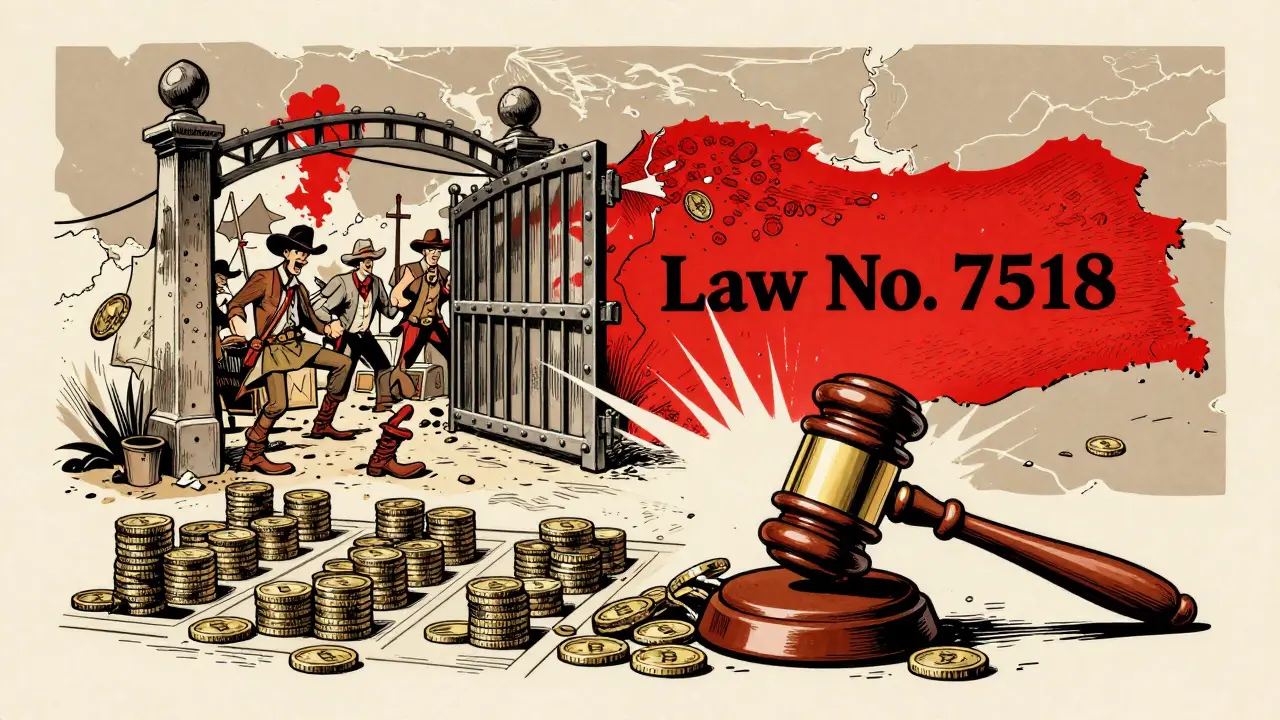
It used to be that if you wanted to buy Bitcoin in Turkey, you could do it pretty much anywhere. Now, the landscape has shifted dramatically. The days of wild west trading are over. Turkey has moved from a permissive stance to implementing one of the most strict digital asset oversight frameworks in the world. If you are a trader, an exchange operator, or just someone holding crypto in this region, understanding these changes is no longer optional-it’s survival.
The pivot began quietly but accelerated fast. It started with the Central Bank of Turkey (TCMB) banning cryptocurrency payments for goods and services back in April 2021. That was the first crack in the foundation. But the real game-changer arrived recently with Law No. 7518, officially titled the 'Law on Amendments to the Capital Markets Law'. Submitted to the Grand National Assembly of Turkey (TBMM) in May 2024 and enacted in June 2024, this law didn't just tweak the rules; it rewrote them entirely. It established formal legal definitions for everything from wallets to custody services and put the entire industry under the microscope of government oversight.
The New Legal Reality: Law No. 7518 Explained
Before Law No. 7518, the rules were vague. Now, they are precise. The legislation introduced specific legal definitions for critical concepts like 'cryptoasset,' 'wallet,' and 'platform.' This might sound like dry legal jargon, but it matters because it gives regulators the teeth they need to enforce compliance. The law requires all Crypto Asset Service Providers (CASPs) to obtain operating licenses from the Turkish Capital Markets Board (CMB). You can’t just set up a website and start matching trades anymore.
The barriers to entry are high, intentionally so. To get a license as an exchange, you need a minimum capital of TRY 150 million (roughly $4.1 million). If you want to offer custody services, that jumps to TRY 500 million ($13.7 million). These numbers aren't arbitrary. They are designed to flush out small, risky operators and consolidate the market around well-funded, stable entities. As of July 2024, this framework replaced the previous patchwork of informal guidelines, making it the primary mechanism governing all crypto activities in the country.
| Requirement | Detail |
|---|---|
| Licensing Authority | Turkish Capital Markets Board (CMB) |
| Exchange Minimum Capital | TRY 150 million (~$4.1 million) |
| Custodian Minimum Capital | TRY 500 million (~$13.7 million) |
| Payment Usage | Strictly Prohibited |
| KYC Threshold | Mandatory for transactions > 15,000 TRY |
The Three Heads of Oversight
Regulation isn't handled by just one group anymore. Turkey has created a tri-party regulatory structure that covers legal, financial crime, and technical aspects. Understanding who does what is crucial for anyone navigating this space.
First, there is the Capital Markets Board (CMB). They are the primary boss. The CMB oversees all cryptocurrency activities, establishes the rules, makes decisions, and hands out sanctions. If you are running an exchange, they are the ones you report to.
Second, you have the Financial Crimes Investigation Board (MASAK). Their job is to stop money laundering. MASAK has been granted expanded powers, including the ability to freeze crypto accounts linked to suspicious activity without prior court approval. This is a significant shift in due process and means your funds can be locked quickly if red flags appear.
Third, there is the Scientific and Technological Research Council of Türkiye (TÜBİTAK). They handle the tech side. TÜBİTAK ensures that the infrastructure used by CASPs meets strict technical compliance standards. They check if your systems are secure and robust enough to handle the regulatory load.

Enforcement Hits Hard: The 2025 Crackdown
Rules mean nothing without enforcement, and Turkey has shown it means business. Throughout 2025, the pressure escalated. In February 2025, full Anti-Money Laundering (AML) rules went into effect, requiring firms to not only get licenses but also undergo ongoing audits. But the real shock came in July 2025.
In that month alone, authorities blocked 46 unlicensed exchanges. This wasn't just small local sites; it included major decentralized exchange platforms like PancakeSwap. For users accustomed to DeFi freedom, this was a massive disruption. The message was clear: if it’s not licensed by the CMB, it’s not accessible in Turkey. The crackdown reached a personal level on July 28, 2025, when the founder of ICRYPEX, a major Turkish exchange, was detained. Allegations linked crypto funding to government critics, suggesting that regulations might also be used as a political tool against opposition figures. This adds a layer of risk beyond just financial compliance.
What This Means for Everyday Users
If you are a regular person buying Bitcoin or Ethereum, your experience has changed. On the positive side, licensed exchanges now offer better security and consumer protection. You don't have to worry as much about your exchange vanishing overnight with your funds. Major platforms have implemented robust Know Your Customer (KYC) procedures and regular audits.
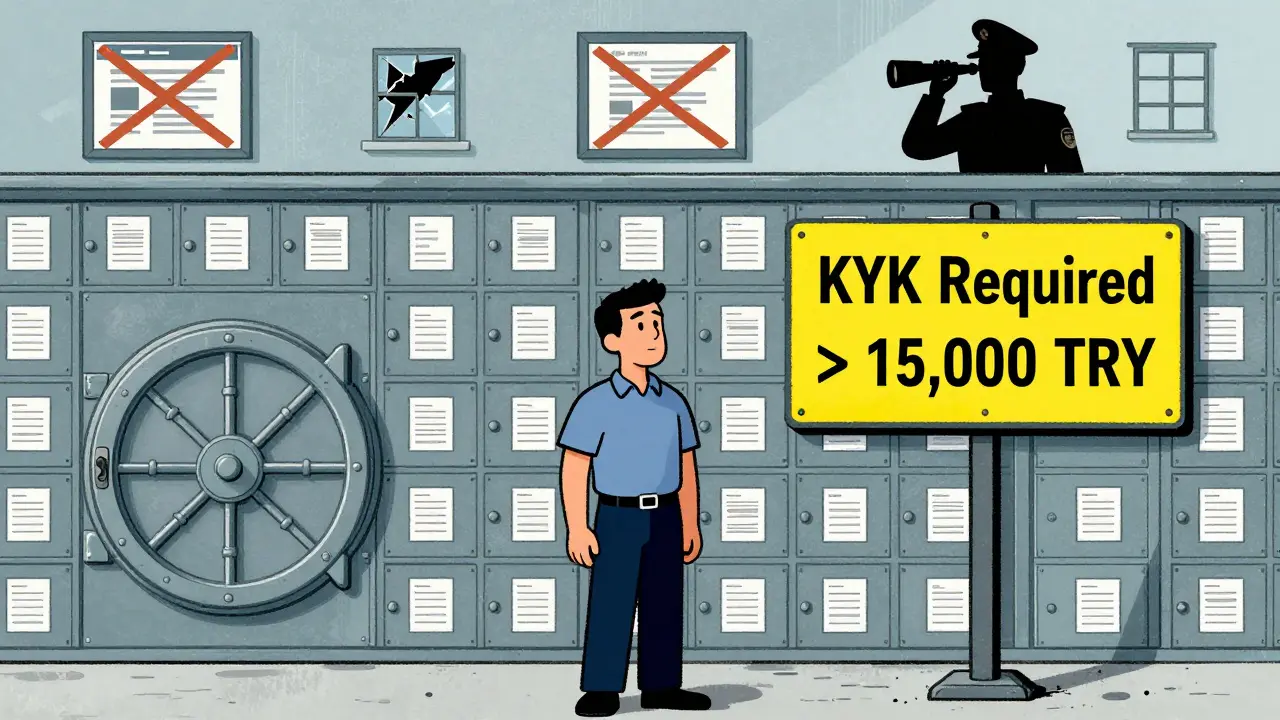
However, the convenience factor has dropped. You will face extensive documentation requirements, especially for larger transactions. Any transaction exceeding 15,000 Turkish lira (approximately $425-450) triggers mandatory identity verification. Users on Reddit and other forums frequently complain about delays in account verification and confusion over compliance details. Many have tried to migrate to international platforms, but remember those blocks? Authorities actively monitor and block unlicensed foreign exchanges serving Turkish users. So, your options are narrowing down to the few domestic players who can afford the license fees.
Global Context: How Turkey Compares
How does Turkey’s approach stack up against the rest of the world? It’s a unique hybrid. The framework aligns closely with the European Union's Markets in Crypto-Assets (MiCA) regulation in terms of structure and clarity. However, Turkey is more restrictive regarding payment usage. While the EU allows some flexibility, Turkey completely prohibits using crypto for purchases.
Compared to the United States, where regulation is fragmented across multiple agencies like the SEC and CFTC, Turkey centralizes oversight under the CMB. This provides a clearer path for operators but leaves less room for interpretation. It’s more restrictive than Switzerland’s crypto-friendly cantons but far less severe than China’s complete ban. Interestingly, it mirrors South Korea’s licensed exchange model but with stricter capital requirements and more extensive reporting obligations. The unique characteristic here is the dual approach: trading is legal and regulated, but paying for coffee with Bitcoin is illegal. This distinction doesn't exist in most major markets.
The Road Ahead: More Restrictions?
Don’t think the tightening is over. Current developments suggest further regulatory tightening is coming. The Turkish government is drafting additional legislation to expand MASAK's authority even further. We expect bills introducing transaction limits above 15,000 lira to require not just KYC checks but documented explanations for why the transfer is happening. Stablecoin transfers may face new restrictions to prevent unregulated capital flight, which is a major concern for the government given inflation pressures.
These moves align with Financial Action Task Force (FATF) recommendations for combating financial crime. The trajectory is clear: Turkey intends to maintain its dual approach of allowing regulated trading while preventing crypto from undermining traditional monetary policy. For emerging markets, Turkey is positioning itself as a model-balancing innovation with aggressive financial stability controls. Whether this balance works long-term remains to be seen, but for now, compliance is the only way forward.
Is it still legal to own cryptocurrency in Turkey?
Yes, owning cryptocurrency is legal in Turkey. However, using it to pay for goods and services is strictly prohibited. You must trade through licensed exchanges regulated by the Capital Markets Board (CMB).
What is the penalty for using unlicensed exchanges?
Authorities actively block access to unlicensed exchanges, as seen with the blocking of 46 platforms in July 2025. While individual penalties for users aren't always publicized, accessing these sites carries risks of frozen assets and potential legal scrutiny under anti-money laundering laws enforced by MASAK.
Do I need KYC for small crypto transactions?
Mandatory identity verification (KYC) is required for transactions exceeding 15,000 Turkish lira (approx. $425-$450). Smaller transactions may have lighter requirements depending on the specific licensed exchange's internal policies, but full KYC is standard for all registered accounts.
Which agency regulates crypto in Turkey?
The primary regulator is the Capital Markets Board (CMB). They work alongside the Financial Crimes Investigation Board (MASAK) for anti-money laundering issues and TÜBİTAK for technical infrastructure standards.
Can I use stablecoins to send money abroad?
Stablecoin transfers are under heavy scrutiny to prevent capital flight. Proposed measures include strict restrictions on stablecoin transfers. Always consult current CMB guidelines before attempting cross-border stablecoin transactions, as penalties for non-compliance are severe.
