
You want to swap one cryptocurrency for another. Maybe you hold Ethereum and want Solana, or you need to move USDT into Bitcoin. It sounds simple, but the platform you choose matters more than you think. A bad choice means high fees, slow speeds, or worse-losing your funds to a scam.
There is no single "Tokenswap" exchange that dominates the market. Instead, token swap services are features built into major exchanges. You can use centralized platforms like Binance for speed, or decentralized protocols like Uniswap for privacy. This review breaks down how these services work, who runs them, and which one fits your needs in 2026.
How Token Swaps Actually Work
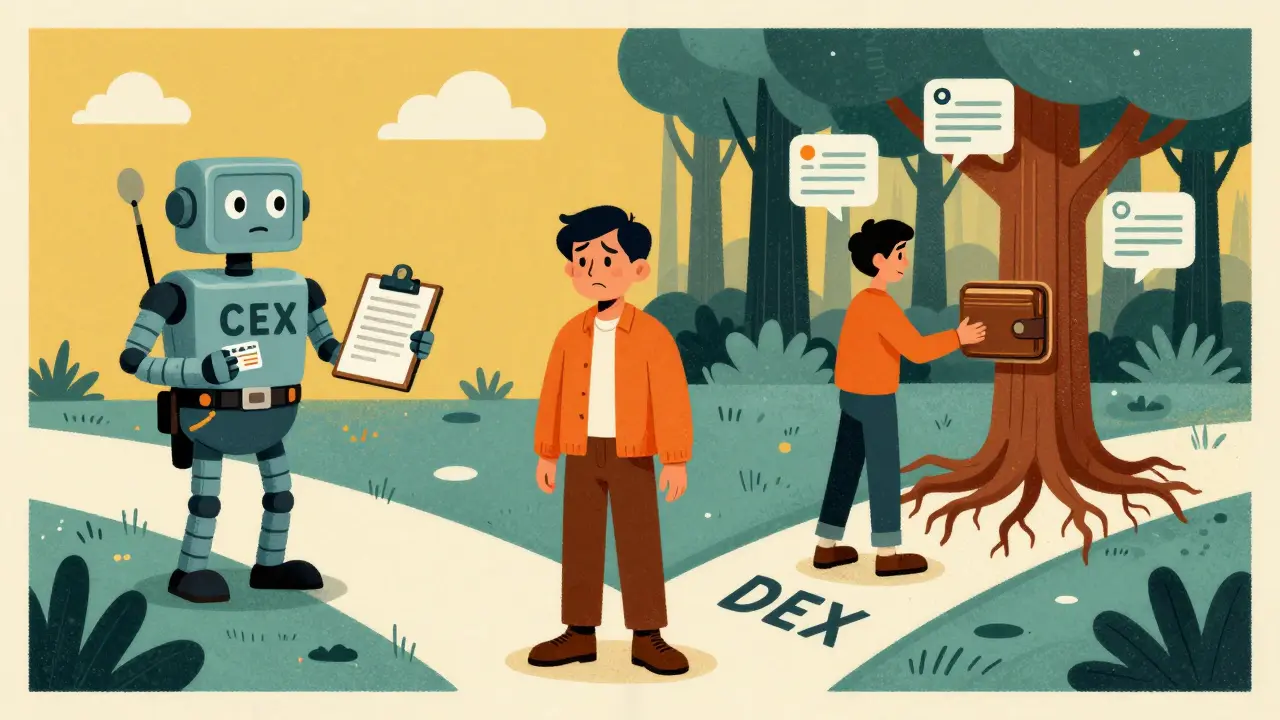
When you swap tokens, you aren't just trading with a person. The process depends entirely on the type of exchange you use. There are two main models: Centralized Exchanges (CEX) and Decentralized Exchanges (DEX).
Centralized Exchanges (CEX) act like traditional banks. You deposit funds into an account they control. When you click "swap," they match your order against other users' orders in their internal system. This happens instantly because the exchange holds your keys. Binance is the biggest player here, handling massive volumes daily. The trade-off? You must trust the company not to freeze your account or get hacked.
Decentralized Exchanges (DEX) work differently. They use smart contracts on blockchains. No company holds your money. You connect your own wallet, like MetaMask, and trade directly from liquidity pools provided by other users. Uniswap pioneered this model. It gives you full control but requires you to manage gas fees and understand blockchain mechanics.
| Feature | Centralized (e.g., Binance) | Decentralized (e.g., Uniswap) |
|---|---|---|
| Control of Funds | Exchange holds custody | You hold custody |
| KYC Required | Yes (ID verification) | No |
| Speed | Near-instant | 15-30 seconds (depends on network) |
| Fees | Trading fee only | Trading fee + Gas fees |
| Security Risk | Hack of exchange | Smart contract bugs / User error |
Top Platforms Reviewed
Not all swaps are created equal. Here is how the leading platforms perform based on 2025-2026 data.
Binance: The Speed Leader
If you prioritize speed and ease of use, Binance is hard to beat. It handles over $227 billion in daily volume. Their swap feature charges a low 0.02% maker fee. However, you must complete KYC (Know Your Customer) checks, which can take up to 72 hours. Users often complain about hidden fees on low-volume tokens, so always check the final quote before confirming.
Uniswap: The DeFi Standard
Uniswap leads the decentralized world with $4.2 billion in total value locked. It supports over 100,000 token pairs across multiple chains like Ethereum, Polygon, and Arbitrum. The latest version, Uniswap V4, uses advanced techniques to reduce costs. The downside? Gas fees on Ethereum can spike. If you swap during peak times, you might pay more in gas than the value of the transaction itself.
PancakeSwap: Low-Cost Alternative
Running on the BNB Smart Chain, PancakeSwap offers much lower fees than Ethereum-based swaps. Average transaction fees sit around $0.087. It’s ideal for smaller trades. However, it limits you mostly to the BNB ecosystem, so cross-chain swaps require extra steps.
GhostSwap: Cross-Chain Privacy
For those who hate KYC, GhostSwap is a rising star. It allows cross-chain swaps between 12 major blockchains without creating an account. It uses atomic swaps to ensure security, boasting a 99.98% success rate. It’s perfect for moving assets between different networks quickly, though regulatory scrutiny is increasing.
Fees and Hidden Costs
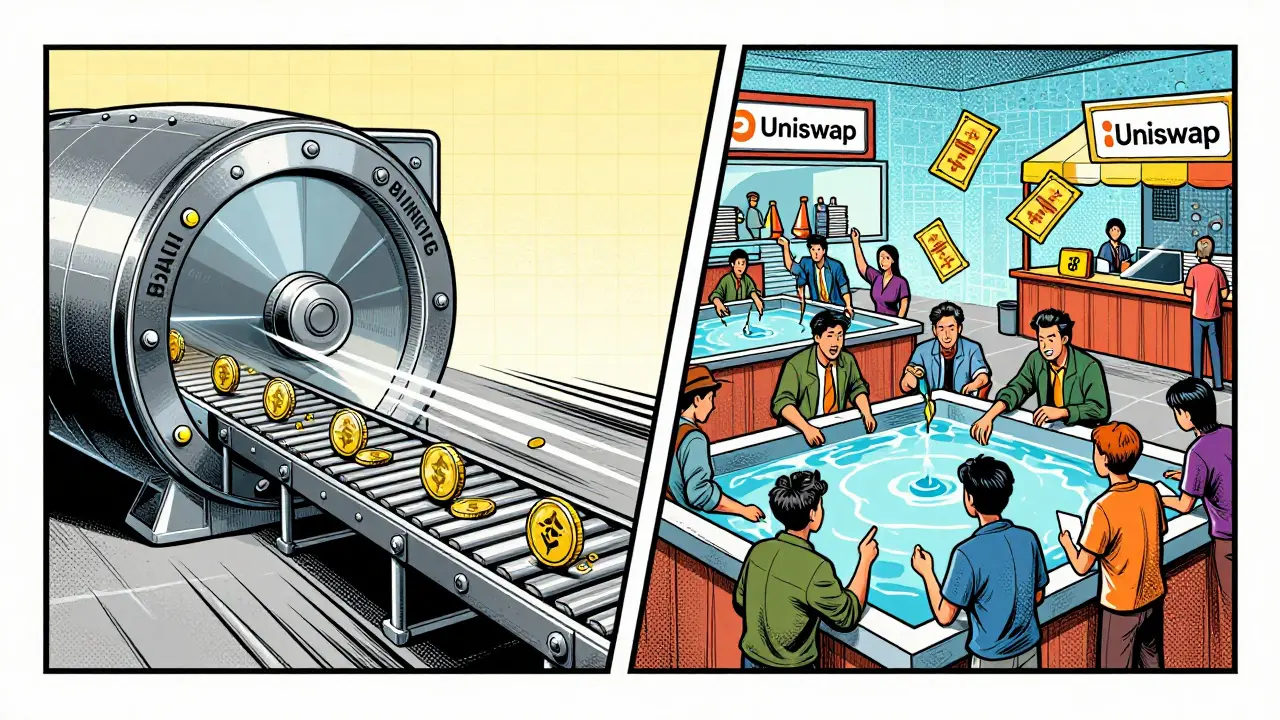
Fees are where most users lose money. There are three types of costs to watch:
- Trading Fees: The percentage charged by the platform. Binance charges ~0.1%, while DEXs vary from 0.05% to 0.3%.
- Gas Fees: Network processing costs. On Ethereum, this can range from $1 to $50 depending on congestion. On Polygon or BNB Chain, it’s usually under $0.10.
- Slippage: The difference between the expected price and the executed price. High slippage happens when there isn’t enough liquidity. For stablecoins, set slippage tolerance to 0.5%. For volatile tokens, 1-2% is safer.
A pro tip: Use aggregators like 1inch. They split your swap across multiple platforms to find the best rate, saving you money on both fees and slippage.
Security Risks You Must Know
Security is the biggest differentiator. According to Chainalysis, 92.7% of swap-related hacks in 2025 occurred on centralized exchanges due to large target sizes. DEXs have fewer hacks but face smart contract risks.
MEV Attacks: On DEXs, bots can detect your pending transaction and front-run it, costing users millions annually. Newer protocols like Uniswap V4 are adding protections against this.
Phishing: Always verify URLs. Fake sites mimic popular exchanges. Never share your seed phrase. If a site asks for your private key to "verify" your wallet, it is a scam.
Regulatory Landscape in 2026
The rules are tightening. The EU’s MiCA framework requires Travel Rule compliance by January 2026. This means many anonymous DEXs may struggle to operate legally in Europe. In the US, the SEC has charged several unregistered swap platforms. While this adds friction, it also increases safety for mainstream users. If you live in a regulated region, sticking to compliant CEXs like Binance or Coinbase may be safer long-term.
Which Platform Should You Choose?
Your choice depends on your priorities:
- Choose Binance if: You want instant execution, high liquidity, and don’t mind ID verification.
- Choose Uniswap if: You hold Ethereum or ERC-20 tokens and value self-custody.
- Choose PancakeSwap if: You want low fees and trade frequently with small amounts.
- Choose GhostSwap if: You need cross-chain swaps without KYC and trust atomic swap technology.
What is the safest way to swap crypto?
For maximum safety, use reputable centralized exchanges like Binance or Coinbase for fiat-onramps, and established DEXs like Uniswap for peer-to-peer trades. Always enable 2FA and never share your seed phrase. Avoid unknown platforms promising high yields.
Why are my DEX swap fees so high?
High fees on DEXs are usually due to Ethereum gas prices. If the network is congested, gas fees spike. To save money, swap during off-peak hours or use Layer 2 solutions like Arbitrum or Optimism, which offer cheaper transactions.
Do I need KYC to use Uniswap?
No. Uniswap is a decentralized protocol and does not require identity verification. You only need a compatible wallet like MetaMask. However, if you buy ETH on a CEX first, that initial purchase likely required KYC.
What is slippage in token swaps?
Slippage is the difference between the expected price and the actual execution price. It occurs when there isn’t enough liquidity in the pool. Setting a higher slippage tolerance ensures your trade goes through, but you might get a worse price.
Is GhostSwap safe for cross-chain swaps?
GhostSwap uses atomic swaps, which are cryptographically secure. It has a high success rate and no central custodian. However, always start with a small test transaction to verify the process works as expected for your specific asset pair.
