

Imagine buying a steak for dinner. You want to know it’s fresh, ethically sourced, and safe to eat. In the old days, you’d have to trust the label. Today, with supply chain blockchain is a distributed ledger technology that creates transparent, immutable records of transactions across complex supply networks, you can scan a QR code and see exactly where that cow was born, when it was processed, and the temperature it traveled at every step of the way.
This isn’t science fiction. It’s happening right now. Companies are moving away from paper trails and siloed databases because they don’t work well enough anymore. Fraud, delays, and lost inventory cost billions annually. Blockchain fixes this by creating a single source of truth that everyone in the network can see but no one can change without permission. Let’s look at how this works in practice, why it matters, and who is already using it.
How Blockchain Transforms Supply Chain Visibility
Traditional supply chains are like a game of telephone. A farmer sells to a processor, who sells to a distributor, who sells to a retailer. Each step involves paperwork, emails, and manual data entry. Errors happen. Data gets lost. When a problem arises-like a contamination scare-it takes weeks to figure out which batch is affected.
Blockchain changes the rules. It acts as a shared digital notebook. Every time a product moves, changes hands, or passes a quality check, that event is recorded on the ledger. Because the ledger is distributed, Maersk, IBM, Walmart, and their partners all see the same data simultaneously. This eliminates information silos. The core value here is immutability. Once a record is written, it cannot be altered. This builds trust between parties who might not otherwise trust each other.
The technology relies on three main mechanisms:
- Immutable Transaction Recording: Every movement is timestamped and locked into a block.
- Smart Contract Automation: Code executes automatically when conditions are met (e.g., payment releases upon delivery confirmation).
- Sensor Integration: IoT devices feed real-time data (temperature, humidity) directly onto the blockchain.
Cold Chain Monitoring: Saving Lives and Products
Some products are unforgiving. Vaccines, insulin, and certain foods spoil if the temperature fluctuates even slightly. This is known as cold chain management. Traditionally, companies relied on spot checks or basic loggers that could be tampered with. If a truck broke down for two hours, the driver might just reset the logger. With blockchain, that’s impossible.
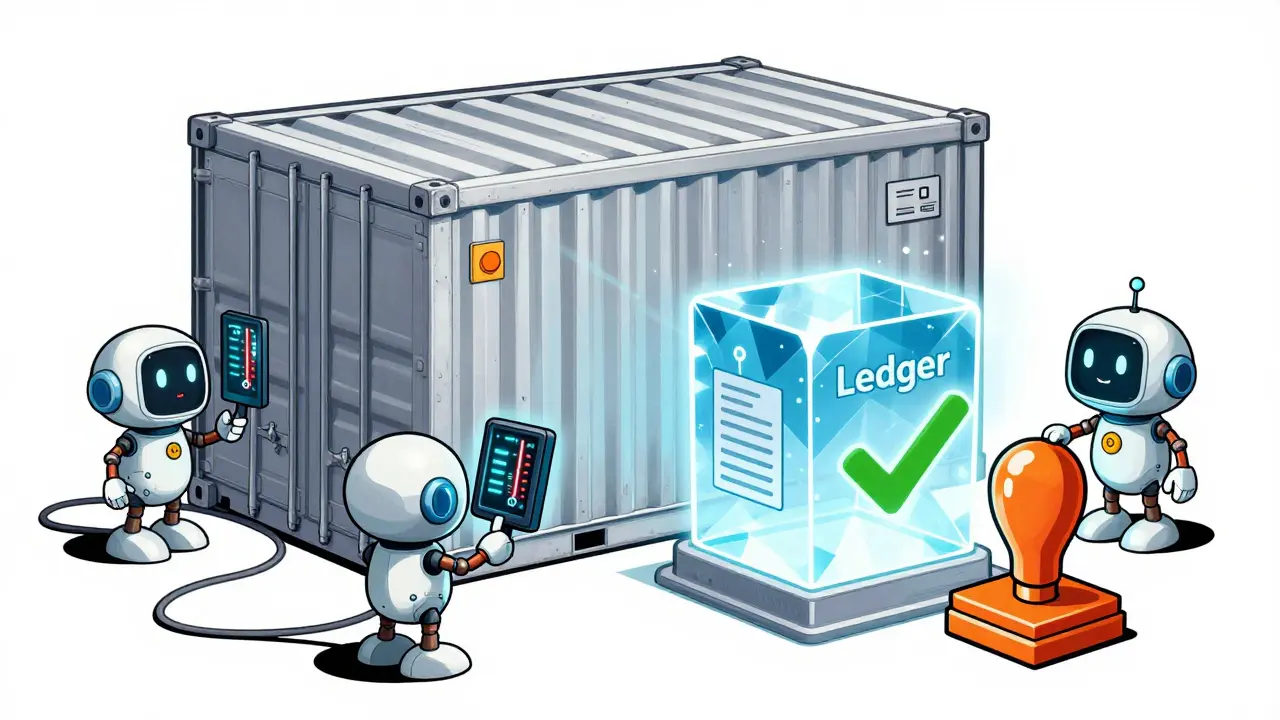
Sensors attached to shipping containers record temperature, humidity, and vibration continuously. This data streams directly to the blockchain. If the temperature rises above a set threshold, a smart contract triggers an alert instantly. All partners see the breach. The system can even automatically adjust storage conditions or flag the product as unfit for sale.
A critical example occurred during the COVID-19 pandemic. Moderna used blockchain systems to ensure its mRNA vaccines remained within strict -70°C requirements throughout their global journey. Without this level of precision and transparency, distributing such sensitive medical supplies at scale would have been nearly impossible. The blockchain provided proof that the vaccine stayed cold, building confidence among healthcare providers and patients alike.
Food Safety and Rapid Recalls
Food safety is perhaps the most dramatic use case. Before blockchain, tracing the source of contaminated food took an average of two months. That’s too long. People get sick, brands lose reputation, and waste increases because entire batches are thrown out rather than just the affected ones.
With blockchain, tracing defective products takes seconds. Walmart has prioritized these solutions to gain detailed insights into supply chain events. If E. coli is found in lettuce, Walmart can pinpoint exactly which farm supplied the bad batch. They can remove only those specific items from shelves while keeping safe produce available. This saves money and, more importantly, lives.
The efficiency gains are measurable. Tracifier, a German startup providing supply chain traceability solutions, achieved up to a 40% reduction in food processing costs for customers after integrating Oracle Blockchain into its database. By automating record-keeping and reducing administrative overhead, companies spend less time on paperwork and more time on quality control.
Provenance and Ethical Sourcing
Consumers care about where their products come from. Are diamonds conflict-free? Is cobalt mined without child labor? Is tuna caught sustainably? Proving these claims is hard without a reliable system.
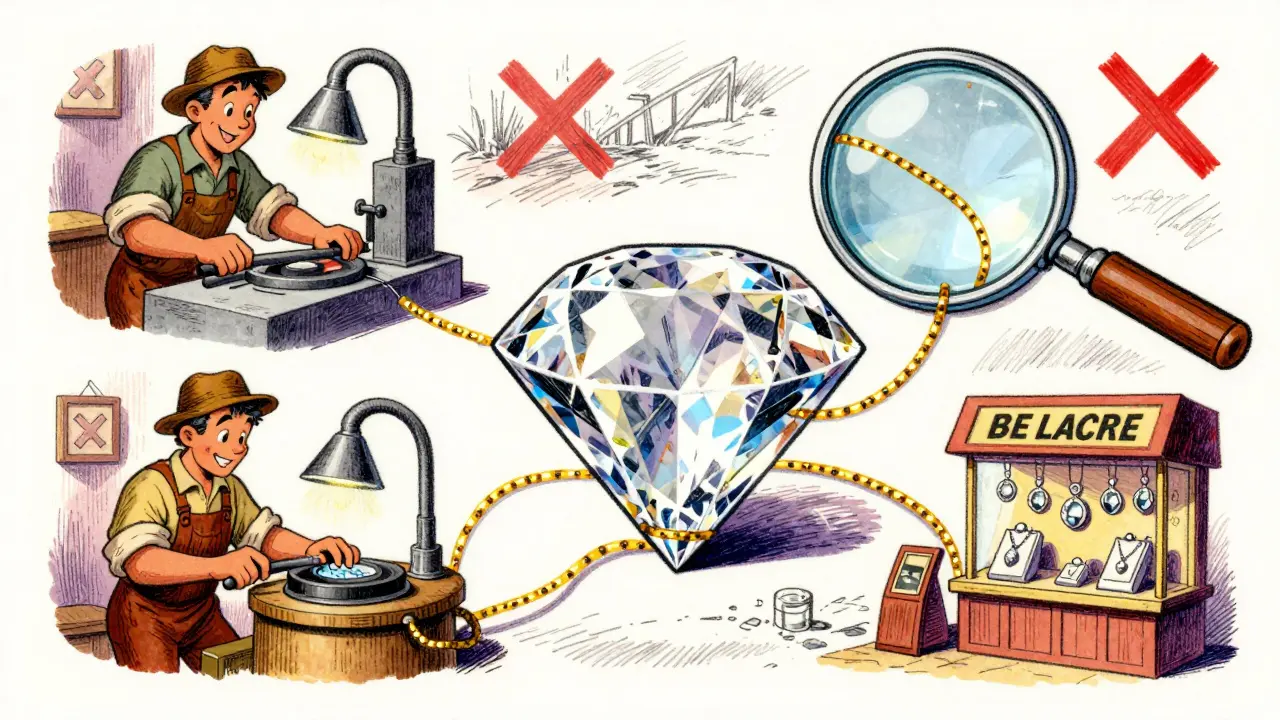
De Beers Group successfully tracked 100 high-value diamonds along its supply chain from mine to retail. This created unprecedented asset-traceability assurance. It solved two major issues: avoiding the trade of conflict diamonds and offering provenance trust for valuable polished stones. Buyers can verify the diamond’s journey, ensuring it wasn’t involved in funding violence.
In the automotive industry, Ford Motor Company announced in late January 2020 its use of blockchain technology to trace cobalt supplies for electric car batteries. Cobalt mining has faced severe human rights criticisms. By tracing the metal back to the source, Ford ensures authentic product quality maintenance and ethical compliance. This transparency protects the brand and meets growing regulatory demands for sustainable sourcing.
Logistics Efficiency and Dispute Resolution
Shipping is complex. Bills of lading, customs declarations, and insurance documents involve multiple parties. Disputes over damage or delay are common and costly. FedEx joined the Blockchain in Transport Alliance (BiTA) and launched a blockchain-powered pilot program to clarify data storage and streamline customer dispute resolution.
When all parties share the same data, disputes decrease. If a container arrives damaged, the blockchain shows exactly when and where the damage occurred. Was it during loading? While in transit? At the port? The evidence is undeniable. This speeds up insurance claims and reduces legal battles.
Abu Dhabi National Oil Company (ADNOC) launched a blockchain supply chain pilot program with IBM to track oil from well to customers while automating transactions. This reduces administrative bloat and speeds up payments. For smaller businesses, this access to decentralized financing platforms opens expansion opportunities previously excluded by traditional banks.
| Metric | Traditional System | Blockchain System |
|---|---|---|
| Traceability Time | Weeks to Months | Seconds to Minutes |
| Data Integrity | Prone to Human Error/Fraud | Immutable and Tamper-Proof |
| Cost Efficiency | High Administrative Overhead | Up to 40% Reduction in Processing Costs |
| Transparency | Siloed Information | Shared Real-Time Visibility |
| Payment Speed | Manual Invoicing (30-60 Days) | Automated Smart Contracts (Instant) |
Implementation Challenges and Considerations
Blockchain isn’t a magic wand. Implementing it requires effort. The learning curve involves understanding distributed ledger principles, smart contract development, and integration with existing enterprise resource planning (ERP) systems. Companies must invest in sensor technology for real-time monitoring, particularly for temperature-sensitive products.
Implementation timeframes vary. Simple traceability systems can be deployed within months. Comprehensive multi-partner networks require longer development periods because you need buy-in from suppliers, manufacturers, and distributors. Everyone must agree on standards. However, platforms like Oracle Blockchain provide ready-to-implement solutions that lower the barrier to entry.
Another consideration is scalability. Blockchains can slow down if they handle too many transactions per second. Solutions like Hyperledger Fabric allow private, permissioned blockchains that are faster and more efficient for enterprise use. Public blockchains like Ethereum are better for consumer-facing transparency but may lack the speed for high-volume logistics.
Future Trends: AI, IoT, and Tokenization
The future of supply chain blockchain lies in integration. Oracle identifies tokenization of goods as a key advancement. This means creating digital representations of physical assets. A pallet of goods becomes a token that can be traded, insured, or financed instantly. This creates faster transactions and greater liquidity.
Integration with Artificial Intelligence (AI) and Internet of Things (IoT) promises sophisticated analytics. AI can predict delays based on historical blockchain data. IoT sensors provide the raw data. Together, they enable predictive supply chain optimization. Instead of reacting to problems, companies can prevent them.
Decentralized financing will also grow. Smaller businesses often struggle to get loans because banks don’t trust their financial records. Blockchain provides transparent proof of sales and inventory. This allows lenders to offer credit based on real-time data, leveling the playing field.
What is the biggest benefit of using blockchain in supply chains?
The biggest benefit is transparency and trust. Blockchain creates an immutable record that all parties can access. This reduces fraud, speeds up recalls, and ensures ethical sourcing. For example, tracing food sources takes seconds instead of months.
Is blockchain only for large companies?
No. While large companies like Walmart and Maersk lead adoption, smaller businesses benefit too. Platforms like Oracle Blockchain offer scalable solutions. Additionally, blockchain enables decentralized financing, helping small businesses access capital by proving their transaction history transparently.
How does blockchain help with cold chain monitoring?
Sensors record temperature and humidity data directly onto the blockchain. If conditions deviate from safe levels, smart contracts trigger alerts instantly. This prevents spoiled goods from reaching consumers and provides proof of proper handling, crucial for vaccines and perishable foods.
Can blockchain stop counterfeit products?
Yes. By tracking products from raw material to end consumer, blockchain verifies authenticity. Consumers can scan QR codes to see the full history. This is widely used in luxury goods, pharmaceuticals, and electronics to combat counterfeiting.
What are the challenges of implementing supply chain blockchain?
Challenges include integration with legacy ERP systems, the need for industry-wide standardization, and initial investment in IoT sensors. Getting all supply chain partners to adopt the same platform can also be difficult, requiring strong leadership and collaboration.
