
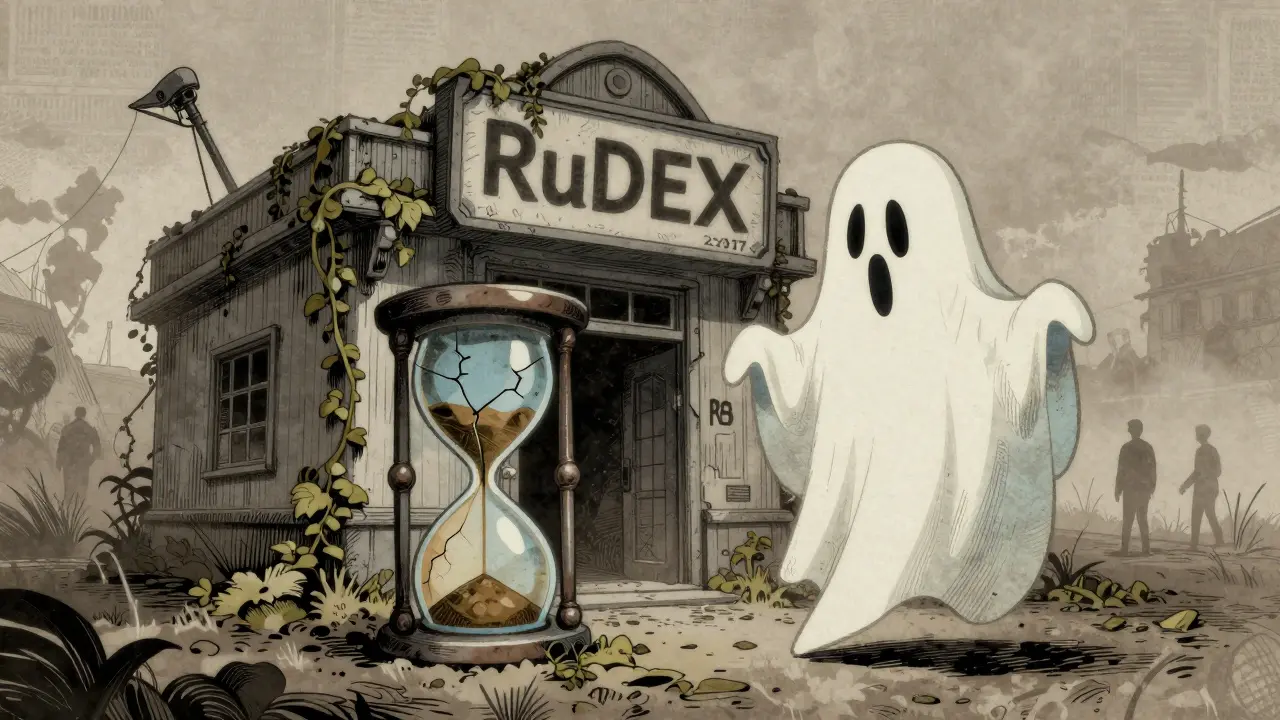
You might have stumbled upon RuDEX while searching for low-fee trading options, only to find a confusing mix of outdated reviews and a website that looks surprisingly modern. The question isn't just whether RuDEX is good-it's whether it still exists in the form you expect. For anyone holding cryptocurrency today, understanding what happened to this platform is critical before you even think about connecting your wallet.
The short answer? The original RuDEX centralized exchange is effectively dead. But the domain lives on as something entirely different. If you are looking to trade Bitcoin or Ethereum with a few clicks, you need to know exactly which version of RuDEX you are dealing with, because the risks and functionalities could not be more different.
What Actually Happened to RuDEX?
To understand where we stand in 2026, we have to look back at what RuDEX was. Launched in April 2017, RuDEX was originally a centralized cryptocurrency exchange based in Russia, built on the BitShares blockchain network. The name itself was a bit of a trick; "Ru" stood for Russia, and "DEX" implied a decentralized exchange, but it operated centrally. It targeted Russian clients primarily but welcomed global traders, including those from the U.S., during its peak years.
For a while, it had a unique selling point: incredibly low fees. While major competitors charged around 0.25% per trade, RuDEX offered rates as low as 0.05% for major pairs like Bitcoin (BTC) and Ethereum (ETH), and even 0.00% for some smaller altcoins. This attracted cost-conscious traders who already held crypto and wanted to move assets without paying hefty commissions.
However, the landscape changed rapidly. By March 2023, data aggregators like Cryptowisser flagged RuDEX as inactive. Why? Liquidity evaporated. On March 23, 2023, their 24-hour trading volume was recorded at a mere USD 1,196.71. To put that in perspective, major exchanges handle billions in daily volume. With less than $1,200 moving through the system in a day, executing an order became nearly impossible for anyone trying to trade more than a tiny fraction of a coin. Cryptowisser officially moved it to their "Exchange Graveyard," signaling that the platform was no longer viable for active trading.
The Pivot: From Exchange to Aggregator
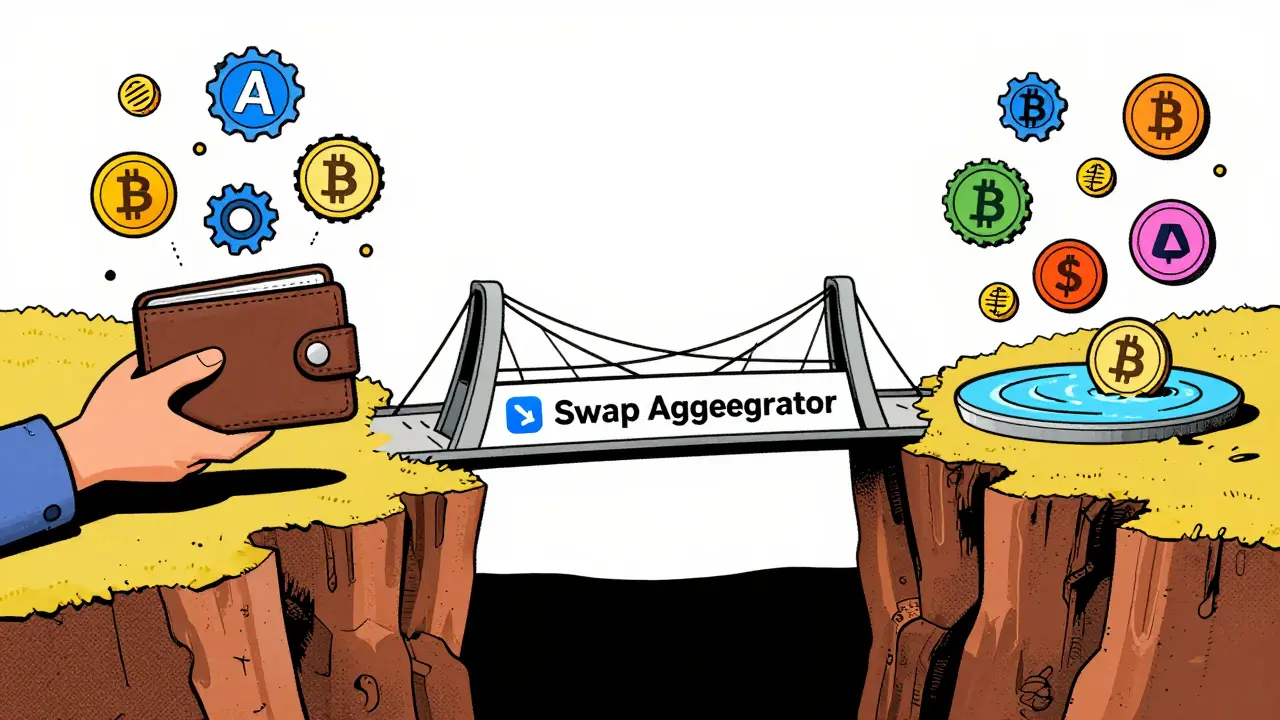
If you visit rudex.org today, you won't see the old order book interface. Instead, you'll find "RUDEX swap," described as an instant cryptocurrency exchange aggregator. This is a crucial distinction. The original platform allowed you to deposit funds, hold them, and trade against other users. The current site acts as a bridge, routing your swaps through various liquidity providers across the blockchain.
This pivot explains the confusion online. Old reviews talk about 14 supported coins and a confusing fee structure. Newer headlines mention swapping over 1,600 cryptocurrencies without registration. They are talking about two different products under the same brand umbrella.
| Feature | Original RuDEX (Pre-2023) | Current RUDEX Swap (2026) |
|---|---|---|
| Type | Centralized Exchange (CEX) | Decentralized Swap Aggregator |
| Custody | Platform held your funds | You keep control of your wallet |
| Fiat Support | None (Crypto-only) | None (Crypto-only) |
| Liquidity Source | Internal Order Book | External DEXs and Liquidity Pools |
| Status | Inactive / Defunct | Active Service |
The shift to an aggregator model removes the need for the platform to hold your money, which solves the liquidity crisis of the past. However, it introduces new variables regarding slippage and routing efficiency that you need to evaluate carefully.
Security and Trust: What You Need to Know
When evaluating any crypto service, especially one with a turbulent history, security is paramount. During its operational life, RuDEX implemented industry-standard encryption and multi-factor authentication (MFA). Users had to verify codes sent to email or mobile devices. That sounds solid on paper, but MFA doesn't protect you if the underlying business model collapses.
The lack of clear regulatory oversight was always a red flag. WikiBit noted that RuDEX's regulatory authority was never specified. In the crypto world, unregulated platforms carry higher risks of fraud or sudden shutdowns. The fact that the original exchange shut down quietly rather than through a formal bankruptcy process raises questions about how user assets were handled during the wind-down period.
For the current RUDEX swap service, the risk profile changes. Since it's a non-custodial aggregator, you aren't depositing funds into a company's wallet. You are signing transactions directly from your own wallet (like MetaMask or Trust Wallet). This reduces the risk of the platform stealing your holdings, but it does not eliminate the risk of smart contract vulnerabilities or malicious routing partners. Always check the transaction details before confirming a swap.
Why Liquidity Matters More Than Fees
RuDEX's downfall teaches a vital lesson for all traders: low fees mean nothing without liquidity. When RuDEX charged 0.05%, it looked unbeatable compared to Binance's 0.10%. But when there are no buyers or sellers on the other side of your trade, you face massive slippage. Slippage occurs when your order executes at a worse price than expected because the market can't absorb your trade size.
In 2023, with only $1,200 in daily volume, trying to sell even $100 worth of Bitcoin would have crashed the price significantly. Today, if you use an aggregator like RUDEX swap, you are relying on external liquidity pools. These pools are generally deeper than RuDEX's internal book ever was, but they are subject to network congestion and gas fees, particularly on networks like Ethereum.
Consider this scenario: You want to swap a niche altcoin for USDT. On a major exchange, you get an instant quote. On a thin order book like old RuDEX, you wait hours or accept a terrible price. On an aggregator, you get the best available rate from multiple sources, but you must pay attention to the "minimum received" amount to ensure the slippage isn't eating your profits.
Better Alternatives for 2026
Given RuDEX's history and current limitations, most traders are better served by established alternatives. Your choice depends on whether you prioritize ease of use, asset variety, or privacy.
- For Beginners (Fiat On-Ramps): Platforms like Coinbase or Kraken remain the gold standard. They support direct bank transfers, offer strong customer support, and are regulated in multiple jurisdictions. Yes, fees are higher, but you are paying for reliability and access to fiat currency.
- For Active Traders (High Volume): Binance and Bybit dominate the market with deep liquidity and advanced charting tools. Their fee structures are competitive, often lower than RuDEX ever was for high-volume traders, and they support hundreds of assets.
- For Decentralized Swaps: If you prefer non-custodial solutions like the new RUDEX swap, consider using Uniswap (for Ethereum-based tokens) or PancakeSwap (for BNB Chain). These protocols have transparent code, massive liquidity, and no single point of failure.
If you are specifically looking for Russian-friendly services due to geographic restrictions, note that many global exchanges have limited access for users in certain regions due to sanctions. In such cases, peer-to-peer (P2P) platforms like LocalBitcoins (or its successors) or localized exchanges may be necessary, though they come with their own set of counterparty risks.
Common Questions About RuDEX
I hear people ask similar questions whenever a legacy crypto brand resurfaces. Here are the most pressing concerns addressed clearly.
Is RuDEX still a working exchange in 2026?
The original centralized exchange is inactive and considered defunct since 2023. The domain now hosts "RUDEX swap," which is a decentralized aggregation tool for swapping tokens, not a traditional exchange where you deposit funds.
Can I withdraw my funds from the old RuDEX account?
If you have funds stuck in the old centralized exchange, recovery is highly unlikely. The platform has been marked as dead by major trackers, and there is no active customer support team to assist with withdrawals. Treat those funds as lost unless official communication from the operators provides otherwise.
Is RUDEX swap safe to use?
As a non-custodial aggregator, it is safer than the old exchange because you don't deposit funds. However, you should always verify the contract addresses and check the slippage tolerance before confirming transactions. Use reputable wallets and never share your seed phrase.
Why did RuDEX fail?
RuDEX failed primarily due to a lack of liquidity. Without enough buyers and sellers, trading became impractical. Additionally, the lack of fiat deposit options limited its user base, and the absence of clear regulatory oversight made institutional investors wary.
Does RuDEX support Bitcoin and Ethereum?
The current RUDEX swap service supports thousands of tokens, including BTC and ETH, by routing trades through various decentralized exchanges. However, you cannot buy these coins with cash; you must already have crypto to perform a swap.
Final Thoughts: Proceed with Caution
The story of RuDEX is a cautionary tale about the importance of liquidity and transparency in crypto. Low fees are attractive, but they are useless if you can't actually execute your trades. As you navigate the crypto markets in 2026, prioritize platforms with proven track records, clear regulatory standing, and deep liquidity.
If you decide to try the new RUDEX swap aggregator, treat it as a utility tool for specific token swaps, not as a primary place to store or trade your portfolio. Keep your main holdings on secure, well-established exchanges or in self-custody hardware wallets. Your financial safety depends on knowing where your money is-and ensuring the platform you use is actually alive.
