

For a few years, holding cryptocurrency in India felt like walking on eggshells. You could technically own Bitcoin or Ethereum, but getting your money in and out of an exchange was nearly impossible. Banks would freeze accounts, reject transfers, and treat digital assets like a dirty secret. That era ended abruptly on March 4, 2020, when the Supreme Court of India struck down the Reserve Bank of India's (RBI) blanket ban on banking services for crypto businesses. But what actually changed after that landmark decision? Did life return to normal, or did new hurdles replace old ones?
The 2018 Circular: When the Tap Was Turned Off
To understand why the reversal mattered so much, you have to look at how bad things got before it. On April 6, 2018, the Reserve Bank of India issued a circular that effectively killed the domestic crypto ecosystem overnight. The directive didn’t explicitly say "you cannot buy Bitcoin." Instead, it prohibited all entities regulated by the RBI-including nationalized banks, commercial banks, non-banking financial companies (NBFCs), and payment system operators-from dealing with or providing services to any person or entity involved with virtual currencies.
This was a masterstroke of regulatory strangulation. Cryptocurrency exchanges rely on traditional banking rails to move fiat currency (Indian Rupees) into their systems. Without bank accounts, exchanges couldn't process deposits or withdrawals. Many major platforms were forced to shut down their Indian operations entirely or relocate servers abroad, leaving users stranded with their funds. Peer-to-peer trading continued in the shadows, but the organized market evaporated.
The RBI’s justification centered on risk. They cited concerns about capital flight, potential misuse for illegal activities, and the volatility of digital assets. Former RBI Governor Shaktikanta Das later emphasized that the central bank viewed cryptocurrency as a threat to monetary sovereignty, arguing that widespread adoption could disrupt the rupee’s stability and alter exchange rates unpredictably.
The Supreme Court Verdict: A Win for Proportionality
The legal battle against this ban culminated in the case of Internet and Mobile Association of India v. Reserve Bank of India. On March 4, 2020, the Supreme Court delivered a unanimous verdict that overturned the 2018 circular. The court ruled that the RBI’s action violated Article 19(1)(g) of the Constitution of India, which guarantees the fundamental right to carry on any profession, trade, or business.
Justice Rohinton Fali Nariman, writing for the bench, focused heavily on the concept of proportionality. The court argued that while the RBI had legitimate concerns about protecting financial institutions, a complete ban was not the "least intrusive measure" available. Crucially, the RBI failed to demonstrate that any financial institution had suffered measurable damage from providing services to virtual currency exchanges. By failing to explore graduated responses-such as stricter KYC norms or monitoring-the regulator acted disproportionately, driving legitimate businesses out of existence without proper justification.
This judgment was more than just a victory for crypto traders; it established a significant legal precedent for financial regulation in India. It signaled that regulators must balance innovation with oversight rather than resorting to blunt prohibitions. For the first time since 2018, crypto exchanges could reopen their doors, resume banking relationships, and operate openly within the country.
Immediate Aftermath: The Market Comes Back to Life
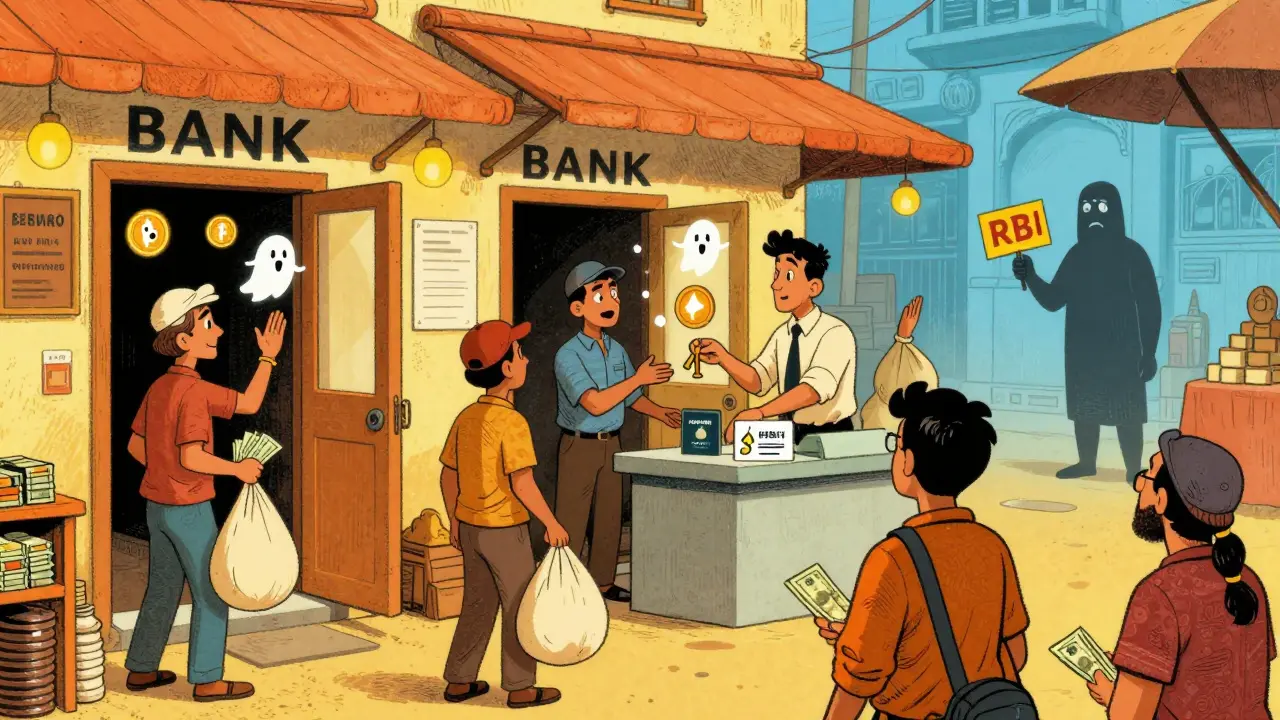
The response to the Supreme Court’s decision was immediate and explosive. Within weeks, major exchanges that had previously suspended Indian users resumed full functionality. Trading volumes surged as pent-up demand hit the market. Users who had been forced to use risky peer-to-peer methods or offshore platforms returned to regulated local exchanges. The sense of uncertainty began to lift, replaced by a cautious optimism that India’s crypto industry was here to stay.
However, the return of banking access did not mean the end of regulatory scrutiny. While the ban was lifted, the RBI maintained its skeptical stance. The central bank continued to warn citizens about the risks of investing in volatile assets. Banks, still wary of regulatory backlash, often applied extra layers of due diligence to transactions involving crypto exchanges. This created a friction-filled environment where access was restored, but trust remained fragile.
The Shift to Taxation: Regulating Without Banning
If the 2020 verdict opened the door, the government’s subsequent actions defined the room inside. Rather than re-imposing a ban, policymakers chose a different path: taxation. In the 2022 Union Budget, Finance Minister Nirmala Sitharaman introduced a comprehensive tax framework for Virtual Digital Assets (VDAs). This marked a pivotal shift in the regulatory landscape, acknowledging crypto as a taxable asset class while maintaining strict controls.
Under this framework, any income earned from the transfer of VDAs is taxed at a flat rate of 30%. There are no deductions allowed for expenses, meaning if you spend money on mining hardware, electricity, or trading fees, you cannot offset those costs against your gains. Additionally, a 1% Tax Deducted at Source (TDS) applies to transactions above certain thresholds. This TDS rule forces exchanges to report user activity directly to the Income Tax Department, creating a transparent trail for every transaction.
This approach solved one problem but created another. The high tax rate and lack of loss-adjustment made long-term holding less attractive for some investors, pushing many toward short-term speculation or offshore exchanges where these rules don’t apply. Yet, it also legitimized the industry. By taxing crypto, the government implicitly recognized its existence, moving away from the "ban and ignore" strategy of the past.

The Ghost of the 2021 Bill: Why No New Law Exists
Despite the clarity provided by taxation, a comprehensive legislative framework remains elusive. In 2021, the government drafted the Cryptocurrency and Regulation of Official Digital Currency Bill. This proposed legislation aimed to ban private cryptocurrencies entirely while paving the way for a Central Bank Digital Currency (CBDC) issued by the RBI. The bill sought to prohibit mining, generation, holding, and trading of private tokens, citing concerns over financial stability and energy consumption.
However, this draft bill was never formally introduced in Parliament. Industry lobbying, public outcry, and the practical difficulties of enforcement likely contributed to its shelving. As of 2025, the legal status of crypto remains governed primarily by the Supreme Court’s 2020 ruling and the tax laws introduced in 2022. This creates a unique hybrid environment: crypto is legal to hold and trade, but it lacks formal recognition as property or legal tender. You can’t use Bitcoin to pay for groceries, and you can’t claim it as collateral for a loan in most traditional banks.
Current Landscape: Opportunities Amidst Uncertainty
Today, the Indian crypto market operates in a state of controlled ambiguity. Exchanges function with banking access, albeit with occasional hiccups when individual banks decide to tighten their internal policies. The introduction of the Digital Rupee (e-Rupee), India’s CBDC, has added another layer to the conversation. While the e-Rupee aims to provide a stable, state-backed digital alternative, it does not replace private cryptocurrencies. Instead, it coexists with them, offering users a choice between sovereign-backed digital money and decentralized assets.
For investors, the key takeaway is that the days of outright bans are behind us. The Supreme Court’s emphasis on proportionality ensures that future regulations will likely focus on consumer protection, anti-money laundering measures, and tax compliance rather than prohibition. However, the high tax burden and regulatory gray areas mean that participants must remain vigilant. Staying compliant with TDS requirements and understanding the implications of the 30% tax slab is essential for anyone serious about navigating India’s evolving crypto landscape.
Is cryptocurrency legal in India after the RBI ban reversal?
Yes, cryptocurrency is legal in India following the Supreme Court’s 2020 verdict. While the RBI cannot ban banking services for crypto businesses, cryptocurrencies are not recognized as legal tender. You can legally buy, sell, and hold digital assets, but you cannot use them to pay for goods or services in place of the Indian Rupee.
What happened to the 2018 RBI circular banning crypto?
The Supreme Court of India struck down the 2018 RBI circular in March 2020. The court ruled that the ban violated the fundamental right to carry on any profession or business and failed the test of proportionality. Consequently, banks and financial institutions are once again allowed to provide services to cryptocurrency exchanges and users.
How is cryptocurrency taxed in India currently?
As per the 2022 Union Budget, income from the transfer of Virtual Digital Assets (VDAs) is taxed at a flat rate of 30%. No deductions are allowed for expenses or losses. Additionally, a 1% Tax Deducted at Source (TDS) is applicable on transactions exceeding specified thresholds, ensuring transparency with the Income Tax Department.
Did the government pass the 2021 crypto ban bill?
No, the draft bill titled 'Cryptocurrency and Regulation of Official Digital Currency Bill' was never formally introduced in Parliament. Although it proposed banning private cryptocurrencies, it was shelved. Currently, the regulatory framework relies on the Supreme Court’s 2020 judgment and existing tax laws.
Can I use Bitcoin to pay for purchases in India?
No, cryptocurrencies are not legal tender in India. While you can trade and invest in them, merchants and service providers are not obligated to accept them as payment. The Indian Rupee remains the sole official currency for settling debts and transactions.

Jan Gilmore
May 7, 2026 AT 04:43Let's be real here, the Supreme Court didn't just save crypto, they saved common sense from a bunch of bureaucrats who think they can stop technology with a piece of paper. The RBI was acting like they were guarding the gates of heaven instead of managing a central bank. You don't ban innovation because you're scared of it, you regulate it. That's basic economics 101.
Kiran CS
May 7, 2026 AT 23:42Oh, please. Spare me the naive optimism. The 'victory' you speak of is merely a temporary reprieve before the state inevitably reasserts its control through taxation and suffocation. The 30% tax is not regulation; it is confiscation disguised as policy. One must look beyond the superficial legalities to see the grim reality of financial servitude.
robert Whitehead
May 8, 2026 AT 07:31The problem isn't the tax, it's the moral decay inherent in speculative gambling. People treat this like an investment when it's essentially digital lottery tickets funded by retail ignorance. The TDS mechanism is actually brilliant because it forces transparency on people who want to hide their illicit gains. If you have nothing to hide, why do you care about the trail?
Sheldon Friesen
May 9, 2026 AT 05:56I mean, honestly? Who knew that paying taxes could be so... complicated?! The 1% TDS is a nightmare for high-frequency traders! It’s absolutely ridiculous how much friction has been added to the system! But hey, at least we aren’t banned entirely! Isn’t that something?! We should all be grateful we can still lose money legally!
Caique Muniz
May 11, 2026 AT 05:27lol another article explaining stuff we already know. the whole "proportionality" argument is just lawyers talking in circles. banks are still scared stiff and will freeze your account if you sneeze wrong. i tried withdrawing last month and got called three times by compliance officers asking if i was involved in terrorism. nice try india.
Mike S
May 12, 2026 AT 05:38Dramatic indeed. The entire ecosystem is built on sand. You think the Supreme Court ruling protects you? It protects the *right* to trade, not the right to keep your money safe from regulatory overreach. The moment the market dips, watch how fast the banks pull the plug. It’s always business until it’s not.
Samara McCallum
May 12, 2026 AT 11:01i feel like we are missing the point here. it is not about the money or the laws really. it is about freedom. the fact that you can hold value outside the system is beautiful. even if they tax it heavily. the spirit remains unbroken. lets just breathe and enjoy the chaos
H F
May 14, 2026 AT 10:01Bloody hell, reading through this makes my head spin! But seriously, it’s a massive win for us Brits watching from afar too. Shows that even big governments can’t stifle what people want. Just wish the UK wasn’t such a bureaucratic nightmare compared to this progress!
Gavin Wonnacott
May 16, 2026 AT 00:36You people are deluded. The RBI knows exactly what it's doing. They let you play with your toys while they build the CBDC trap. The Digital Rupee isn't a choice; it's a leash. Once they get everyone used to digital payments, they'll turn off the private crypto spigot overnight. Wake up.
Bijan Das
May 16, 2026 AT 10:27simple truth is no one cares about your philosophy. the government wants your money. the 30% tax is theft. plain and simple. and yet you guys keep buying. stupid.
Tricia Alach
May 16, 2026 AT 16:01i think its great that the court stepped in. its hard to imagine life without being able to move money freely. the banking restrictions were so stressful back then. now we just have to deal with the tax man which is also annoying but at least we can trade. hope things get clearer soon tho
Michael Berggren
May 17, 2026 AT 21:02Look on the bright side! 🌟 At least we have clarity now. The 30% tax is steep, sure, but it legitimizes the space. Plus, emojis make everything better, right? 😊 Let's embrace the future of finance together! 🚀💸
Ashley Rodriguez
May 19, 2026 AT 17:01i mean i get why people are upset about the taxes but honestly it is kind of inevitable once something becomes popular enough to matter to the government. they have to find a way to capture some value from it otherwise why would they allow it at all. it is just the natural order of things i suppose and we just have to adapt to it as best we can
Bridget Coogle
May 21, 2026 AT 07:26let's stay positive. change is hard but this is progress. we are learning together
Zara Zaman
May 21, 2026 AT 20:20India needs to stop relying on foreign tech narratives. This crypto craze is imported nonsense. Focus on domestic stability. The RBI was right to be cautious. Foreign influence is dangerous.
Larry Port
May 23, 2026 AT 10:21I'm curious about the long term effects of the TDS rule. Does it actually help the IT department track down evaders or does it just create more paperwork for honest users? I wonder if there is data on this yet.
Bradley Geldenhuys
May 24, 2026 AT 07:20look man i get it its tough but u gotta fight for ur rights. the system is rigged but we can still win small battles. dont let them grind u down. keep hodling and keep speaking out. its the only way to change things. peace.