
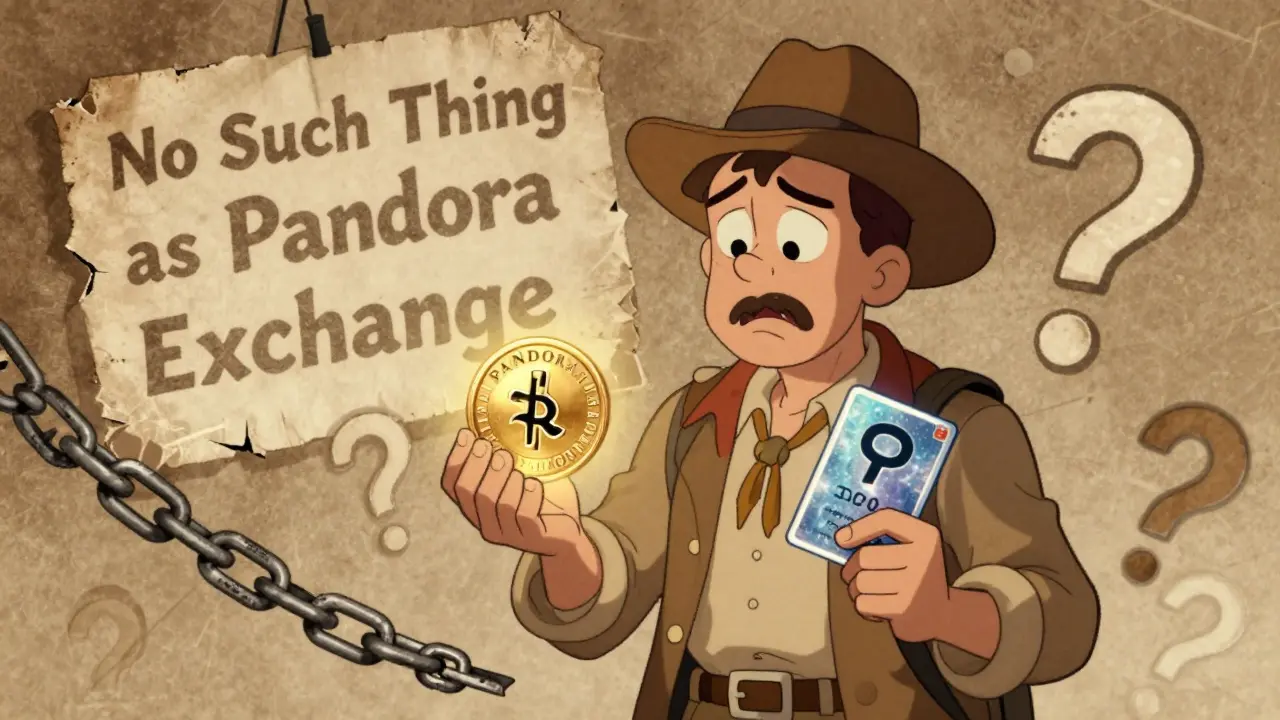
There is no such thing as a "Pandora crypto exchange." That name doesn’t exist anywhere in the crypto world. If you’re searching for it, you’ve likely been misled by confusing search results or misleading blog posts. What people actually mean when they say "Pandora crypto" is the PANDORA token - an experimental hybrid cryptocurrency that blends features of both tokens and NFTs. It’s not an exchange. It’s a token. And understanding it means cutting through the noise.
What is the PANDORA token?
PANDORA is an ERC404 token built on the Ethereum blockchain. ERC404 isn’t an official Ethereum standard like ERC20 or ERC721 - it’s an experimental hybrid that tries to combine both. Every time you buy one PANDORA token, you automatically get a unique NFT attached to it. Think of it like buying a digital collectible card that also acts as a tradable currency. The token itself can be sent, traded, or sold like any other ERC20 coin. But the NFT? That’s where the rarity and collectibility come in.
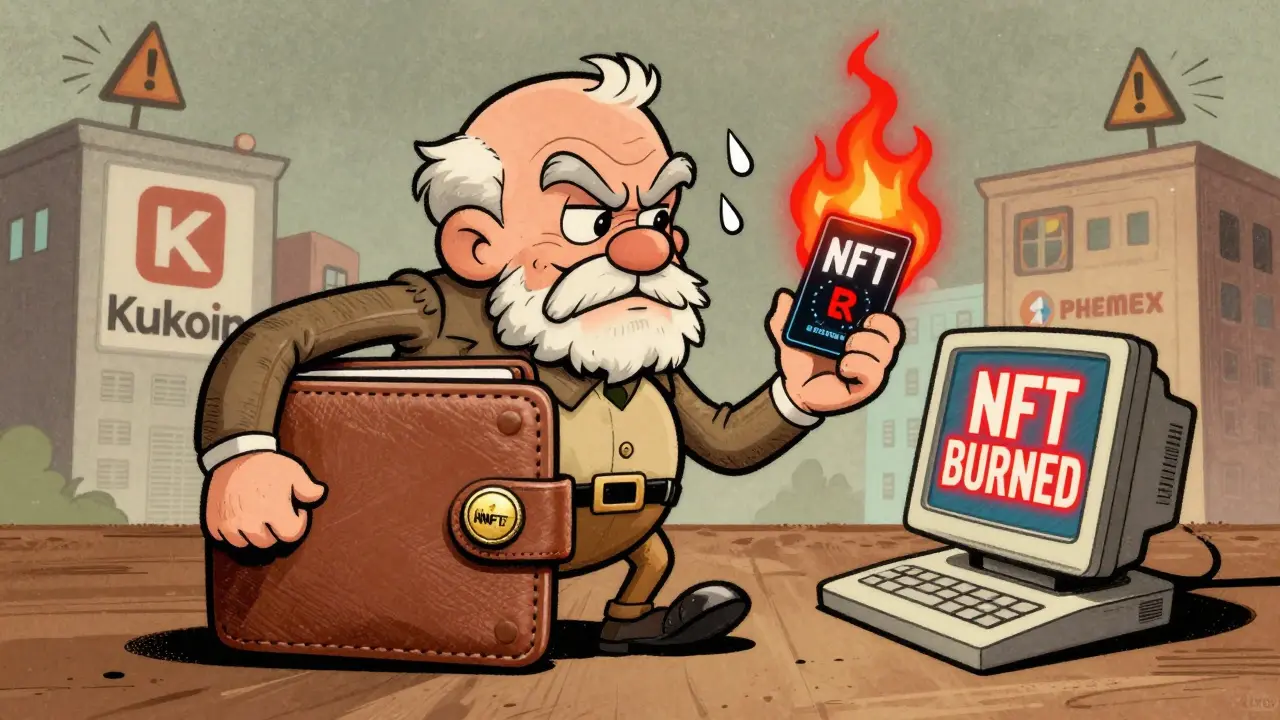
There are only 10,000 PANDORA tokens total. Of those, 8,500 are available to the public. The rest are reserved for development. Each token comes with a randomly assigned NFT rarity level: common (75% chance), rare (20%), epic (4.9%), and legendary (0.1%). If you sell your PANDORA token, the NFT burns with it. That’s intentional - it creates scarcity and deflationary pressure on the NFT side of the ecosystem.
Where can you buy PANDORA?
You won’t find PANDORA on Coinbase, Binance, or Kraken. It’s only listed on a handful of smaller exchanges. As of mid-2025, it’s available on seven platforms, with KuCoin and Phemex being the two most active. KuCoin launched it first in March 2024 and still handles the majority of trading volume. Phemex followed shortly after and has since improved its documentation, earning higher user satisfaction scores for PANDORA support.
Trading pairs are limited: 82% of trades happen against ETH, and 18% against USDT. There’s no direct fiat on-ramp for PANDORA. You need to first buy ETH or USDT on a major exchange, transfer it to KuCoin or Phemex, then trade for PANDORA. No wallet can hold PANDORA unless it supports both ERC20 and ERC721 standards. MetaMask version 10.18.0 or higher is the minimum requirement. Hardware wallets like the Ledger Nano X (firmware 2.3.0+) are recommended for security, but even they require manual setup to display the NFT component correctly.
How does it work technically?
The magic - and the risk - of PANDORA lies in its dual-component system. Every token transaction triggers two processes: the transfer of the ERC20 token and the minting or burning of the ERC721 NFT. This synchronization happens automatically but isn’t flawless. During periods of high Ethereum congestion, the NFT and token balances can temporarily desync. In March 2024, researcher Alex Kim documented three critical bugs in early ERC404 contracts, including cases where users lost track of their NFTs after selling tokens.
Transaction times are slower than normal. While a standard Ethereum transfer takes about 14 seconds, a PANDORA transaction averages 28.7 seconds because the system must verify both components. Gas fees are higher too, since you’re essentially executing two smart contract actions at once. And if you migrate your wallet or switch platforms, you might lose access to your NFT unless you manually track and re-link it - a process that’s poorly documented.
Is it secure?
Security is the biggest concern. The ERC404 standard has never been audited by the Ethereum Foundation. In fact, as of May 2025, they publicly stated they won’t endorse it until major security flaws are fixed. That’s a red flag. The token’s attack surface is 37% larger than traditional ERC20 tokens, according to Arkose Labs’ May 2024 report, because of the added NFT synchronization layer.
After the Bybit hack in February 2025 - which stole $1.5 billion in ETH - regulators and researchers turned a sharper eye on experimental tokens like PANDORA. Exchanges responded. KuCoin and Phemex added mandatory confirmation screens that show both your token balance and NFT status before you confirm any trade. That’s a good step, but it doesn’t eliminate risk. If you’re not careful, you could sell your token and accidentally burn your rare NFT without realizing it.
Who is it for?
PANDORA isn’t for beginners. It’s not for long-term HODLers looking for stable growth. It’s for a very specific group: crypto collectors who want liquidity. If you like owning rare NFTs but hate how hard they are to sell, PANDORA gives you a way out. You can sell your token on an exchange for ETH or USDT - no need to wait for a buyer on OpenSea or Blur.
Some users have seen massive returns. One Reddit user bought five PANDORA tokens in April 2024 and got a legendary NFT. That NFT later sold for 220% more on Blur, while the token itself rose 85%. But those stories are outliers. Most users report confusion. On Trustpilot, 32% of KuCoin reviews mentioning PANDORA called the process "confusing" or "frustrating." One user on Phemex’s forum lost access to their NFT after selling tokens too quickly - they didn’t know the NFT burned with the sale.
Successful users spend hours learning. KuCoin’s support team says it takes most people 4 to 6 hours to fully understand how to manage both the token and NFT. Tools like NFTBank.io help track holdings, but even those have limitations. The documentation is scattered. The interface is clunky. And there’s no customer support team that truly understands the token’s quirks.
Market performance and future outlook
As of May 2025, PANDORA trades at an average of $2.3 million daily. That’s small compared to top coins, but it’s grown 23x since January 2024. The token trades at a 3.2x premium over similar experimental tokens because of its dual structure. But 78% of that volume comes from just 15 wallets holding over 100 tokens each. That means it’s dominated by whales. Price swings are extreme. A single large sale can drop the price 20% in minutes.
Regulators are watching. The SEC’s April 2024 guidance flagged hybrid tokens like PANDORA as potential investment contracts - meaning they could be classified as securities. That could shut down trading on U.S.-based exchanges entirely. Gartner’s June 2025 forecast predicts only 15% of experimental token standards like ERC404 will survive past 2026. Without official Ethereum Foundation backing, PANDORA’s long-term future looks uncertain.
Should you buy PANDORA?
Only if you understand the risks - and you’re okay with treating it like a high-risk gamble. It’s not an investment. It’s a speculative experiment. You’re betting that the NFT market will keep growing, that the token’s liquidity will hold, and that the smart contract won’t break. You’re also betting that exchanges won’t delist it, and that regulators won’t shut it down.
If you’re curious, start small. Buy one token. Learn how the NFT appears in your wallet. Test selling it. See how the process works. Don’t invest more than you’re willing to lose. And never trust a YouTube video or TikTok influencer who says "Pandora is the next Bitcoin." That’s not true. It’s not even close.
PANDORA is a fascinating technical experiment. But it’s not a product. It’s a prototype. And prototypes break.
Is there a crypto exchange called Pandora?
No, there is no crypto exchange named Pandora. The term "Pandora crypto exchange" is a common misconception. People mean the PANDORA token, which is traded on existing exchanges like KuCoin and Phemex. There is no platform called "Pandora Exchange."
What is the ERC404 standard?
ERC404 is an experimental token standard that combines ERC20 (fungible tokens) and ERC721 (NFTs). Each token purchase automatically mints a unique NFT. It’s not an official Ethereum standard and has not been audited or endorsed by the Ethereum Foundation. It’s still in early testing and carries significant technical risks.
Can I store PANDORA in any wallet?
No. You need a wallet that supports both ERC20 and ERC721 standards. MetaMask version 10.18.0 or higher works, but you must manually enable NFT display. Hardware wallets like Ledger Nano X (firmware 2.3.0+) are recommended, but even they require extra setup to show the NFT component correctly. Standard wallets like Coinbase Wallet or Trust Wallet may not display your NFTs at all.
What happens if I sell my PANDORA token?
When you sell your PANDORA token, the associated NFT is automatically burned. You lose ownership of that unique digital collectible. Some users accidentally sell their legendary NFTs without realizing this. Always check the exchange’s confirmation screen - it should show both token and NFT details before you confirm the trade.
Is PANDORA a good investment?
It’s not an investment - it’s a high-risk speculative bet. The token’s value depends on NFT demand, exchange liquidity, and whether regulators allow it to continue. It’s dominated by whales, has no official backing, and could be delisted or banned at any time. Only consider it if you’re treating it like a collectible with liquidity, not a long-term asset.
Why is PANDORA so hard to use?
Because it’s a hybrid system that doesn’t yet have user-friendly tools. You have to manage two assets (token + NFT) with different rules. Wallets don’t display them clearly. Documentation is poor. Support teams often don’t understand the token’s mechanics. Most users spend 4-6 hours learning how to use it properly - compared to 1-2 hours for regular tokens.
Will PANDORA survive in 2026?
According to Gartner’s June 2025 forecast, only 15% of experimental token standards like ERC404 will survive beyond 2026. PANDORA’s future depends on Ethereum Foundation endorsement, regulatory clarity, and improved tooling. Without those, it’s likely to fade into obscurity. Treat it as a short-term experiment, not a long-term holding.

MOHAN KUMAR
January 20, 2026 AT 21:06PANDORA is just a gimmick. Two standards fused together? That’s asking for trouble. Gas fees double, wallets break, and you lose your NFT by accident. No audit? No official backing? Why are people even trading this?
Arielle Hernandez
January 20, 2026 AT 23:03While I appreciate the technical ambition behind ERC404, the operational fragility is alarming. The lack of standardized wallet integration, combined with the irreversible burning mechanism, introduces unacceptable user-experience risks. This is not innovation-it’s premature exposure of an unvetted protocol to retail investors who lack the technical literacy to navigate its pitfalls.
Paru Somashekar
January 21, 2026 AT 20:01Just a heads up-make sure your MetaMask is updated to 10.18.0 or higher. I lost my rare NFT once because I didn’t enable NFT display manually. 😅 Always check the confirmation screen before selling. Trust me, you don’t want to burn your legendary card by accident!
Jeffrey Dufoe
January 22, 2026 AT 19:54I bought one just to see how it works. Took me 5 hours to figure out the wallet thing. It’s confusing but kinda cool if you’re into collectibles. Still, I wouldn’t put more than $50 in it.
Julene Soria Marqués
January 23, 2026 AT 21:33So you’re telling me people are spending hours learning this… just to lose their NFTs? 😂 I mean, I get it’s experimental, but isn’t there a simpler way to make digital collectibles liquid? Like… I don’t know… just make an NFT marketplace that actually works? Why invent a broken hybrid?
Bonnie Sands
January 25, 2026 AT 18:52Anyone else think this is a Fed-backed experiment to track crypto ownership? ERC404 is too convenient for surveillance-burning NFTs on sale? That’s not security, that’s control. And why is KuCoin the only one pushing this? Coincidence? I think not. The SEC’s already watching. This is a trap.
Abdulahi Oluwasegun Fagbayi
January 27, 2026 AT 00:37Prototypes break yes but sometimes they break beautifully. PANDORA is like a child learning to walk-stumbles, falls, but still moving. The fact that it exists at all is a win. The real question isn’t whether it works now but whether it teaches us something for the next version
Steve Fennell
January 27, 2026 AT 17:22Just want to say thank you to everyone who’s shared their experiences here. I was about to dump $2k into this until I read about the NFT burn risk. Now I’m just holding one token to test it. Smart move. 🙏
Heather Crane
January 29, 2026 AT 14:05I love how this forces people to really understand what they’re buying-not just another coin, but a story, a rarity, a digital artifact with real emotional weight! Yes, it’s messy, yes, it’s risky-but isn’t that what makes crypto exciting? Let’s not kill innovation because it’s inconvenient! 💪✨
Catherine Hays
January 30, 2026 AT 03:13People are treating this like a lottery ticket and acting surprised when they lose. ERC404 is a scam dressed up as innovation. No audit. No transparency. Just hype. And you wonder why crypto gets a bad name?
Nathan Drake
January 31, 2026 AT 18:17If a token requires six hours of study just to avoid losing your assets… is it really meant for the public? Or is it a private experiment disguised as a public product? The line blurs when usability is sacrificed for theoretical elegance
Chidimma Catherine
February 2, 2026 AT 11:47So I bought 3 PANDORA tokens last month and still cant see my NFT on my wallet even after following all steps. I think its the firmware on my Ledger. But I love the idea so much I dont care. Maybe its not for everyone but its for me. And I think more people should try it with small amounts. We need more experiments like this
Adam Fularz
February 2, 2026 AT 16:37ERC404? More like ERC-FAIL. Who even came up with this? It’s like building a car that needs two keys and a manual from 1987. And now people are throwing money at it? I’m not even mad. I’m just impressed by how bad this is.
Jennifer Duke
February 3, 2026 AT 22:59It’s fascinating how Americans treat this like some revolutionary breakthrough while the rest of the world watches in silence. We’ve had NFT marketplaces for years. We don’t need a broken hybrid standard to make collectibles liquid. This is American overengineering at its finest-complex, inefficient, and full of hubris.
HARSHA NAVALKAR
February 4, 2026 AT 20:10...I read all of this... and I still don't know if I should buy one...