
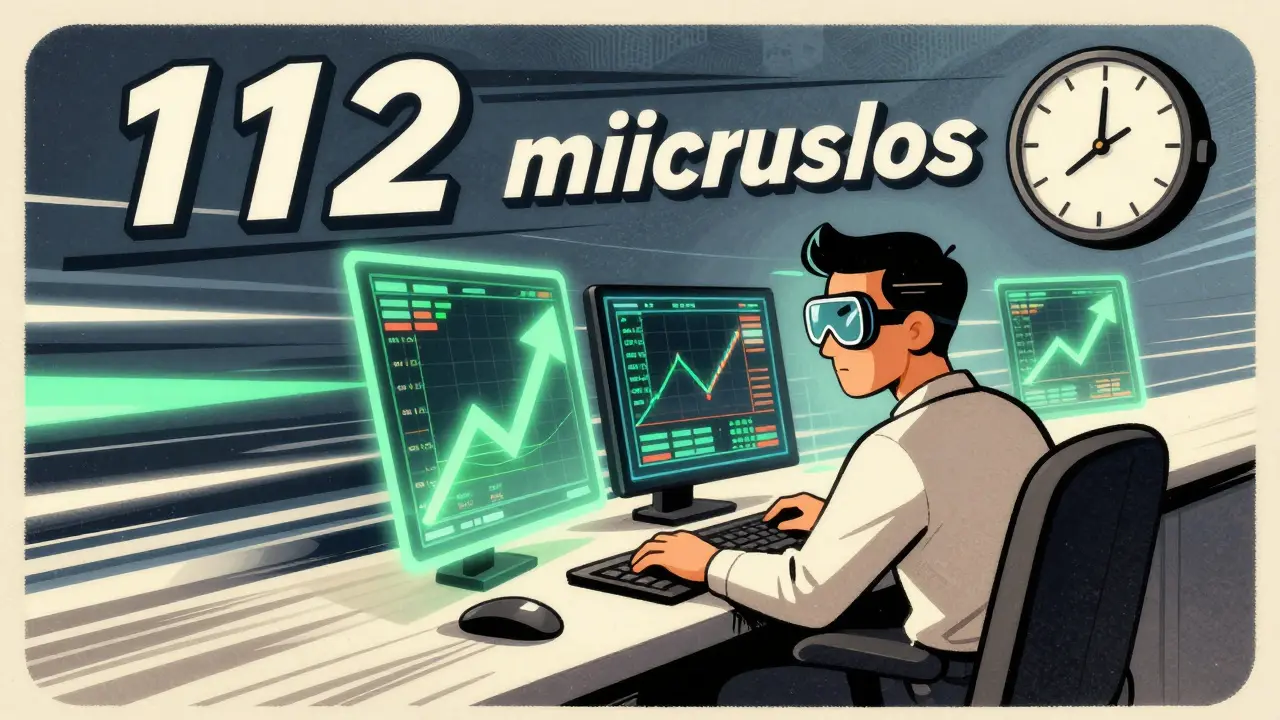
Imagine placing a trade and seeing it execute before you’ve even finished blinking. That is the promise of One Trading, a cryptocurrency exchange that claims to be the fastest in the world with an average end-to-end execution time of just 112 microseconds. For context, traditional financial markets often operate around 126 microseconds. The platform also touts "commission-free" trading, a feature that sounds too good to be true in an industry where fees usually eat into profits. But does this speed actually matter for you? And more importantly, is it safe?
In the crowded world of crypto exchanges, most platforms compete on security, coin variety, or user-friendly apps. One Trading takes a different route, focusing almost entirely on raw technical performance. This review breaks down what we know about the platform, who it is actually built for, and whether the lack of transparency raises red flags you should worry about.
The Speed Claim: What 112 Microseconds Actually Means
To understand One Trading’s value proposition, you have to look at the numbers. The company states its infrastructure achieves an average execution speed of 112 microseconds. A microsecond is one-millionth of a second. If you are a casual investor buying Bitcoin once a month, this speed difference is invisible to you. However, if you are running algorithmic trading bots or engaging in high-frequency trading (HFT), milliseconds can mean the difference between profit and loss.
This technology targets a very specific group: professional traders, market makers, and quantitative analysts. These users rely on ultra-low latency to exploit tiny price discrepancies across markets. One Trading positions itself as a "game-changing" venue for these strategies by removing the lag that plagues slower networks. They claim their system is faster than some traditional stock exchanges, which is a bold statement given how optimized those legacy systems are.
However, speed alone does not make a great exchange. In fact, prioritizing speed over other factors can sometimes lead to compromises in liquidity or security. We need to look closer at how this speed translates to real-world usability.
The "Free Trading" Model: Where Is the Catch?
One Trading’s second major selling point is commission-free trading. Most centralized exchanges charge between 0.1% and 1% per transaction. For a high-volume trader, these fees add up quickly. Removing them entirely seems like a dream scenario. But in business, someone always pays the cost.
If One Trading isn’t charging trading fees, how do they make money? The available information does not clearly explain their revenue model. Common alternatives include:
- Spread Markups: The difference between the buy and sell price might be wider than on other platforms, effectively hiding the fee.
- Data Sales: Selling order flow data to market makers or hedge funds.
- Premium Services: Charging for API access, advanced charting tools, or institutional-grade support.
- Token Ecosystem: Issuing a native token that grants benefits, encouraging users to buy and hold it.
Without clear disclosure, this opacity is a concern. Established exchanges like Binance or Coinbase are transparent about their fee structures because trust is their currency. When a new platform hides its monetization strategy, users should proceed with caution. You need to ask yourself: if I’m not paying the fee, am I the product?
Security and Transparency: The Missing Pieces
When evaluating any crypto exchange, security is non-negotiable. The history of the industry is littered with warnings from platforms that promised innovation but failed to protect user funds. Major exchanges invest heavily in cold storage, multi-factor authentication (MFA), withdrawal whitelists, and regular third-party security audits.
Here is the problem with One Trading: there is very little public information about their security infrastructure. As of June 2026, we cannot find detailed reports on:
- Custody solutions (where your keys are stored)
- History of security breaches or hacks
- Third-party audit certifications
- Insurance coverage for user assets
In contrast, competitors like Kraken and Coinbase publish proof-of-reserves and undergo regular audits. One Trading’s focus on speed appears to come at the expense of marketing its safety features. For a platform handling digital assets, this silence is deafening. Never deposit significant capital into an exchange that cannot prove it has robust security measures in place.
Regulatory Status and Availability
The regulatory landscape for cryptocurrency in 2026 is stricter than ever. Governments worldwide are demanding compliance, anti-money laundering (AML) checks, and know-your-customer (KYC) procedures. Established exchanges proudly display their licenses in jurisdictions like the US, EU, UK, and Canada.
One Trading’s regulatory status remains unclear. There is no readily available information regarding:
- Which countries they are licensed to operate in
- Their legal entity structure
- KYC requirements for users
- Geographical restrictions
If you live in a regulated region, using an unlicensed exchange could pose legal risks. It might also mean that if something goes wrong, you have no recourse through local financial authorities. Always verify if an exchange is registered in your jurisdiction before creating an account.
Who Should Use One Trading? (And Who Should Avoid It)
Based on the limited data, One Trading is not a general-purpose exchange for beginners. It lacks the educational resources, customer support visibility, and broad coin selection that newcomers need. Instead, it caters to a niche audience.
| User Type | Suitability | Reason |
|---|---|---|
| Beginners | Not Recommended | Lack of tutorials, unclear fees, unknown security track record. |
| Casual Investors | Low Value | Speed advantage is irrelevant for long-term holding; better options exist. |
| Algorithmic Traders | Potential Fit | Ultra-low latency may benefit high-frequency strategies. |
| Market Makers | Potential Fit | Free trading reduces costs for high-volume order placement. |
If you are not running complex algorithms, the 112-microsecond speed boost offers zero practical benefit. Meanwhile, the risks associated with an opaque platform outweigh the potential gains.
Comparison With Established Exchanges
How does One Trading stack up against the giants? Let’s compare it to industry leaders like Binance, Coinbase, and Kraken. These platforms prioritize liquidity, security, and regulatory compliance over raw execution speed.
- Binance: Offers massive liquidity, hundreds of coins, and competitive fees. While not as fast as One Trading claims, its ecosystem is mature and trusted by millions.
- Coinbase: Focuses on ease of use and regulatory compliance. Ideal for beginners and institutional investors who value safety over speed.
- Kraken: Known for strong security and transparency. Offers advanced trading tools without the hype of "microsecond" marketing.
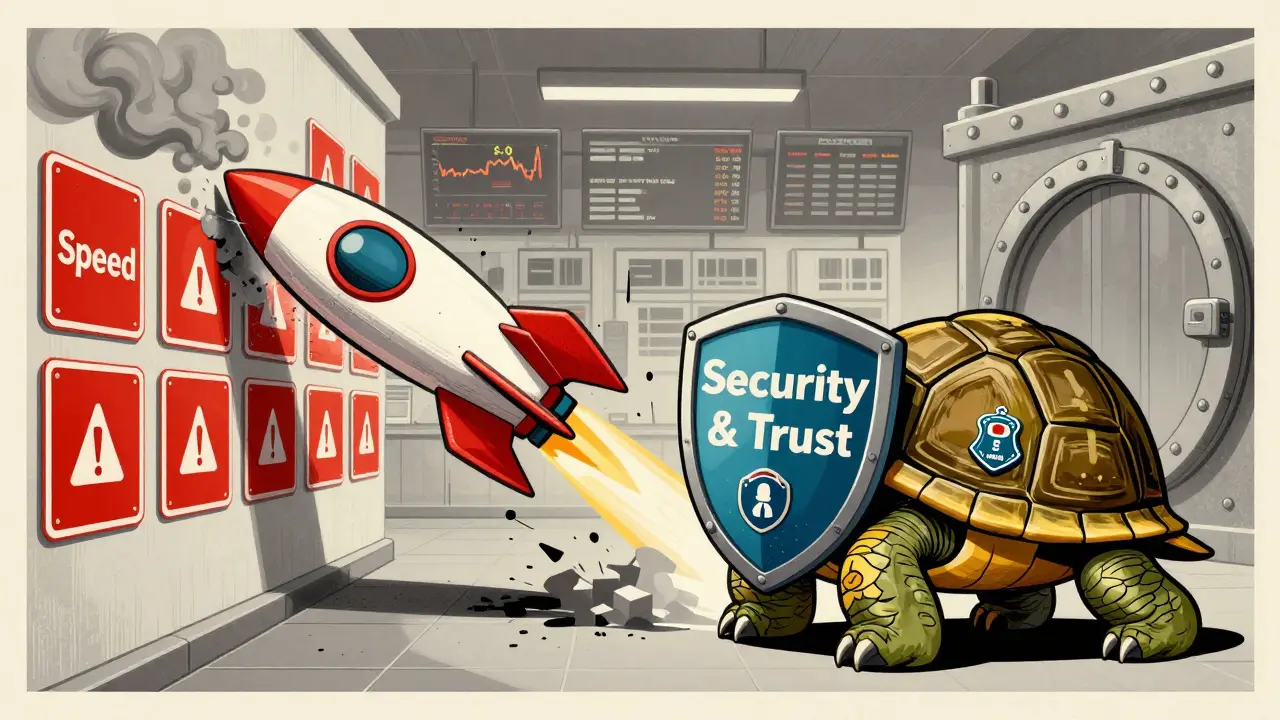
One Trading tries to differentiate itself by being "faster" and "free." But in the crypto world, trust is more valuable than speed. A fast exchange that disappears overnight is useless. Established platforms have years of proven reliability, which is a feature One Trading currently lacks.
Final Verdict: Proceed With Extreme Caution
One Trading presents an intriguing technological concept. The promise of sub-126-microsecond execution is impressive on paper. However, the absence of critical information regarding security, regulation, and revenue models makes it a high-risk choice.
For most users, especially those new to crypto, sticking with established, regulated exchanges is the safer path. If you are a professional trader tempted by the speed and free fees, start small. Test the platform with minimal funds to verify execution quality and withdrawal processes. Do not rely on marketing claims alone. Demand transparency before committing your portfolio.
In the end, speed means nothing if you can’t withdraw your money. Until One Trading provides clear evidence of its security and regulatory standing, it remains a speculative option rather than a reliable trading partner.
Is One Trading a scam?
There is no definitive proof that One Trading is a scam, but there are significant red flags. The lack of transparent information about its security, regulatory status, and revenue model makes it risky. Always exercise caution with new platforms that hide these details.
What does 112 microseconds mean for trading?
112 microseconds is one-millionth of a second. This level of speed is only beneficial for high-frequency traders and algorithmic bots. For average users buying and holding crypto, this speed difference is imperceptible and offers no practical advantage.
Are there really no fees on One Trading?
One Trading claims to offer commission-free trading. However, the exact mechanism for how they generate revenue is not publicly disclosed. Hidden costs could exist in the form of wider spreads or premium service charges. Always check the fine print.
Is One Trading regulated?
As of 2026, there is no clear public information about One Trading’s regulatory licenses or legal entity. This lack of transparency is concerning, as regulated exchanges must comply with strict financial laws to protect users.
Who is One Trading best for?
One Trading appears designed for professional algorithmic traders and market makers who need ultra-low latency. It is not suitable for beginners or casual investors due to the lack of educational resources and unclear security practices.
How does One Trading compare to Binance?
Binance offers a comprehensive ecosystem with high liquidity, extensive coin support, and proven security. One Trading focuses solely on speed and claims zero fees. Binance is generally safer and more versatile for most users, while One Trading is a niche tool for specific high-speed strategies.

Hadleigh Edwards
June 3, 2026 AT 07:02I really appreciate the detailed breakdown here because it highlights exactly why we need to be so careful with these new platforms that promise the moon and stars without showing their work. It is incredibly encouraging to see people taking the time to analyze the actual numbers rather than just getting swept up in the hype of 'fastest' and 'free'. When you look at the history of crypto, every single time a platform claims they have solved the speed issue without addressing security or regulation, it usually ends up being a house of cards waiting to collapse. The fact that they are targeting algorithmic traders makes sense from a business perspective, but it leaves the average user completely exposed to risks they might not even understand. I think it is great that this review points out the lack of transparency because that is the real red flag here, not the speed itself. We should always support platforms that are open about how they make money and where our funds are kept, because trust is the only currency that actually matters in the long run.
mark valmart
June 3, 2026 AT 16:24man i get why ppl would want fast trades but hiding the fees is just shady af like if u dont know who pays the fee then u r the product basically
Crystal Davis
June 4, 2026 AT 21:23The entire premise of this exchange is fundamentally flawed for anyone who isn't running a high-frequency trading bot with co-located servers. You cannot simply ignore the spread markup when they claim zero commissions; it is elementary economics 101. If they aren't charging fees, they are widening the bid-ask spread to compensate, which means you are losing money on every entry and exit regardless of the execution speed. Furthermore, the lack of regulatory disclosure suggests they are likely operating in a jurisdiction with lax oversight, which is a massive liability for any serious investor. Do not fall for the marketing buzzwords about microseconds unless you have the infrastructure to exploit them. For 99.9% of users, this platform is a trap designed to extract value through hidden spreads while offering no recourse if the platform decides to vanish with your assets. It is pathetic that people still believe 'free' means good in financial services.
Rosie Morris
June 6, 2026 AT 09:16i feel like its kinda scary how little info they have out there right? like if i wasnt a pro trader i wouldnt touch it with a ten foot pole honestly
Craig Swanson
June 7, 2026 AT 10:49Listen to me closely because I am going to say this once: DO NOT put your life savings into an unregulated black box. You need to understand that speed is irrelevant if the platform is a scam. I have seen too many people get wrecked by chasing performance metrics instead of safety. If you are a beginner, stick to Coinbase or Kraken where you can actually sue them if something goes wrong. This One Trading thing is playing Russian roulette with your capital. Wake up and smell the coffee before you lose everything.
Bill Gunn
June 8, 2026 AT 13:19Hey folks! 👋 Just wanted to chime in with a bit of expert insight here 🧠✨. While the 112ms claim is technically impressive for HFTs, the real kicker is the liquidity depth. Fast execution means nothing if you slip 0.5% on a large order due to thin books. I’ve tested similar niche venues, and usually, the 'free' model hides costs in the spread or data fees. Always check the slippage! 📉💸 Stay safe out there, y’all! 🚀🛡️
Barclay Chantel
June 10, 2026 AT 02:57It is frankly tedious to witness the same amateurish mistakes repeated by retail investors year after year. The pretension of calling oneself a 'trader' while ignoring basic principles of custody and audit trails is laughable. One Trading is clearly catering to the intellectually lazy who prefer shiny marketing over substantive security protocols. A true professional demands proof of reserves and clear legal standing, neither of which is present here. To engage with such an opaque entity is to invite disaster upon oneself. I suppose some people enjoy walking blindly off cliffs.
Miss Masquer
June 11, 2026 AT 19:51I find myself deeply curious about the cultural shift towards prioritizing speed over stability in our financial systems, especially considering how different markets in Asia and Europe handle regulatory compliance compared to the US. It seems that in our rush to innovate, we often forget the foundational elements of trust that have been built over centuries in traditional banking sectors. Perhaps there is a lesson here for us all to learn from more regulated environments where transparency is not just a buzzword but a legal requirement that protects the everyday person from predatory practices. I wonder if other countries are seeing similar trends with these microsecond-focused exchanges and how their regulators are responding to these challenges.
Joshua Alcover
June 12, 2026 AT 17:10The epistemological crisis inherent in decentralized finance manifests here as a failure of institutional verification. One must question the ontological status of an asset held on a platform lacking sovereign regulatory oversight. The velocity of transaction execution is merely a superficial metric masking the profound structural vulnerabilities of the system. We are witnessing the commodification of latency at the expense of fiscal sovereignty. It is imperative that the individual asserts dominance over their capital by refusing to participate in unverified digital bazaars. The state’s role in ensuring market integrity cannot be abdicated to private entities operating in the shadows.
Diana Morris
June 14, 2026 AT 09:39stop wasting time reading reviews and just go trade on binance already like seriously this one trading stuff sounds sketchy af and nobody wants to deal with that drama
Dianne Wright
June 15, 2026 AT 04:39i mean its obvious theyre hiding something why would a legit company not show their audits? its so annoying how everyone falls for this free lunch crap like theres no such thing as a free lunch in crypto ever
trisya hazriyana
June 18, 2026 AT 03:00the irony of claiming to be the fastest while being slow to disclose basic info is rich isnt it? let's talk about the opportunity cost of using a platform with unknown risk factors versus the marginal gain of 14 microseconds it's a non-starter for any rational actor
Debbie Lewis
June 18, 2026 AT 03:09i just sit back and watch these things happen every few years and its always the same story hype first reality later
Eric Grosso
June 19, 2026 AT 11:44hey guys does anyone know if they accept credit cards cause im thinking of trying it out but idk if its safe
Edith Mair
June 20, 2026 AT 14:56You are asking the wrong question. The issue isn't payment methods, it's whether the platform will exist tomorrow. Stop looking for convenience and start looking for security. This is not a suggestion, it is a directive for your own financial survival.
Sam Dashti
June 21, 2026 AT 16:53Oh wow, talk about a wild ride! 🎢 I mean, who doesn't love a good mystery novel, right? But when it comes to my hard-earned cash, I prefer the plot to be transparent. It's like going to a restaurant where the menu says 'Delicious Surprise' but doesn't list the ingredients. Sure, it might be tasty, but what if I'm allergic to 'Scam'? 🤔 Let's stick to places where we know exactly what we're eating!
Joe Clements
June 23, 2026 AT 03:26Thanks for sharing this review, it really helps clarify things. I always try to be friendly and supportive in these discussions because we are all learning together. It is important to look out for each other and avoid pitfalls that could hurt our portfolios. Keep doing the research!
lorna erni
June 24, 2026 AT 19:17Let's keep the peace here but also call out the nonsense! This platform is dodgy and we all know it. Don't let them fool you with fancy tech jargon. Stand together and demand better from the crypto industry. We deserve safety and transparency, not just speed. Fight for your rights as investors!