
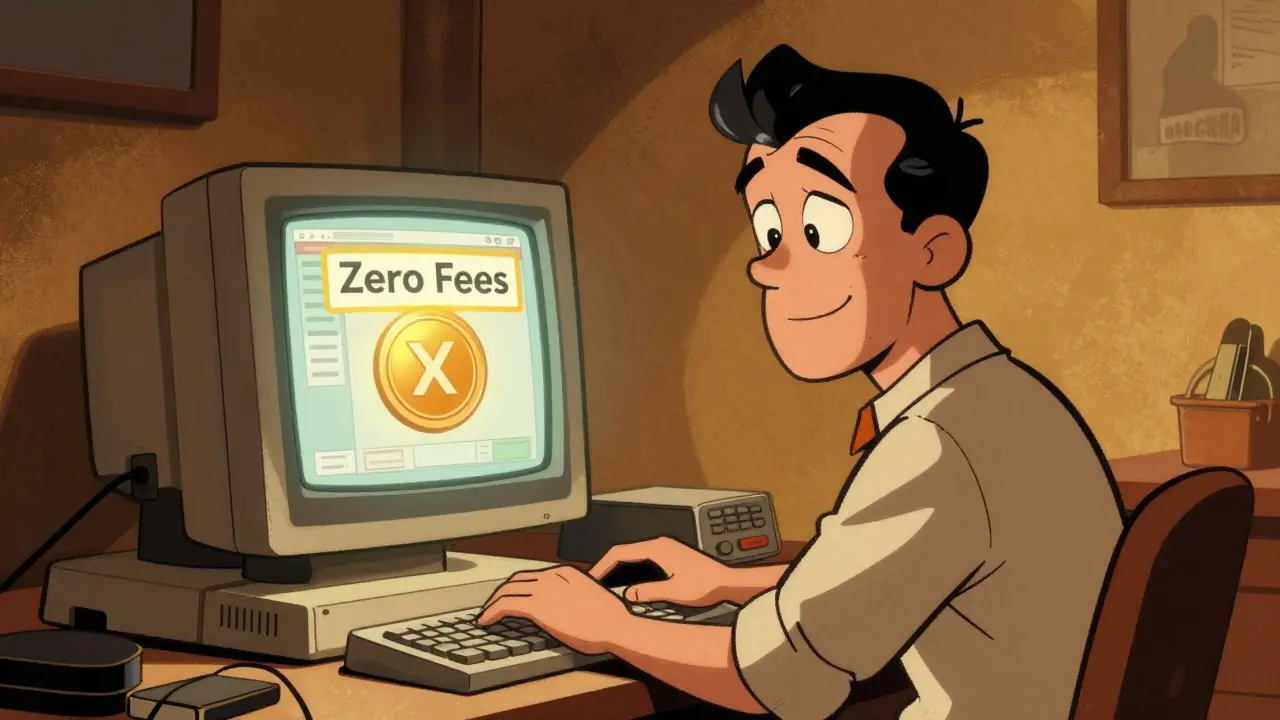
Imagine finding a specialized trading platform that promises zero fees for your favorite niche cryptocurrency. You sign up, deposit your funds, and wait for the market to move. Then, one day, the lights go out. The website goes silent. Your assets are stuck in limbo. This isn't just a hypothetical nightmare; it is the reality for many users of Nanex, a cryptocurrency exchange that once positioned itself as the premier hub for trading Nano (XNO) and other altcoins.
If you are reading this review because you found an old bookmark or heard a rumor about the platform, here is the hard truth upfront: Nanex is no longer operational. According to data from CoinMarketCap, the exchange officially shut down its services on April 30th. While the domain might still technically exist, the engine driving the trades has stopped running.
This article breaks down what Nanex was, why it failed, and what this means for anyone who still has questions about their funds or the history of this specific platform. We will look at the features they promised versus the reality they delivered, helping you understand the risks of niche-focused exchanges.
What Was Nanex? A Deep Dive into the Platform
To understand why Nanex closed, we first need to understand what it tried to be. Launched in January 2018, Nanex was a centralized cryptocurrency exchange specifically designed for Nano (XNO) trading. Unlike giants like Binance or Coinbase that list hundreds of coins, Nanex had a laser focus. They claimed that Nano represented the future of feeless, instant cryptocurrency transactions, and they built their entire brand around being the best place to trade it.
The core selling point was simple but attractive to traders: zero-fee deposits and withdrawals for Nano. In a world where Bitcoin network fees can spike during congestion, a platform offering free movement of assets sounds like a dream. However, specialization comes with trade-offs. By focusing heavily on one asset class, Nanex limited its own liquidity pool compared to broader markets.
Beyond Nano, the exchange did support a curated list of other cryptocurrencies. If you were looking to diversify slightly without leaving the ecosystem, you could trade:
- Bitcoin (BTC)
- Ethereum (ETH)
- Litecoin (LTC)
- Monero (XMR)
- Decred (DCR)
- Smaller altcoins like Garlicoin, Haven Protocol, Lindacoin, and Phore.
On paper, this looked like a robust selection for a mid-tier exchange. But as we will see, the paper trail didn't match the operational reality.
The Red Flags: Transparency and Trust Issues
In the cryptocurrency world, trust is not given; it is earned through transparency. Unfortunately, Nanex struggled significantly in this area. When you visit a financial platform, you expect to know who owns it, where it is located, and how your money is protected. Nanex offered almost none of this.
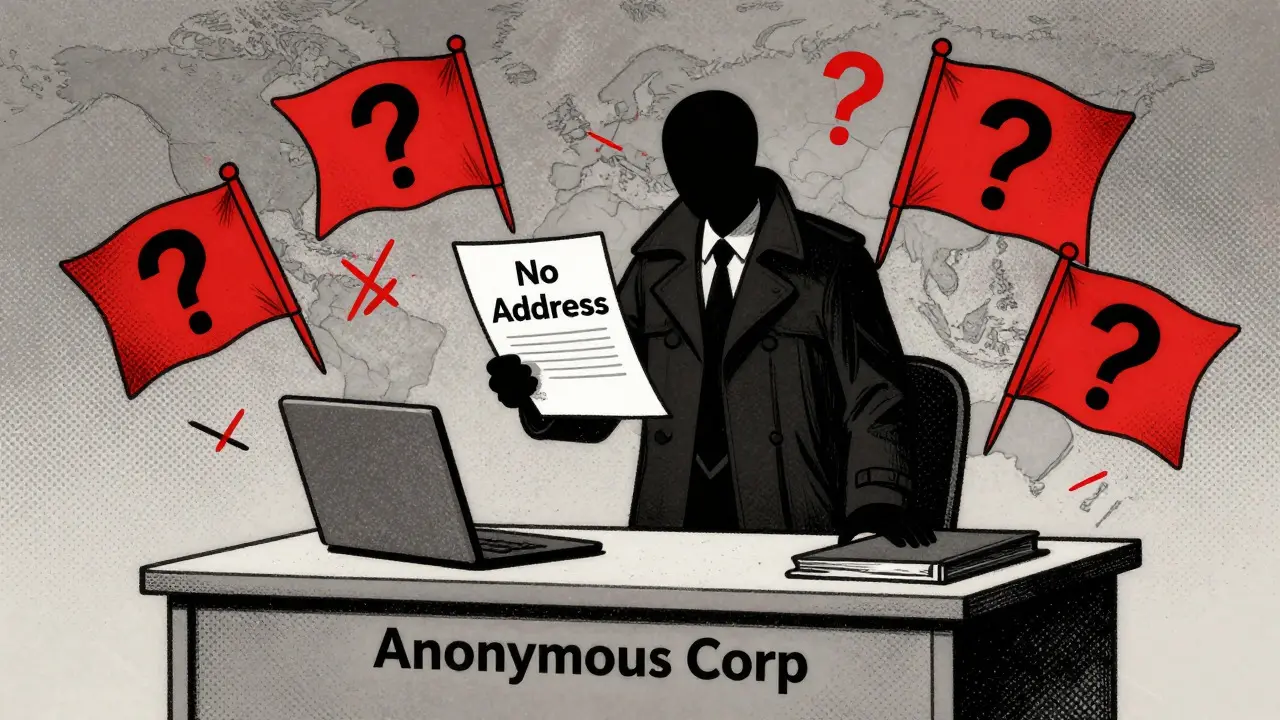
There was no clear information about the corporate structure behind the exchange. No physical address was listed prominently. No details were provided regarding the team members or their backgrounds. For a platform handling real money, this anonymity is a major red flag. It makes regulatory compliance nearly impossible to verify and leaves users vulnerable if things go wrong.
Geographical restrictions further complicated the picture. While US investors could generally access the platform (with exceptions for New York and Washington residents), entire countries were blocked. Residents of Bosnia and Herzegovina, North Korea, Ethiopia, Iran, Iraq, Syria, Uganda, Vanuatu, and Yemen were completely restricted. These bans are common due to sanctions, but combined with the lack of corporate identity, they suggested a platform trying to skirt regulatory scrutiny rather than embrace it.
Features vs. Reality: What Did Users Actually Get?
Nanex marketed itself as having a full suite of professional trading tools. They claimed to offer:
- Fiat gateway integration (buying crypto with dollars/euros).
- Credit card purchase options.
- Margin and leverage trading.
- Over-the-counter (OTC) trading services.
- Dedicated desktop and mobile applications.
However, user reports and technical audits told a different story. The "zero-fee" promise was indeed true for Nano, which aligned with the coin's native protocol. But the execution was flawed. Many users reported technical glitches, such as missing price charts on the web interface. Imagine trying to make a split-second trading decision without seeing the live graph-it’s like driving with a fogged-up windshield.
More critically, the volume was non-existent. Data from CoinPaprika showed a 24-hour trading volume of $0 in the exchange's final days. The estimated real volume was also $0, resulting in a confidence score of 0.00%. This indicates that even if the site was technically "up," there was no one else to trade with. Liquidity dried up, making it difficult or impossible to execute orders at fair prices.
Security Measures: Was Your Money Safe?
Security is paramount in crypto. Nanex did implement some standard measures, such as two-factor authentication (2FA). This is a basic requirement for any modern exchange, protecting accounts from unauthorized access via password theft alone. They also provided an integrated online wallet service.
But hardware security is only half the battle. The bigger question was custodial security: where were the cold wallets? How were client assets stored? Because the company lacked transparency, users never got a clear answer. Without proof of reserves or regular third-party audits, there was no way to verify if the exchange actually held the assets it claimed to have. In the industry, this is known as an "opaque reserve" model, and it is a leading cause of insolvency when panic sets in.
The Shutdown: What Happened on April 30th?
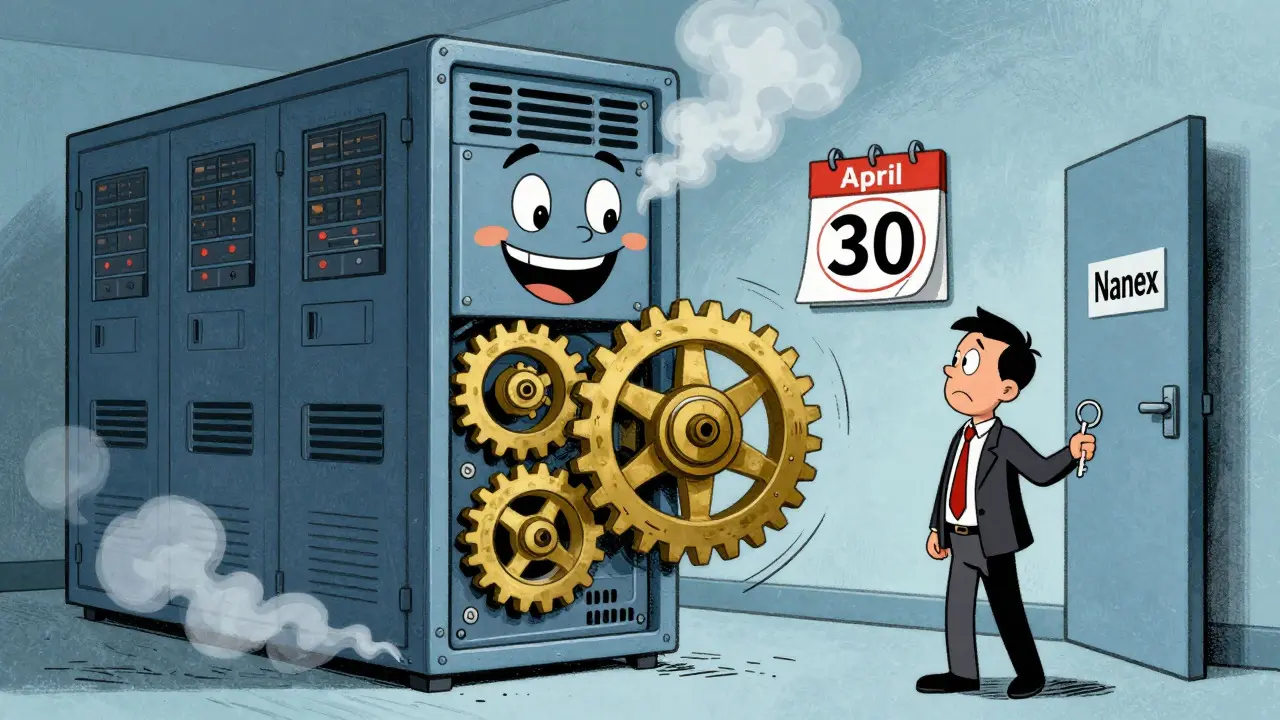
The end came quietly. On April 30th, CoinMarketCap marked Nanex as "shut down." There was no massive press conference, no dramatic announcement. Just silence. This pattern is unfortunately common among smaller, specialized exchanges that fail to achieve critical mass.
Why did it happen? Several factors likely converged:
- Lack of Liquidity: With low trading volumes, the exchange couldn't generate enough transaction fees to sustain operations.
- Regulatory Pressure: As global regulations tightened in 2025 and 2026, anonymous platforms found it harder to maintain banking relationships or payment gateways.
- Competition: Major exchanges began listing Nano with competitive fees, removing Nanex's unique selling proposition.
For users who had funds on the platform at the time of closure, the situation remains unresolved. Without a functioning customer support team or active website, recovering assets is extremely difficult. This serves as a stark reminder: if an exchange doesn't have a clear legal entity, your funds may be unrecoverable.
| Feature | Nanex (Historical) | Modern Standard Exchange |
|---|---|---|
| Status | Shut Down (April 30) | Active & Regulated |
| Transparency | Low (No company info) | High (Public audits, team bios) |
| Trading Volume | $0 (Final months) | High Liquidity |
| Supported Coins | Niche (Nano-focused) | Broad (100+ coins) |
| Fees | Zero for Nano | Variable (Maker/Taker fees) |
Lessons Learned: Avoiding the Next Nanex
The story of Nanex is not just about one failed platform; it is a case study in risk management for crypto traders. Here is what you should look for before trusting an exchange with your capital:
1. Check the Corporate Entity. Look for an "About Us" page that lists a registered business name, physical address, and key personnel. If it’s all vague buzzwords, walk away.
2. Verify Liquidity. Use tools like CoinMarketCap or CoinGecko to check real-time trading volume. If the volume is suspiciously low or inconsistent, you may struggle to sell your assets when needed.
3. Demand Proof of Reserves. Reputable exchanges now publish monthly proofs of reserves, showing that they hold 1:1 backing for user deposits. Don’t accept blind faith.
4. Diversify Platforms. Never keep all your eggs in one basket. Use multiple exchanges and, most importantly, withdraw large holdings to self-custody hardware wallets.
FAQ: Common Questions About Nanex
Is Nanex crypto exchange still working in 2026?
No, Nanex is no longer working. The exchange officially shut down on April 30th, according to CoinMarketCap records. While the website URL might still load, there are no active trading services, and new registrations are not accepted.
Can I recover my funds from Nanex?
Recovering funds is highly unlikely. Since the exchange lacks transparent corporate governance and has ceased operations, there is no active customer support team to process withdrawal requests. Users are advised to check official communications from the last active period, but most specialized exchanges of this size do not have insurance funds to cover losses.
Why did Nanex shut down?
Nanex likely shut down due to a combination of low trading volumes, lack of liquidity, and increasing regulatory pressures. Its niche focus on Nano cryptocurrency limited its user base, while the absence of corporate transparency made it difficult to comply with evolving global financial regulations.
Was Nanex a scam?
While not definitively proven to be a malicious scam, Nanex exhibited many characteristics of high-risk platforms, including anonymous ownership and opaque reserves. The sudden shutdown without clear communication suggests operational failure rather than a premeditated fraud, but the outcome for users is similar: loss of access to funds.
Where can I trade Nano (XNO) safely now?
You can trade Nano on major, regulated exchanges such as Binance, Kraken, or KuCoin. These platforms offer higher liquidity, better security audits, and clearer regulatory compliance. Always ensure you enable two-factor authentication and consider withdrawing your Nano to a personal wallet after purchasing.

Joy Kwant
August 1, 2026 AT 13:30I just feel so exhausted reading about another platform that vanished into thin air leaving people holding the bag. It is absolutely infuriating how these entities operate with zero accountability and then expect us to just accept the loss as part of the 'crypto journey' like it's some noble sacrifice we are supposed to make for innovation. The audacity of shutting down without a word while users are left staring at frozen balances is truly soul-crushing and speaks volumes about the lack of basic human decency in this industry.
Subhash Kashyap Dm
August 1, 2026 AT 22:00typical centralized honeypot operation designed to siphon liquidity before vanishing under regulatory radar. the anonymity was never a bug but a feature allowing operators to exploit trustless narratives while maintaining custodial control over assets. classic pump and dump structure disguised as niche utility play.
Ed Wallace
August 2, 2026 AT 19:32It really makes you wonder about the nature of value when a platform can promise the moon and deliver nothing but silence. I suppose in the grand tapestry of digital finance, Nanex was just a fleeting thread that unraveled too quickly, reminding us all that trust is a fragile commodity indeed. Perhaps the real lesson here isn't just about security protocols but about our own willingness to believe in promises that sound too good to be true.
Joshua Hofford
August 4, 2026 AT 05:36Hey everyone, let's not lose hope! This is actually a great learning moment for the community. We see these things happen and we grow stronger together by sharing stories and helping each other avoid similar pitfalls in the future. Keep your heads up and stay safe out there!
Marcia Albert
August 5, 2026 AT 13:31I remember when Nano was the shiny new toy everyone wanted to play with and platforms like this popped up overnight claiming to be the gateway to the future. It feels like watching a soap bubble float gently upward only to pop against a thorny bush, leaving nothing but a faint mist where something colorful once was. Such a bittersweet end to what could have been a vibrant little ecosystem.
Emma Smith
August 7, 2026 AT 09:16the whole concept of proof of reserves is basically theater for the masses because if they want to steal it they will find a way regardless of audits which are often cooked by the same insiders who run the show anyway so why bother pretending transparency matters when the underlying system is rigged from the start
Ed Mitchell
August 8, 2026 AT 03:34One must consider the deeper implications of such closures which are rarely accidental but rather orchestrated events designed to consolidate power among larger exchanges. The silence is deafening precisely because it is calculated to prevent organized resistance or legal recourse from taking shape before the assets are laundered through shell companies overseas.
Michael Mostyn
August 10, 2026 AT 00:10It appears that the fundamental issue lies in the misalignment between promised utility and actual operational capacity. When an exchange lacks the infrastructure to support its claims, failure becomes inevitable rather than surprising. This case serves as a pertinent example of why due diligence remains paramount in volatile markets.
Erica Johnson
August 10, 2026 AT 19:23You'd think after FTX everyone would know better but apparently greed blinds people faster than any rug pull can. :/ It's sad really that folks still fall for the zero fee hype without checking if there's even anyone on the other side of the trade.
Ken G
August 11, 2026 AT 03:34these elites always get away with it because they write the rules and we are just pawns in their game waiting to be sacrificed when the market turns sour. simple truth is that no amount of education will save you when the house decides to close the casino doors forever
Lorraine Surringer
August 11, 2026 AT 19:36I mean honestly its just so draining to read all these technical explanations when the bottom line is that regular people lost money again and nobody seems to care enough to hold anyone accountable. Its like we are expected to just shrug and move on like nothing happened which is totally unfair to those who trusted the system.
Alex Di Mango
August 13, 2026 AT 09:59Let's try to look at this constructively though. While it is unfortunate, it highlights the importance of self-custody. Maybe we can use this as a chance to educate newer traders about hardware wallets and the benefits of decentralization. Every cloud has a silver lining, right?
Amor Jordan
August 14, 2026 AT 05:28I can only imagine the stress and anxiety those users must have felt watching their accounts go dark. It is heartbreaking to think about the financial strain this puts on families who may have invested their savings believing in a secure future. We need more empathy in these discussions rather than just blaming the victims.
Nick Darring
August 15, 2026 AT 22:08Actually, I would argue that the shutdown was probably a mercy killing because the platform was likely insolvent months prior and keeping it open would have only prolonged the suffering of users who were slowly bleeding out their capital through hidden fees and slippage that weren't advertised properly. By closing abruptly, they spared everyone the agony of watching a slow decline which is arguably worse than a sudden death because at least with a sudden death you can plan your funeral whereas a slow decline leaves you in limbo wondering if today is the day the lights finally go out for good.
Billy Cunningham
August 17, 2026 AT 03:42Zero volume means zero life 📉💀