

Imagine logging into your crypto account to find your funds stuck in limbo. You click "withdraw," wait days, then weeks, and the support tickets go unanswered. For many traders on Mercatox, this isn't a hypothetical nightmare-it’s a recurring reality reported by users as recently as late 2025. While the platform boasts over a decade of operation since its 2015 launch, recent feedback paints a picture of an exchange struggling with reliability, customer service bottlenecks, and withdrawal delays that can freeze your capital indefinitely.
If you are considering using Mercatox for trading or storage, you need more than just marketing promises about low fees. You need to understand the actual friction points: how their flat fee structure compares to competitors, whether their Canadian roots offer real security benefits, and why user ratings have plummeted despite their longevity. This review cuts through the noise to give you a clear, evidence-based look at whether Mercatox is still a viable option in 2026 or if it’s time to move your assets elsewhere.
The Basics: What Is Mercatox?
Mercatox is a centralized cryptocurrency exchange founded in Canada in October 2015. Unlike newer platforms that chase viral growth, Mercatox has survived multiple market crashes and bull runs, making it one of the older players in the space. The platform positions itself as a multifunctional hub, offering not just spot trading but also lending services, payment processing, and multi-currency wallets for both personal and commercial use.
The interface is web-based and proprietary, meaning you don’t need to download heavy software to start trading. It supports customization for order types, price settings, and trade amounts, with an integrated order book window for tracking transactions. They claim to serve both beginners and experienced traders, offering training documentation, webinars, and even live online training. However, the platform’s age shows in its design philosophy-it feels functional rather than modern, lacking the sleek, intuitive UX found on newer exchanges like Coinbase or Kraken.
Fees and Trading Costs: Are They Really Low?
One of Mercatox’s main selling points is its fee structure. The platform charges a flat 0.25% trading fee for all transactions, regardless of volume. At first glance, this seems competitive. But let’s put that in perspective.
| Exchange | Maker Fee | Taker Fee | Fee Model |
|---|---|---|---|
| Mercatox | 0.25% | 0.25% | Flat Rate |
| Binance | 0.10% | 0.10% | Tiered (lower with BNB) |
| Kraken | 0.16% - 0.26% | 0.26% - 0.34% | Tiered Volume-Based |
| Coinbase Pro | 0.40% - 0.60% | 0.40% - 0.60% | Tiered Volume-Based |
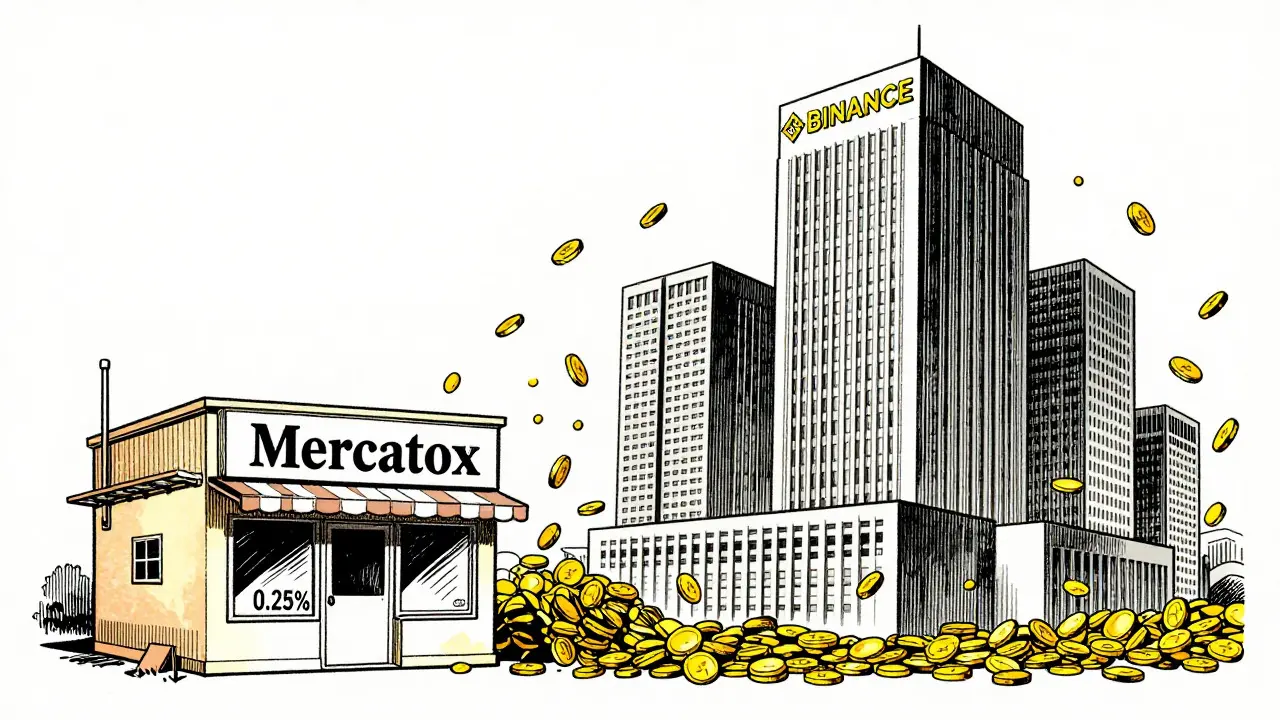
As you can see, Mercatox’s 0.25% is average at best. If you’re a high-volume trader, you’ll pay significantly more than on Binance or Kraken, where fees drop drastically with higher monthly volumes. For casual traders, the difference might be negligible, but don’t expect "low fees" as a unique advantage. Experts like Cryptowisser have pointed out that calling these fees "low" is misleading-they’re simply in line with industry standards, not below them.
Liquidity and Trading Volume: A Modest Presence
Liquidity matters. If you want to buy or sell large amounts without slippage, you need deep order books. Mercatox’s trading volume tells a story of steady but modest growth. In July 2019, they reported 579,071 registered users and 17.5 million deals totaling 651,791 BTC, with a 24-hour volume of $16.2 million. By December 2021, that volume had risen to approximately $36 million.
Compare that to Binance, which consistently handles billions in daily volume. Mercatox ranks around #84 globally among exchanges by volume. This means thinner liquidity for less popular pairs. If you’re trading Bitcoin or Ethereum, you’ll likely find enough depth. But if you’re diving into altcoins or smaller caps, you might face wider spreads and slower execution. For serious day traders, this lack of liquidity can eat into profits faster than fees ever could.
User Experience and Platform Reliability
The Mercatox platform is accessible across multiple devices-iOS, Android, Windows, Mac, Linux, and via SaaS. This cross-platform compatibility is a plus for traders who switch between desktop and mobile. The API access is comprehensive, allowing integration with tax tools like CoinLedger, Koinly, and portfolio trackers like IntoTheBlock. They also support Unified Payments Interface (UPI) integrations, which is useful for users in specific regions.
However, the user experience takes a hit when things go wrong. Customer support operates 24/7 with live representatives, but user reviews suggest response times are slow and solutions are often generic. On Cryptogeek, Mercatox holds a dismal 2.5 out of 5 rating based on 30 reviews. More alarming are recent reports from Reviews.io in September 2025, where multiple users cited difficulties accessing funds, delayed withdrawals, and even scams linked to third-party recovery services.
One verified reviewer noted that "withdrawals are now processing quickly and smoothly" after account restoration, suggesting intermittent improvements. But the prevalence of complaints about fund recovery indicates systemic issues. When you can’t get your money out, no amount of API integration or cross-platform support matters.
Security and Regulatory Standing
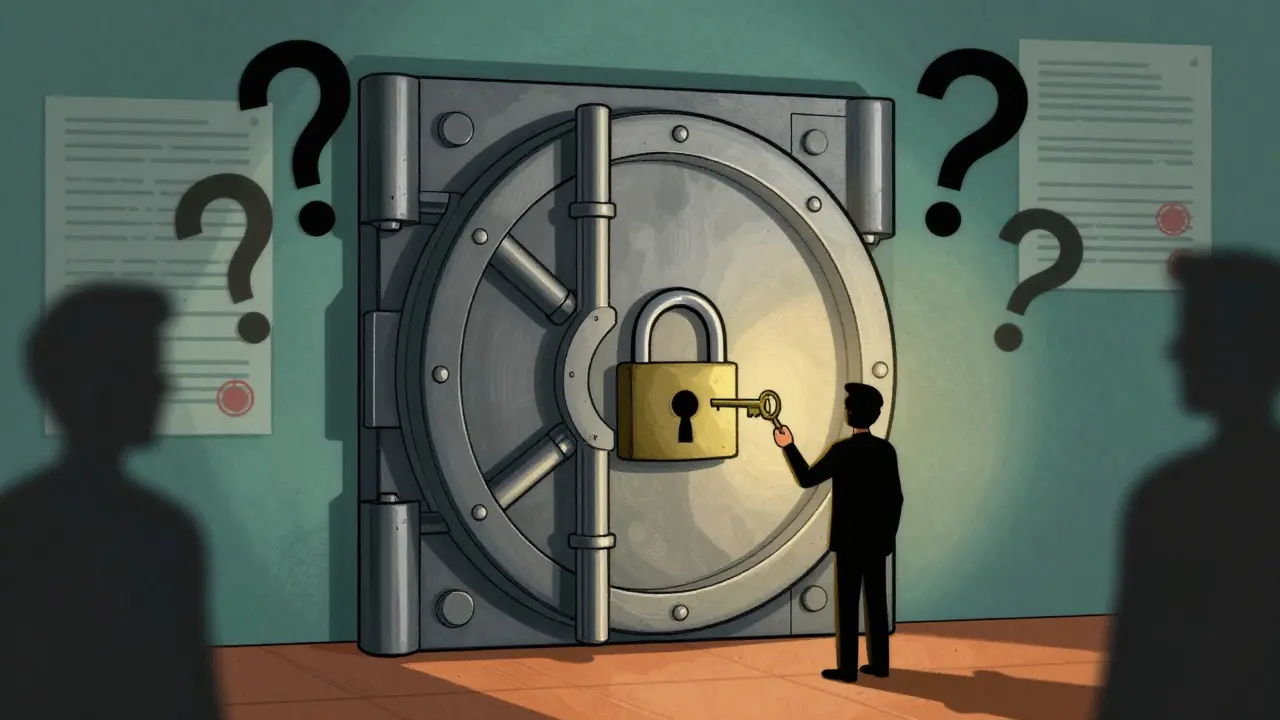
Mercatox was founded in Canada, which theoretically offers stronger regulatory oversight compared to unregulated offshore exchanges. However, there’s limited public information about their specific compliance status or audits. They don’t prominently display proof of reserves or regular third-party security audits, which has become a standard expectation post-FTX collapse.
The platform uses cold storage for most assets, a common practice, but details on insurance coverage or multi-signature wallet setups are scarce. For institutional investors or large holders, this lack of transparency is a red flag. Retail traders might overlook it, but given the recent wave of exchange failures, knowing exactly where your funds sit and how they’re protected is non-negotiable.
Who Should Use Mercatox? And Who Should Avoid It?
Mercatox might still make sense for:
- Casual traders looking for a simple, no-frills interface to buy and hold major cryptocurrencies.
- Users in regions where larger exchanges are restricted, provided they verify local accessibility.
- Those interested in lending features, as Mercatox offers a lending platform alongside trading.
Avoid Mercatox if:
- You are a high-volume trader sensitive to fees and liquidity.
- You prioritize fast withdrawals and responsive customer support.
- You demand full transparency regarding reserves and regulatory compliance.
- You are trading obscure altcoins that require deep order books.
Alternatives to Consider in 2026
If Mercatox’s reliability concerns weigh heavily, consider these alternatives:
| Exchange | Best For | Key Advantage | Potential Drawback |
|---|---|---|---|
| Binance | High-volume traders | Lowest fees, highest liquidity | Complex interface for beginners |
| Kraken | Security-conscious users | Strong reputation, transparent audits | Higher fees for small trades |
| Coinbase | Beginners | User-friendly, regulated in US/EU | Higher fees, limited coin selection |
| KuCoin | Altcoin hunters | Vast selection of lesser-known coins | Variable liquidity on small pairs |
Each of these platforms offers better liquidity, clearer regulatory standing, and more robust customer support channels. Switching might take effort, but the peace of mind is worth it.
Final Verdict: Is Mercatox Worth Your Trust?
Mercatox has survived longer than many expected, which speaks to some level of operational resilience. Its multifunctional approach-combining trading, lending, and payments-is ambitious. But survival isn’t success. With mixed user feedback, persistent withdrawal complaints, and average fees, Mercatox struggles to differentiate itself in a crowded market.
For new users in 2026, the risks may outweigh the rewards. Unless you have a specific reason to use Mercatox-like regional access needs or loyalty to its lending products-it’s hard to recommend it over more transparent, liquid, and reliable alternatives. Always do your own due diligence, check recent user reviews, and never keep more than you can afford to lose on any single platform.
Is Mercatox safe to use in 2026?
Safety is relative. Mercatox has operated since 2015 without a major hack, which is positive. However, recent user reports highlight issues with withdrawal delays and customer support responsiveness. While not inherently unsafe, it lacks the transparency and reserve proofs that top-tier exchanges provide. Use caution and avoid storing large long-term holdings here.
What are Mercatox's trading fees?
Mercatox charges a flat 0.25% fee for all trades, regardless of whether you are a maker or taker. This is an average rate compared to industry leaders like Binance, which offer lower tiered fees for high-volume traders.
Why are there so many complaints about Mercatox withdrawals?
Recent reviews from late 2025 indicate systematic issues with withdrawal processing times and account access. Some users report needing third-party fund recovery services, suggesting deeper operational bottlenecks. While some users note improvements after account restoration, the pattern of delays remains a significant concern.
Does Mercatox support API trading?
Yes, Mercatox provides comprehensive API access, allowing integration with portfolio management tools like CoinLedger and Koinly. This makes it suitable for automated trading strategies or tax reporting purposes.
How does Mercatox compare to Binance?
Binance dwarfs Mercatox in every metric: liquidity, trading volume, fee competitiveness, and feature set. Mercatox is a mid-tier exchange with modest volume ($36M daily vs Binance’s billions). Choose Binance for active trading; consider Mercatox only if you need specific regional access or lending features not available elsewhere.
